 Vera Clarissa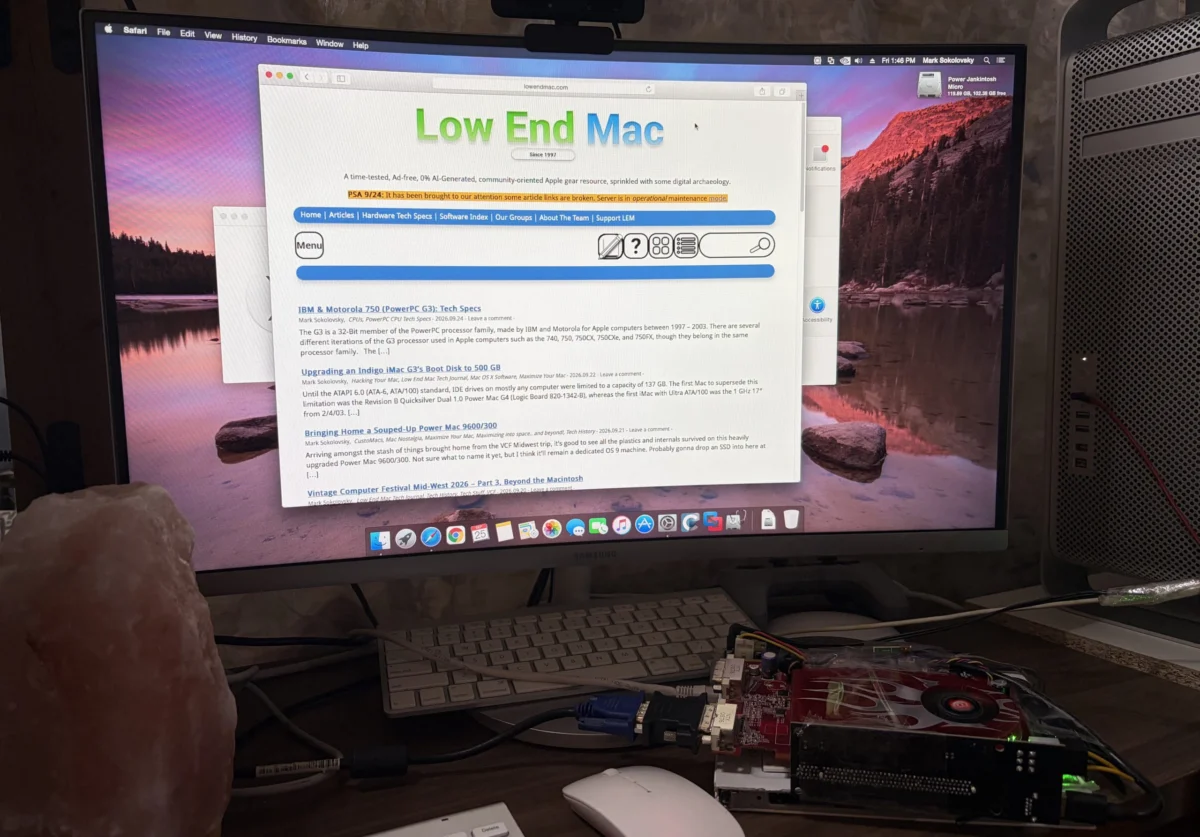
The annual global event known as RetroChallenge has officially returned for its 2026 iteration, inviting hobbyists, engineers, and computing enthusiasts to engage in a month-long period of intensive technical development. Organized in collaboration with the ACMS (Association for Computing Machinery and Society) and various industry stakeholders, the challenge serves as a platform for participants to document their efforts in restoring, modifying, or reimagining legacy hardware. This year’s event features a significant cross-promotional alignment with the Hackaday RetroComputing Contest, creating a unified ecosystem for creators to share progress, receive feedback from subject-matter experts, and compete for a variety of technical prizes and recognition.
The Scope and Objectives of RetroChallenge 2026
RetroChallenge is designed to foster ingenuity in the vintage computing space by requiring participants to maintain a detailed, public log of their progress. The judges, comprised of ACMS members and industry veterans, monitor these logs to provide technical guidance and community encouragement. The event culminates in a formal "Show & Tell" presentation on October 31, 2026, hosted by the ACMS. Participants are allotted five minutes to present their projects, after which a panel of judges reviews the submissions based on a weighted rubric that includes technical difficulty, project outcomes, innovative use of legacy components, and overall passion for the subject matter.

Prizes for the 2026 cohort are substantial, reflecting the high caliber of work expected. Awards include a $500 AUD voucher for hardware components, specialized products from ZuluSCSI—a leader in modern storage emulation for vintage systems—and official commemorative merchandise. The initiative is not merely a contest but a collaborative effort to keep archival computing relevant in an era of rapid technological obsolescence.
Chronology of the "Power Hackintosh Micro" Project
Within the broader context of the 2026 competition, one project has garnered attention for its complex hardware integration: the "Power Hackintosh Micro." The premise of this project rests on an alternate-history scenario: What if Apple had released a "Mac Studio" desktop variant in 2006, alongside the transition to Intel-based architectures?
The development timeline for this project began as a conceptual "Franken-Mac" experiment during the 2020–2021 pandemic era, where the creator repurposed internal components from various legacy Macs. The current phase, executed for RetroChallenge 2026, transitioned from a theoretical design to a physical proof-of-concept.

- Initial Acquisition (Early 2026): The creator acquired two 2006-era MacBooks from the Wisconsin Computer Club for a combined cost of $15. These units were selected for their core architecture compatibility.
- Component Benchmarking (Mid-2026): After testing both units, the creator selected a Core 2 Duo MacBook for the project. Disassembly revealed that the logic board was remarkably compact, provided it could be decoupled from the internal display and battery requirements.
- Power and Connectivity Hurdles (Late September 2026): A significant obstacle emerged regarding power delivery. The ATI Radeon HD 2600 XT GPU required 12V of power, which the MacBook’s internal SATA interface could not provide. Initial attempts using a 12V 2A barrel jack proved insufficient, leading to boot failures and garbled graphical output during the load phase of the Piker Alpha OS X Yosemite installation.
- Final Optimization (September 25, 2026): By upgrading to a 12V 5A power supply—originally intended for a high-performance external storage array—the creator successfully bypassed the power limitation. This allowed for stable operation and successful graphical acceleration using the external GPU (eGPU) configuration.
Technical Analysis and Hardware Implications
The "Power Hackintosh Micro" demonstrates the viability of utilizing Mini PCIe interfaces as a bridge for external graphics acceleration in legacy Apple hardware. In the 2006 MacBook, the Intel GMA 950 integrated graphics represent a significant bottleneck for any modern OS, including custom builds of macOS. By offloading the graphics processing to an ATI Radeon HD 2600 XT, the project effectively circumvents the thermal and bandwidth limitations of the original internal design.
From a technical standpoint, the project highlights the necessity of managing memory address space. The MacBook’s chipset limitations dictate that system RAM must be capped below 2.5 GB to prevent conflicts with the PCIe-connected GPU. The creator successfully mitigated this by utilizing a 2 GB memory module, ensuring that the system remained stable while providing the necessary overhead for the GPU to communicate via the Mini PCIe bus.
Broader Impact on the Retrocomputing Community
The success of such projects underscores a growing trend in the retrocomputing community: the move from simple "restoration" to "modernization." As legacy hardware becomes increasingly difficult to use in a modern, web-connected environment, the ability to integrate contemporary peripherals—such as high-speed SSDs and modern GPUs—is essential for extending the functional lifespan of these devices.

Official representatives from the ACMS have noted that the 2026 submissions reflect a high degree of technical sophistication compared to previous years. The integration of "Franken-Mac" projects suggests that the community is no longer satisfied with keeping hardware in its original state, but is instead focused on creating "what-if" scenarios that explore the potential performance ceilings of older architectures.
Implications for Future Hardware Preservation
The logistical success of the Power Hackintosh Micro serves as a blueprint for other enthusiasts looking to solve the "power delivery" problem. The reliance on spliced power supplies and external adapters illustrates that while legacy hardware is durable, it requires innovative power management solutions to operate modern, high-draw components.
As the RetroChallenge moves toward its final evaluation stage, the focus remains on the synthesis of hardware and software. By utilizing Piker Alpha’s modified macOS installations, participants are demonstrating that the barrier between legacy hardware and modern software is largely a matter of driver support and kernel configuration.

Conclusion
As the 2026 RetroChallenge approaches its October 31 deadline, the community anticipates a final showcase that will likely push the boundaries of what is possible with 20-year-old consumer technology. The project highlights that with sufficient documentation, access to legacy components, and a willingness to perform invasive hardware modifications, the limitations of 2006 computing can be largely mitigated. Whether or not these projects eventually move into permanent, custom-fabricated cases, the technical documentation produced during this process provides invaluable data for future preservationists who seek to maintain the functionality of Apple’s early Intel-era hardware. For the participants, the challenge serves as a testament to the enduring relevance of the personal computer as a platform for experimentation and continuous learning.