Chalid Lutfie
On April 15, 2017, the creators of the SOUNDSHOCK music compilation series provided an exhaustive look into the visual identity that defined their three-part project. Central to this aesthetic were the hand-painted album covers by professional artist and manga creator Tsuyoshi Shimokura. This collaboration, which began with the inception of the first volume, FM FUNK MADDNESS!!, bridged the gap between retro-computing culture, FM synthesis music, and traditional illustrative storytelling. By examining the evolution of these covers—from the action-oriented visuals of the first installment to the spiritual, mandalic composition of the third—one gains a deeper understanding of how the series synthesized disparate artistic influences into a coherent, multi-media legacy.
The Genesis of a Collaborative Vision
The partnership between the project lead, known as zinger, and Tsuyoshi Shimokura originated through mutual acquaintance hex125. Initially, Shimokura was brought on board as a contributing composer for the series’ inaugural release. However, during the vetting process of Shimokura’s musical portfolio, the production team discovered a private collection of high-quality illustrations. Given Shimokura’s established background in manga and his documented enthusiasm for FM sound chips—the foundational technology behind the series’ auditory output—the production team identified him as the ideal candidate to define the visual brand of the SOUNDSHOCK franchise.
This collaboration marked a shift in how independent music compilations were packaged at the time. Rather than relying on generic graphic design or digital stock imagery, the team opted for a bespoke, hand-painted approach that mirrored the craftsmanship of the music contained within the albums.
Chronology of Creative Development
The development of the series’ visual identity can be categorized into three distinct phases, each corresponding to the release of an album in the trilogy.
Phase I: FM FUNK MADDNESS!!
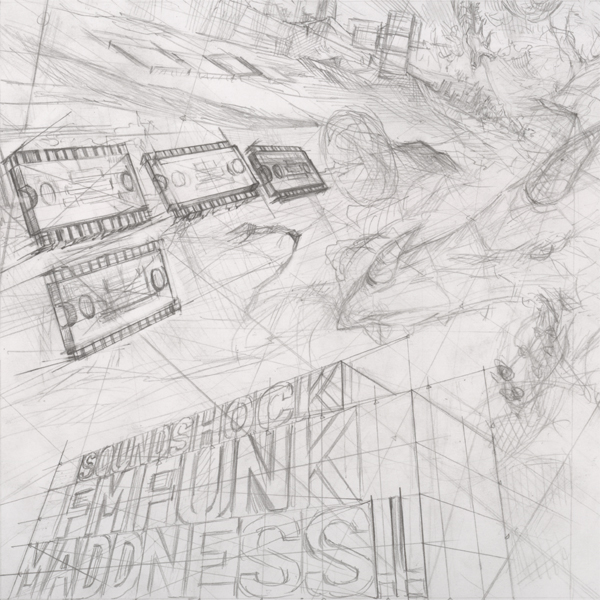
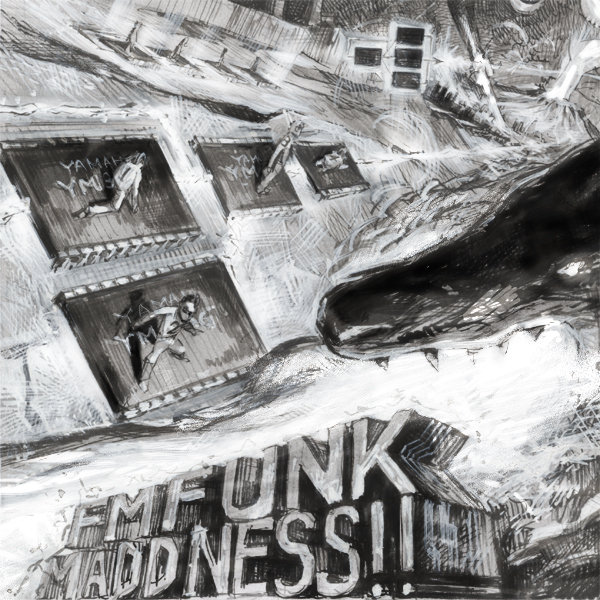
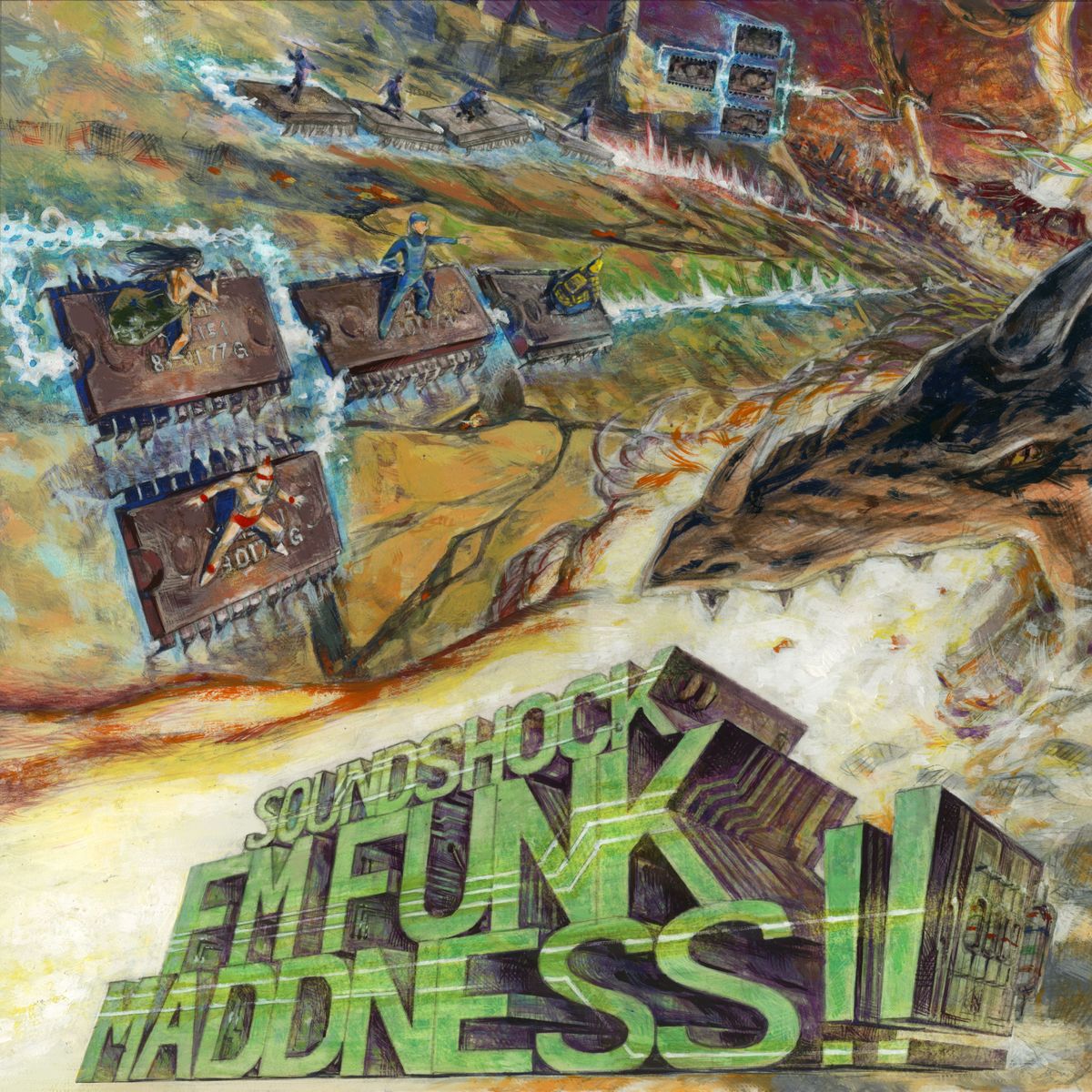
The first volume established the series’ core motif: the empowerment of the musician through the technology they utilize. Drawing inspiration from classic 1980s and 90s arcade shooter flyers—most notably those of Metal Black and Darius II—Shimokura developed a narrative-driven cover. The final artwork depicts a team of heroes utilizing the raw power of FM sound to combat encroaching threats. A notable technical detail in this work is the depiction of FM synthesis chips arranged in the form of algorithm charts, with the artist adding whimsical biological features, such as caterpillar-like legs, to the hardware components to emphasize the "living" nature of the sound.
Phase II: FM FUNK TERRROR!!
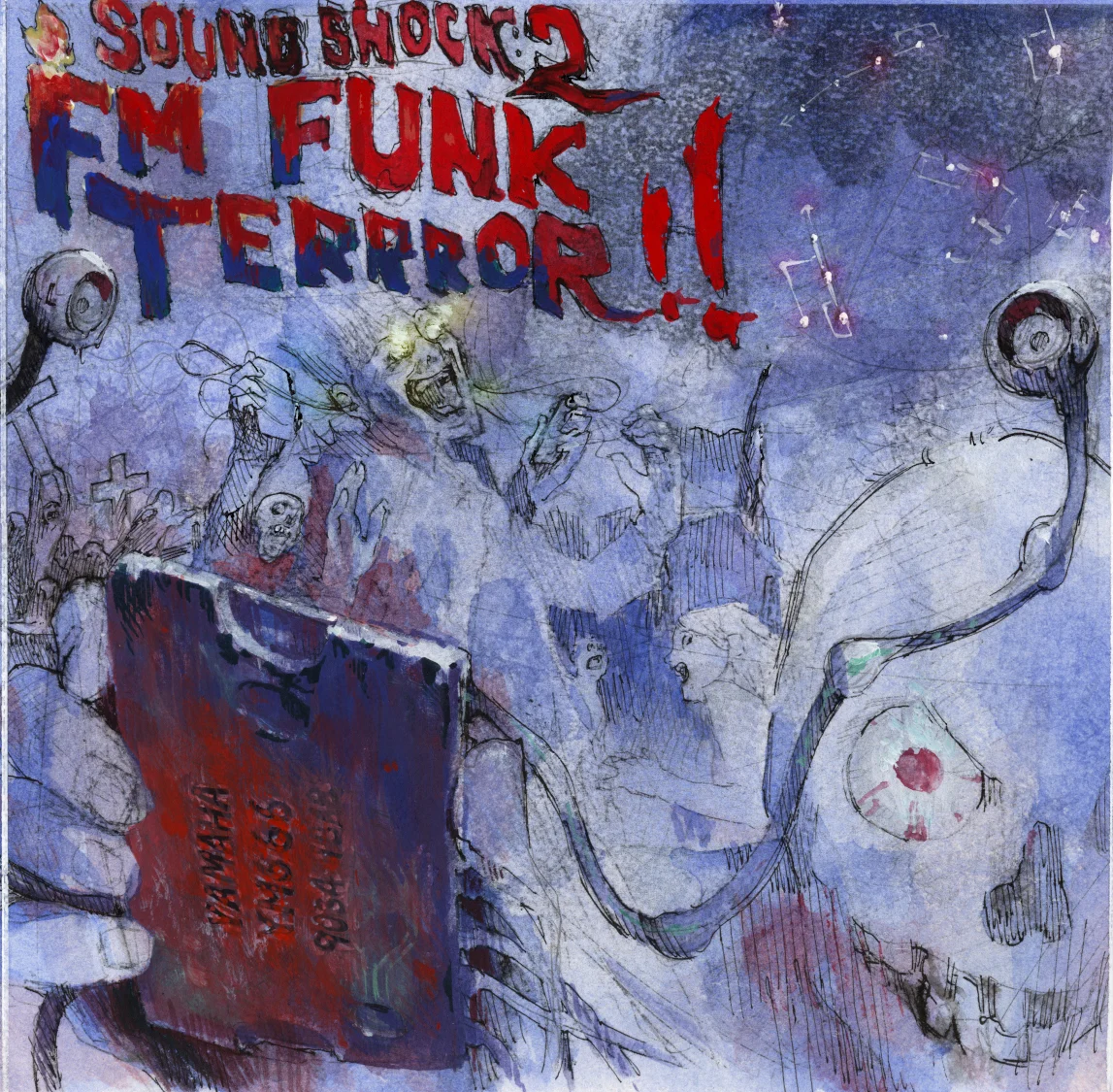
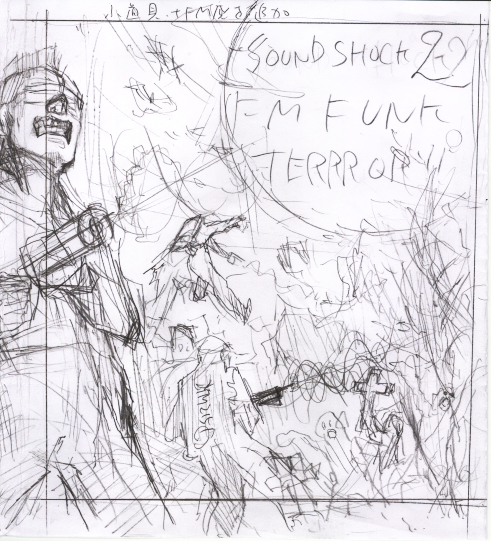
For the second installment, the creative direction pivoted toward the horror aesthetic. The production team provided Shimokura with an archive of 1980s horror cinema posters, ranging from the Nightmare on Elm Street series to regional cult classics, alongside visual references from games like the Splatterhouse series. The resulting artwork was a complex, layered composition featuring a lead ghoul figure adorned with a custom-modified, gravestone-themed music player. This period of the collaboration was marked by an iterative process lasting several weeks, resulting in a dense narrative where the stars in the night sky were arranged to mirror actual FM algorithm schematics.
Phase III: FM FUNK NIRVANA!!
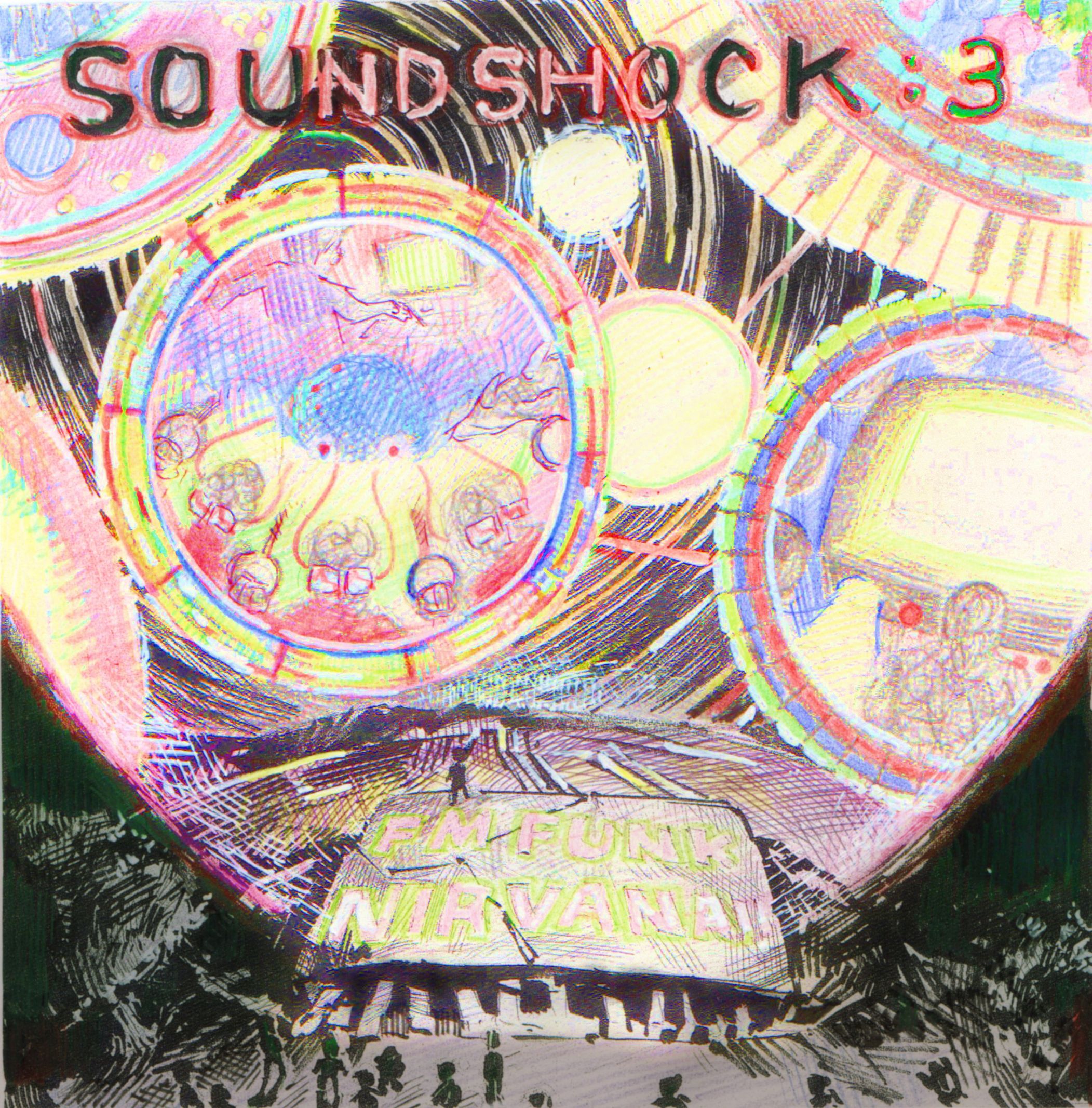
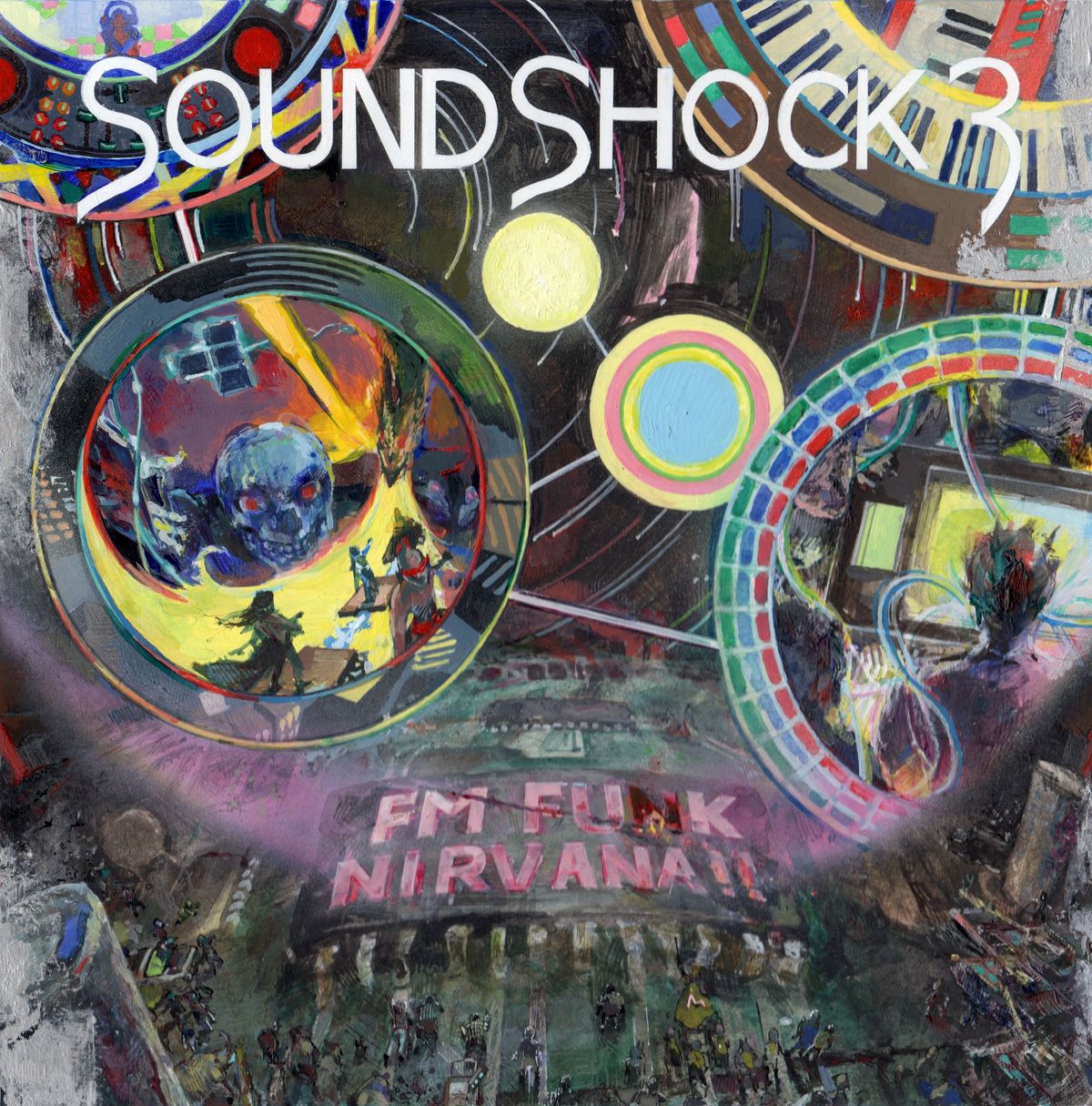
The final album, NIRVANA, represented a departure from the action and horror themes of its predecessors, opting instead for a conceptual and spiritual tone. The title itself was a deliberate choice influenced by audience feedback and a desire to represent the "ultimate" state of the series. Shimokura’s final cover art utilized the concept of a mandala—a geometric configuration of symbols—to represent the universe of FM sound. The artwork features a group of disciples gathered in worship before a massive FM chip, with the upper portion of the canvas serving as a spiritual map. This imagery was intended to symbolize the conclusion of the series as not a termination, but a transition of legacy.
Artistic Philosophy and Cultural Implications
The SOUNDSHOCK series stands as a unique intersection of Japanese manga-influenced illustration and digital music preservation. Shimokura’s contributions were not merely decorative; they functioned as a secondary narrative layer that explained the music to the listener.
The "official" interpretation of the series, as provided by the artist upon the release of the final volume, frames the project as a cycle of rebirth. Shimokura noted: "Supposing SOUNDSHOCK really has struck a chord in its listeners’ hearts, then our work could be thought of as a seed for future stars that have yet to be born." This perspective suggests that the project was intended to serve as a bridge between the classic FM sound era and contemporary electronic music producers. By honoring the technical limitations and aesthetic sensibilities of 80s and 90s hardware, the series fostered a community of "believers in FM sound" who viewed the technology as an enduring medium rather than an obsolete tool.
Technical and Aesthetic Analysis
The success of this collaboration can be attributed to the close alignment between the audio and visual departments. In the case of the first two albums, the team engaged in deep, weeks-long discussions regarding motifs and world-building. For the third, the team allowed Shimokura the creative freedom to follow his own intuition, leading to a more abstract and esoteric final product.
The inclusion of prototype sketches, rough drafts, and early concept art in the documentation of these releases provides an invaluable look at the creative labor involved in independent digital media. The transition from the "active" heroism of the first album to the "meditative" conclusion of the third highlights a clear, intentional arc in the series’ storytelling. Furthermore, the decision to retain the "extra letter" naming convention for the first two albums (MADDNESS, TERRROR) while opting for the singular, powerful "NIRVANA" shows a sophisticated understanding of branding and linguistic impact.
Broader Impact on Independent Music Culture
The legacy of the SOUNDSHOCK project extends beyond its audio content. It highlights the importance of cohesive visual identity in establishing a brand within the competitive landscape of digital music. By prioritizing the artist’s personal narrative and the specific cultural history of FM synthesis, the team created a product that resonated on both an intellectual and emotional level with its audience.
The project also served as a catalyst for local community engagement, as evidenced by the interpersonal relationships formed during the project’s lifespan, such as the professional tours of Osaka’s boutique game centers conducted by Shimokura. These human elements, while peripheral to the music itself, are central to the culture of the scene that supported the series.
As of April 2017, the conclusion of the SOUNDSHOCK series leaves behind a definitive case study in how niche digital art can achieve longevity through intentional, high-quality visual presentation. The work of Tsuyoshi Shimokura remains a vital point of reference for those looking to merge the technical rigidity of digital audio with the fluid, expressive potential of traditional illustration. The series serves as a testament to the idea that even in the digital age, the "human touch"—the deliberate, hand-crafted detail—is what transforms a collection of audio files into a lasting cultural artifact.
Ultimately, the SOUNDSHOCK series achieved its goal of creating a "sacred space" for FM sound enthusiasts. By providing listeners with both a sonic experience and a complex visual framework, the producers ensured that their work would continue to be discussed and analyzed by enthusiasts of retro-gaming and electronic music for years to come. The "seeds" planted by the project, as described in Shimokura’s final message, continue to influence the next generation of composers and artists working within the sphere of classic synthesis.