 Vera Clarissa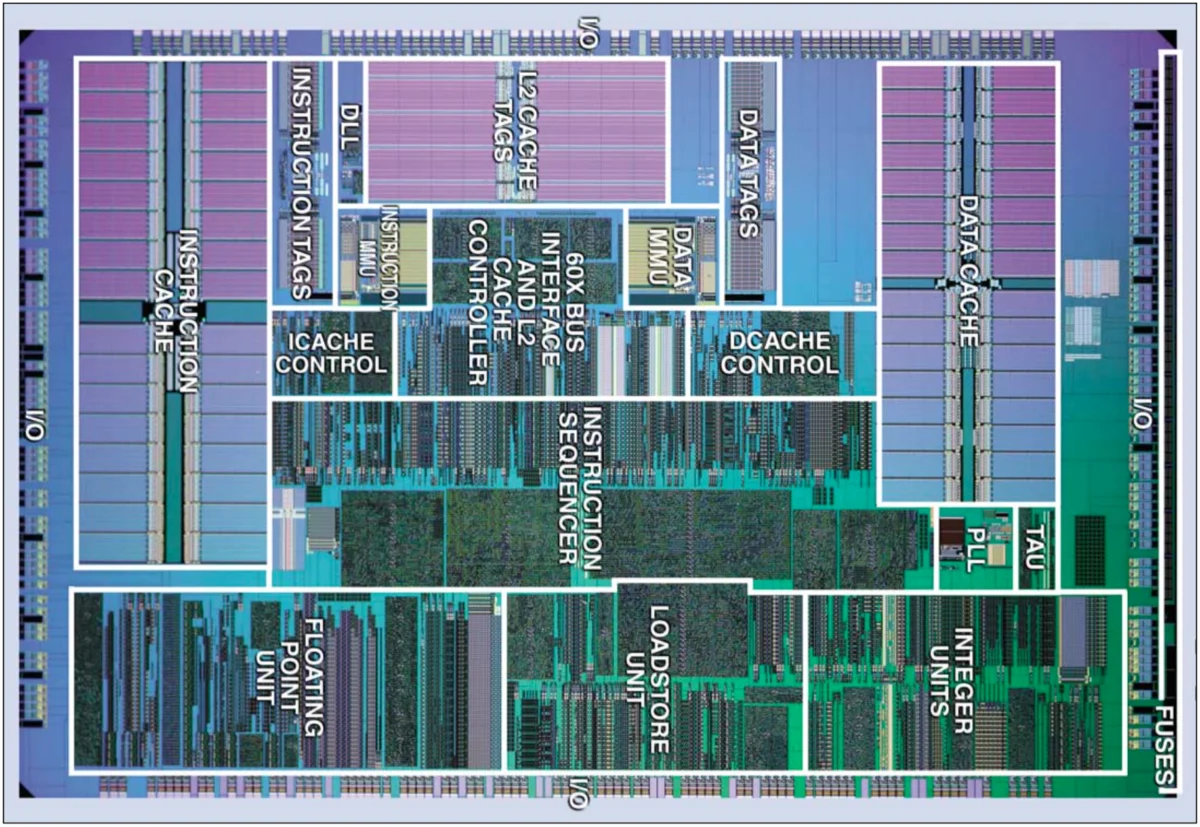
The PowerPC G3 processor, a 32-bit architecture jointly developed by IBM and Motorola, represents a foundational chapter in the history of personal computing. Spanning the years 1997 through 2003, this processor family served as the engine for Apple’s resurgence during a period of significant corporate instability. By departing from the earlier 603e and 604e designs, the G3 series introduced a streamlined, high-efficiency approach that redefined the performance-per-watt metrics of the late 1990s. Its introduction facilitated a shift in Apple’s hardware strategy, moving away from complex, power-hungry designs toward a more elegant, cache-optimized architecture that would eventually underpin iconic machines like the Power Macintosh G3 and the original iMac.

Architectural Evolution and the Shift from 603e
To understand the impact of the G3 (technically the PowerPC 740/750), one must look at its predecessor, the PowerPC 603e. While the 603e was a commendable effort in power management, it lacked the computational headroom required for the increasingly demanding multimedia tasks of the late 90s. The G3 was designed to bridge the gap between the low-power 603e and the more aggressive 604e.

Engineers at IBM and Motorola opted for a design philosophy that prioritized cache efficiency over sheer clock speed or brute-force execution width. The G3 architecture featured a second integer execution unit and a significant doubling of the L1 cache to 64 KB (32 KB instruction, 32 KB data). Perhaps most notably, the G3 incorporated dynamic branch prediction, an essential feature for maintaining pipeline throughput. By retaining the 4-stage pipeline, the designers achieved a balance that allowed for higher clock speeds without the thermal overhead that plagued competing architectures of that era.

The most critical innovation, however, was the dedicated L2 backside cache interface. In previous iterations, such as the 604e, the L2 cache performance was often bottlenecked by the system bus and the motherboard’s logic. By moving this cache to a dedicated, high-speed backside interface, the G3 processor could access critical instructions independently of the main system bus traffic. This architectural decoupling resulted in a massive real-world performance gain, effectively allowing the G3 to outperform more expensive processors in many standard computing environments.

Chronology of the G3 Generation
The G3 family was not a static entity but a rapidly evolving series of chips that tracked the rapid pace of semiconductor fabrication improvements.

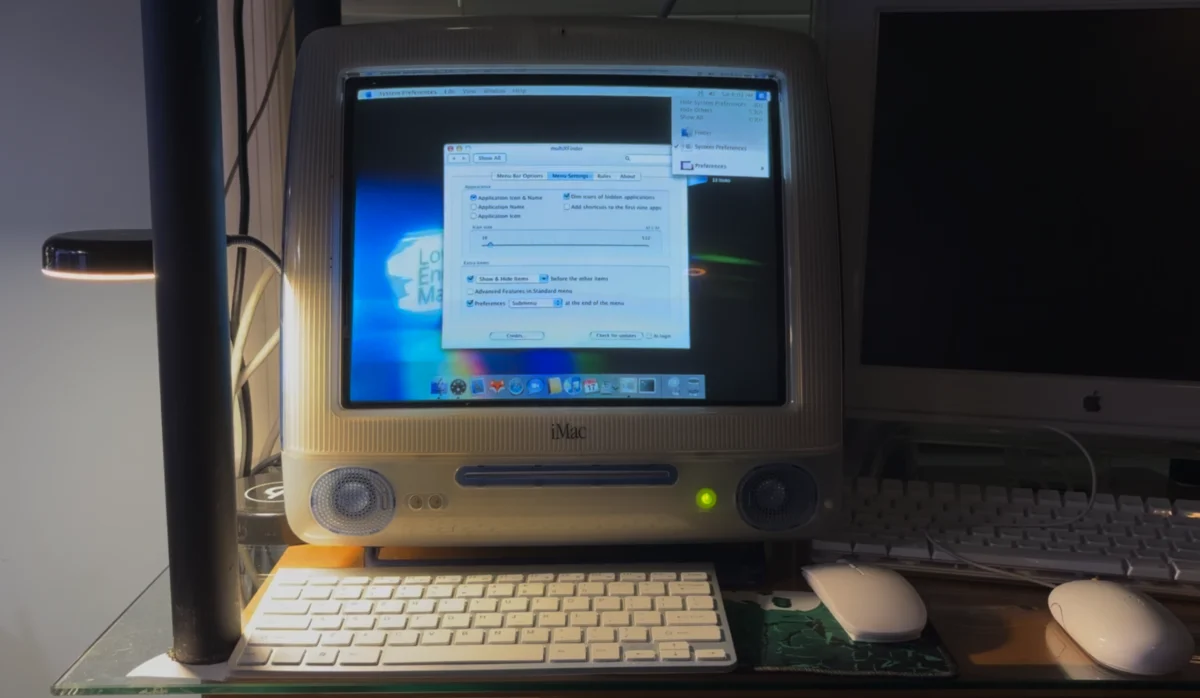
- 1997: The Launch of the 740/750 (Codename: Arthur): The initial G3 launch signaled a new era for Apple. These chips, produced on a 0.29-micron process, set the stage for the Power Macintosh G3 desktop and the introduction of the iconic Bondi Blue iMac in 1998.
- 2000: The 750CX (Codename: SideWinder): A pivotal release that addressed one of the main limitations of the early G3s—the lack of an integrated L2 cache. The 750CX brought 256 KB of L2 cache directly onto the silicon die, dramatically increasing reliability and performance by eliminating the signal degradation inherent in external cache implementations.
- 2001: The 750CXe: An incremental but essential update, the 750CXe moved the fabrication process to 0.18 microns, allowing for higher clock speeds and lower power consumption.
- 2002: The 750FX (Codename: Sahara): The final major evolution of the G3 family. Utilizing a 0.13-micron process, the 750FX featured 512 KB of on-die L2 cache and significantly improved power management features, including advanced thermal sensors and dynamic frequency scaling capabilities.
Technical Specifications and Data Analysis
The progression of the G3 family demonstrates the industry-wide transition toward higher transistor densities and lower voltage requirements.

| Feature | 740/750 (1997) | 750CX (2000) | 750FX (2002) |
|---|---|---|---|
| Process | 0.29 μm | 0.18 μm | 0.13 μm |
| Transistors | 6.35 Million | 20 Million | 38 Million |
| L2 Cache | External (Optional) | 256 KB (On-die) | 512 KB (On-die) |
| Power Draw | ~6W @ 233 MHz | ~5W @ 400 MHz | ~4W @ 600 MHz |
The data illustrates a clear trend: as the transistor count increased by a factor of six, the power draw per unit of performance decreased. This allowed Apple to design thinner, quieter, and more portable devices. The transition from external L2 cache to on-die cache was the single most important factor in the stability of the G3 platform. Prior to this, cache coherency issues had effectively barred the creation of multi-processor G3 systems. The 750CX finally resolved these hardware-level bottlenecks, allowing the architecture to mature into a reliable platform for the early 2000s.

Broader Impact on the Industry
The G3 processor’s influence extended far beyond the Apple ecosystem. Its inherent efficiency and cost-effectiveness made it an ideal candidate for embedded systems and gaming consoles. The most prominent example is the Nintendo GameCube, which utilized a modified version of the G3 architecture, known as "Gekko." The Gekko processor, running at 485 MHz, allowed Nintendo to deliver high-fidelity 3D graphics in a compact, consumer-friendly form factor that remained competitive for years.

Furthermore, the collaboration between IBM and Motorola during this period showcased the viability of a multi-vendor supply chain for high-performance RISC (Reduced Instruction Set Computer) architecture. While the industry was increasingly gravitating toward the x86 architecture championed by Intel and AMD, the G3 proved that RISC could remain relevant through specialized cache management and power optimization.

Challenges and Limitations
Despite its successes, the G3 architecture was not without its drawbacks. The primary limitation was its 32-bit address bus, which restricted total system memory to a maximum of 4 GB. While this was more than sufficient for the average user in 1997, it became a significant hindrance as computing needs shifted toward high-resolution digital media and memory-intensive applications in the early 2000s.

Additionally, the lack of an integrated GPU controller forced Apple to rely on external graphics cards for nearly the entirety of the G3’s lifecycle. While this allowed for modular upgrades, it increased the footprint of the logic board and necessitated more complex thermal management solutions within the chassis. Critics at the time often pointed to the inability of the G3 to scale to the clock speeds achieved by the competing Pentium III and Pentium 4 lines. By the time the 750FX was at its peak, the industry was already transitioning toward 64-bit architectures, rendering the G3 an evolutionary dead-end in the long term.

Legacy and Final Analysis
The legacy of the PowerPC G3 is defined by its role as a "rescue" architecture. It provided Apple with a platform that was both affordable to manufacture and sufficiently powerful to allow for the design of the iMac, the iBook, and the Power Macintosh G3. Without the G3, it is highly probable that Apple would have struggled to maintain its competitive edge during the late 90s, potentially altering the trajectory of the company during its most critical period of transition.

While the G3 was eventually succeeded by the G4 and G5 processors, the fundamental lessons learned during the development of the 750 series—specifically the importance of on-die cache and the balance between power consumption and computational output—became standard industry practice. Today, the G3 is viewed as a masterpiece of late-90s engineering, representing a moment in time when architectural efficiency was prioritized over sheer clock speed, resulting in some of the most iconic and beloved hardware in the history of personal computing.