Vera Clarissa
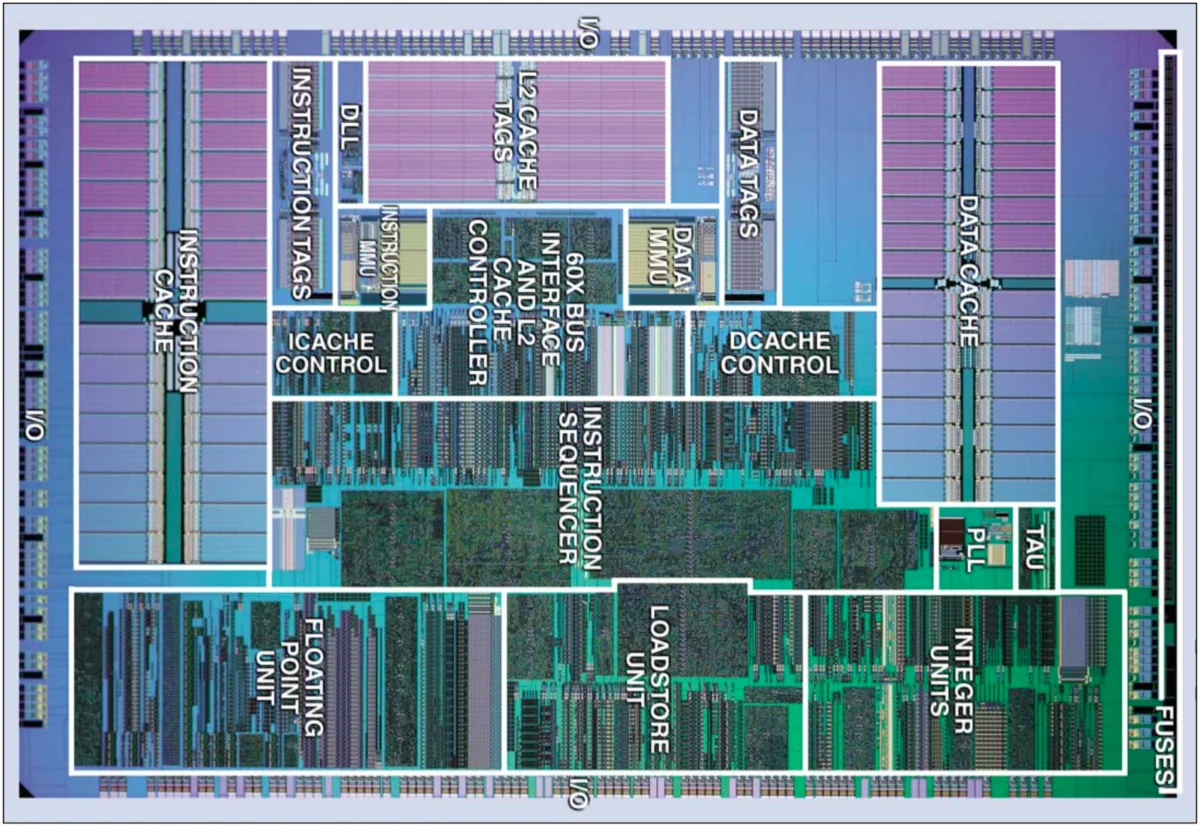
The PowerPC G3 represents a pivotal chapter in the history of personal computing, serving as the 32-bit engine that powered Apple’s resurgence between 1997 and 2003. Developed through a collaborative engineering effort between IBM and Motorola, the G3 family—encompassing iterations from the 740 and 750 to the advanced 750FX—was designed to offer high-performance computing while maintaining the power efficiency required for both desktop and portable Macintosh systems. By shifting away from the architectural limitations of the preceding 603e and 604e series, the G3 established a new standard for performance-per-watt that allowed Apple to regain its competitive footing during a critical period of market volatility.

The Architectural Genesis of the G3
At its core, the G3 (PowerPC 740/750) was a direct evolution of the PowerPC 603e. While the 603e was celebrated for its power efficiency, it often fell short in raw computational throughput compared to the more complex, high-power 604e series. Engineers at IBM and Motorola sought to bridge this gap by refining the architecture to handle modern software demands more effectively.

The G3 introduced significant improvements over the 603e, including a second integer execution unit, which allowed for greater parallel processing capabilities. Furthermore, the L1 cache was doubled to 64 KB (32 KB instruction and 32 KB data), providing the processor with faster access to frequently used instructions. Despite these advancements, the G3 retained the 4-stage pipeline of its predecessor. The defining technical innovation of the G3, however, was its dedicated L2 backside cache interface. Unlike the 604e, which often relied on the motherboard’s system bus for cache access—a bottleneck that limited performance—the G3 allowed the L2 cache to operate independently. This architecture significantly reduced latency and allowed the CPU to maintain high performance without requiring complex, power-hungry system board configurations.

Chronology of Development and Iterations
The G3 family evolved rapidly, reflecting the pace of the semiconductor industry in the late 1990s. The initial generation, codenamed "Arthur," launched in August 1997. It was an immediate success for Apple, appearing in the iconic "Beige" Power Macintosh G3 towers and the revolutionary PowerBook G3.

As the industry moved into the turn of the millennium, the manufacturing processes and feature sets matured:

- 1997: The 740/750 Debut. These chips set the baseline, moving to a 0.29-micron process with 6.35 million transistors.
- 2000: The 750CX. Codename "SideWinder," this iteration introduced a significant shift by integrating the L2 cache directly onto the die. This design solved the cache coherency issues that had previously hindered the development of dual-processor G3 configurations and improved overall system stability.
- 2001: The 750CXe. An enhancement of the CX, this version utilized a 0.18-micron process and pushed clock speeds higher, catering to the increasing demands of OS X and professional creative software.
- 2002: The 750FX. Codename "Sahara," this was the pinnacle of the G3 line. Built on a 0.13-micron process and boasting 38 million transistors, the 750FX offered significant power efficiency improvements and higher frequency headroom, marking the end of the line for the G3 architecture before the industry-wide shift toward the PowerPC G4 and eventually the G5.
Technical Specifications and Data
The evolution of the G3 architecture is best evidenced by the radical jump in transistor density and manufacturing precision. The jump from the 6.35 million transistors in the original 750 to the 38 million found in the 750FX illustrates the rapid pace of semiconductor shrinking.

| Feature | PowerPC 740/750 | PowerPC 750CX/CXe | PowerPC 750FX |
|---|---|---|---|
| Process | 0.29 – 0.20 μm | 0.18 μm | 0.13 μm |
| Transistors | 6.35 Million | 20 Million | 38 Million |
| L1 Cache | 64 KB | 64 KB | 64 KB |
| L2 Cache | External | Integrated | Integrated |
The memory architecture remained consistent throughout the generation, utilizing a 64-bit data bus and a 32-bit address bus capable of supporting up to 4 GB of RAM, depending on the specific logic board implementation. While the G3 lacked an integrated GPU, its high-speed bus allowed it to interface effectively with various graphics controllers, making it a versatile choice for both desktop workstations and mobile laptops.

Addressing Technical Limitations
One of the most persistent hurdles during the G3 era was the challenge of cache coherency. In early iterations, implementing a dual-processor configuration using an inline or backside cache was notoriously difficult. This technical constraint prevented the widespread adoption of dual-G3 Macs, a segment that Apple would later dominate with the G4 series. The industry consensus, reflected in technical documentation from the era, suggested that the G3 was primarily optimized for single-processor efficiency rather than multi-core scaling. It was not until the introduction of the 750CX that the integration of L2 cache onto the processor die finally resolved these coherency issues, though by that time, Apple was already beginning its transition toward the next generation of processors.

Broader Impact and Industry Implications
The PowerPC G3 was more than just a chip; it was a stabilizer for the Apple ecosystem. By offering a high-performance, cost-effective processor that was significantly more efficient than the competition, Apple was able to deliver products like the PowerBook G3, which redefined the portable computing market.

Furthermore, the influence of the G3 extended well beyond the Macintosh line. The architecture’s inherent efficiency and performance profile made it a highly desirable component for embedded systems and gaming consoles. The legacy of the 750 architecture can be found in several iconic gaming platforms of that era, where the G3’s ability to handle high-frequency tasks with low power draw proved instrumental in delivering consistent gaming experiences.

From an economic standpoint, the collaboration between IBM and Motorola provided a necessary buffer for Apple. By utilizing a shared architecture that was also being explored by other hardware manufacturers, Apple was able to benefit from economies of scale. The transition from the 0.29-micron process to the 0.13-micron process for the 750FX is a testament to the longevity of the design; few processor architectures of that era remained relevant for nearly five years without requiring a complete design overhaul.

Conclusion
The PowerPC G3 remains a benchmark for architectural longevity and strategic engineering. Its ability to scale from a basic 740 core to the advanced 750FX allowed Apple to maintain a consistent performance trajectory during a volatile period in its corporate history. While the industry eventually moved toward the higher-bandwidth, multi-core designs of the PowerPC G4 and G5, the G3’s emphasis on L2 backside cache performance and power-efficient execution set the blueprint for future processor designs.

Today, the G3 is remembered by enthusiasts and historians alike as the architecture that provided the foundation for the return of the Macintosh. Its success proved that innovation in cache management and instruction execution could produce a "best-in-class" processor, even when faced with the thermal and power limitations of the late 1990s. As a piece of computing history, the G3 serves as a case study in how targeted architectural refinements can extend the life and impact of a product line, ultimately shaping the evolution of the personal computer.