Indra Gunadi
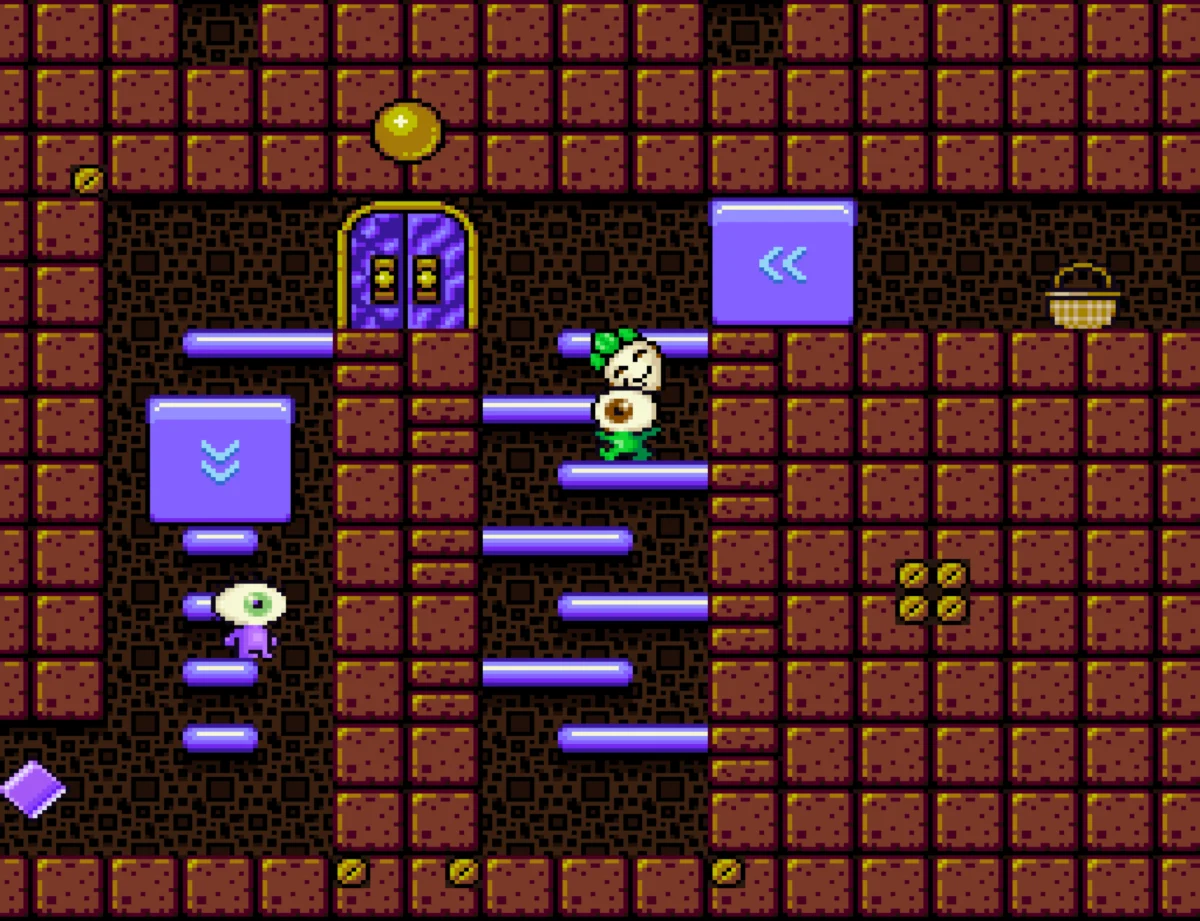
The landscape of retro gaming development continues to evolve as independent creators push the technical boundaries of 16-bit hardware. The release of Wink and Blink Get Lost in the Puzzle Dungeon, a new title developed by Max Oakland for the Super Nintendo Entertainment System (SNES), represents a significant milestone in the ongoing homebrew software movement. As the original console nears its fourth decade of existence, the emergence of high-quality, original software demonstrates both the enduring popularity of the platform and the sophisticated capabilities of modern developers working within the constraints of legacy hardware.
A New Chapter for 16-Bit Homebrew
Wink and Blink Get Lost in the Puzzle Dungeon introduces a unique cooperative puzzle-solving mechanic that leverages the specific architectural strengths of the SNES. The game centers on two titular characters, Wink and Blink, who navigate a series of intricate chambers. The core gameplay loop is defined by asymmetrical ability sets: Wink possesses the capacity to fire lasers, which interact with environmental triggers, while Blink is capable of throwing various vegetables to activate pressure plates and switches.
This synergy requires players to coordinate their actions precisely to progress through the dungeon. The game’s design choice to allow a second player to join at any moment by pressing START on the second controller is a nod to the arcade-style accessibility that defined the SNES era. This "drop-in" functionality ensures that the game remains fluid and responsive to the needs of the user, whether they are navigating the puzzle-heavy single-player campaign or engaging in cooperative play.
The Evolution of the SNES Homebrew Market
The SNES homebrew scene has seen a marked increase in output over the last five years. Unlike the early 2000s, when homebrew development was largely focused on emulators and basic software proofs-of-concept, the current generation of developers utilizes advanced toolchains, including custom assembly language routines and modern compilers that bridge the gap between contemporary programming environments and the 65816 microprocessor architecture.
Max Oakland’s project is emblematic of this shift. By focusing on mechanical depth rather than merely replicating the aesthetics of 1990s-era titles, the game provides a fresh experience for enthusiasts who have exhausted the original retail library of the console. The development timeline for such projects typically spans eighteen to thirty-six months, involving rigorous testing to ensure compatibility with both original hardware and the wide variety of modern flash cartridges and FPGA-based consoles, such as the Analogue Super Nt.
Technical Specifications and Hardware Constraints
Working within the limitations of the SNES is a feat of engineering that requires a deep understanding of the console’s PPU (Picture Processing Unit) and its limited memory overhead. The SNES, featuring a 3.58 MHz processor and 128KB of work RAM, necessitates efficient code management.
Data from the project indicates that the game utilizes optimized sprite handling to allow for the simultaneous movement of Wink and Blink without incurring the "flicker" or slowdown that plagued many poorly optimized games of the 1990s. The decision to use vegetable-throwing as a primary mechanic is not merely a stylistic choice; it serves to create distinct hitboxes and projectile arcs, challenging the developer to manage collision detection cycles effectively within the console’s tight frame-budget constraints.
The Significance of Collaborative Puzzle Design
The puzzle genre on the SNES has a rich history, with titles like The Lost Vikings and Fire Striker setting the standard for cooperative and multi-character gameplay. Wink and Blink Get Lost in the Puzzle Dungeon occupies this specific niche, offering a modern interpretation of the genre.
From an analytical perspective, the game’s design philosophy highlights the "Duo-Logic" school of puzzle design. In this framework, the environment acts as the third participant in the game. By tethering the player’s success to their ability to swap roles or coordinate laser-vegetable interactions, the developer creates a feedback loop that rewards communication. This design is particularly relevant in the modern era, where the revival of "couch co-op" has become a selling point for many independent games across all platforms.
Industry Impact and Market Reception
The release of this title signals a broader trend within the retro gaming community: the professionalization of homebrew. As physical media collectors continue to drive demand for boxed SNES releases, developers are increasingly partnering with boutique publishers to produce high-quality, authentic-feeling cartridges. While Wink and Blink Get Lost in the Puzzle Dungeon has launched in a digital capacity, the interest surrounding its release suggests a viable path toward physical production.
Market analysts following the retro-hardware segment note that the average age of the demographic investing in these titles is between 30 and 45. This cohort possesses both the nostalgia for the 16-bit era and the disposable income to support indie projects. Consequently, developers are no longer creating games just for hobbyist forums; they are catering to a sophisticated consumer base that demands polish, documentation, and replayability.
Chronology of Development
The development cycle for this project can be categorized into four distinct phases:
- Conceptualization (Q1 2024): Initial prototypes focusing on sprite movement and the core mechanic of laser-and-vegetable interaction.
- Technical Implementation (Q3 2024 – Q2 2025): The writing of the core game engine in 65816 assembly, focusing on memory management and sound driver integration.
- Refinement and Level Design (Q3 2025 – Q2 2026): Designing the puzzle rooms to ensure a steady difficulty curve. This phase involved extensive playtesting to ensure that the two-player dynamic did not lead to game-breaking exploits.
- Finalization and Release (Q3 2026): Final debugging, color palette optimization for CRT and modern displays, and digital distribution preparation.
Implications for Future Development
The success of titles like this one provides a roadmap for other developers. By prioritizing mechanical clarity over visual complexity, creators can bypass many of the technical hurdles associated with modernizing legacy hardware. Furthermore, the use of a simple, intuitive, and drop-in cooperative system makes the game accessible to casual players, expanding the potential audience beyond the hardcore homebrew enthusiast base.
As we look toward the remainder of 2026 and into 2027, it is likely that the "Puzzle Dungeon" sub-genre will see further expansion. The ability for the SNES to handle increasingly complex logic chains, thanks to improved development tools, means that the next generation of homebrew titles may feature even more elaborate mechanics, such as persistent world states or non-linear exploration.
Conclusion
Wink and Blink Get Lost in the Puzzle Dungeon (2026) is more than just a nostalgic homage to the 16-bit era. It is a modern piece of software that respects the history of the SNES while demonstrating that the console still has room for innovation. By focusing on the interplay between two distinct characters and their specific environmental interactions, Max Oakland has crafted a compelling experience that validates the ongoing relevance of the SNES in the modern gaming ecosystem.
Whether played solo, with the ability to switch between characters, or with a partner, the game stands as a testament to the creativity of independent developers. It confirms that as long as there is an interest in the platform, there will be creators capable of pushing the Super Nintendo Entertainment System into new, unexplored territory, proving that even a console from 1990 can provide a vibrant, contemporary gaming experience well into the late 2020s.