Vera Clarissa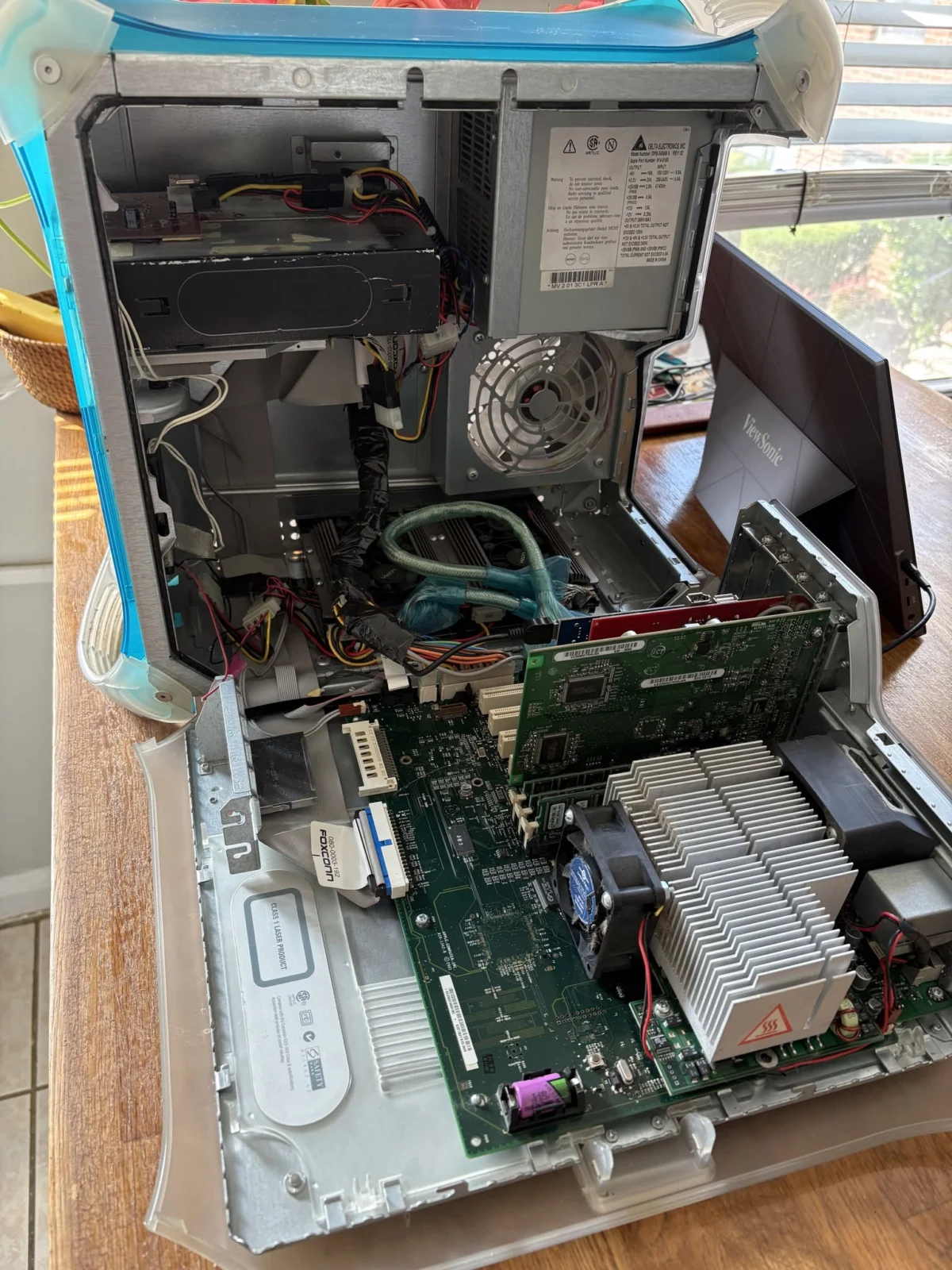
The intersection of classic industrial design and high-performance modification remains a vibrant frontier for the PowerPC enthusiast community, as evidenced by a recently surfaced project featuring a heavily customized Dual 800 MHz Power Mac G4 "Quicksilver." The machine, which blends the internal architecture of the early 2000s G4 era with the aesthetic sensibilities of the earlier Blue & White Power Macintosh G3, represents a growing trend in "case modding" that preserves vintage Apple hardware while modernizing its utility.
The Evolution of the Power Mac G4 Architecture
To understand the significance of this specific build, one must examine the hardware lineage of the Power Mac G4 series. Released in July 2001, the "Quicksilver" G4 was a landmark machine for Apple. It transitioned the Power Mac line away from the translucent "Graphite" aesthetic of the earlier G4s toward a more professional, industrial look characterized by a metallic finish and a refined front-panel design. The Dual 800 MHz configuration was, at the time of its release, a high-end workstation capable of handling demanding creative tasks in professional environments.
The internal architecture featured the Motorola PowerPC 7450 processors, a significant leap in efficiency and instruction-set architecture for the time. However, as the industry transitioned toward Intel processors in 2006, these machines were largely relegated to legacy status. The project highlighted in the current Low End Mac mailbag serves as a testament to the longevity of these machines, which continue to "chime"—the iconic startup sound of Apple hardware—decades after their production cycles concluded.

A Study in Customization and Retrofitting
The project submitted by the community member illustrates the technical challenges involved in modifying early 2000s hardware. The modification goes beyond mere cosmetic alterations, involving the integration of a custom gauge cluster and the physical reconfiguration of the front-facing plastic elements to mimic the Blue & White G3 chassis.
The G3 Blue & White, released in 1999, was the first Macintosh to feature the "towers of power" design that Apple would iterate upon until the transition to the aluminum Power Mac G5. By marrying the Quicksilver’s powerful dual-processor internals with the classic blue aesthetic, the builder has created a hybrid machine that effectively bridges two distinct eras of Apple’s design history. The addition of a gauge cluster—a common aesthetic upgrade in the custom PC community—suggests a desire to monitor system health and thermal performance in real-time, an ironic nod to the fact that these machines were once "sealed boxes" where such metrics were hidden from the average consumer.
Technical Hurdles in Vintage Computing
One of the primary obstacles facing users of legacy Apple hardware is the Apple Display Connector (ADC). The ADC was a proprietary interface that combined video, USB, and power into a single cable to simplify cable management for Apple’s line of flat-panel monitors. As the industry moved toward DVI, HDMI, and eventually DisplayPort, the ADC interface became a significant bottleneck.
The owner’s admission that they currently lack a monitor due to the ADC connector highlights a common pain point for vintage computing enthusiasts. Adapters exist, but they are often expensive or require specific power considerations, as ADC monitors drew their power directly from the GPU. This specific limitation serves as a barrier to entry, requiring hobbyists to either source period-correct displays or engineer complex signal conversion chains to utilize modern monitors.

Timeline of the Power Mac G4 Era
- 1999: Apple releases the Power Macintosh G3 (Blue & White), establishing the tower design language.
- August 1999: The original Power Mac G4 (PCI Graphics) is introduced.
- July 2001: The Power Mac G4 (Quicksilver) launches, introducing the redesigned chassis and the dual-processor capability that remains the foundation of this custom project.
- January 2002: The Quicksilver 2002 iteration arrives, pushing clock speeds further before the eventual transition to the "Mirrored Drive Doors" (MDD) design.
- 2006: Apple completes the transition to Intel, effectively ending the native support cycle for PowerPC-based machines in macOS.
- 2026: Enthusiasts continue to restore and modify these units, utilizing third-party software patches and hardware workarounds to keep the PowerPC architecture relevant for niche computing tasks.
Implications for the Retro Computing Community
The persistence of these projects speaks to a broader movement within the technology sector: the "Right to Repair" and the preservation of digital history. While the original article focuses on the aesthetic "fun" of the project, the underlying implication is one of sustainability. By repurposing the chassis and motherboard of a 2001-era computer, users are preventing e-waste and keeping functional hardware out of landfills.
Furthermore, the "hacking" of these machines—the modification of physical plastic and the potential for internal component upgrades—reflects a culture of ownership. Modern computing devices are often criticized for their lack of modularity and the difficulty involved in servicing them. In contrast, the Quicksilver G4 chassis is famous for its "side-door" access mechanism, which allows a user to lay the tower flat and open it like a book to access the motherboard, RAM, and expansion slots. This design remains a gold standard for accessibility in computer engineering.
Analysis of Modern Utility
While the Dual 800 MHz Power Mac G4 is objectively obsolete for contemporary web browsing or media consumption, it remains a valuable tool for specific, high-intent use cases. Many enthusiasts use these machines for "retro-gaming" (running Mac OS 9 or early versions of OS X), MIDI music production, and as servers for legacy networking protocols.
The community’s reaction to such projects is generally one of appreciation for the craftsmanship involved. By modifying the physical exterior, the user is not just restoring a computer; they are engaging in a form of industrial sculpture. The inclusion of a gauge cluster implies a shift from seeing the computer as an appliance to seeing it as a performance instrument.

Conclusion: The Future of Legacy Hardware
As we move further into an era of cloud computing and AI-driven software, the appeal of local, physical, and modifiable hardware only grows. The Dual 800 MHz Quicksilver G4, once a high-performance workstation for the creative professional, has transitioned into a "hobbyist platform."
The project highlighted here is not merely about a vintage computer; it is about the intersection of art, engineering, and the refusal to let legacy technology fade into obsolescence. As long as there are enthusiasts willing to bridge the gap between proprietary connectors and modern displays, and as long as there is a desire to see what lies inside the "towers of power," these machines will continue to find a place on desks across the globe. The ongoing dialogue within the Low End Mac mailbag serves as a vital record of this dedication, ensuring that the history of Apple’s design evolution remains not just documented, but actively used and enjoyed.