Vera Clarissa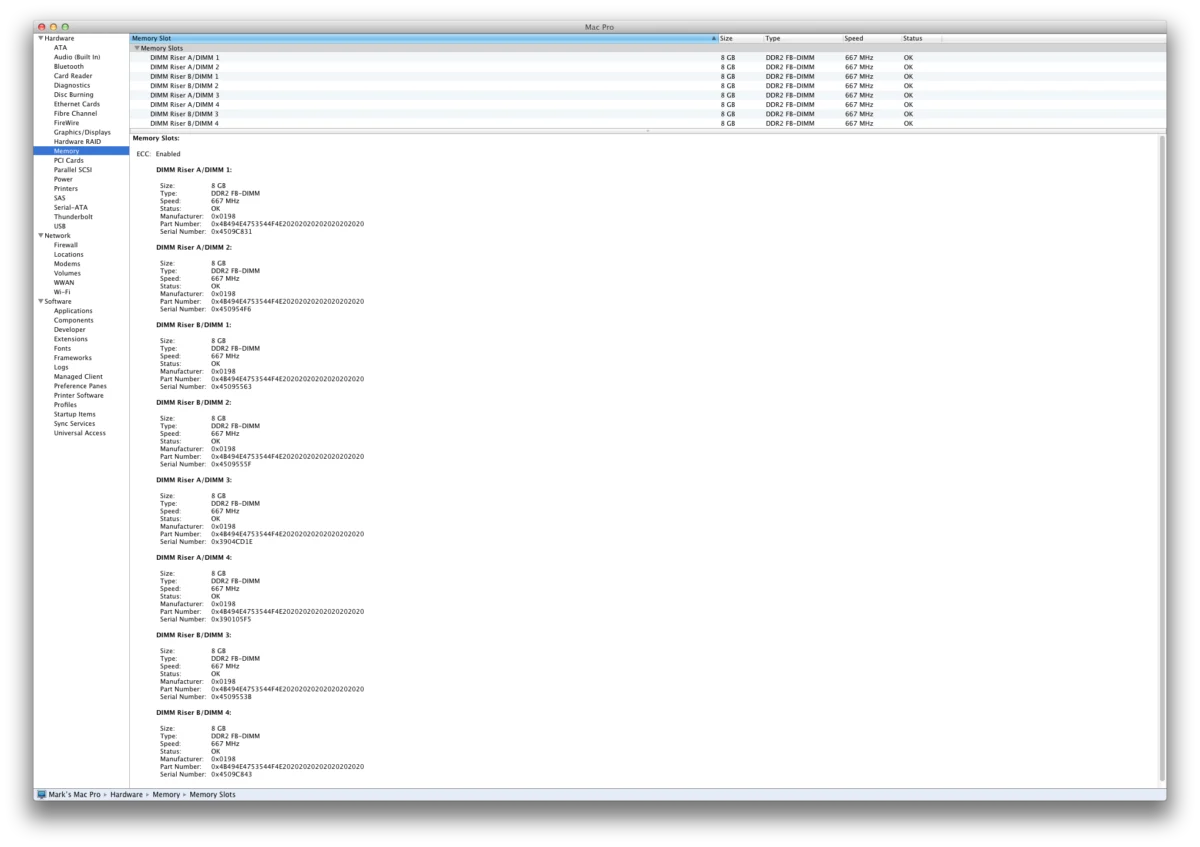
The Evolution of the Mac Pro Memory Ceiling
The Mac Pro 1,1 and 2,1 series utilized the Intel 5000X chipset, a platform designed to offer workstation-grade stability. In the mid-2000s, 16GB was an exorbitant amount of memory for most professional workflows, and the official documentation from Apple reflected the standard hardware configurations of the time. Throughout the 2010s, as memory density increased and the cost of server-grade components dropped, users began experimenting with higher-capacity modules.

The initial transition from the standard 16GB to 32GB was the first milestone, confirming that the Intel 5000X chipset could address more memory than Apple had initially documented. By 2018, the community achieved the "64GB breakthrough." This was not merely a software trick but a physical hardware modification—or rather, a specific selection of RAM modules—that allowed the system to recognize eight 8GB sticks.
Technical Architecture and Limitations
To understand why the jump to 64GB is significant, one must examine the memory architecture of these machines. The Intel 5000X chipset supports a total of 16 physical RAM slots in its enterprise implementations, but the Mac Pro tower is restricted to eight slots, arranged in two branches. Each branch supports two channels, and each channel accommodates two DIMMs.

The memory interface utilizes FB-DIMMs, which include an Advanced Memory Buffer (AMB). This buffer allows for higher reliability through error correction (ECC) and high-speed communication with the memory controller. However, these modules are notorious for high power consumption and significant heat generation. When populating all eight slots with 8GB modules to reach the 64GB threshold, thermal management becomes a critical operational factor. Users must ensure that the airflow within the chassis remains unobstructed, as the heat output from 64GB of FB-DIMM RAM can lead to system instability if the internal fans are not operating correctly or if the heatsinks on the RAM are improperly seated.
Identifying Compatible Hardware: The 2Rx4 vs. 4Rx4 Distinction
The most critical barrier to success in this upgrade is the physical architecture of the RAM module itself. Through years of testing and community reporting, it has been established that the Mac Pro 1,1 and 2,1 are strictly compatible with 2Rx4 (dual-rank) memory modules.

The 4Rx4 (quad-rank) modules, while often cheaper and more abundant in the surplus market, are fundamentally incompatible with the memory controller on these specific logic boards. Attempting to boot the system with 4Rx4 modules will result in a "no-post" state, where the machine fails to initialize the boot sequence. This is a common pitfall for those purchasing bulk server memory from aftermarket vendors. Users are advised to verify the label on each module for the "2Rx4" designation, typically paired with the PC2-5300F specification. Brands like Micron and Kingston have shown high reliability in these configurations, whereas other manufacturers may exhibit varying degrees of success or failure based on the specific revision of their memory chips.
Chronology of the 64GB Project
- 2006–2007: Apple releases the Mac Pro 1,1 and 2,1, with official specs limiting RAM to 16GB.
- 2010–2015: Enthusiasts begin documenting 32GB configurations on forums, signaling the chipset’s ability to handle higher capacities.
- 2017: Initial attempts at 64GB configurations face high failure rates due to the prevalence of incompatible 4Rx4 modules.
- 2018: Successful, repeatable 64GB builds are documented, shifting the standard for "maxed-out" legacy Mac Pro builds.
- 2024–2026: Continued maintenance of these machines confirms that 64GB remains a stable configuration for legacy workloads, provided that power-efficient, 2Rx4-compliant memory is utilized.
Implications for Legacy Computing
The ability to push the Mac Pro 1,1 and 2,1 to 64GB of RAM carries implications beyond mere curiosity. For professionals maintaining legacy software environments—such as specific CAD, audio production, or data processing suites that require older versions of macOS or Linux—this upgrade allows these machines to remain viable.

The primary constraint now is no longer the memory capacity, but the speed of the DDR2 standard and the thermal overhead of the FB-DIMM architecture. While 64GB of RAM is theoretically sufficient for many modern tasks, the processor speed of the original Xeon CPUs acts as a bottleneck. However, the upgrade serves as a testament to the longevity of Apple’s "cheese grater" chassis design, which allowed for modular upgrades long before the industry trend shifted toward soldered-on components.
Best Practices for Implementation
For those intending to perform this upgrade today, the following protocols are recommended:

- Verification: Always inspect the module labels. PC2-5300F 2Rx4 is the target specification.
- Firmware Considerations: Ensure the Mac Pro 1,1 has been successfully flashed to the 2,1 firmware. This is essential for accessing higher-performance processor options and improved stability with larger memory pools.
- Thermal Maintenance: Clean the internal memory risers and ensure that the memory fan assembly is functioning at peak capacity. FB-DIMMs run hot, and 64GB of them will significantly increase the thermal load on the internal components.
- Gradual Installation: It is often safer to install the RAM in pairs (or full sets of four) and verify that the system boots and reports the memory correctly before moving to the full 64GB capacity.
Conclusion
Expanding the Mac Pro 1,1 and 2,1 to 64GB of RAM is a viable, albeit hardware-specific, project that effectively quadruples the original official capacity. While the process requires a precise selection of components—avoiding the common trap of 4Rx4 modules—the results offer a tangible performance improvement for legacy systems. As these machines move further into the vintage category, the documentation of these limits ensures that the community can continue to preserve and utilize this era of computing history. The success of this modification confirms that the Intel 5000X chipset was significantly more capable than its early retail documentation suggested, allowing these workstations to serve their users for nearly two decades past their original design life.