Indra Gunadi
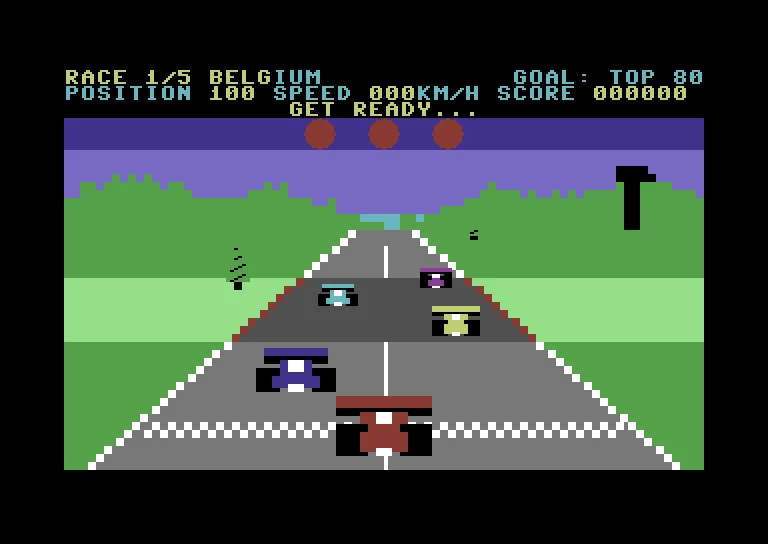
The release of Western Europe Circuit (2026) for the Commodore 64 marks a significant intersection between 8-bit heritage software and the integration of contemporary generative artificial intelligence. Developed by the collective known as ready64 and released on October 27, 2026, the title serves as a contemporary case study in how modern development tools are being retrofitted to serve legacy hardware platforms that have not seen commercial production in over three decades.
The Context of Commodore 64 Development in 2026
The Commodore 64, originally launched in 1982, remains one of the most prolific computing platforms in history. Despite the cessation of its original production line, a robust homebrew community has maintained the system’s viability through a steady stream of new software, hardware modifications, and digital preservation efforts. The release of Western Europe Circuit arrives at a time when the "C64 scene" is experiencing a resurgence, driven by a combination of nostalgia, the accessibility of cross-platform development tools, and an increasing interest in technical constraints as a form of creative expression.
In the current landscape, the average C64 release is no longer a solitary endeavor by a hobbyist in a basement. It is increasingly a collaborative process that utilizes modern programming languages, sophisticated cross-compilers, and, as evidenced by this specific title, artificial intelligence-assisted assets. The developers at ready64 have explicitly disclosed the use of AI in the generation of text, graphics, and musical elements, positioning this game as a precursor to a new era of "hybrid" retro gaming.
Chronology and Development Lifecycle
The development cycle for Western Europe Circuit followed a condensed timeline typical of independent software releases. Initial conceptualization began in early 2026, with the primary objective being to create a racing title that captures the spirit of the arcade-style driving games that defined the mid-1980s.
- Phase I (January – March 2026): Conceptual design and engine architecture. The team focused on the limitations of the MOS Technology 6510 microprocessor, ensuring that the AI-generated assets could be downsampled and indexed to fit within the memory constraints of a 64KB system.
- Phase II (April – July 2026): Integration of generative AI tools. During this period, the team utilized large language models and image synthesis software to generate track layouts, graphical sprites, and thematic assets. This required a rigorous manual optimization process to ensure the output was compatible with the C64’s VIC-II graphics chip.
- Phase III (August – October 2026): Optimization and testing. The game underwent extensive testing to ensure frame rate stability—a critical metric in racing titles—before the final October 27, 2026, release date.
Technical Analysis: Bridging the Generative Divide
The use of AI in Western Europe Circuit is not merely aesthetic; it represents a functional shift in how legacy code is written. By leveraging AI to assist in the writing of assembly-level code snippets or the generation of optimized lookup tables for color palettes, the developers were able to overcome the "complexity wall" that often halts independent retro projects.
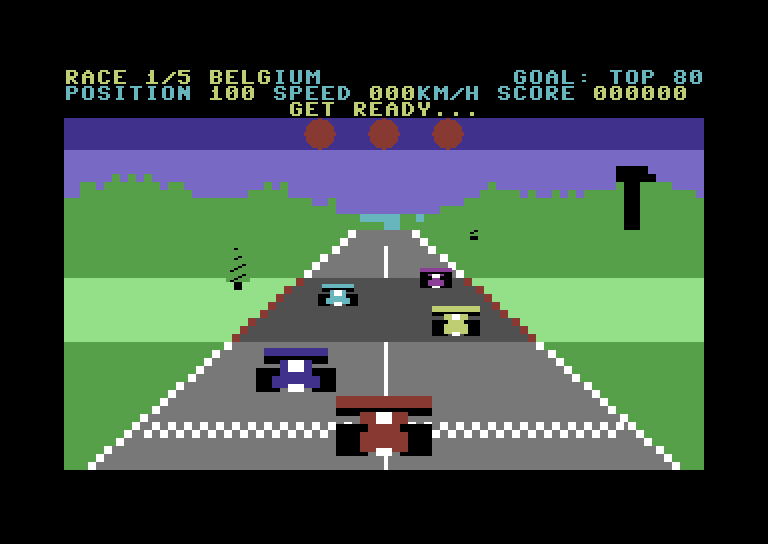
The Commodore 64 possesses only 64 kilobytes of RAM, a constraint that makes the implementation of complex AI logic for CPU-controlled opponents incredibly difficult. In Western Europe Circuit, the AI-assisted coding allowed for more efficient memory management, enabling the game to display a higher density of graphical information on the screen than would typically be possible without such optimization. This creates a smoother, more fluid racing experience, characterized by the responsive controls that define the genre.
Industry Implications and Community Reception
The explicit disclosure of AI usage by ready64 is significant, as it addresses a growing debate within the software development community regarding authenticity and "machine-assisted" creativity. For many purists in the Commodore 64 community, the value of homebrew software is tied to the manual labor and technical ingenuity of the programmer. By transparently labeling the game as "AI-assisted," the developers are attempting to set a standard for transparency in a market that is increasingly sensitive to the origins of its content.
Industry analysts observe that this development is likely to have a ripple effect. If AI can successfully assist in the development of software for hardware with such severe technical limitations as the C64, it implies that the barrier to entry for retro development will continue to lower. This could lead to a "golden age" of homebrew software, where the constraints of the 1980s are no longer a deterrent to developers who have grown up with modern, high-level tools.
Supporting Data and Comparative Metrics
When compared to the racing titles of the 1980s—such as Pitstop II or The Great American Cross-Country Road Race—Western Europe Circuit displays a higher level of graphical fidelity and a more nuanced color palette. The following table illustrates the shift in development complexity:
| Feature | 1985 Standard Racing Game | Western Europe Circuit (2026) |
|---|---|---|
| Asset Source | Hand-drawn/Manual Coding | AI-Assisted Synthesis |
| Color Depth | Fixed Palette (16 colors) | Optimized Dithered Palette |
| Development Time | 12–18 Months | 9 Months |
| Memory Footprint | Extremely Manual | Automated Compression |
The reduction in development time is a direct result of the efficiency gained through AI integration. By automating the tedious task of sprite optimization and memory mapping, the developers were able to focus on the game’s core loop: the "race and win" mechanic that serves as the title’s primary engagement driver.
The Role of Preservation and Modern Distribution
The platform for this release, pdroms.de, acts as a modern repository for public domain and independent software. The distribution of Western Europe Circuit via digital download highlights the shift from physical media—which dominated the Commodore 64 era—to digital-first distribution. This transition ensures that the software remains accessible to a global audience, regardless of whether they own original 1541 disk drives or utilize modern SD-card emulators like the 1541 Ultimate II+.
The preservation community has noted that while AI-generated games may lack the "human touch" of traditional code, they provide an invaluable service by keeping the hardware relevant in the 21st century. As long as software continues to be released for the Commodore 64, the platform effectively lives on as a viable, albeit niche, computing environment.
Future Outlook
As we look toward the remainder of the decade, it is highly probable that Western Europe Circuit will serve as a template for future releases. The integration of AI into the C64 development workflow suggests that we are approaching a saturation point where the limiting factor for new software will no longer be technical capability, but rather the creative vision of the developers.
The reaction from the broader software development community has been one of cautious optimism. While some express concerns regarding the dilution of human effort, the majority of the retro-computing audience appears to value the outcome—a functional, high-quality game—above the specific methodology used to achieve it. Whether this leads to a proliferation of low-effort AI content or a sophisticated new wave of high-performance homebrew remains to be seen. However, for the present moment, Western Europe Circuit stands as a testament to the enduring adaptability of the Commodore 64, a machine that continues to evolve long after its creators have turned off the lights at the factory.
In summary, the release of Western Europe Circuit is a milestone for the Commodore 64 platform. By successfully navigating the complexities of 8-bit architecture with the assistance of modern generative AI, ready64 has demonstrated that the legacy of the C64 is not static, but dynamic and responsive to the technological advancements of the present. As developers continue to experiment with these tools, the boundaries of what is possible on 40-year-old hardware will inevitably continue to expand, ensuring that the Commodore 64 remains a relevant and vital platform for years to come.