 Farhan hamdan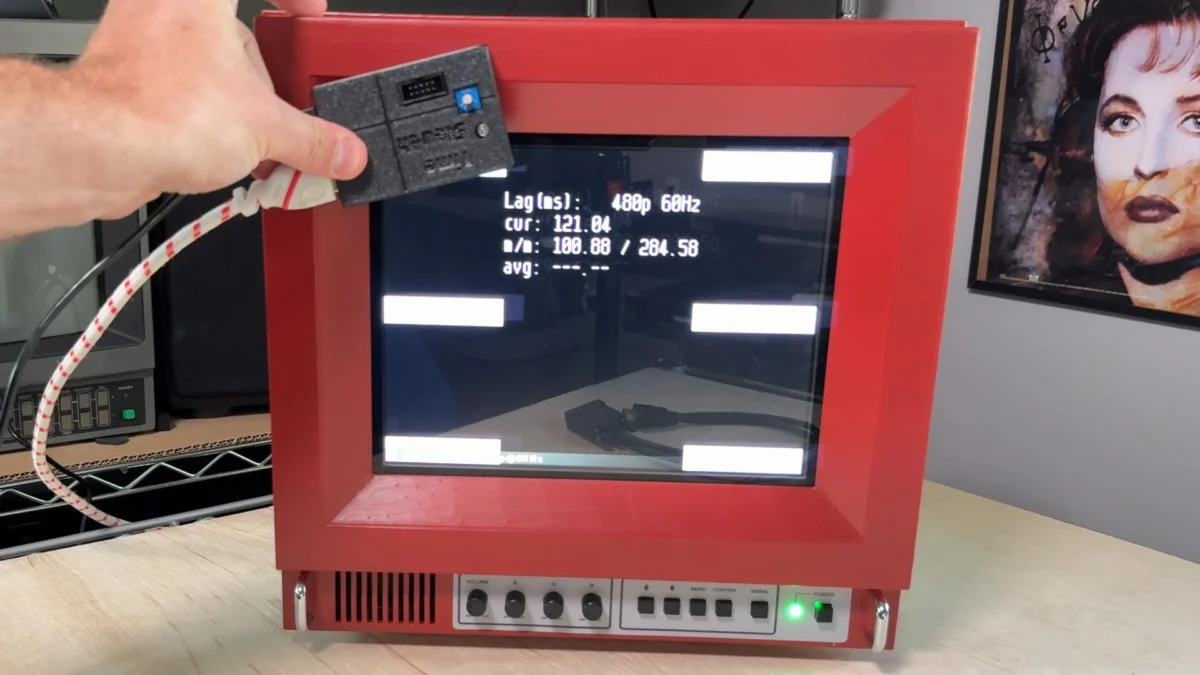
The crowdfunding campaign for Unico’s Traveller ULW10, a modern LCD-based display marketed as a "PVM-style" monitor tailored for retro gaming enthusiasts, has successfully crossed its funding threshold, securing approximately a quarter of a million dollars from backers. Alongside the campaign’s financial success, project organizers have issued a series of technical updates detailing a complete overhaul of the display’s internal hardware. Most notably, the company has introduced a newly designed driver board incorporating a Field Programmable Gate Array (FPGA). This redesign comes in direct response to heavy public criticism regarding an early, poorly performing prototype that was initially distributed to independent product reviewers prior to the launch of the crowdfunding initiative.
Despite the positive momentum generated by the hardware revisions, significant questions remain regarding the project’s production timeline, technical capabilities, and the transparency of the development process. Industry analysts and backers continue to scrutinize Unico’s aggressive delivery schedules and the paucity of empirical performance data, particularly concerning input lag and low-resolution video handling.
Background and Concept of the Traveller ULW10
The demand for authentic vintage display technology, such as Sony Trinitron Professional Video Monitors (PVMs) and Consumer Video Monitors (CVMs), has surged exponentially over the past decade. As original Cathode Ray Tube (CRT) displays age, suffer from component degradation, and become increasingly scarce, the retro gaming community has sought alternative hardware solutions that can replicate the geometric precision, vibrant color reproduction, and characteristic scanlines of classic 4:3 analog displays without the massive physical footprint and high maintenance requirements of CRTs.
Unico positioned the Traveller ULW10 as a contemporary solution to this niche demand. Designed as a portable, LCD-based 4:3 monitor, the product aimed to bridge the gap between modern flat-panel convenience and the aesthetic requirements of retro console gaming. The core value proposition of the Kickstarter campaign relied on promises that the monitor would authentically simulate vintage CRT visuals, handle standard-definition video formats, and provide an integrated solution for enthusiasts of 8-bit and 16-bit gaming systems.
However, the path from concept to realization has been fraught with controversy, testing the patience and trust of the crowdfunding community.
Chronology of Events and Prototype Controversy
The trajectory of the Traveller ULW10 project offers a notable case study in the complexities and pitfalls of modern hardware crowdfunding. The timeline of development highlights a pattern of aggressive marketing followed by reactive engineering changes:
- Initial Concept Phase: Unico announced the Traveller ULW10, outlining ambitious specifications regarding CRT simulation, aspect ratio management, and native support for legacy video inputs.
- Reviewer Embargo and Prototype Distribution: Prior to the formal launch of the Kickstarter campaign, Unico supplied early prototype units to prominent retro gaming tech reviewers and content creators.
- Public Backlash: The reviewed prototypes were widely criticized as severely underperforming, utilizing generic, off-the-shelf LCD driver boards entirely incapable of supporting the advanced features advertised in promotional materials. Reviewers publicly lambasted the hardware quality and performance discrepancies.
- Unico’s Initial Response: When confronted with the shortcomings of the review units, Unico representatives defended the state of the hardware by asserting that the fundamental spirit of Kickstarter is to crowdfund early concepts and rough prototypes rather than finalized retail products.
- Public Pressure and Engineering Pivots: Following sustained criticism from influential community figures and potential backers, Unico altered its development strategy, initiating a major hardware redesign aimed at incorporating custom processing architecture.
- Campaign Funding and Hardware Updates: The Kickstarter campaign successfully met its financial goals. Shortly thereafter, Unico published technical updates showcasing a newly engineered driver board featuring an FPGA and updated composite video handling capabilities.
Technical Analysis of the New Driver Board and FPGA Implementation
The introduction of an FPGA to the Traveller ULW10 architecture marks a critical turning point for the hardware’s technical viability. In their recent project updates, Unico showcased a redesigned circuit board that departs significantly from the generic components found in the initial review units.

An FPGA is an integrated circuit designed to be configured by a customer or a designer after manufacturing. In the context of display technology and video processing, an FPGA allows for low-level, hardware-accelerated manipulation of video signals. This capability is essential for implementing features such as custom scaling algorithms, precise aspect ratio conversions, and authentic scanline generation that mimics the physical phosphors of a CRT display.
During the initial marketing phase, Unico explicitly claimed that the Traveller ULW10 would be capable of simulating original CRT displays and traditional pixel art styles. Reviewers quickly pointed out that the generic LCD driver boards present in the prototype units lacked the processing power and flexibility required to execute these tasks, rendering the campaign promises technically impossible at the time. The inclusion of an FPGA addresses this fundamental architectural limitation, theoretically making advanced video processing features feasible.
Additionally, recent updates demonstrated the board’s ability to accept composite video inputs, specifically showcasing 480i signals. Composite video handling remains a notoriously difficult engineering challenge for modern displays due to the complex nature of separating luma and chroma signals without introducing severe artifacts or excessive processing latency. While the integration of an FPGA opens the door for proper signal decoding, hardware experts emphasize that the mere presence of an FPGA does not guarantee optimal performance. Real-world execution will depend heavily on the maturity of Unico’s proprietary firmware and software programming.
Outstanding Technical and Logistical Concerns
Despite the implementation of a more advanced driver board, several critical questions and potential red flags persist regarding the Traveller ULW10 project:
- Input Lag Verification: Input latency is the single most critical performance metric for retro gaming displays. Gamers relying on original hardware require near-zero latency to ensure that reflex-based titles remain playable. Unico has yet to publish comprehensive, standardized lag test data derived from the new FPGA-equipped board.
- 240p Signal Compatibility: While recent demonstrations confirmed composite 480i support, concrete evidence regarding native 240p processing—the foundational resolution for the vast majority of fourth-generation and earlier home consoles—remains limited.
- Delivery Timelines: The official Kickstarter campaign page continues to list an estimated delivery window targeting the end of the current calendar year. Given that the primary driver board has only recently transitioned from a redesign phase to initial testing, industry observers view this timeline as highly improbable. Hardware manufacturing, component sourcing, safety certification, and mass production typically require significantly more time than the remaining months in the stated schedule.
- Transparency and Accountability: Critics have questioned whether the substantial engineering pivot—specifically the adoption of the FPGA board—would have occurred organically had independent reviewers not publicly exposed the inadequacies of the initial prototype units.
Broader Industry Implications and Consumer Takeaways
The development cycle of the Unico Traveller ULW10 underscores a broader tension within the hardware crowdfunding ecosystem. Crowdfunding platforms like Kickstarter have increasingly shifted from incubators for innovative garage-style inventions to pseudo-retail storefronts where established companies market products that are already deep into development.
When companies utilize early-stage crowdfunding to validate market demand while simultaneously distributing sub-par pre-release hardware to media outlets, consumer confidence is inevitably strained. The willingness of Unico to alter its engineering roadmap in response to public technical critique demonstrates the efficacy of community oversight, but it also highlights the risks borne by early financial backers who commit capital before core hardware specifications are finalized and independently verified.
As the Traveller ULW10 moves closer to its projected manufacturing phase, the technical community remains cautiously observant. While the inclusion of an FPGA and redesigned composite video circuits provides a viable pathway toward delivering the product initially envisioned by backers, the absence of rigorous latency testing and the persistence of aggressive delivery timelines suggest that consumers should maintain realistic expectations. Ultimately, the success of the project will be judged not by its promotional campaign or its mid-development hardware revisions, but by the performance and reliability of the final units delivered to consumer doorsteps.