Farhan hamdan
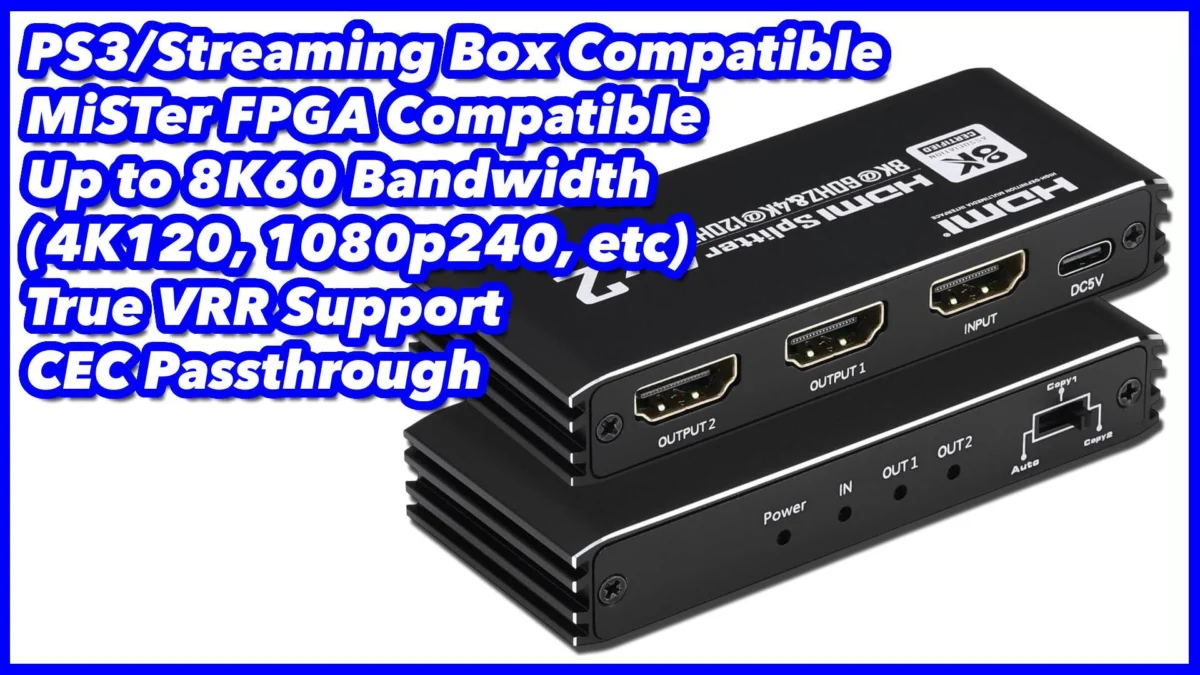
The consumer electronics and home theater marketplace has seen the introduction of a new high-performance 8K60 and 4K120 HDMI splitter that bridges the gap between ultra-high-definition modern displays and specialized legacy hardware. Designed to handle demanding signal paths, the device accepts up to 8K resolution at 60Hz and 4K resolution at 120Hz, while offering full support for variable refresh rate (VRR) technology. Beyond standard compatibility with modern streaming boxes and gaming consoles such as the PlayStation 3, testing has confirmed that the hardware operates seamlessly with the MiSTer FPGA, even functioning correctly when utilizing direct video modes.
As displays and source devices evolve, the demand for reliable signal distribution hardware has intensified. Modern gaming setups frequently incorporate a mixture of cutting-edge consoles, personal computers, high-refresh-rate monitors, and complex retro-gaming upscalers. Historically, hardware splitters struggled to maintain signal integrity when passing high-bandwidth data alongside non-standard or legacy timings generated by retro gaming equipment. This newly reviewed splitter introduces several advanced features—including built-in downscaling and Consumer Electronics Control (CEC) passthrough—making it a compelling option for enthusiasts managing mixed-resolution environments.
Core Technical Features and Performance Metrics
At the heart of the new splitter’s appeal is its robust handling of high-bandwidth signals. Capable of processing 8K video at 60 frames per second and 4K video at 120 frames per second, the hardware meets the specifications required by modern HDMI 2.1 ecosystems. This bandwidth capacity is essential for modern gaming platforms and high-end graphics cards that leverage high frame rates and adaptive synchronization technologies.
A standout utility feature of the device is its built-in downscaling capability. In multi-display configurations where a user connects a primary 4K display to one output and a secondary 1080p display to the other, the splitter manages the resolution disparity natively. This ensures that users do not have to compromise their primary viewing experience to accommodate older secondary monitors or capture cards. Furthermore, the inclusion of CEC passthrough allows users to control multiple interconnected devices using a single remote control, maintaining the convenience expected in contemporary consumer electronics setups.
Compatibility testing reveals that the splitter integrates effectively with modern hardware ecosystems. When paired with the RetroTINK-4K (RT4K), the unit successfully transmits complex signals, including true Variable Refresh Rate (VRR) modes, without noticeable degradation or handshake failures. This level of performance elevates the device to top-tier status among similar distribution hardware currently available on the consumer market.
Compatibility with Retro Gaming and FPGA Systems
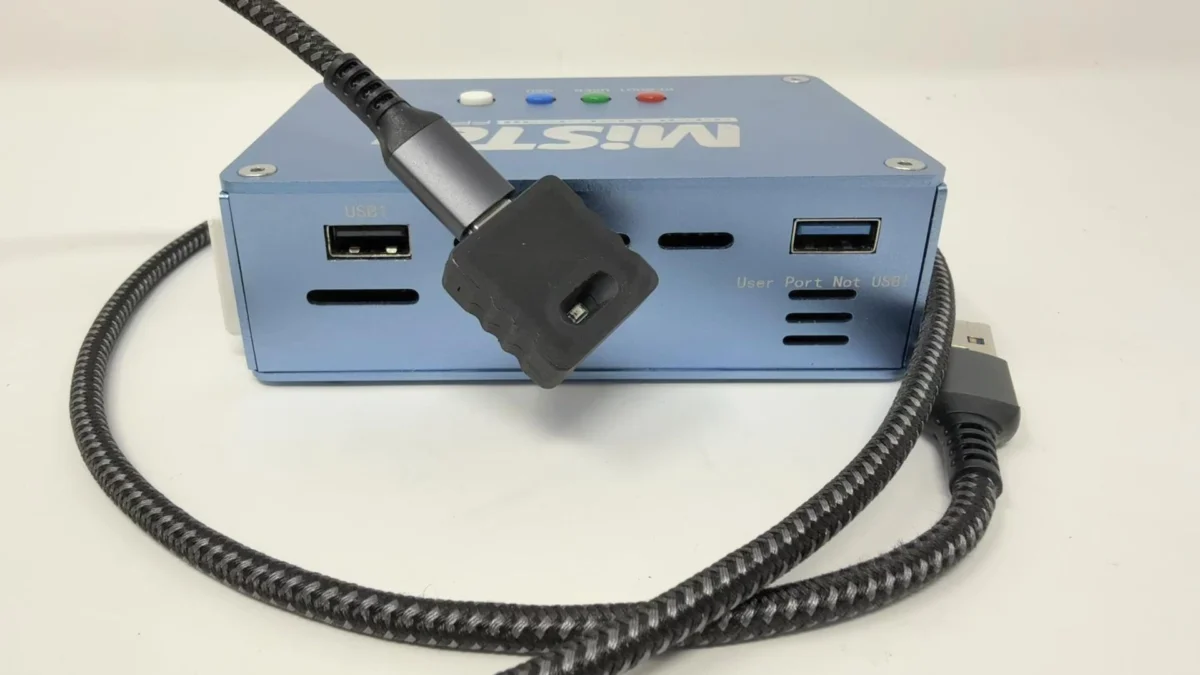
Despite its modern specifications, a critical point of evaluation for hardware of this nature is its behavior when handling legacy video signals, upscalers, and field-programmable gate array (FPGA) platforms. The MiSTer FPGA project, which replicates vintage computer and console hardware via hardware description languages, operates reliably through the splitter, even when configured for direct video output.
However, specialized testing indicates specific limitations when dealing with non-standard, line-multiplied signals. The splitter exhibited compatibility hurdles when processing unique signal types, such as 5x line-multiplied Super Nintendo Entertainment System (SNES) outputs derived from original Open Source Scan Converters (OSSC) or when running the Morph upscaler in its lowest latency configurations. While the unit processed standard low-latency tests—such as running the classic arcade title R-Type through the MiSTer platform—without issue, its aversion to specific line-multiplied retro formats suggests that users relying heavily on niche legacy upscaling profiles may encounter synchronization challenges.

These findings highlight a common engineering hurdle in HDMI distribution hardware: balancing the strict timing tolerances of modern high-bandwidth digital protocols with the eccentricities of analog-derived, line-multiplied retro video signals. While modern consoles and high-definition computers adhere strictly to standardized VESA or CEA timing parameters, vintage consoles processed through modern line multipliers often produce custom blanking intervals and pixel clocks that can stress downstream receiver chips.
Hardware Design Trade-Offs: EDID Management and Audio Extraction
To maintain a compact physical footprint, the manufacturer made specific design choices regarding Extended Display Identification Data (EDID) management and audio extraction capabilities.
The device features an integrated EDID selection switch, allowing users to influence how source devices negotiate resolution and audio formats with connected displays. However, the hardware lacks an advanced EDID spoofing mode found in some competing splitters. In previous-generation devices, spoofing allowed users to manually force specific output profiles, such as a permanent 4K resolution combined with Dolby Atmos audio codecs, regardless of the physical display’s capabilities. While the absence of built-in spoofing requires users to deploy external, inexpensive EDID emulators if such manipulation is required, the omission contributes to a smaller, more streamlined chassis.
Similarly, the splitter does not incorporate dedicated audio extraction ports, such as an optical S/PDIF output. For home theater enthusiasts or audio purists who rely on extracting multi-channel digital audio directly from the HDMI stream for older AV receivers or soundbars, this absence requires an alternative workflow. For users who prioritize audio extraction, older splitter models equipped with dedicated audio breakout ports remain the preferred choice. Conversely, users who do not require physical audio extraction benefit directly from the reduced physical dimensions and simplified signal path of the newer hardware.
Market Implications and Broader Industry Context
The introduction and evaluation of this 8K60/4K120 HDMI splitter arrive at a transitional period for home entertainment and gaming hardware. As the consumer market transitions away from legacy HDMI 2.0 infrastructure toward full HDMI 2.1 implementation, enthusiasts are frequently forced to choose between supporting ultra-high-definition, high-refresh-rate modern content and maintaining compatibility with legacy and retro equipment.
Historically, hardware accessories catering to retro gaming enthusiasts occupied a niche market, often separated entirely from mainstream consumer electronics. However, the rise of advanced FPGA platforms, high-end upscalers like the RetroTINK series, and universal modern display technologies has created a convergence. Consumers increasingly demand hardware that can seamlessly transition from streaming 8K media and playing modern 4K120 titles to processing 240p retro content routed through sophisticated digital signal processors.
Industry analysts note that signal distribution devices—such as splitters, switchers, and matrixes—form the invisible backbone of complex home entertainment and enthusiast setups. A failure in a splitter can introduce input lag, frame drops, audio desynchronization, or complete signal blackouts. Consequently, rigorous community-driven testing provides vital validation for hardware performance claims made by manufacturers.
The positioning of this specific splitter as a preferred option among hardware reviewers underscores the importance of real-world compatibility testing across diverse equipment chains. While the device is not entirely universal—notably struggling with certain line-multiplied retro signals—its core performance metrics, high-bandwidth capabilities, VRR support, and compact form factor make it a significant addition to the market for advanced display routing solutions. As display technologies continue to advance toward higher refresh rates and resolutions, the demand for robust, flexible, and backward-compatible signal management tools will remain a critical focus for both manufacturers and consumers.