 Farhan hamdan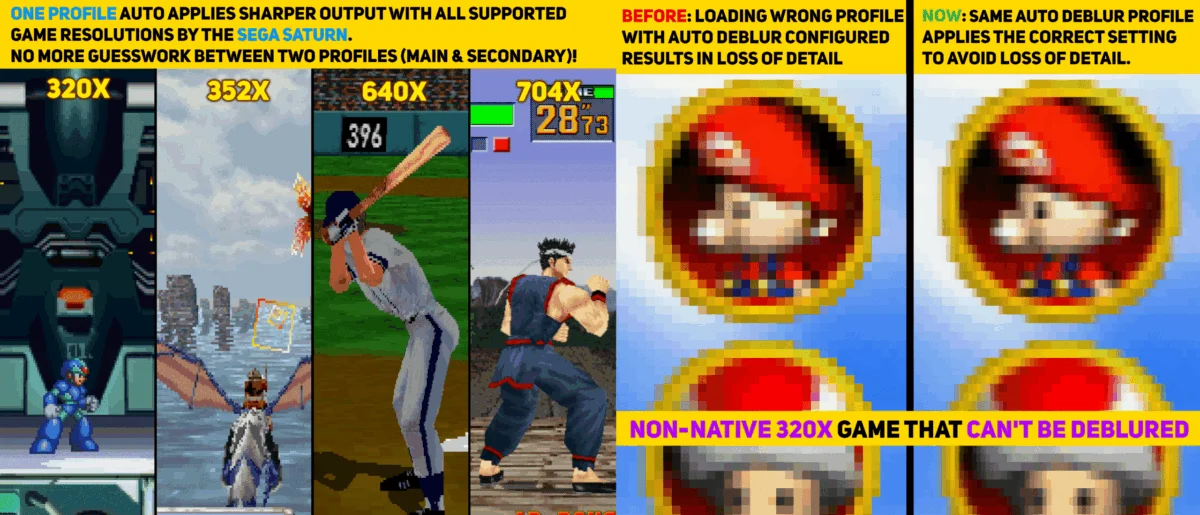
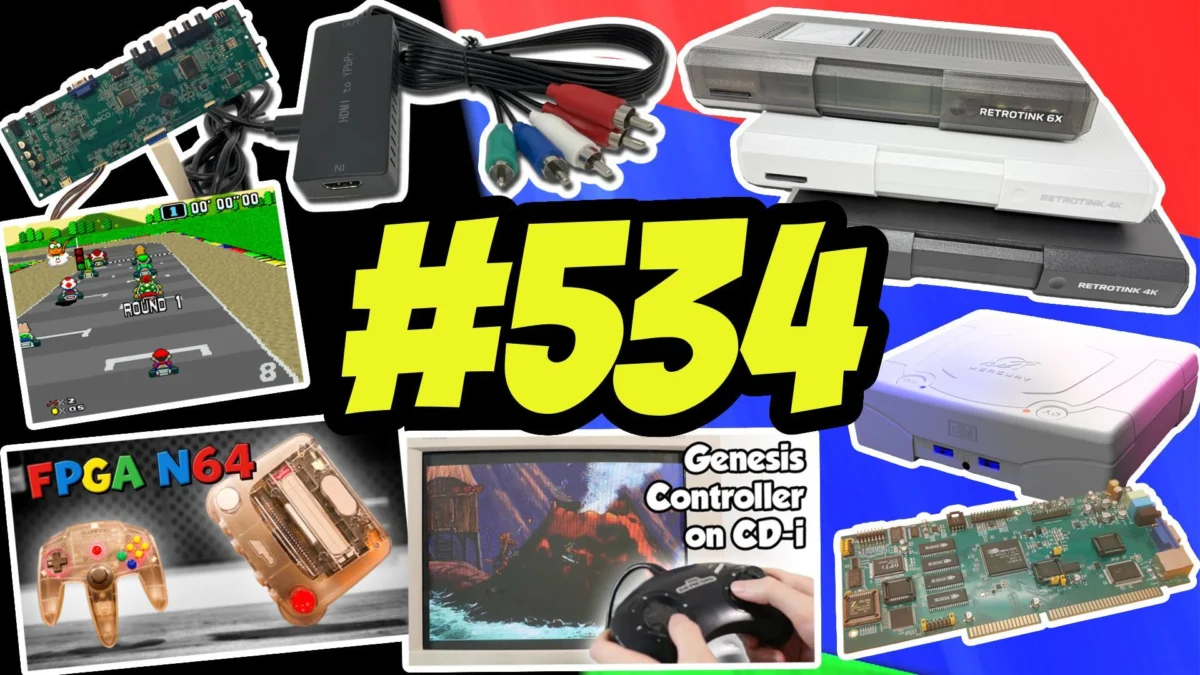
Over the past month, display scaling technology pioneer Mike Chi has rolled out a series of significant firmware updates for the RetroTINK-4K and RetroTINK-6X video processors. Operating alongside these system-level updates, prominent profile creator Wobbling Pixels has released a comprehensive new suite of configuration packs designed to maximize the hardware enhancements. Together, these updates introduce sophisticated automated detection algorithms, true Variable Refresh Rate (VRR) HDMI output, Automatic Low Latency Mode (ALLM) triggers, and enhanced S-Video decoding engines.
For retro gaming enthusiasts and professional archivists utilizing high-end upscaling hardware, these updates represent a major leap forward in signal processing accuracy, ease of use, and visual fidelity. While Chi officially classifies these system iterations as "experimental"—a designation meaning the software has not yet undergone extended long-term public vetting—the updates are entirely safe for hardware deployment, do not void manufacturer warranties, and allow users to revert to prior stable builds at any time.
Comprehensive Main Facts and Technical Additions
The latest firmware releases bring profound architectural changes to how the RetroTINK-4K and RetroTINK-6X handle analog and digital video inputs. Among the most notable improvements is the implementation of entirely new phase and decimation detection algorithms. Designed to operate automatically upon updating the system firmware, this enhancement delivers a sharper overall image and faster synchronization speeds without requiring manual user calibration.
Furthermore, the engineering teams have introduced a true Variable Refresh Rate (VRR) HDMI output mode compatible across all modern RetroTINK models. While users previously relied on enabling a basic VRR flag while locked to framelock or genlock standards, the new native mode utilizes dynamic frame length adjustments to directly mirror the incoming signal. This eliminates frame drops entirely and reduces display latency on compatible modern television sets and computer monitors.
To further streamline the user experience, the firmware now supports Automatic Low Latency Mode (ALLM). When connected to modern displays manufactured within the last several years, the RetroTINK will automatically broadcast a signal instructing the television to switch to its dedicated low-latency game mode, removing the need for manual remote control adjustments.
Hardware-Specific Enhancements for the RetroTINK-4K Pro
Owners of the flagship RetroTINK-4K Pro benefit from several exclusive upgrades, most notably a completely overhauled Enhanced S-Video engine. This updated architecture delivers vastly improved automatic luminance (luma) and chrominance (chroma) alignment across all sample rates. Users connecting legacy consoles via S-Video—particularly the Nintendo 64—can achieve pristine analog separation by routing signals through specialized rear adapter hardware.
Additionally, the RetroTINK-4K Pro now supports screen rotation for 720p, 480i, and 576i sources. This capability is particularly advantageous for arcade preservationists and vertical-orientation shooting game (shmup) enthusiasts who require precise display orientation controls without introducing scaling artifacts.
Wobbling Pixels Profile Packs and Streamlined Configuration

To harness the capabilities of the new firmware, configuration specialist Wobbling Pixels has published updated profile packs for both the RetroTINK-6X and RetroTINK-4K platforms. Installation procedures remain streamlined: users simply remove legacy configuration directories from their secure digital (SD) storage cards and copy the new folder structures into place.
The latest profiles introduce multi-resolution compatibility into single, unified configuration files. For hardware such as the Sega Saturn, this advancement removes the necessity for users to manually identify and select game-specific display resolutions, as the system handles scaling automatically.
The integration reaches a higher level of sophistication with the Nintendo 64. The updated profiles not only manage multiple resolutions seamlessly but also automate the application of de-blur filters. This automation prevents common user errors where de-blur settings are inadvertently left active or inactive, ensuring optimal visual clarity across every software title. Additionally, Wobbling Pixels has updated configuration profiles for the Nintendo Entertainment System (NES), Super Nintendo Entertainment System (SNES), Sega Genesis, and Sega Master System to incorporate razor-sharp 10x scaling modes.
Lumacode Decoder Updates and System Architecture
The latest firmware cycle also includes a crucial revision to the Lumacode decoder engine, extending advanced multi-console support across all compatible RetroTINK hardware. Because Lumacode integration represents a fundamental shift in how digital color signals are processed from modified classic hardware, users are advised to replace their existing system Lumacode directories on their SD cards with the newly provided iteration prior to executing the broader firmware update.
Chronology of Development and Distribution
The deployment of these features follows a structured release cadence typical of the high-end retro gaming hardware market. Mike Chi and associated developers continuously refine signal processing software based on community telemetry, hardware stress testing, and advances in FPGA (Field-Programmable Gate Array) programming.
- Initial Testing Phase: Core developers compile experimental builds focusing on low-level timing adjustments, phase detection, and decimation improvements.
- Community Collaboration: Profile creators such as Wobbling Pixels receive early access builds to design, test, and refine configuration packs that exploit new firmware hooks.
- Public Beta Rollout: Software packages are published via official GitHub repositories and community hubs, accompanied by changelogs and detailed installation instructions.
- User Deployment: End users download experimental packages, update their local SD card directories, and provide ongoing feedback regarding compatibility across diverse display types.
Broader Impact and Technical Implications
The introduction of true VRR and automated signal processing marks a mature phase in the evolution of retro video hardware. For decades, bridging the technical gap between analog 15kHz video signals generated by vintage consoles and high-resolution, fixed-pixel digital displays required complex, manual calibration. Users often needed deep technical knowledge of line multiplication, sampling phases, and aspect ratios to achieve an acceptable image.
By automating phase detection, unifying multi-resolution profiles, and introducing native low-latency handshakes like ALLM and true VRR, these updates lower the barrier to entry for high-end video processing. Gamers can achieve performance and visual fidelity that rivals professional broadcasting equipment without navigating dense configuration menus. Furthermore, the continuous refinement of hardware decoders ensures that investments in high-end processors like the RetroTINK-4K and RetroTINK-6X remain future-proof as display technologies continue to evolve.
As developers prepare comprehensive documentation and supplementary deep-dive analyses regarding complex architectural changes—such as the Lumacode engine overhaul—the retro gaming community continues to benefit from an active, iterative development model that pushes vintage hardware into modern display standards.