 Vera Clarissa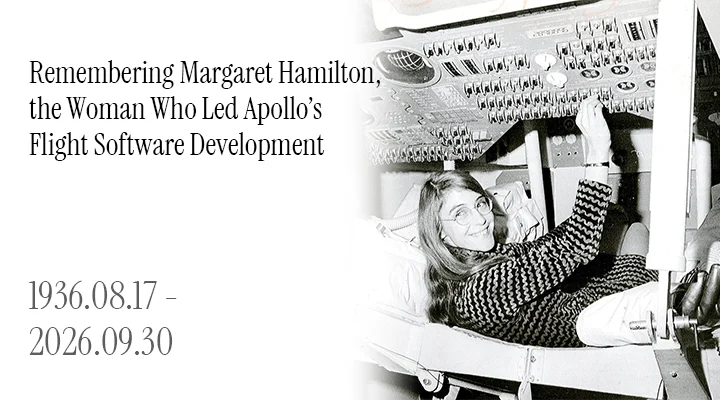
Hamilton passed away on September 30, 2026, in Cambridge, Massachusetts. Her death marks the end of a transformative era in computing, as her work at the Massachusetts Institute of Technology (MIT) Instrumentation Laboratory fundamentally changed how humanity approaches complex digital systems. Her contributions, ranging from the lunar landing to the foundations of modern aviation, remain cornerstones of modern engineering.
A Legacy of Engineering Excellence
Margaret Hamilton’s professional trajectory was defined by an uncompromising commitment to reliability. As the director of the Software Engineering Division at the MIT Instrumentation Laboratory, she was tasked with the Herculean effort of writing the guidance and navigation software for the Apollo space program. At a time when software development was often viewed as a secondary, auxiliary task—frequently relegated to the bottom of the engineering hierarchy—Hamilton insisted on its status as a core discipline. She is credited with coining the term "software engineering" to provide the field with the legitimacy and academic rigor it required to be taken seriously by the broader engineering community.
Her technical brilliance was not confined to academic theory. During the SAGE (Semi-Automatic Ground Environment) project, an early air defense initiative, Hamilton tackled complex, high-stakes programming problems that cemented her reputation as a leading expert in mission-critical systems. This experience proved vital when she transitioned to the Apollo program, where the margin for error was non-existent.
Chronology of a Career in Computing
Hamilton’s career spanned decades of rapid technological evolution, beginning long before the ubiquity of personal computing.
- 1960–1963: Working on the SAGE project, Hamilton developed a deep understanding of software reliability under extreme pressure.
- 1963–1973: As the lead software developer for the Apollo missions, she oversaw the creation of the Apollo Guidance Computer (AGC) software.
- 1969: The Apollo 11 moon landing occurred. Hamilton’s team’s software famously detected a data overflow during the descent, triggering an automated restart that prevented a mission abort.
- 1976: Hamilton founded Higher Order Software (HOS), applying the methodologies developed during the Apollo era to commercial and government projects.
- 1986: She established Hamilton Technologies, Inc., focusing on the Universal Systems Language (USL) to improve the lifecycle of system design.
- 2016: President Barack Obama awarded Hamilton the Presidential Medal of Freedom, the highest civilian honor in the United States, acknowledging her singular role in modernizing software development.
The Philosophy of Defensive Programming
Hamilton’s most enduring technical legacy is the conceptualization of "defensive programming." In the early 1960s, software was fragile and prone to catastrophic failure. Hamilton recognized that human error—such as an astronaut flipping the wrong switch or a sensor transmitting conflicting data—was inevitable. Rather than ignoring these possibilities, she designed software that could anticipate, identify, and recover from such faults.
The efficacy of this approach was proven during the Apollo 11 descent. Minutes before the Lunar Module Eagle touched down on the moon, the AGC was bombarded with a series of "1202" and "1201" alarms. These alarms indicated that the computer was overloaded with tasks. Because of Hamilton’s prioritization and recovery logic, the system jettisoned lower-priority tasks and maintained essential functions, allowing the astronauts to land safely.
"If the computer hadn’t recognized this problem and taken recovery action, I doubt if Apollo 11 would have been the successful moon landing it was," Hamilton noted in a 1971 interview with Datamation. This philosophy—that software should be designed to handle the unexpected—is now the industry standard for aerospace, automotive, and medical software.
Expanding the Horizons of Aerospace
Hamilton’s influence extended well beyond the lunar surface. Following the success of the Apollo missions, she led the onboard flight software work for Skylab, the United States’ first space station. Her contributions were instrumental in the early design phases of the Space Shuttle, where she helped establish the groundwork for digital fly-by-wire systems.
The concept of "fly-by-wire"—replacing manual, mechanical flight controls with electronic interfaces—was in its infancy during the 1970s. Hamilton’s work on high-reliability software provided the safety protocols necessary to transition from physical hydraulic linkages to software-governed flight control systems. Today, virtually all commercial and military aircraft rely on the principles of software-based control that Hamilton helped pioneer.
Academic and Industry Reactions
The global scientific community has responded to news of her passing with profound respect. MIT, where Hamilton spent much of her formative career, released a statement honoring her as a "founding architect of the modern digital world." Her colleagues have often noted that her influence was not merely in the lines of code she wrote, but in the organizational structure she imposed on software projects.
"Margaret didn’t just write code; she created a culture of verification and validation," remarked a former colleague from the MIT Instrumentation Laboratory. "Before Margaret, software was often ‘hacked’ together. After Margaret, it became an engineering process with clear requirements, rigorous testing, and fail-safe mechanisms."
Analysts suggest that the current boom in autonomous vehicle technology and artificial intelligence is, in many ways, an extension of the groundwork Hamilton laid. Her focus on "high-reliability software" is the primary hurdle currently facing self-driving cars and autonomous drones; the industry continues to look to her papers and methods to solve the challenge of building systems that can handle real-world, unpredictable environments.
Broader Impact and Implications
The death of Margaret Hamilton serves as a reminder of the historical significance of early software pioneers. Her life story challenges the historical narrative that minimized the role of women in the early space race. Despite the fact that her team was composed of many women and that she was the director of one of the most critical divisions at MIT, her name was often omitted from historical accounts until the 2010s.
The implications of her work continue to ripple through the 21st-century economy. Every time a consumer steps onto a commercial flight, receives a medical diagnostic, or uses a smartphone, they are utilizing systems built upon the foundations of software engineering established by Hamilton. Her insistence on modularity, error-checking, and systemic oversight provided the blueprint for the complex, interconnected world we inhabit today.
Memorial and Legacy
Margaret Hamilton is survived by her daughter, son-in-law, two grandsons, and four great-grandchildren. While the cause of death was not disclosed by her family, her final years were spent as a celebrated figure in technology history, frequently lecturing on the importance of engineering ethics and the future of artificial intelligence.
A memorial service is scheduled for the spring of 2027 in Cambridge, Massachusetts. The event is expected to draw leaders from NASA, the aerospace industry, and the computer science academic community. As the world mourns her loss, the technological infrastructure she helped build continues to operate, a testament to the precision and foresight that characterized her entire career.
Hamilton’s life serves as a definitive case study in the power of engineering to change the course of history. By shifting the focus from simply "making the computer work" to "ensuring the computer never fails," she provided the essential safeguard for the most ambitious technological projects of the 20th century. Her legacy is not merely the lunar footprints left by Apollo astronauts, but the invisible, reliable code that continues to hold the modern world together.