 Vera Clarissa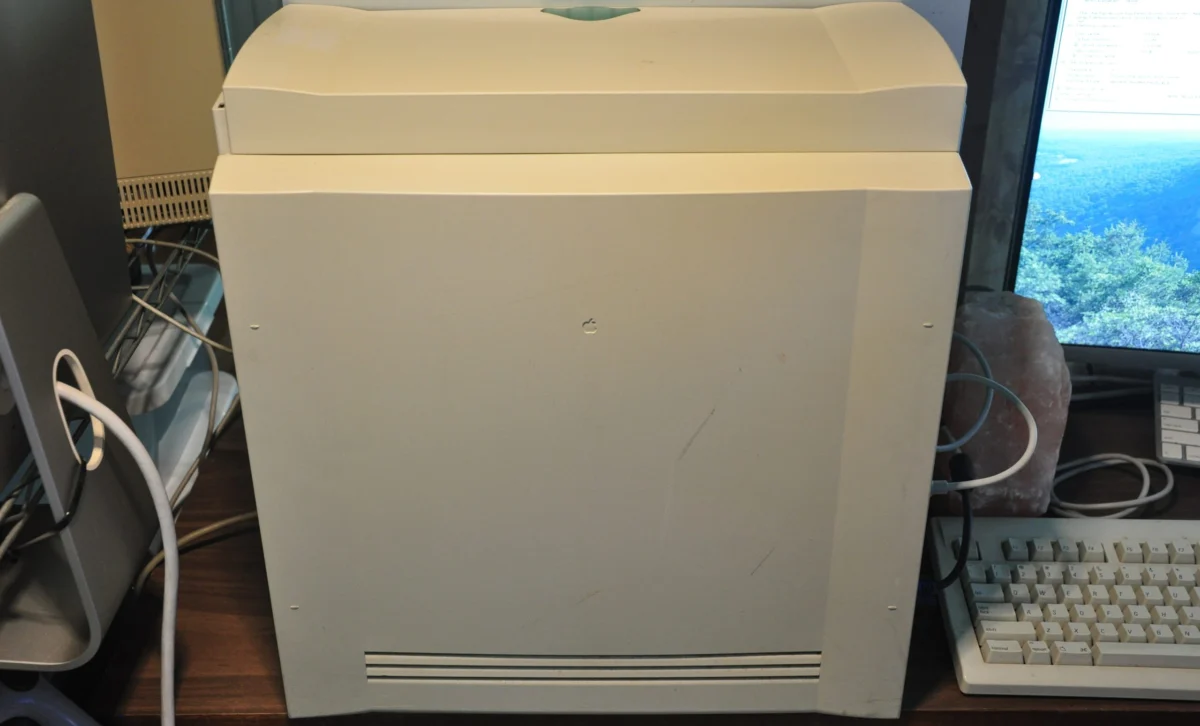
The recent acquisition of a heavily modified Power Macintosh 9600/300 from the Vintage Computer Federation (VCF) Midwest event has provided a unique opportunity to document the evolution of Apple’s professional workstation line. Originally introduced on August 5, 1997, alongside the more powerful 9600/350 model, the 9600 series represented the pinnacle of the "PowerPC" era before the eventual transition to the blue-and-white G3 tower architecture. This particular unit, which arrived in remarkably pristine internal condition, serves as a testament to the longevity of modular computing design and the historical trend of third-party hardware acceleration that sustained Apple’s professional user base during the company’s precarious financial period in the late 1990s.
Chronology of the Power Macintosh 9600 Series
The Power Macintosh 9600 was the flagship of the Apple workstation lineup, designed to compete with high-end Windows-based workstations of the era. Released as a successor to the 9500, it utilized the PCI-based architecture that Apple had pioneered to replace the aging NuBus standard. The timeline of the 9600 is relatively brief, reflecting the rapid pace of technological turnover during that period.

- August 1997: Apple launches the 9600/300 and 9600/350, utilizing the PowerPC 604e processor.
- March 1998: Production of the 9600 series ceases as Apple shifts focus toward the newer Power Macintosh G3 series.
- 1998–2000: The secondary market for 9600s flourishes, largely due to the machine’s twelve DIMM slots and six PCI expansion slots, making it a favorite for video production and print layout professionals.
The scarcity of this machine today is a result of both its limited production window and its high initial price point, which made it accessible primarily to design firms and educational institutions.
Technical Specifications and Historical Context
The unit acquired from VCF Midwest is a "maxed-out" configuration that reflects the common upgrade paths taken by professional users between 1998 and 2002. The most significant modification is the installation of a Newer Technology MaxPowr G3 processor upgrade card, which pushes the system to 445 MHz. This card effectively bypassed the motherboard’s native clock speed, allowing the aging 9600 to perform tasks that were originally impossible on the 300 MHz stock processor.
Beyond the CPU, the system features a comprehensive array of expansion cards that provide a window into the industry standards of the time:

- Storage Management: A Sonnet Tempo HD Ultra ATA/133 controller card, which allowed users to move away from the limitations of the internal SCSI bus, providing support for higher-capacity IDE drives.
- Connectivity: A Lucent-based USB and FireWire PCI combo card, a critical upgrade for those who needed to interface with the peripherals that became standard after the release of the iMac G3.
- Networking: A D-Link DFE-530TX+ 10/100 Ethernet card, replacing the older, slower networking capabilities of early 90s hardware.
- Graphics: Dual-card configuration featuring the ATI 3D Rage II and the ATI Rage LT Pro.
- SCSI Legacy: An ATTO 68-pin Express PCI SCSI controller, essential for the high-end external drive arrays used by creative professionals in the late 1990s.
The RAM Economy of the Late 90s
One of the most fascinating aspects of the Power Mac 9600 is its memory architecture. The machine shipped with twelve memory slots, an engineering choice that allowed for unprecedented amounts of RAM for the time. However, the cost of this technology was prohibitive. As noted by vintage computing expert Dan Bashur, the cost to fully populate a 9600 with 128 MB DIMMs—which were not even available at the time of the machine’s initial launch—could exceed $20,000.
This creates a peculiar performance bottleneck in modern restoration projects. Large amounts of RAM in these systems actually increase boot times due to the lengthy Power-On Self-Test (POST) cycles required to initialize massive banks of memory. Furthermore, the system is highly sensitive to the type of RAM installed; it requires a precise balance of EDO (Extended Data Out) or FPM (Fast Page Mode) modules to function at peak efficiency. Mismatched DIMMs, which are common in units that have been upgraded piecemeal over twenty years, can significantly degrade system stability and bus speed.
Implications for Restoration and Preservation
The decision to maintain this machine as a dedicated Mac OS 9 workstation is rooted in the preservation of a specific software ecosystem. With Adobe Photoshop 5.5 pre-installed, the system provides an authentic experience of the creative workflow as it existed at the turn of the millennium. The primary challenge for modern restorers is the "retrobriting" process—a chemical treatment involving hydrogen peroxide and UV light—necessary to reverse the yellowing of the ABS plastic chassis. This yellowing is a side effect of the brominated flame retardants integrated into the plastic, a common industry standard in the 1990s that has since been phased out.

When considering storage, the choice between solid-state technology (SD or mSATA adapters) and traditional mechanical hard drives involves a trade-off between reliability and authenticity. While an IDE-to-SD adapter provides near-instantaneous file access, the physical limitation of the Sonnet controller and the OS 9 file system drivers requires careful calibration. The failure of generic IDE-to-SATA adapters in many legacy systems underscores the importance of using hardware specifically tested for compatibility with the NuBus-era bridge protocols.
Broader Impact: The "Familiar Era" of Computing
The Power Mac 9600 represents the tail end of an era where hardware was fully modular, transparent, and intended for user-servicing. For many who grew up in the 1995–2001 window, these machines represent the "familiar" era of computing—before the total integration and enclosure of the modern desktop.
The collaborative effort behind this restoration—involving trades and technical advice between members of the Low End Mac community—highlights a significant shift in how vintage technology is preserved. It is no longer a solitary hobby but a networked effort to document the specific hardware configurations that defined professional output in the late 20th century. By maintaining these machines, enthusiasts are not merely keeping "old computers" running; they are preserving the primary production tools that built the modern digital landscape.

As this unit is prepared for its next phase of service, the focus will remain on stabilizing the hardware through careful component selection and ensuring that the software environment remains consistent with the late 1990s experience. The Power Mac 9600 continues to serve as a reminder that the performance ceiling of the past can be significantly elevated, provided one has the technical documentation and the community support to navigate the complexities of legacy architecture. The machine, once a $10,000 workstation for elite design firms, now stands as a primary resource for understanding the technical evolution of the Apple brand.