 Cecilia Chamidah Nur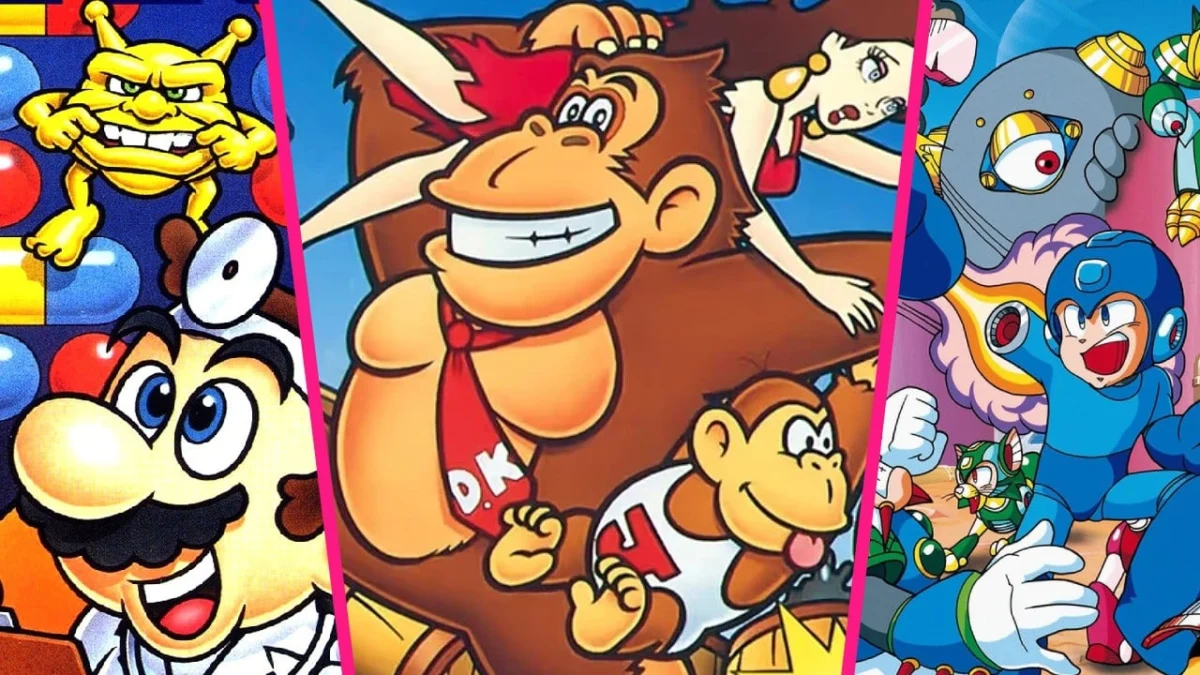
The long-anticipated restoration and colorization project for the 1994 classic Donkey Kong, often referred to as Donkey Kong ’94, has reached a critical development threshold. The project, led by the developer known as marc_max alongside collaborators Kensu and Jorge, recently achieved its first fully functional beta build. This version allows players to progress from the game’s opening stage to the final encounter without encountering uncolored graphical assets, marking the end of the primary development phase for the ROM hack.
Initially released on the Nintendo Game Boy, Donkey Kong ’94 served as both a remake of the original 1981 arcade cabinet and a substantial expansion, introducing 101 puzzle-platforming levels. Despite its critical acclaim, the title was frequently overshadowed during its original release window by the launch of Donkey Kong Country on the Super Nintendo Entertainment System. The current ROM hack initiative, titled Donkey Kong DX, seeks to modernize the visual fidelity of the Game Boy classic by applying the color-palette capabilities of the Game Boy Color (GBC), bringing the title in line with the aesthetic expectations of the late 1990s.
A Chronology of Technical Development
The Donkey Kong DX project has been in active development for approximately four years, representing a significant investment of time and engineering resources. According to lead developer marc_max, the project underwent three distinct "resets"—periods where the development team scrapped existing code structures to adopt more sustainable, efficient architectures.
The development timeline for this specific hack began roughly one month after the release of Mega Man World 5 DX, another of marc_max’s high-profile restoration projects. Throughout 2021, 2022, and 2023, the team navigated the complexities of Game Boy architecture, specifically addressing the hardware’s limitations regarding ROM bank management. Because Game Boy ROMs are divided into 16kb banks, the process of injecting high-fidelity color data required meticulous pointer calculations to avoid memory overflow.
By early 2024, the team successfully navigated the complexities of the game’s proprietary compression algorithms. The developers were required to reverse-engineer these algorithms to build custom tools capable of decompressing, modifying, and recompressing the game’s graphical data. This effort culminated in the recent announcement of a complete, playable beta build, signaling that the project has moved into the final stages of quality assurance and bug testing.
Technical Challenges and Architectural Constraints
One of the primary obstacles in the development of Donkey Kong DX is the game’s massive database of over 2,000 unique tilesets. Unlike more linear platformers, Donkey Kong ’94 utilizes a complex system where individual levels act as distinct biomes. This requires the development team to manage a highly specific selection of assets—such as levers, moving platforms, and environmental hazards—within the narrow constraints of the GBC’s limited background palette.
In traditional ROM hacking, changing a single graphical element can cause a cascade of errors in the pointer system, which directs the console to the correct memory address for a given asset. To mitigate this, the team disassembled the entire original game database to create an exact source code replica. This allowed the developers to rearrange and recolor graphics without risking the integrity of the original game’s logic.
Furthermore, the team developed specialized tools for this project, including a metasprite previewer and an object (OBJ) palette collision calculator. Interestingly, these tools proved interoperable with other titles developed by Pax Softnica, the original developer of Donkey Kong ’94. This technical synergy allowed the team to expedite work on Mole Mania DX, which saw a release during the interim periods of the Donkey Kong project.
Professional Transition and Future Implications
The development of Donkey Kong DX represents a significant point of transition for its lead developer. After dedicating years to the preservation and enhancement of classic titles, marc_max has signaled that this will be his final "farewell remaster" as a fan project. This shift is partially driven by the realities of the modern software industry, where experienced ROM hackers are increasingly moving toward commercial roles in game preservation and professional development.
In recent discussions, it was confirmed that the developer has secured a commercial contract for the official colorization of a well-known classic title. This transition from hobbyist preservation to professional software engineering reflects a broader trend in the gaming industry, where fan-made technical projects often serve as a portfolio for professional recruitment.
Additionally, the developer is currently in the early stages of designing an original title for classic hardware. This represents a pivot from modifying existing intellectual property to original software development, a move that highlights the growing ambition within the ROM hacking community. The developer noted that while the current economic climate in the tech sector, coupled with the rapid integration of artificial intelligence, has created a volatile landscape, the focus remains on delivering the Donkey Kong DX project to the community as a final gesture of appreciation.
The Impact of ROM Hacking on Game Preservation
The efforts of the Donkey Kong DX team underscore the broader importance of community-led game preservation. By reverse-engineering proprietary hardware limitations, these developers ensure that classic titles remain accessible and visually relevant for modern audiences.
Critics and observers within the gaming community often note that projects of this nature act as a digital "living archive." While Nintendo maintains its own legacy catalog through services like Nintendo Switch Online, fan-led restorations often provide features—such as full colorization, bug fixes, and quality-of-life improvements—that standard emulation might lack.
For the Donkey Kong ’94 community, the release of this hack will serve as a definitive version of a title that, despite being a pinnacle of Game Boy design, rarely receives official attention from the copyright holder. The integration of Kensu and Jorge’s graphical work into the project is expected to set a new benchmark for GBC-style restoration, effectively bridging the gap between the monochrome limitations of the early 90s and the vibrant potential of later handheld iterations.
Current Status and Expected Release
As of late 2026, the project is entering its final optimization phase. While external factors, such as the aforementioned professional commitments and personal development cycles, caused a delay from the initial 2025 release target, the current outlook remains optimistic.
The team has stated that they intend to release the final build during the upcoming holiday season. The release is expected to be distributed as a patch file that players can apply to their own legal copies of the original Donkey Kong ROM. By focusing on a "start-to-finish" experience free of visual glitches, the developers aim to provide a polished product that honors the source material while showcasing the technical evolution of the ROM hacking scene over the past decade.
For fans of the Donkey Kong series, this milestone represents more than just a fresh coat of paint; it is the culmination of years of reverse engineering, artistic collaboration, and technical problem-solving. As the release date approaches, the project stands as a testament to the dedication of the retro-gaming community in preserving the history of interactive entertainment.