 Cecilia Chamidah Nur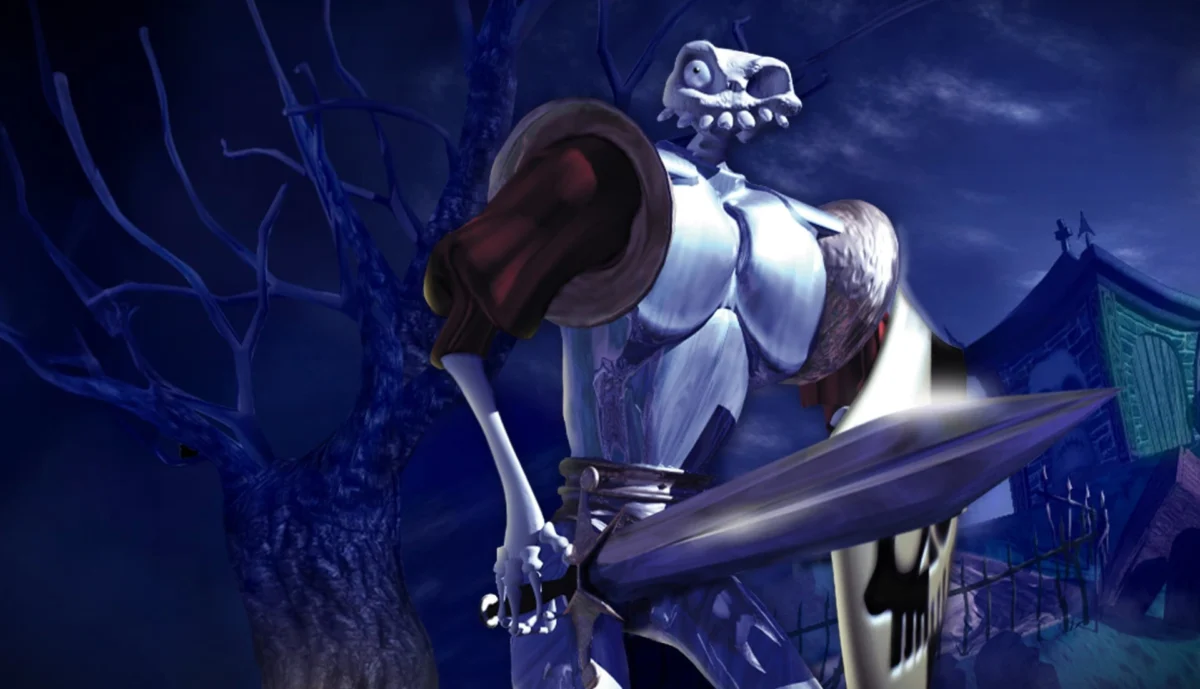
The landscape of retro gaming preservation has shifted significantly with the release of the first beta build for the PlayStation 1 classic MediEvil, now available as a native PC recompilation. Developed by the preservation collective BlackLabelHQ, this project represents a landmark effort in reverse engineering, moving beyond traditional emulation to deliver a high-fidelity experience that leverages modern hardware capabilities. By reconstructing the game’s source code, the team has enabled features previously impossible on original Sony hardware, including adjustable draw distances, widescreen aspect ratios, and frame interpolation, all while maintaining the integrity of the original 1998 release.
The Evolution of Gallowmere
To understand the significance of this release, one must look back to the origins of the franchise. MediEvil was developed by Millennium Interactive, a British studio that later became a cornerstone of Sony Interactive Entertainment’s internal development stable. Released in October 1998, the game was a stylistic outlier in the burgeoning 3D platformer market. While peers like Super Mario 64 and Spyro the Dragon leaned into vibrant, cartoonish aesthetics, MediEvil embraced a gothic, Tim Burton-esque charm that resonated deeply with European players.
The narrative centers on Sir Daniel Fortesque, an incompetent knight who perished in the opening moments of the Battle of Gallowmere. Despite his inglorious end, he is accidentally resurrected a century later by the antagonist, the sorcerer Zarok. The game functions as a satirical take on the traditional hero’s journey, with the protagonist struggling to live up to a legacy he never earned. This blend of dark humor and mechanical challenge defined the series, which subsequently spawned a direct sequel, MediEvil 2, in 2000, followed by the PSP reimagining MediEvil: Resurrection in 2005 and a full-scale ground-up remake for the PlayStation 4 in 2019.
Technical Foundations of the Recompilation
The BlackLabelHQ project is built on the foundation of recompilation—a sophisticated method of game preservation that differs fundamentally from emulation. While an emulator mimics the behavior of the original console hardware, a recompilation project translates the game’s original MIPS-based assembly code into a format that modern x86 or ARM processors can execute natively.
This technical approach allows for a vastly improved user experience. According to the project documentation provided via the Gallowpedia community, the beta build offers:
- Dynamic Resolution Scaling: Support for ultra-wide monitors and high-definition displays.
- Frame Interpolation: Smoothing out the original 20-30 FPS cap to provide a fluid, modern visual experience.
- Adjustable Rendering: Players can toggle draw distance settings to minimize the "pop-in" effect common in 1998-era 3D gaming.
- Input Mapping: Native support for modern controllers, addressing the limitations of the original PlayStation DualShock layout.
Commitment to Human-Centric Preservation
One of the most notable aspects of the BlackLabelHQ release is the developers’ explicit stance on artificial intelligence. In an era where generative AI is increasingly utilized to upscale textures or assist in coding, the BlackLabelHQ team has maintained a strictly manual development process. Their public statement underscores a commitment to "human-made" preservation, going so far as to announce that any bug reports or feedback generated via AI tools will be discarded.
This decision reflects a growing trend in the modding and preservation community to define clear ethical boundaries regarding automated tools. By insisting on manual code analysis, the team ensures that the game’s original logic—including its unique physics and hit-detection quirks—is preserved accurately rather than being "hallucinated" or altered by predictive algorithms.

Industry Implications and Legal Context
The release of a native PC port for a first-party Sony title raises complex questions regarding intellectual property and digital preservation. While Sony Interactive Entertainment has maintained a rigorous stance on copyright enforcement in the past, the "recomp" community occupies a gray area. By requiring players to provide their own game assets (ROMs/ISOs) from a legitimate copy of the software, these projects often avoid the legal pitfalls of distributing pirated copyrighted material.
This model of preservation is increasingly viewed as a viable path for keeping legacy software alive when original hardware is no longer viable. As the PlayStation 1 and 2 libraries face the threat of "bit rot," where aging optical media and hardware components fail, projects like MediEvil Recomp provide a lifeline. Industry analysts suggest that if major publishers continue to ignore the demand for native PC ports of their older back catalogs, independent preservation groups will continue to fill that void.
The Broader Ambitions of BlackLabelHQ
MediEvil is not the only title under the lens of BlackLabelHQ. The group has simultaneously been working on a recompilation of Konami’s seminal 1997 masterpiece, Castlevania: Symphony of the Night. The parallel development of these two titles suggests a sophisticated pipeline for handling PS1-era engine code.
The success of the MediEvil beta serves as a proof-of-concept for the broader community. By successfully porting a game that relied heavily on custom engine mechanics and specific hardware limitations, the team has established a blueprint that could theoretically be applied to dozens of other cult classics currently trapped on aging hardware.
Looking Ahead
As of April 2025, the MediEvil Recomp is currently in a "Beta" state. The development team has indicated that while the game is fully playable from start to finish, users should expect intermittent stability issues as they refine the memory management and rendering pipelines.
For the gaming community, this release is a testament to the longevity of the MediEvil brand. Despite the long gaps between official entries in the series, the dedication of fans—as evidenced by the Gallowpedia’s documentation efforts and BlackLabelHQ’s technical prowess—demonstrates that the "Hero of Gallowmere" still commands a loyal following. Whether this project will eventually garner attention from rights holders remains to be seen, but for now, it stands as a significant milestone in the ongoing effort to ensure that the history of interactive entertainment remains accessible to future generations of players.
The preservation of video games is a task that often falls to the players themselves, rather than the corporations that produced the software. By investing thousands of hours into reverse engineering these titles, developers are effectively rewriting the history of the medium, ensuring that the games of the 1990s remain as playable as the day they were first released. The MediEvil Recomp is a triumph of this ethos—a bridge between the limitations of the past and the capabilities of the present.