Hartono Sudibyo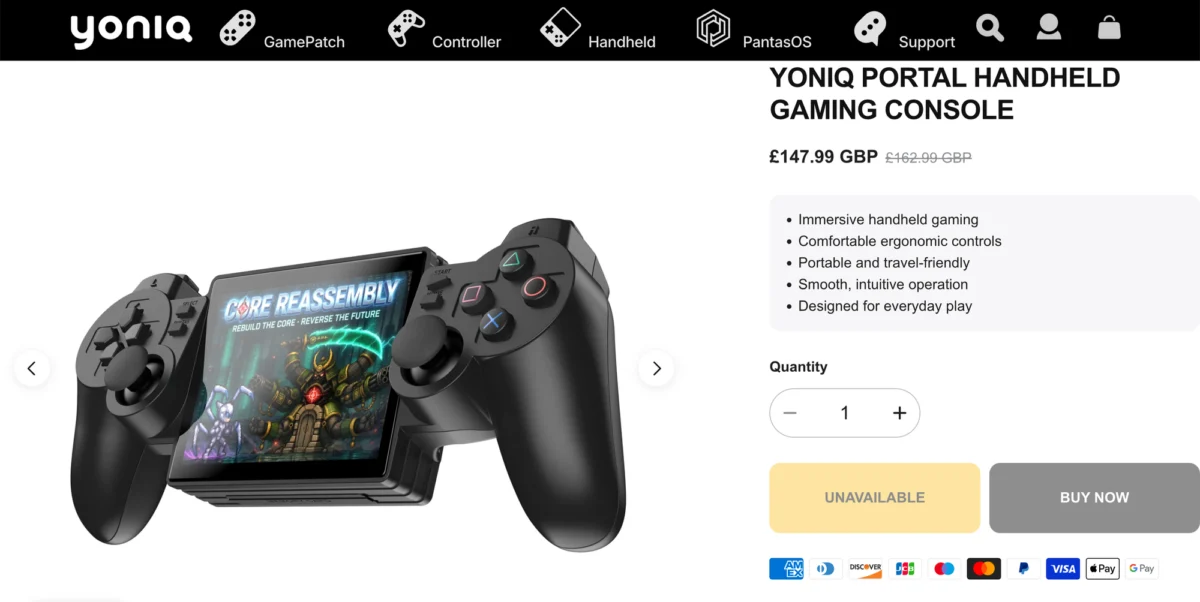
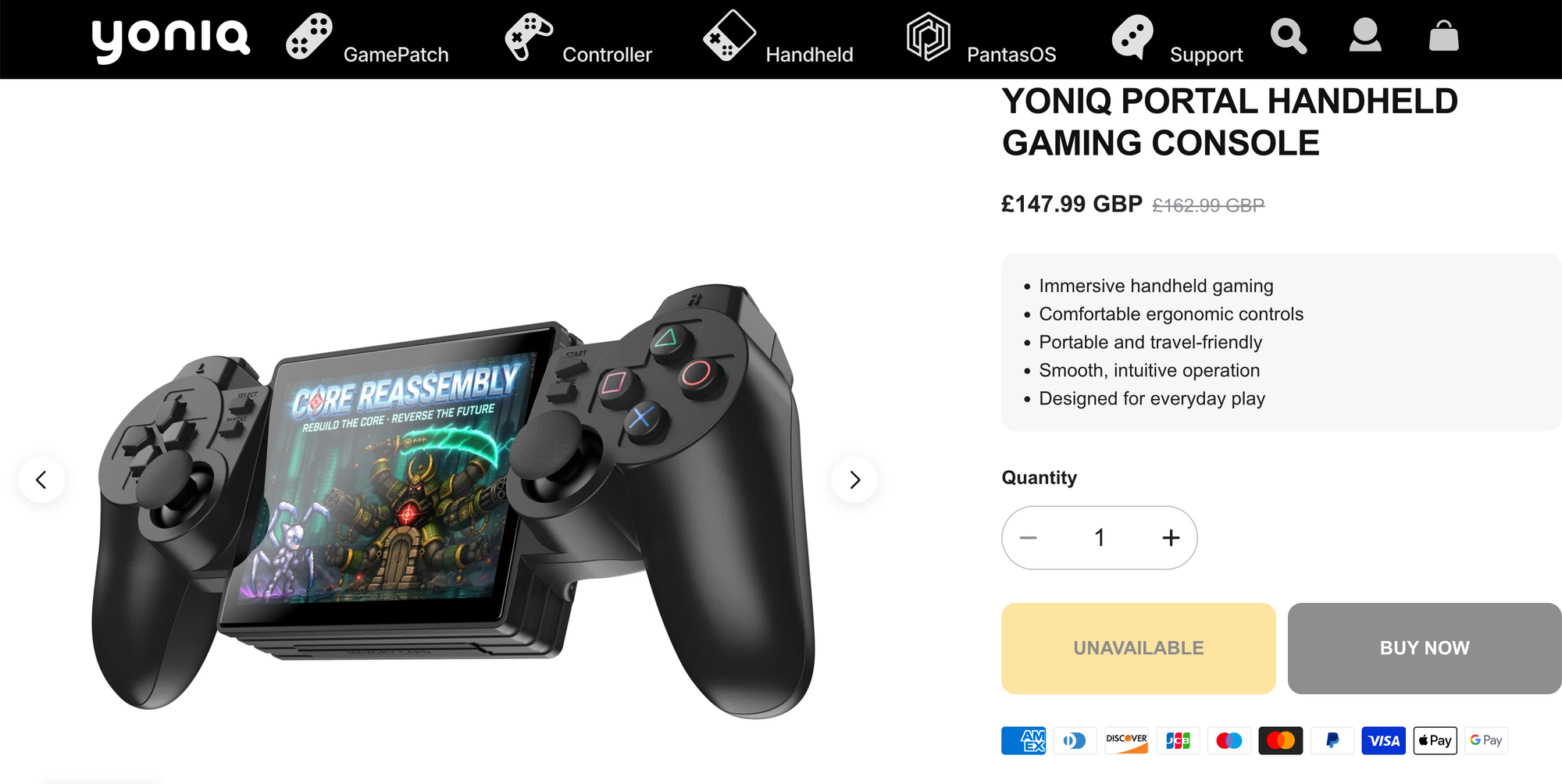
The emerging hardware manufacturer Yoniq has officially listed its upcoming Portal handheld gaming console on its digital storefront, displaying a baseline retail price of $199. This development follows closely on the heels of the company’s recent pricing reveal for the Duo, its dual-screen device targeted directly at competing with the Anbernic RG DS Plus, which was priced at $149.99.
While neither console is currently available for direct consumer purchase, the publication of specific price points and product pages indicates that the manufacturer is actively establishing its infrastructure for an upcoming pre-order campaign before the conclusion of the calendar year. However, technical analysis of the newly minted Portal product page reveals that the listing remains in a transitional state, featuring placeholder marketing copy recycled from older hardware iterations, alongside preliminary product imagery and minor editorial inconsistencies.
Chronology and Product Evolution
The trajectory of Yoniq’s product announcements over the third quarter of 2026 highlights an aggressive push into the direct-to-consumer retro-handheld and emulation hardware market. Earlier in the week, the company publicized pricing for the Duo, followed swiftly by the publication of the Portal listing.
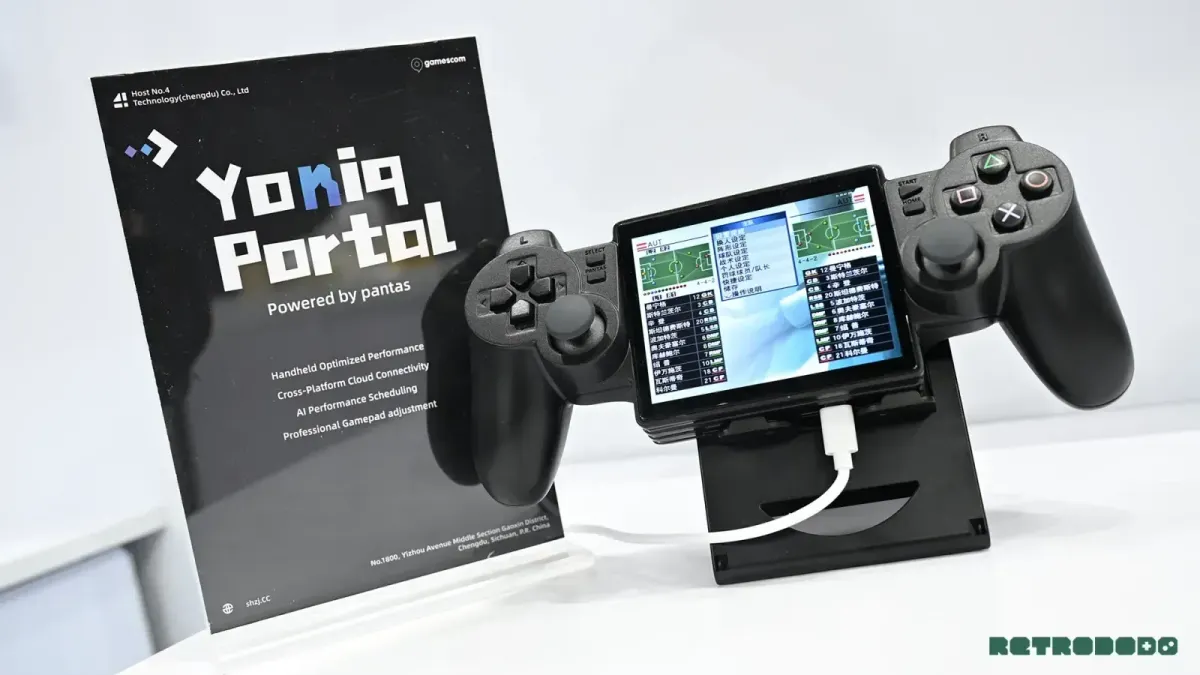
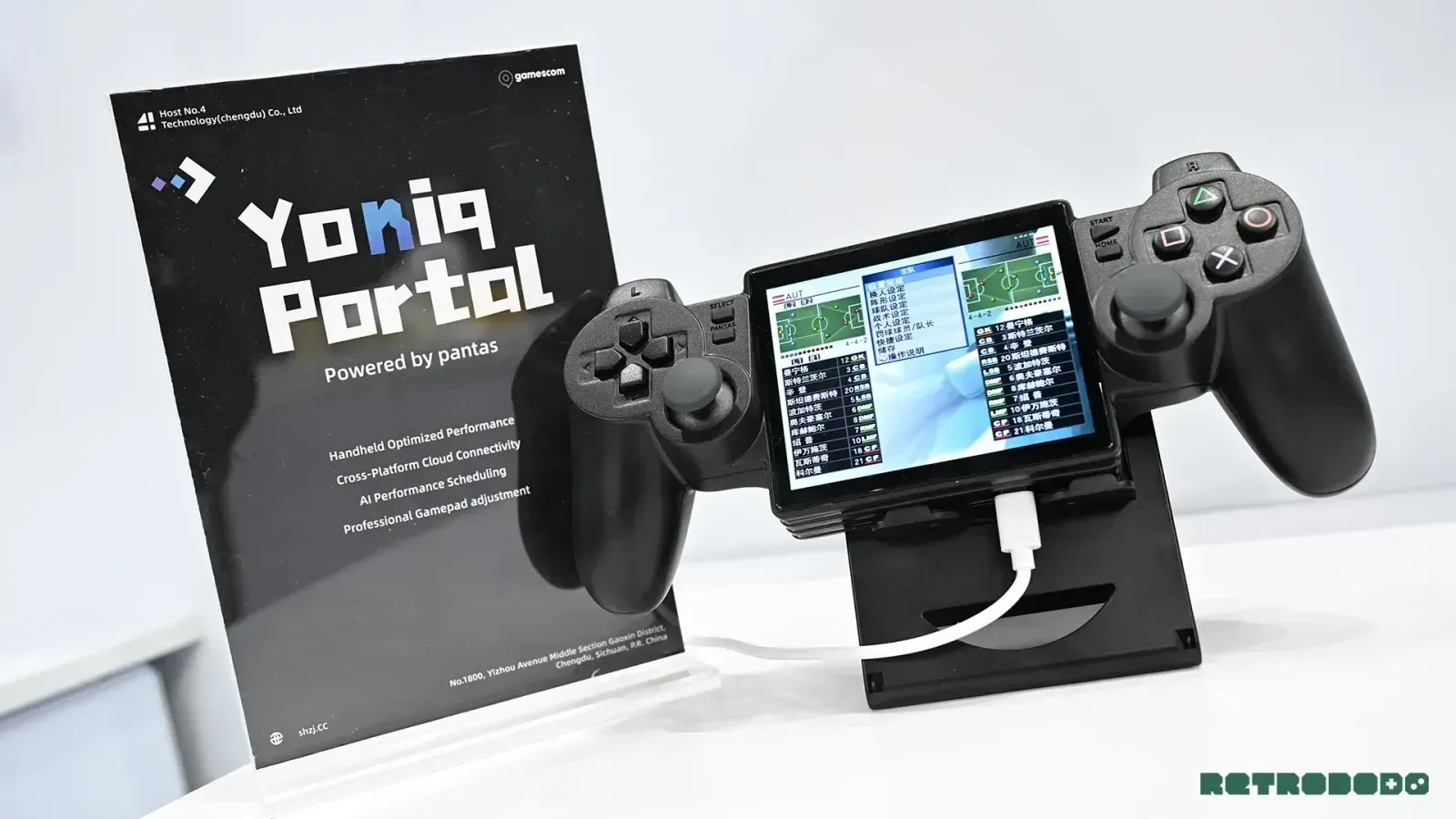
The Portal hardware concept first drew public attention during the Gamescom convention, where prototype units were displayed to industry analysts and attendees. The initial prototype phase showcased a design philosophy heavily influenced by Sony’s aesthetic language—specifically blending the classic gray colorway and visual cues of the original PlayStation console with a centered display flanked by controllers, reminiscent of contemporary remote-play devices like the PlayStation Portal.
Following the convention circuit, the official online listing introduced updated promotional assets, including detailed top-and-bottom port configurations. These recent manufacturer assets have provided hardware enthusiasts and reviewers with their first clear look at the device’s physical input and output layout.
Hardware Specifications and Design Analysis

Priced initially at approximately £162 ($215) before reflecting a promotional early-bird adjustment down to £147 ($199), the Portal occupies a premium segment within the emulation handheld market. This positioning has drawn scrutiny from industry observers, given that its exterior design language bears superficial similarities to budget-friendly emulation devices traditionally distributed via direct-import marketplaces.
An examination of the manufacturer’s newly released schematic imagery details a standard array of modern handheld inputs and connectivity ports. The bottom edge of the device houses a USB-C port—intended for battery recharging and potentially video-out capabilities—alongside a standard 3.5mm headphone jack and a dedicated microSD card slot for expandable storage and ROM management. The top profile accommodates a standard power button, a rockered volume control interface, and an auxiliary blue-accented button, which analysts speculate may function as a dedicated operating system menu or function key.
Most notably, promotional renders of the bottom chassis feature an aperture explicitly labeled as a "Memory Card" slot. While physical memory card slots capable of reading legacy media have occasionally surfaced in specialized emulation hardware or hardware mods, the inclusion of a functional legacy slot on a modern handheld running Android or Linux-based emulation software remains unconfirmed. Furthermore, physical prototypes exhibited at Gamescom did not prominently feature or demonstrate functional legacy memory card compatibility, leaving the exact technical implementation of this feature ambiguous.
Manufacturer Background and Industry Context
Although Yoniq is operating as a newcomer under its own consumer-facing brand, corporate disclosures indicate that the company’s leadership and engineering divisions possess extensive foundational experience within the original design manufacturer (ODM) sector.
According to corporate statements provided to industry media, the core team behind Yoniq claims over five decades of collective experience in the research, development, and mass production of handheld gaming electronics for third-party companies. Utilizing established supply chain networks anchored in China, the firm has historically operated behind the scenes, supplying hardware architecture and manufacturing capacity to numerous established brands in the portable gaming ecosystem.
The transition from a business-to-business manufacturing entity to a direct-to-consumer brand marks a strategic shift for the organization. Industry analysts note that while established original equipment manufacturers often possess robust logistical and supply chain capabilities, establishing direct consumer trust, software support infrastructure, and localized customer service presents a distinct set of commercial challenges.
Market Implications and Outlook
The introduction of the Yoniq Portal at a $199 price point places it in direct competition with established mid-to-high-end emulation devices produced by market veterans such as Retroid, Anbernic, and Ayaneo. Devices in this price tier typically demand high-performance system-on-chip (SoC) architectures capable of handling complex sixth-generation console emulation—including PlayStation 2 and GameCube titles—alongside robust build quality and active software support.
While the preliminary pricing and hardware disclosures signal Yoniq’s intent to capture consumer interest ahead of the fourth-quarter holiday shopping window, critical details regarding the Portal’s internal specifications remain undisclosed. Key metrics—including the specific chipset, RAM allocation, battery capacity, display resolution, and operating system framework—have not been formally published by the manufacturer.
As the company prepares for its anticipated pre-order rollout, prospective buyers and hardware reviewers will likely look for clarification on these core specifications, alongside hands-on verification of the device’s emulation performance. Until comprehensive technical reviews are conducted using finalized retail units, the long-term market viability of Yoniq’s consumer-facing debut will depend heavily on whether the hardware performance justifies its premium positioning.