Hartono Sudibyo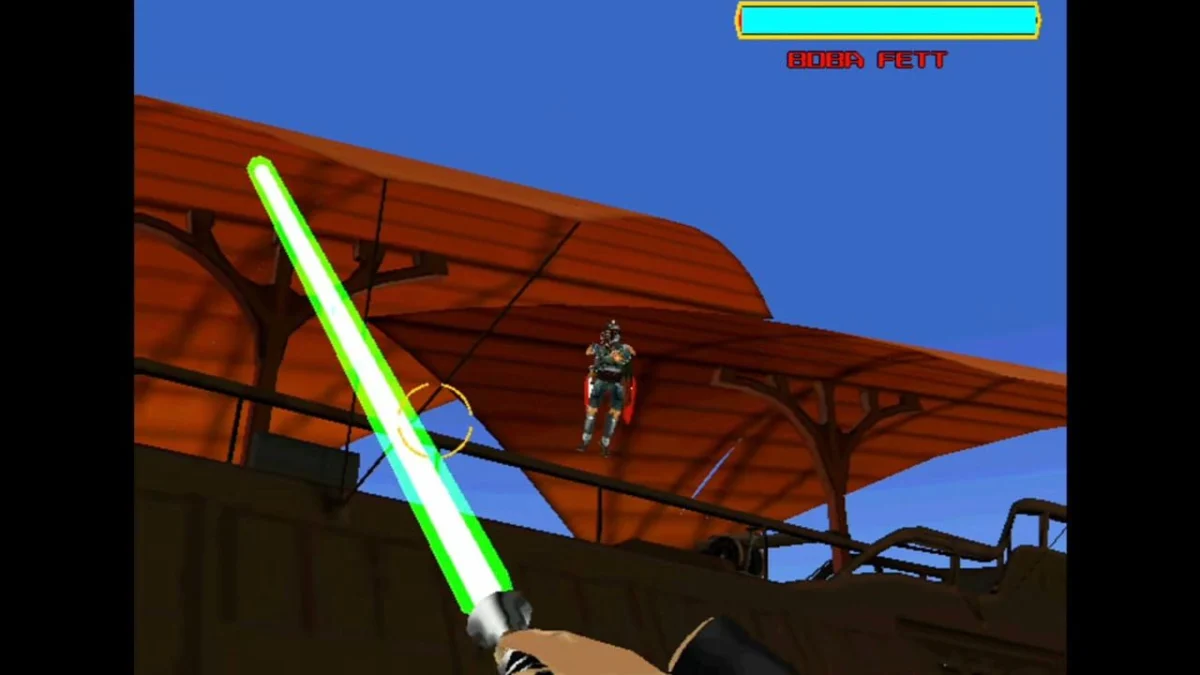
The landscape of classic video game preservation has achieved another remarkable milestone as independent developer ToastedGreedo successfully ports the legendary 1998 arcade rail-shooter Star Wars Trilogy Arcade to Sega’s final home console, the Dreamcast. Originally powered by Sega’s formidable Model 3 arcade architecture, the game defined late-1990s arcade culture with its immersive gameplay, sprite-and-polygon graphics, and iconic set pieces drawn from the original Star Wars film trilogy. Decades after the commercial decline of both the arcade industry and the Dreamcast hardware lifecycle, this technical feat bridges a historical gap that many retro gaming enthusiasts believed would remain permanently unfulfilled.
The successful transition of complex arcade code onto standard Dreamcast hardware highlights the ingenuity of the modern retro homebrew community. By utilizing low-level programming techniques and optimizing assets originally designed for high-end arcade boards, ToastedGreedo has transformed an experimental concept into a functioning, playable reality. A free, Dreamcast-compatible demo disc featuring two distinct stages is scheduled for release, offering players worldwide the opportunity to experience arcade-authentic rail-shooting action directly in their living rooms using native consumer hardware.
Background Context and Historical Significance
To fully understand the weight of this homebrew development, one must examine the state of arcade gaming and home console technology at the turn of the millennium. In the late 1990s, arcade cabinets served as the undisputed vanguard of graphical fidelity. Sega’s Model 3 arcade system board, introduced in 1996 in partnership with Lockheed Martin’s Real3D division, was capable of rendering unprecedented geometric complexity and texture filtering that vastly outperformed contemporary home consoles like the original PlayStation, the Sega Saturn, and even early PC graphics cards.
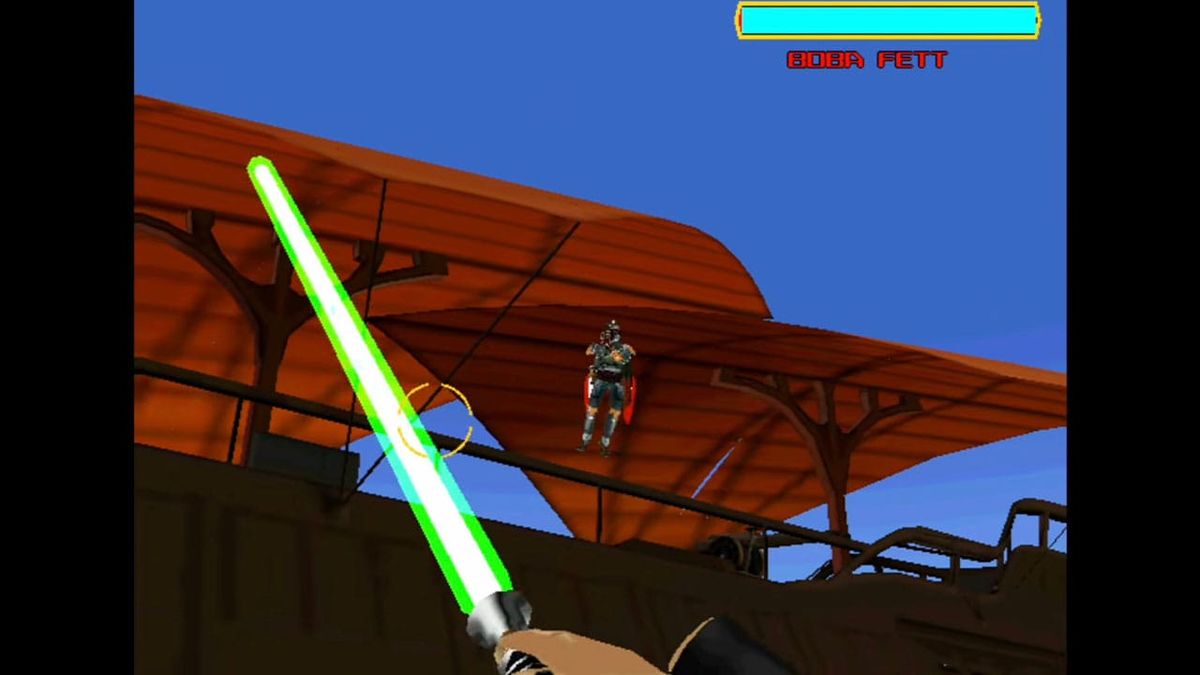
When Sega released Star Wars Trilogy Arcade in 1998, it utilized the Model 3 Step 2 board to deliver fluid 60-frames-per-second action, featuring landmark sequences such as the Battle of Hoth, the destruction of the first Death Star, and a dramatic lightsaber duel against Boba Fett. For teenagers and gamers frequenting arcades during that era, the game was a premier destination attraction.
Simultaneously, Sega was preparing for the launch of the Dreamcast, released in late 1998 in Japan and 1999 globally. Powered by a Hitachi SH4 CPU and a NEC PowerVR2 graphics processing unit, the Dreamcast was heralded as a generational leap that would finally bring arcade-perfect ports directly into the home. Throughout the console’s commercial lifespan, Sega successfully ported several major Model arcade titles to the platform, including Virtua Fighter 3tb, Sega Rally 2, and The House of the Dead 2.
However, a home port of Star Wars Trilogy Arcade never materialized. Industry rumors circulating during the late 1990s and early 2000s suggested that a conversion was at various points discussed or experimentally initiated, but licensing complexities with LucasArts, shifting corporate priorities as Sega transitioned away from hardware manufacturing, and the technical hurdles of scaling down Model 3 hardware code to consumer specifications ultimately led to its cancellation. Consequently, the game remained locked inside aging arcade cabinets, many of which succumbed to hardware failure, component degradation, or geographic scarcity over the ensuing decades.
Chronology of the Homebrew Port
The realization of the Dreamcast port did not happen overnight; it represents months of meticulous reverse-engineering, asset analysis, and code optimization by ToastedGreedo. The project began as a technical proof-of-concept—an exploratory endeavor designed to test the architectural limits of the Dreamcast when handling heavy polygonal assets and real-time rail-shooter mechanics native to the Model 3 environment.
Initial development focused on breaking down the original arcade ROMs, analyzing opcode structures, and mapping out memory management protocols. Because the Dreamcast possesses a custom architecture with specialized graphics rendering pipelines, direct translation of arcade code was impossible. Instead, ToastedGreedo had to manually reconstruct the game’s core engine logic while preserving the exact pacing, hit-detection parameters, and visual integrity of the 1998 release.
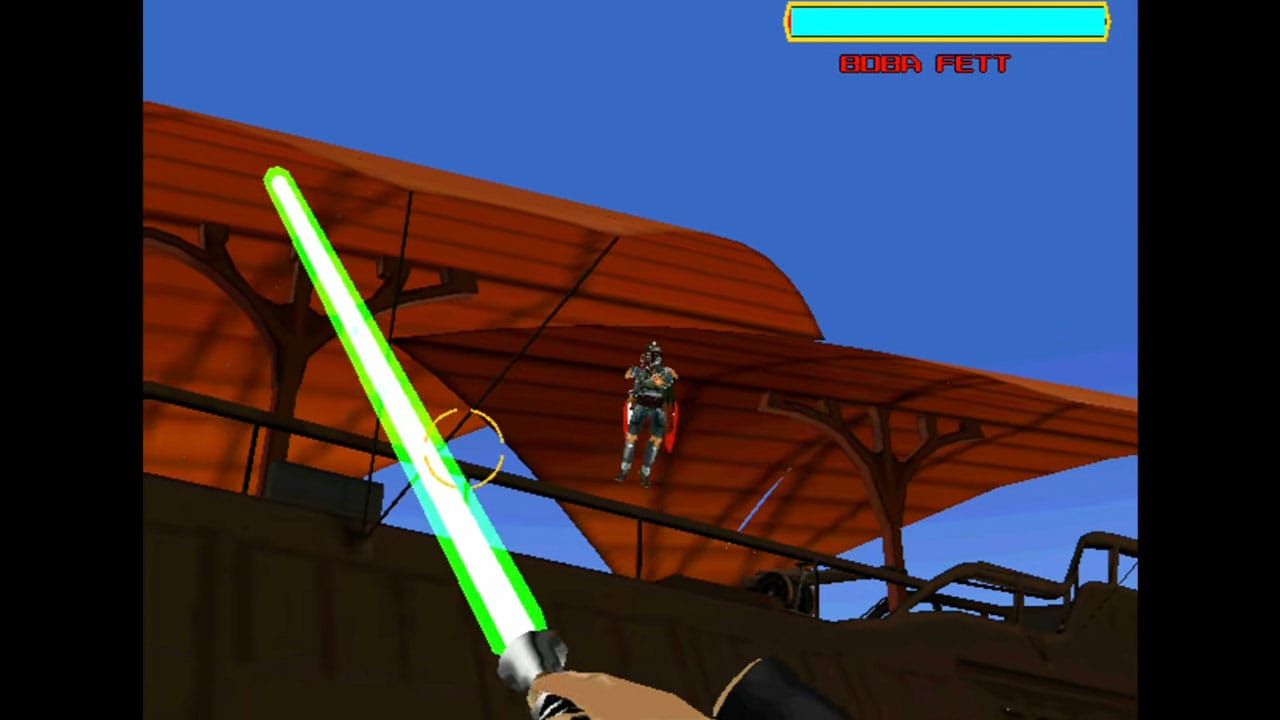
The first major milestone in the development timeline was the recreation of the Boba Fett Duel stage. Serving as the foundational test bed for the entire project, this boss encounter required the integration of complex character animation routines, dynamic lighting effects, and precise input response mapping to emulate the arcade light-gun or analog controller experience.
Following the successful implementation of the Boba Fett duel, development expanded to include the Yavin Death Star trench run and surface battle stage. The inclusion of these two distinct environments proved that the foundational engine framework was scalable and capable of supporting multiple gameplay vectors, ranging from cockpit-based space combat to on-foot directional shooting.
Technical Specifications and Demo Disc Rollout

The forthcoming demo disc has been engineered to be fully compatible with standard, unmodified Sega Dreamcast retail hardware, utilizing self-booting disc images that can be played on original consoles or via modern optical disc emulators (ODEs) such as the GDEmu.
According to technical breakdowns shared within the retro development community, the port successfully maintains a remarkably stable framerate despite the heavy visual load associated with the Model 3’s polygon counts. While optimizing the game for the Dreamcast’s 16MB of system RAM and 8MB of video RAM required strategic asset compression and texture downscaling, the visual fidelity closely mirrors the arcade experience.
The demo features two playable segments:
- The Yavin Death Star Stage: A multi-phase sequence incorporating surface trench navigation, targeting computer mechanics, and projectile evasion modeled directly on the arcade source material.
- The Boba Fett Duel: An intense, close-quarters confrontation requiring precise reticle placement and timing to overcome the iconic bounty hunter.
In public commentary regarding the project’s progression, ToastedGreedo noted the emotional and technical arc of the development cycle: "The Boba Fett Duel was the first stage I recreated for the project and has served as the foundation for bringing the original Model 3 arcade experience to Dreamcast hardware. It’s been especially exciting to see the project progress from an early technical experiment into something that increasingly feels like a complete Dreamcast game."
Community Reactions and Preservation Implications
The announcement and subsequent video showcases of the Star Wars Trilogy Arcade Dreamcast port have generated widespread enthusiasm across retro gaming forums, preservation archives, and enthusiast outlets such as the Dreamcast Junkyard. Analysts and historians within the video game preservation sector view such homebrew initiatives not merely as fan projects, but as vital acts of digital conservation.
With commercial entities often constrained by complex intellectual property licensing agreements, corporate restructuring, and the economic impracticality of reissuing niche retro titles, independent developers have increasingly taken on the mantle of preserving gaming history. Projects like this ensure that software originally bound to decaying proprietary hardware can be experienced by contemporary audiences on original legacy consoles.
Furthermore, the project highlights the enduring commercial and cultural vitality of the Sega Dreamcast. Despite having its official hardware lifecycle cut short following Sega’s 2001 decision to withdraw from the console manufacturing market, the Dreamcast maintains one of the most active and technically proficient homebrew communities in the history of interactive entertainment. Developers continue to push the boundaries of the console’s architecture, producing new games, ports, and hardware modifications over two decades after its discontinuation.
Broader Impact and Future Outlook
While the upcoming demo disc represents a major milestone, questions remain regarding the feasibility of a complete, arcade-accurate release of the entire Star Wars Trilogy Arcade campaign. The remaining stages—including the Battle of Hoth, the Endor speeder bike chase, and subsequent space battles—present significant memory allocation and programming challenges.
However, the modular framework established by ToastedGreedo provides a robust foundation for continued expansion. As optimization techniques improve and community collaboration deepens, the prospect of a fully playable home version of the 1998 arcade classic moves closer to historical completion.
For retro gaming enthusiasts, arcade purists, and Star Wars fans alike, the project delivers a long-overdue piece of gaming history. By righting a decades-old omission in the Dreamcast software library, independent homebrew development continues to prove that passion, technical mastery, and community dedication can successfully resurrect the ghosts of gaming’s golden eras.