Cecilia Chamidah Nur
The long-anticipated spiritual successor to the seminal shoot ’em up Ikaruga, titled Ubusuna, has been officially cancelled by publisher M2, coinciding with the departure of its legendary designer, Hiroshi Iuchi, from the company. This development, initially announced in May 2026, sent ripples through the dedicated community of arcade and shmup enthusiasts who had awaited the project since its initial reveal in 2014. However, a recent update from Iuchi himself offers a glimmer of hope, revealing his intent to revive Ubusuna independently, with discussions for external funding already underway.
The Legacy of Hiroshi Iuchi and the Genesis of Ubusuna
Hiroshi Iuchi stands as a titan within the Japanese game development landscape, particularly revered for his profound contributions to the shoot ’em up genre. His portfolio boasts titles that are not merely games but benchmarks of design ingenuity and artistic vision. Before Ikaruga, Iuchi lent his immense talent to games like Radiant Silvergun (1998) for Treasure, a title often cited as a cornerstone of the genre, pushing boundaries with its intricate scoring systems and complex bullet patterns. He later spearheaded Ikaruga (2001) at Treasure, a game that transcended its arcade roots to become a cult classic across multiple platforms, celebrated for its unique polarity-switching mechanic that required players to absorb bullets of one color while attacking with the opposite. This innovative gameplay, combined with its striking minimalist aesthetic, cemented Ikaruga‘s place in video game history and garnered Iuchi an almost mythical status among fans. His work is characterized by meticulous attention to detail, challenging yet fair gameplay, and a distinctive visual style that often blends futuristic elements with an almost organic, mechanical sensibility.
Following his impactful tenure at Treasure, Iuchi continued to influence the genre, notably contributing to Gradius V (2004) for Konami and working on various projects, including Night Striker Gear (2019) during his time at M2. It was against this backdrop of an illustrious career that the concept for Ubusuna first materialized. Iuchi explains that the foundational "concept and system specifications" for Ubusuna were established as early as 2006, years before he officially joined M2. This early genesis highlights the long-term vision Iuchi held for the project, conceiving it as a natural evolution or spiritual successor to the principles he explored in Ikaruga. The very name "Ubusuna" itself carries a weight of expectation, implicitly promising a continuation of the innovative, high-skill gameplay that defined its predecessor.
The M2 Partnership and a Decade of Development Challenges
In 2014, the gaming world received the exciting news that Ubusuna was officially in development under the M2 banner. M2, a company renowned for its exceptional work in porting, preserving, and enhancing classic video games – particularly arcade titles and shmups through their M2 ShotTriggers series – seemed like a perfect fit. Their technical prowess and deep respect for retro gaming suggested an ideal environment for Iuchi to realize his vision. The partnership was met with widespread enthusiasm, as it promised to combine Iuchi’s creative genius with M2’s technical expertise and commitment to quality.
However, the ensuing years saw very little public information or gameplay footage emerge from the project. This prolonged silence, while not entirely uncommon in the Japanese game development scene, began to fuel speculation among fans. The development period stretched over a decade, with Ubusuna becoming a whispered legend rather than a tangible release. Iuchi’s recent statement sheds considerable light on the reasons behind this protracted and ultimately troubled development. He candidly reveals that the project was not continuously in the making for 12 years, as many assumed, but rather experienced multiple significant stalls—perhaps "the third or fourth time that development has stalled on the project."
Iuchi attributes a significant portion of these delays to his own relentless pursuit of perfection, coupled with a development environment that, while initially supportive, inadvertently fostered complacency. He elaborates on the instruction from M2 to "take the necessary time to solve the problem until Inouchi can do what he wants," which, in hindsight, became a double-edged sword. While intended to grant creative freedom, it inadvertently led to an iterative process of "trial and error without any real purpose," perpetually seeking to improve quality without a firm endpoint. This lack of clear direction or perhaps, more accurately, an unconstrained pursuit of an ever-shifting ideal, was compounded by practical limitations. Iuchi draws a telling comparison: "a company that has never made a 3D game before gathering two or three people to create a AAA title like Call of Duty (and occasionally helping out with other projects). They would cover the lack of personnel and technical skills with time." This stark analogy highlights the ambitious scope of Ubusuna relative to the resources and experience within the team, leading to a "vicious cycle" where the long duration itself made the team complacent, and the necessary personnel were not assembled until very late in the process.
The Official Cancellation and Iuchi’s Departure
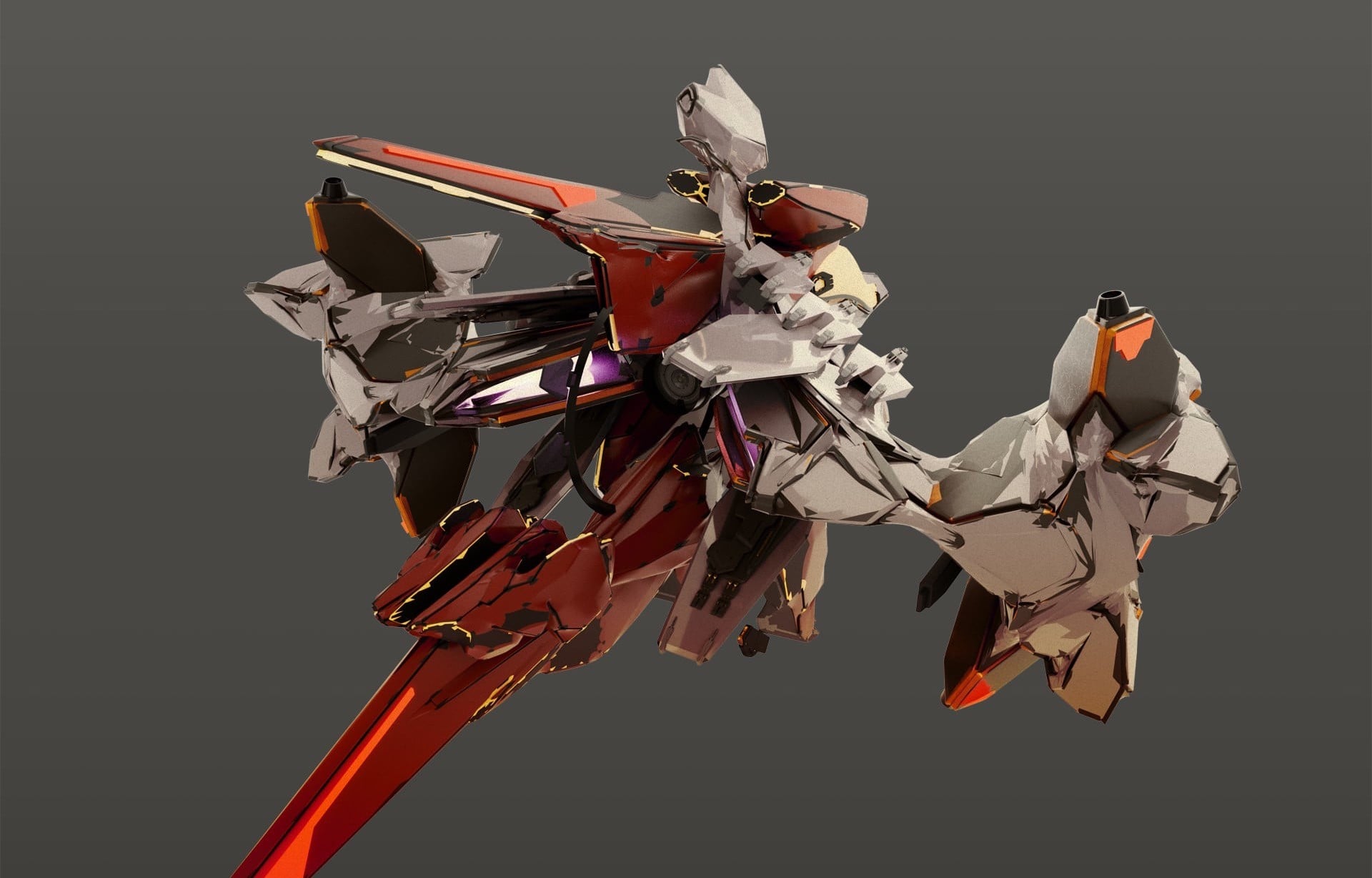
The culmination of these protracted challenges arrived in late 2025, when Hiroshi Iuchi made the decision to part ways with M2. This personal decision led directly to the official cancellation of Ubusuna by M2, a fact that was publicly confirmed in May 2026. For fans, this announcement was a significant disappointment, signaling the apparent end of a highly anticipated project from a revered designer. The cancellation underscored the immense difficulties even established studios face in managing long-term, ambitious projects, especially when led by creatives with a strong, often uncompromising, artistic vision.
The news was particularly impactful because M2 is widely respected for its commitment to niche genres and quality, making the decision to abandon Ubusuna a stark indicator of the insurmountable hurdles faced during its development. While M2 did not release an extensive statement regarding the cancellation beyond the initial announcement, the context provided by Iuchi’s subsequent comments suggests that the project had become commercially untenable for the studio, having consumed significant resources over an extended period without a clear path to completion. The separation appeared to be an amicable one, driven by a mutual recognition that the existing framework was no longer conducive to Ubusuna‘s progress or M2’s business objectives.
Iuchi’s Candid Account and the Complexities of Revival
Following the official cancellation, Hiroshi Iuchi broke his silence in July 2026, offering a comprehensive and remarkably candid explanation on his personal website, later reported by outlets like Automaton Media. His lengthy post served not only as a clarification but also as a declaration of his unwavering commitment to Ubusuna. He stated unequivocally that he has "no intention of abandoning" the game and is actively "working to ensure that everyone involved does not suffer any losses." This immediately transformed a story of cancellation into one of potential resurrection.
A crucial aspect of Iuchi’s statement addresses the intellectual property rights surrounding Ubusuna. He confirms that he retains ownership of the game’s core "concept and system specifications," as these were developed prior to his engagement with M2 in 2006. This is a significant legal detail that empowers him to pursue independent development. However, he also acknowledges a critical caveat: any game assets created during his tenure at M2 cannot be utilized "for free" in the revived project. This necessitates either a renegotiation with M2 for the use of those assets, or a complete recreation of them, both of which represent substantial financial and logistical challenges for an independent endeavor. The need to resolve this asset ownership issue is paramount and will likely be a major factor in the viability and timeline of Ubusuna‘s revival.
Iuchi’s deep dive into the reasons for the prior stalls offers a rare glimpse into the pressures and internal struggles of high-level game design. His acknowledgment of his own "sense of perfection" contributing to the issues is particularly striking. This level of self-awareness, while admirable, also underscores the inherent tension between artistic idealism and the practical realities of project management and commercial deadlines. The "vicious cycle" he describes—where a generous mandate for creative freedom led to unbounded iteration, which in turn caused delays and team complacency—is a cautionary tale for any creative industry.
The Road to Revival: A New Hope Emerges
The decision to leave M2 at the close of 2025 initially led Iuchi to consider stepping away from the corporate structure entirely, even briefly contemplating a different project with his wife, who serves as the main programmer for Ubusuna. However, a pivotal intervention came from Rin Kususaga, a freelance designer who had previously contributed to Ubusuna. Kususaga proposed a bold new path: securing external funding from another company to continue development and offered assistance with sales.
This proposal ignited a "wave of support." Iuchi recounts how others rallied around the project, expressing their willingness to help if Ubusuna were to be resumed. This spontaneous gathering of committed individuals, driven by a shared passion for the game and respect for Iuchi’s vision, provided the necessary impetus to move forward. "I can only express my gratitude for having people around me who had such determination and took action. I am truly thankful," Iuchi shared. This collective enthusiasm quickly translated into concrete steps: "Furthermore, thanks to the efforts of [Kususaga], we have begun discussions with companies that have expressed interest."
This surge of external support and the commencement of funding talks represent a critical turning point. It transforms Ubusuna from a cancelled dream into a project with a tangible, albeit challenging, path to completion. The involvement of experienced individuals like Kususaga, who are willing to navigate the business aspects of game development, is vital for Iuchi, allowing him to focus on the creative core while the practicalities of funding and publishing are addressed.
Challenges and Cautious Optimism
Despite the renewed momentum, Iuchi remains realistically cautious. He explicitly states that "it’s not certain that Ubusuna will be completed," and any positive resolution will not come "immediately." This measured optimism is crucial, tempering fan expectations while acknowledging the significant hurdles that still lie ahead. Securing adequate funding, resolving the M2 asset issue, rebuilding a dedicated team, and managing a project of Ubusuna‘s ambition outside a larger corporate structure are all formidable tasks.
Nonetheless, Iuchi and his team are "working hard to deliver Ubusuna to all of you who have been waiting for so long," urging fans to "continue to wait and see" and to "continue to support us." His confidence in the game itself remains high. He describes Ubusuna as "a somewhat unique shooting game and difficult to adjust," but asserts that "the concept itself hasn’t changed at all since 2006, and there are no problems." In a remarkable vote of confidence, he adds, "I don’t mean to sound boastful, but even after playing the game as it is now, I think it’s quite fun. (I think it’s probably easier for most people to play than Ikaruga.)" This final assessment offers perhaps the most exciting prospect for fans: a game that retains Iuchi’s signature innovation and quality, potentially with a more accessible entry point than his famously challenging previous works.
Broader Implications: Creative Freedom vs. Commercial Viability
The saga of Ubusuna offers a compelling case study in the delicate balance between creative freedom and commercial viability in the video game industry. Iuchi’s experience highlights the challenges faced by visionary designers whose pursuit of perfection can clash with the realities of project deadlines, budget constraints, and market expectations. The initial M2 partnership, while offering resources and support, ultimately could not sustain a project that lacked a definitive endpoint, even with a revered figure at its helm.
The independent revival effort, while fraught with its own set of risks, also symbolizes the enduring power of passion and community in game development. It showcases how dedicated individuals, even after corporate backing is withdrawn, can coalesce to keep a dream alive. This trajectory is becoming increasingly common in the modern gaming landscape, where crowdfunding and independent publishing platforms offer new avenues for projects that might otherwise be deemed too niche or too creatively ambitious for traditional publishers.
For the shmup community, Ubusuna‘s potential revival is more than just another game; it’s a testament to the genre’s resilience and the enduring appeal of Iuchi’s design philosophy. The prospect of a new work from him, especially one that promises to be more accessible than Ikaruga while retaining its depth, is cause for significant excitement.
Conclusion
The journey of Ubusuna has been one marked by high hopes, prolonged silence, a painful cancellation, and now, an unexpected resurgence. Hiroshi Iuchi’s transparent account provides invaluable insight into the complexities of game development and the personal dedication required to bring a creative vision to life. While the path ahead remains uncertain, the renewed efforts by Iuchi, his wife, Rin Kususaga, and a growing cohort of supporters, coupled with ongoing funding discussions, have rekindled hope for a project many had written off. The shmup community and wider gaming audience will undoubtedly be watching closely, eager to see if this legendary designer can, against considerable odds, finally deliver Ubusuna to the world.