Vera Clarissa
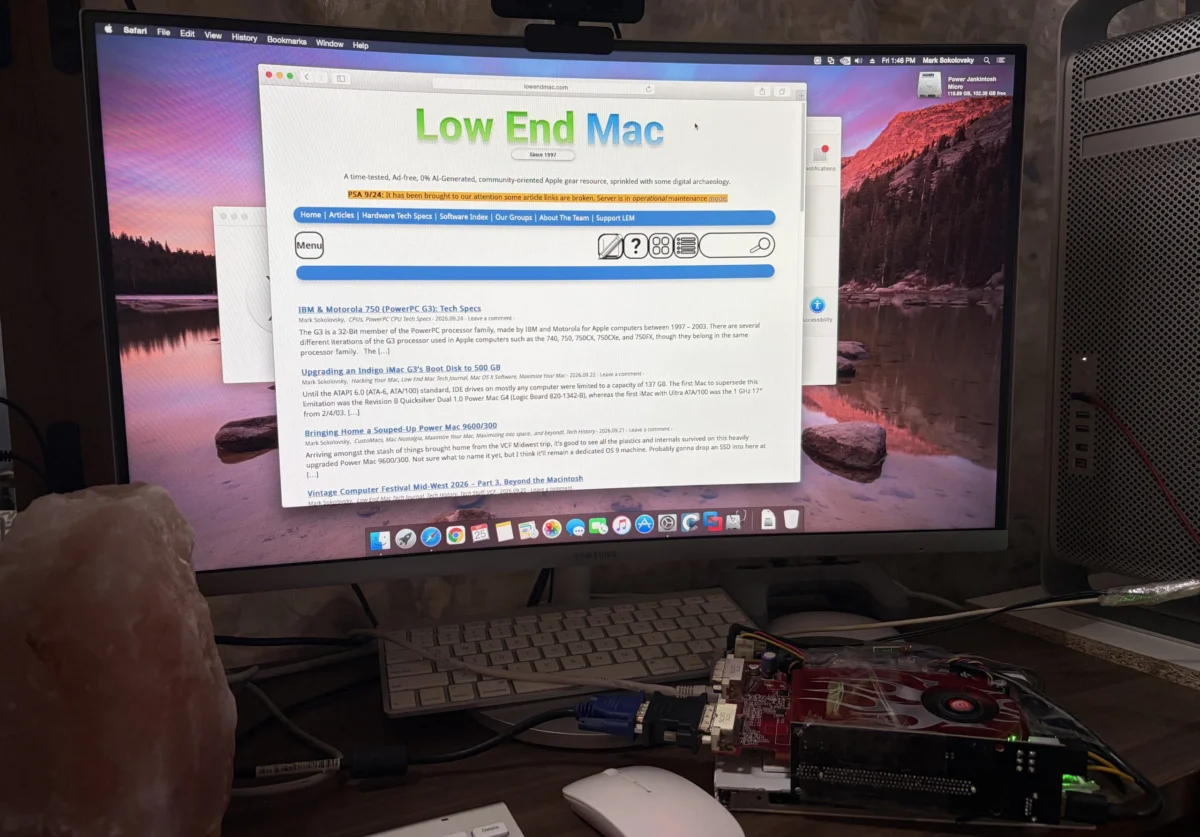
The international retrocomputing community has officially launched the 2026 iteration of RetroChallenge, a month-long event dedicated to the restoration, modification, and creative repurposing of legacy hardware. This year’s initiative, supported by the ACMS (Association for Computing Machinery and Science) and integrated with the HACKADAY RetroComputing Contest, invites participants from across the globe to document their technical projects, fostering a collaborative environment for engineers, hobbyists, and digital historians. The event serves as a platform for demonstrating technical ingenuity, with a final showcase scheduled for October 31, 2026, at the ACMS, where participants will present their achievements for competitive review.
Context and Scope of the RetroChallenge
RetroChallenge has historically functioned as a catalyst for innovation within the hobbyist computing sector. By encouraging participants to step outside the boundaries of standard hardware maintenance, the organizers aim to document the limits of legacy systems. The event is not merely an exhibition of antique technology; it is an exercise in reverse engineering and creative problem-solving. Judges for the 2026 competition are tasked with evaluating entries based on a multi-faceted rubric: technical difficulty, the ingenuity of the solution, overall outcomes, and the depth of passion demonstrated throughout the documentation process.

The inclusion of the HACKADAY RetroComputing Contest this year broadens the scope, offering participants access to a larger forum for peer feedback and community engagement. This synergy allows for a more robust exchange of ideas, as the judges actively participate by providing technical encouragement and expert guidance to those navigating the complexities of archaic hardware.
The Engineering Challenge: A Case Study in Modernizing the 2006 MacBook
One of the most notable projects currently gaining traction within the community is a "Franken-Mac" initiative that explores the potential of a 2006-era MacBook logic board to serve as the foundation for a high-performance, compact desktop computer. This project, which began as a conceptual exploration of an alternate history where Apple introduced a "Mac Studio" desktop in 2006, has evolved into a rigorous experiment in external GPU (eGPU) integration and power management.
The project began with the acquisition of two vintage MacBooks from the Wisconsin Computer Club, providing a platform to test the limits of Intel-based architecture from the mid-2000s. The researcher focused on the Core 2 Duo model, specifically addressing the chipset limitations inherent to the GMA 950 graphics processor. By restricting system memory to the 2 GB threshold, the developer successfully prevented memory address conflicts, a common bottleneck when attempting to bridge external PCIe devices to internal Mini PCIe slots.

Technical Chronology and Hardware Integration
The development process was defined by a series of iterative technical challenges, primarily centered on power delivery and hardware stability.
- Initial Prototyping: The project required the removal of the internal AirPort card to facilitate the connection of an eGPU via a Mini PCIe to PCIe adapter. Early testing indicated that the MacBook’s internal SATA power could not support the 12V requirement of a modern GPU, necessitating an external power source.
- Power Management Hurdles: The initial attempt to use a 12V 2A power supply resulted in system instability, characterized by garbled boot screens and subsequent reboots. This underscored the significant power draw of the ATI Radeon HD 2600 XT, which required higher amperage than initially anticipated.
- System Optimization: The breakthrough occurred when the developer replaced the inadequate power supply with a 12V 5A unit, salvaged and re-wired from an external storage array. This provided the necessary voltage stability to allow the system to successfully initialize the GPU and boot into a customized instance of Piker Alpha OS X Yosemite.
- Structural Realization: The final phase of the current build involved the repurposing of the original MacBook chassis as a structural housing. By cutting the bottom casing to accommodate the logic board, the developer created a modular, shielded unit that effectively manages thermals while maintaining the aesthetic continuity of the device.
Broader Implications for Retrocomputing
The significance of these projects extends beyond the individual success of the builder. As legacy hardware becomes increasingly scarce, the techniques developed during the RetroChallenge provide a roadmap for preservation and utility. The ability to integrate modern eGPUs into decade-old hardware demonstrates that "obsolete" technology can still perform contemporary tasks, such as high-definition graphical output and advanced data processing, when subjected to clever engineering.
Furthermore, the emphasis on documentation ensures that the knowledge gained is not lost to time. By sharing technical hurdles—such as power supply splicing, chipset limitations, and OS patching—participants contribute to a collective knowledge base that benefits the entire computing community.

Prizes and Community Recognition
The competitive aspect of the 2026 event is underscored by a series of prizes designed to encourage high-level participation. These include a $500 AUD voucher and specialized hardware components from industry partners such as ZuluSCSI. These incentives reflect the professionalization of the hobbyist sector, where the line between amateur enthusiast and professional hardware modifier continues to blur.
Judges will finalize their decisions over a six-week period following the October 31 showcase. The criteria will focus heavily on the "Show & Tell" presentations, where participants are expected to articulate their design process and the technical justifications for their modifications.
Analysis of Future Trends
The trajectory of the RetroChallenge suggests a shift toward more complex, hybrid systems. As developers become more adept at leveraging Linux kernels, specialized macOS patches, and custom hardware adapters, the barrier to entry for high-performance retrocomputing is lowering. The "Power Hackintosh" project serves as a prime example of this trend: it is not merely a restoration, but an architectural re-imagining.

The implications for the technology industry are twofold:
- Sustainability: By extending the life cycle of hardware by two decades or more, these enthusiasts are directly contributing to the reduction of electronic waste, providing a practical model for sustainable hardware management.
- Innovation: The constraints of old hardware force engineers to innovate in ways that modern, high-spec systems often render unnecessary. The necessity of solving power distribution and bus compatibility issues fosters a specific type of engineering acumen that is highly transferable to professional design and manufacturing sectors.
As the RetroChallenge 2026 continues throughout the month, the global community remains focused on the potential for these legacy systems to reach new heights. Whether through the revival of Apple’s early Intel-era machines or the complex restoration of mainframe hardware, the event stands as a testament to the enduring relevance of the machines that built the modern digital landscape. The final results, expected in late 2026, will likely highlight several projects that challenge current perceptions of hardware obsolescence and set a new standard for the retrocomputing field.