 Indra Gunadi
The Evolution of PSP Security and Custom Firmware
To understand the significance of this rapid jailbreak method, one must consider the historical cat-and-mouse game between Sony Interactive Entertainment and the homebrew community. When the PSP was first released, it utilized a proprietary operating system that was considered highly secure for its time. However, within months of its launch, hackers identified vulnerabilities in the console’s kernel, leading to the development of Custom Firmware (CFW).
Throughout the mid-2000s, the PSP became a prime target for security researchers and enthusiasts. The release of the PSP-2000—known as the "Slim and Lite"—and the subsequent PSP-3000 introduced hardware-level security patches intended to prevent the execution of unsigned code. Despite these countermeasures, the community consistently found ways to bypass Sony’s restrictions. The current method showcased in recent digital tutorials leverages the maturity of these exploits, utilizing refined "Infinity" or "Pro-C" firmware packages that are now virtually foolproof, even for those with minimal technical expertise.
Chronology of PSP Firmware Development
The journey from the original 1.00 firmware to the modern state of the console is marked by several key milestones:
- December 2004: The PSP launches in Japan with firmware version 1.00. Early hackers discover that the console lacks signature verification for homebrew applications.
- 2005–2006: Sony releases iterative updates (1.50, 2.00, etc.) to patch vulnerabilities. The "Dark Alex" era begins, with the creation of the first custom firmware (OE – Open Edition).
- 2007–2008: The introduction of the PSP-2000 brings "TA-088v3" motherboards, which initially resisted permanent modification, leading to the rise of "Temporary" or "LCFW" (Light Custom Firmware).
- 2010–2011: The release of the PSP-E1000 Street marks the end of the console’s lifecycle. By this time, the community has standardized the "6.60" and "6.61" firmware versions, which remain the industry standard for modding today.
- 2015–Present: The development of "Infinity" allows for a seamless, permanent jailbreak across all PSP models, effectively unifying the disparate modding methods of the previous decade.
Breaking Down the Five-Minute Process
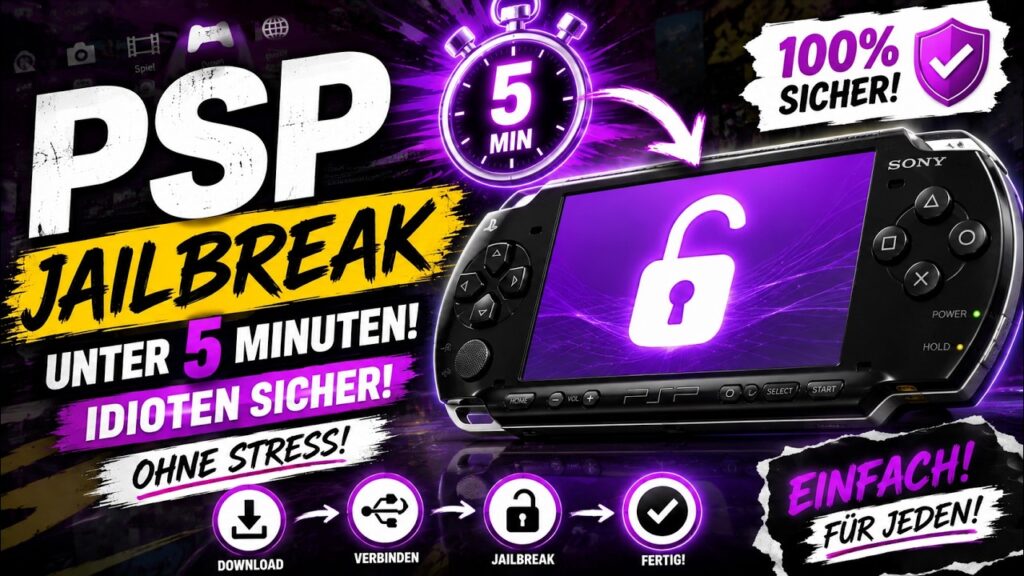
The recent tutorial simplifies what was once an hour-long, high-risk procedure into a streamlined, low-risk operation. The methodology relies on the console’s ability to run a "flasher" application directly from the Memory Stick Duo.
The process typically involves three primary stages:
- System Verification: Ensuring the PSP is running official firmware version 6.60 or 6.61. If not, the user must update via Sony’s official channels first.
- Payload Execution: Copying the installation files to the device’s storage. The custom firmware installer is launched as a standard game application from the XMB (XrossMediaBar) menu.
- Finalization: A brief reboot cycle that applies the patch to the console’s flash memory.
By avoiding complex technical jargon and focusing on a linear, step-by-step approach, the current generation of tutorials lowers the barrier to entry. This accessibility is essential for the preservation of the device, as it allows users to extend the functionality of the PSP to include emulators, file managers, and community-developed plugins that enhance the user experience far beyond the console’s original design limitations.
Data and Hardware Considerations
The longevity of the PSP is backed by robust market data. Despite being discontinued in 2014, the PSP sold over 80 million units worldwide. The high volume of hardware in circulation ensures that the market for replacement parts—such as batteries and displays—remains active.
From a technical perspective, the "Street" (E1000) model is particularly noteworthy. As a budget-oriented version of the console, it lacks Wi-Fi capabilities, which previously made firmware installation more difficult. Modern installers, however, have bypassed the need for network-based verification, meaning the E1000 is now just as easy to modify as the earlier, more feature-rich models.
Industry Perspectives and Legal Implications
While Sony Interactive Entertainment has not issued a recent statement regarding the modification of the PSP, the company has historically taken a firm stance against the circumvention of security measures on its platforms. In the past, such activities were often cited as a catalyst for piracy. However, the current consensus within the gaming industry has shifted toward viewing legacy hardware modification as a form of digital preservation.
Industry analysts suggest that because the PSP has been out of production for a decade and the PlayStation Store for the device is largely shuttered, the economic impact of jailbreaking is negligible. Instead, these modifications are increasingly viewed as a way to keep legacy software alive, allowing players to back up their physical media or play homebrew games that would otherwise be lost to time.
Broader Impact on the Gaming Community
The ease with which a PSP can be modified today has several implications for the gaming ecosystem:
- Preservation: Digital archives and fan-made patches for games are now more accessible. As physical UMD (Universal Media Disc) drives are prone to mechanical failure, the ability to run games from a microSD card—facilitated by modern adapters—is a critical factor in hardware longevity.
- Homebrew Renaissance: The PSP remains a favorite for developers creating new, low-resource games. The ability to easily install custom firmware encourages the development of new software, keeping the platform active in hobbyist circles.
- Educational Value: For many, the process of jailbreaking a PSP serves as an entry point into computer science and embedded systems. Understanding how a kernel is exploited and how firmware is flashed provides a foundational knowledge of how consumer electronics operate.
Conclusion
The availability of simplified, rapid jailbreak methods for the PSP is a testament to the dedication of the hobbyist community. By reducing the time and technical skill required to modify these devices, current tutorials ensure that the PlayStation Portable will continue to function long after its original intended lifespan. While the process remains a gray area regarding traditional manufacturer support, its role in preventing the obsolescence of a landmark piece of gaming history is undeniable. As users continue to seek out these devices on the secondary market, the ability to effortlessly customize and maintain them ensures that the PSP will remain a fixture in the gaming landscape for years to come. Whether for the purpose of playing classic titles or exploring the potential of homebrew software, the five-minute jailbreak represents the final, most stable iteration of a decade-long evolution in console modification.