 Indra Gunadi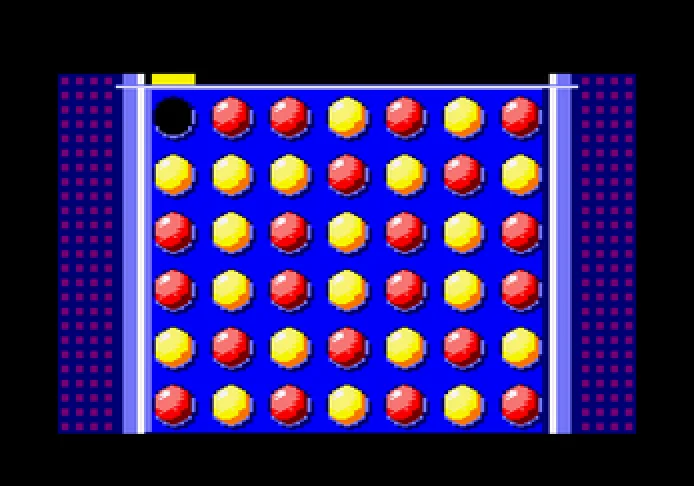
The release of Puissance 4 Deluxe for the Amstrad CPC platform represents a noteworthy milestone in the ongoing preservation and active development of 8-bit computing history. Developed by Orko and utilizing AI-assisted coding methodologies, this modern interpretation of the classic "Connect Four" strategy game demonstrates that the legacy hardware market remains a vibrant space for software innovation. By leveraging Assembly language to ensure performance optimization, the title provides a bridge between vintage computing limitations and modern expectations for polished user experiences.
The Evolution of 8-Bit Strategy Software
To understand the significance of Puissance 4 Deluxe, one must contextualize the current state of the Amstrad CPC scene. Released in 1984, the Amstrad CPC series—ranging from the 464 to the 6128—was a staple of the European home computer market, competing directly with the Commodore 64 and the ZX Spectrum. While many classic games of that era were constrained by the 64KB RAM limits and the Zilog Z80 processor’s clock speed, modern developers are now revisiting these machines with a deeper understanding of hardware architecture.
The classic Connect Four formula has long been a staple of home computing due to its elegant mathematical foundation. As a zero-sum, perfect information game, it is an ideal candidate for algorithmic implementation. In the 1980s, rudimentary versions of this game were common across almost all 8-bit systems. However, the 2026 release of Puissance 4 Deluxe differentiates itself through its "Deluxe" moniker, which implies an overhaul of the visual interface, a more sophisticated AI engine, and a focus on software stability that was often lacking in early hobbyist releases.
Technical Implementation and AI Integration
One of the most notable aspects of this release is the integration of AI-assisted code. In the context of modern software development, this refers to the use of Large Language Models (LLMs) or specialized code-generation tools to assist in writing, debugging, and optimizing Assembly language code. Assembly remains the gold standard for Amstrad CPC development because it allows for direct manipulation of the Z80 registers and memory, ensuring that the game runs at a fluid frame rate without the overhead inherent in higher-level languages like BASIC.
The use of AI in this development cycle highlights a shifting trend in the retro-computing community. As the barrier to entry for assembly programming is historically high due to its complexity and the steep learning curve of machine-code registers, AI tools have enabled developers to bridge the gap between creative vision and technical execution. This allows for a more complex AI opponent than what would have been possible for a single developer working in the mid-80s, effectively allowing the CPC to calculate deeper move trees without introducing latency.
Chronology of the Project
The development cycle for Puissance 4 Deluxe reflects a growing trend of short-cycle, high-quality releases within the homebrew scene.
- Early 2026: Initial conceptualization of the project, focusing on a robust AI opponent that could challenge human players at various skill levels.
- Mid-2026: Implementation of the core game engine in Z80 Assembly. During this phase, the developer prioritized the "Hard" AI mode, requiring the implementation of a minimax algorithm—a decision-making tool that minimizes the possible loss for a worst-case scenario.
- Q3 2026: Integration of UI elements and optimization for the Amstrad CPC’s unique color palette and resolution constraints.
- October 2026: Final testing, debugging, and public release.
This timeline indicates a disciplined development approach. By focusing on a singular, well-defined objective—the strategy game—the developer was able to provide a polished final product that avoids the feature creep often associated with larger homebrew projects.
Comparative Analysis of Difficulty Scaling
A primary feature of the new release is the tiered difficulty system. Puissance 4 Deluxe offers a "Beginner" mode, which relies on less aggressive move-pruning, and a "Hard" mode, which utilizes the full capacity of the CPU to analyze subsequent turns.
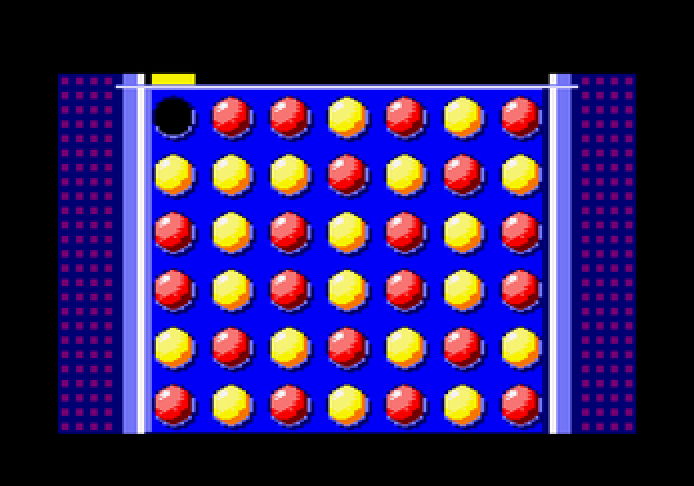
In strategy game development, scaling difficulty for an 8-bit processor requires a delicate balance. If the AI is too simple, the game loses replayability; if the AI is too complex, the player is forced to wait for long "thinking" intervals while the Z80 processes the tree. By optimizing the Assembly code, Orko has managed to achieve a response time that feels immediate, a factor that is critical for player engagement on legacy hardware.
Broader Impact on the Retro-Gaming Ecosystem
The release of software for the Amstrad CPC in 2026 serves as a testament to the longevity of the platform. There are several implications for this trend:
- Preservation through Usage: The continued creation of new software encourages the maintenance of existing hardware. As long as there is new content to play, collectors and hobbyists are incentivized to keep their original CPC units functional.
- Skill Transfer: Younger developers are engaging with 1980s-era machine architecture, effectively keeping the knowledge of Assembly and low-level optimization alive. This cross-generational knowledge transfer is essential for digital preservation.
- Community Standards: The "Deluxe" quality of this release sets a new benchmark for what is expected in the homebrew scene. It moves away from "proof-of-concept" software toward finished, retail-ready products.
Industry observers note that the homebrew market has become a significant subset of the gaming industry. While it does not generate the revenue of modern AAA titles, its cultural value is immense. It maintains a living history of computing that would otherwise be relegated to static museum displays.
Official Responses and Community Reception
While Orko has not issued a formal press statement, the reaction from the Amstrad CPC community—as observed on various forums and preservation sites—has been largely positive. Users have highlighted the game’s accessibility as a major selling point. In the 1980s, many games were notoriously difficult, often serving as digital puzzles that required immense patience. The inclusion of a beginner-friendly mode is viewed as a modern design choice that accommodates a broader audience, including those who may not have grown up with the unforgiving difficulty curves of the 8-bit era.
Furthermore, the game’s aesthetic presentation, which makes efficient use of the CPC’s limited color depth, has been praised for its clarity. In games involving grid-based strategy, visual legibility is paramount, and the developer’s attention to UI design has been identified as a key factor in the game’s success.
Future Implications for 8-Bit Development
The success of Puissance 4 Deluxe points to a likely future where AI-assisted development becomes the standard for retro-gaming projects. By automating the more tedious aspects of memory management and syntax checking, developers can focus on gameplay design and AI logic. This is expected to lead to a surge in high-quality homebrew releases for the Amstrad CPC, ZX Spectrum, and Commodore 64 platforms in the coming years.
Moreover, the move toward Assembly-based titles ensures that these games remain compatible with original hardware. As emulator technology also continues to improve, the accessibility of these titles is effectively guaranteed for the foreseeable future.
Conclusion
Puissance 4 Deluxe (2026) is more than just a simple implementation of a classic game; it is a synthesis of historical hardware and contemporary development practices. By successfully navigating the technical limitations of the Amstrad CPC while providing a modern, multi-tiered gameplay experience, Orko has contributed a significant piece of software to the ongoing narrative of the home computer era. As the community looks toward the future of 8-bit development, this title will likely be remembered as a hallmark of how modern efficiency can breathe new life into classic, foundational systems. The game stands as a reminder that strategy, logic, and hardware performance are timeless elements of the gaming experience, regardless of the decade in which the code was written.