 Edi Durjana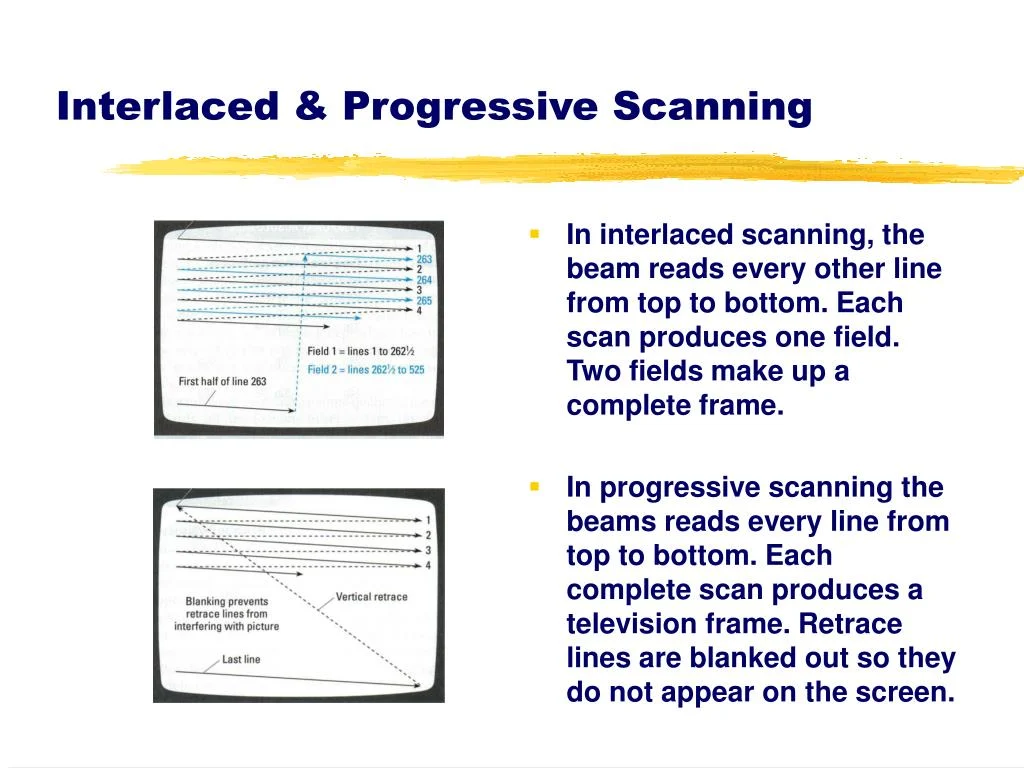
The PlayStation 2 stands as one of the defining hardware achievements in the history of interactive entertainment, having shipped over 155 million units worldwide since its March 2000 launch in Japan. Beneath its sleek black chassis, the console was a machine engineered almost entirely from the ground up for the analog era of Cathode Ray Tube television sets. Rather than operating around modern pixel-mapped resolutions, the architecture of the PlayStation 2 was tightly bound to scanlines, analog timing, and the idiosyncrasies of standard-definition display signals. While an official PS2 Linux toolkit allowed for VGA monitor attachments utilizing VESA display modes, this feature remained an afterthought that saw virtually no commercial software adoption. Understanding the technical realities of the PlayStation 2 requires examining how its unique hardware constraints dictated everything from framerate consistency to aspect ratios and regional video standards.
Hardware Constraints and the Pursuit of 60 Frames Per Second
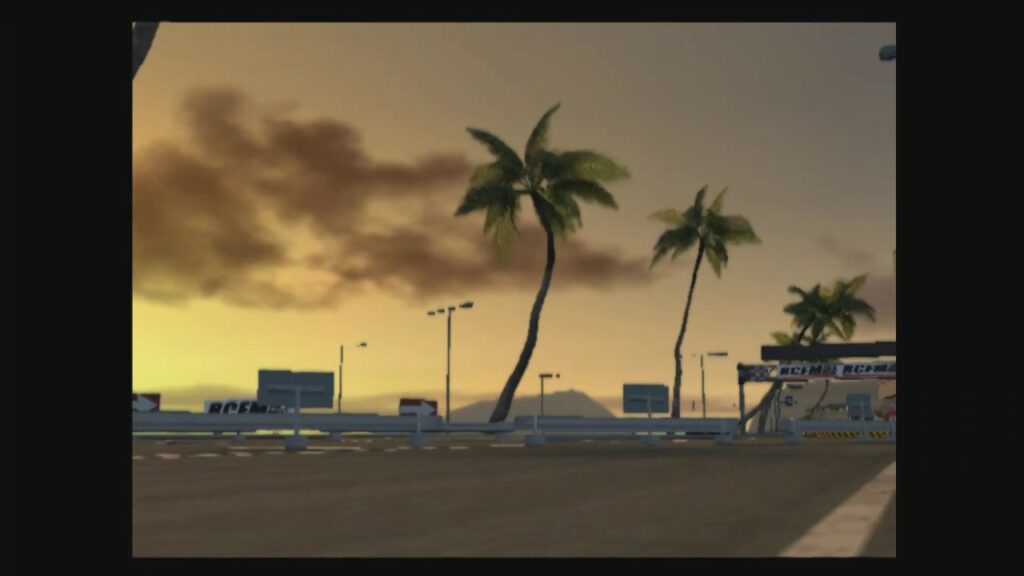
At the heart of the console’s graphical prowess was the Graphics Synthesizer, the PlayStation 2’s custom GPU. Featuring a remarkably small 4MB of embedded video RAM, the GS could rarely hold a full 640×480 framebuffer simultaneously with other necessary render targets. Sony repeatedly instructed developers to treat this memory not as traditional VRAM, but as a high-speed scratchpad. Despite this tight limitation, the Graphics Synthesizer boasted unmatched memory bandwidth. Operations that crippled competing GPUs—such as alpha blending, multipass rendering, and rapid framebuffer copying—were executed at virtually zero performance cost on the PS2.
Furthermore, the inclusion of two SIMD coprocessors, Vector Unit 0 and Vector Unit 1, gave the system a fully programmable geometry pipeline. This hardware configuration enabled advanced geometric features years before they appeared in contemporary PC hardware, such as mesh shaders later introduced in NVIDIA’s GeForce RTX 20 series.
To maximize this hardware and avoid severe image degradation, developers were heavily incentivized to lock their titles at a solid 60Hz/60fps on NTSC systems, or 50Hz/50fps on PAL systems. Early software development kits initially supported only interlaced scanline modes, requiring a 60Hz signal to achieve a 640×448 resolution. As software tools matured, developers could choose between full-frame rendering and field-rendered mode.
Field rendering—an interlaced technique—halved memory requirements per frame by outputting images at 640×240 or 512×224. This method drastically reduced the time needed to render the final output, making it an attractive option for fast-paced action titles. However, it introduced a severe caveat. Because the hardware relied on the CRT to blend alternating fields into a coherent image, any dropped frame caused the entire image to shift vertically by a single scanline. Consequently, developers could not tolerate fluctuating framerates. To prevent visual tearing and vertical jitter, games like SSX 3 would internally drop frames to preserve a locked 60Hz target rather than allowing the framerate to drift.
Conversely, frame rendering produced full-frame images at resolutions like 640×448, increasing render times and making a consistent 60fps harder to maintain. Yet, frame-rendered modes were more forgiving when performance dipped, simply displaying the second field of the previous frame without the jarring vertical shift. This technical balancing act explains why the PlayStation 2 catalog boasts a disproportionately high number of 60fps titles, particularly during its launch window, distinguishing it from competitors like the original Xbox and the Nintendo GameCube.
The Widescreen Revolution and Aspect Ratio Compromises
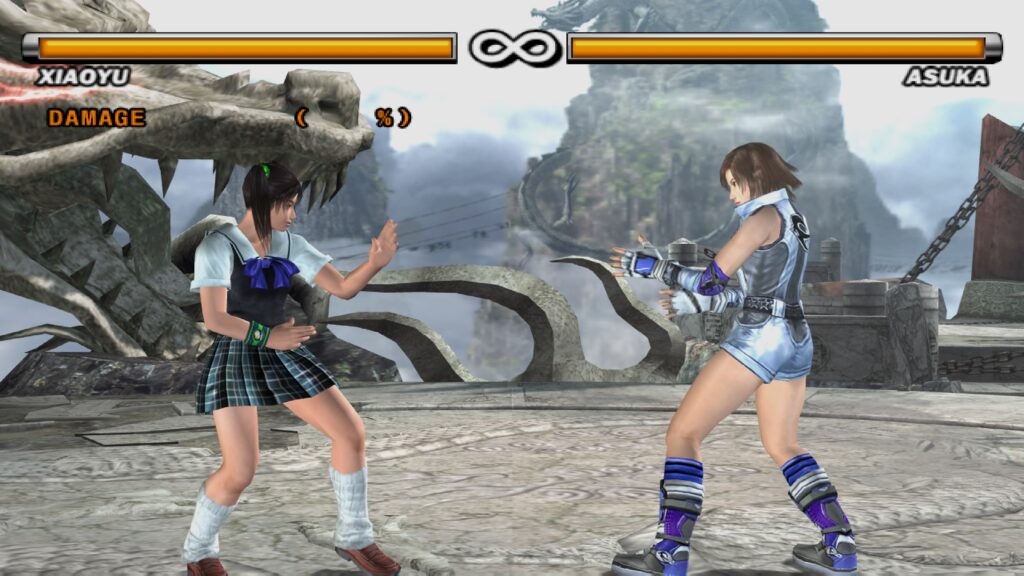
As the sixth generation progressed into the early 2000s, the consumer electronics market began shifting toward widescreen displays, accelerated by the PlayStation 2’s secondary function as a mainstream DVD player. Anamorphic widescreen became a prominent industry term, and manufacturers began mass-producing 16:9 CRT televisions. While the vast majority of PS2 software was authored for traditional 4:3 aspect ratios, growing consumer demand prompted developers to implement native widescreen options.
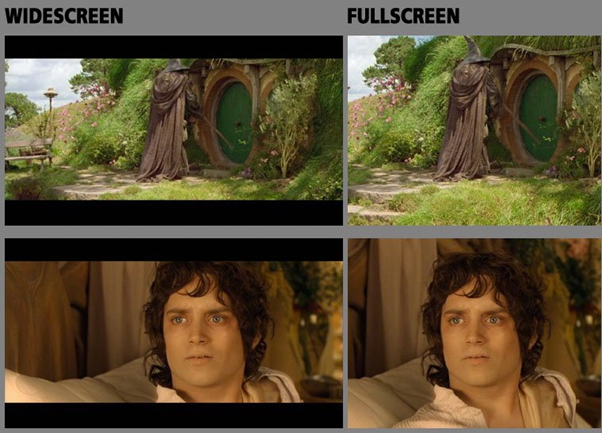
Console developers typically addressed widescreen implementation through three distinct scaling methods: Hor+ (expanding the horizontal field of view), Vert- (cropping the top and bottom of the image and zooming in), and combinations thereof. The overwhelming majority of PlayStation 2 games opted for the Vert- approach. Titles such as Tekken 5, alongside major platforming franchises like Ratchet & Clank and Jak and Daxter, utilized quasi-widescreen modes. In these configurations, gameplay-agnostic vertical space was discarded, and the central image was magnified to fill a 16:9 frame.
This approach was largely dictated by the limitations of the Graphics Synthesizer’s 4MB eDRAM. Zooming and scaling operations were computationally free on the GS, whereas expanding the horizontal resolution (Hor+) demanded significantly more memory bandwidth and pixel processing overhead—resources the console’s architecture could rarely spare while maintaining acceptable performance and visual fidelity.
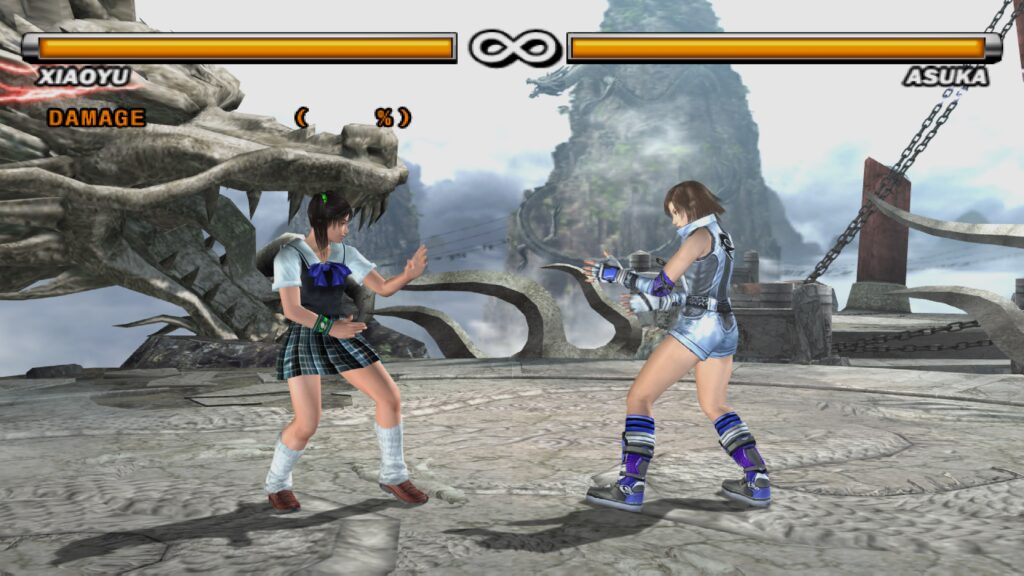
The Advent of Progressive Scan and Resolution Tricks
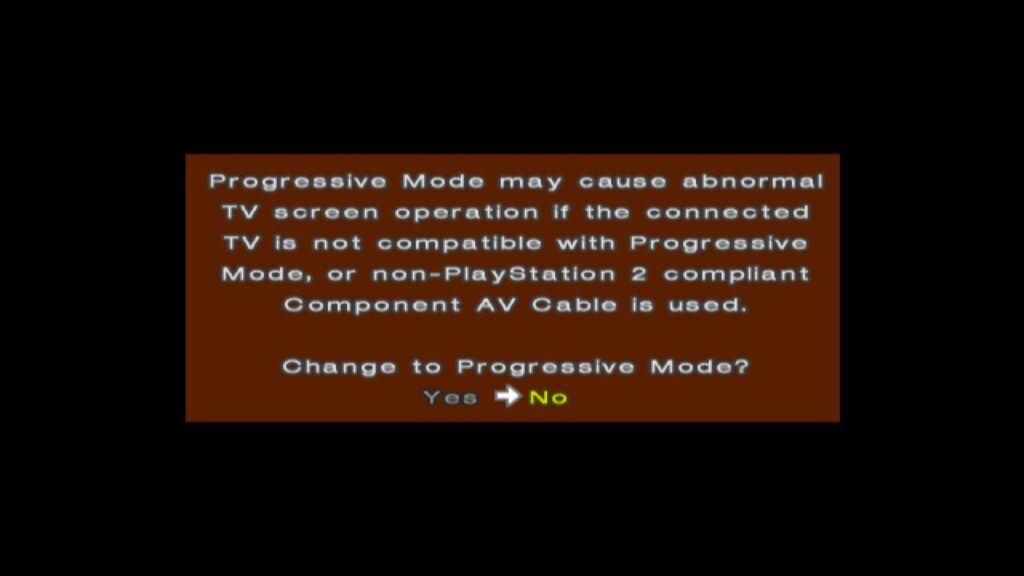
Nearing the twilight of the CRT’s market dominance, the consumer electronics industry introduced Enhanced-Definition Television specifications, paving the way for progressive scan display modes capable of outputting 480p and 576p signals. By utilizing component cables on NTSC displays or RGB SCART cables in European and Japanese markets, players could bypass interlacing artifacts by holding specific button combinations at boot.
While progressive scan offered cleaner, full-height backbuffers, it often required developers to reduce framebuffer depth to 16 bits per pixel or lower to fit within the 4MB eDRAM limit, frequently resulting in noticeable color banding. Despite this compromise, progressive scan imagery generally surpassed interlaced output in clarity.
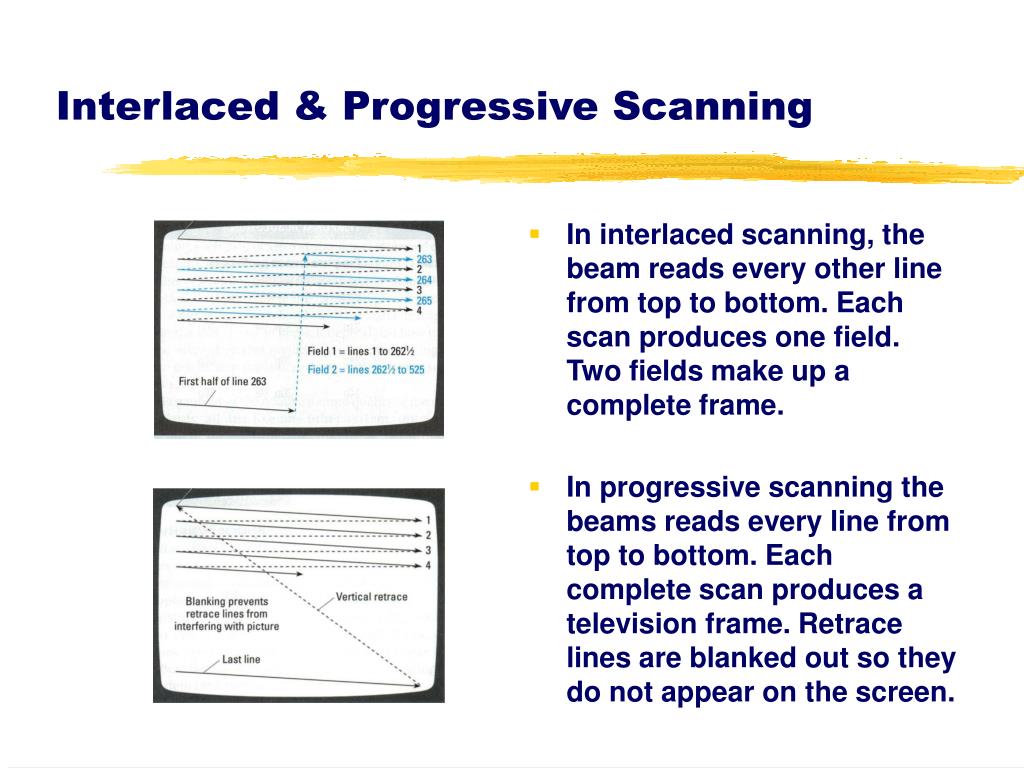
Pushing hardware boundaries further, select titles such as Gran Turismo 4 and Valkyrie Profile 2 advertised high-definition 1080i modes. Beneath the marketing, however, these resolutions relied on clever internal frame-buffering techniques rather than native pixel generation. Gran Turismo 4, for instance, rendered internally at 640×540 before utilizing the Graphics Synthesizer Cathode Ray Tube Controller to magnify the image horizontally by an integer factor of three and vertically by a factor of two, achieving a 1920×1080 output that appeared remarkably convincing on period-accurate analog hardware.
The European PAL Dilemma and Regional Disparities
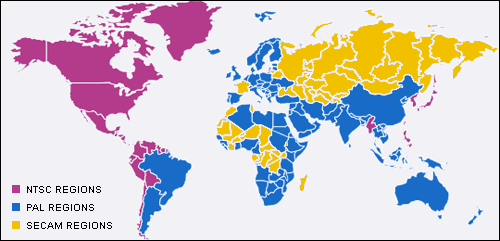
While North American and Japanese consumers enjoyed 60Hz NTSC signals, European players faced persistent hurdles stemming from the PAL television standard, which operated natively at 50Hz. When the PlayStation 2 launched in Europe, competing systems like the Sega Dreamcast frequently offered dedicated PAL60 modes, mitigating the 16.9% reduction in gameplay speed and the mandatory letterboxing caused by PAL’s higher native vertical resolution.
Sony initially declined to standardize PAL60 support across the PlayStation 2 hardware ecosystem, leaving early European software locked to 50Hz. While British developers such as Psygnosis and Core Design frequently optimized their titles by rendering additional scanlines for PAL displays—resulting in higher static image fidelity at the expense of motion fluidity—the broader industry struggled with the conversion process. Role-playing game developers, most notably Square with Final Fantasy X, cited the immense data footprint of high-quality Full Motion Video sequences as a barrier to shipping dual 50Hz and 50Hz/60Hz assets on a single DVD, forcing European players to endure slower playback speeds.
By 2002, software publishers increasingly incorporated 50Hz/60Hz toggles into their titles, though the console typically achieved this by switching to an NTSC 480i signal rather than a true PAL60 protocol. Fortunately, the proliferation of multi-system compatible CRT televisions in Europe during the late 1990s minimized hardware incompatibility issues, eventually rendering single-rate 50Hz releases the exception rather than the rule.
The Transition to LCD Displays and Modern Preservation
The mid-2000s transition from analog CRT displays to digital LCD and early HDTV technology presented severe challenges for sixth-generation hardware. As the industry embraced high-definition flat-panel displays, older analog consoles suffered from noticeable latency, scaling artifacts, and severe ghosting. Visual techniques that relied on the natural phosphor persistence of CRT screens—such as motion blur—looked deeply flawed on early LCD panels.
Efforts to mitigate these visual discrepancies included in-game settings like Soulcalibur III’s Software Overdrive, which attempted to suppress afterimages on digital displays. However, systemic input latency and motion blur persisted as long-term hurdles for retro gaming enthusiasts. Only with recent advancements in simulation software, such as real-time CRT beam-racing shaders and frame-injection technologies pioneered by display researchers and emulation communities, have modern OLED and high-refresh-rate displays begun replicating the latency, motion clarity, and aesthetic warmth of the original analog hardware environment that defined the PlayStation 2 era.