 Farhan hamdan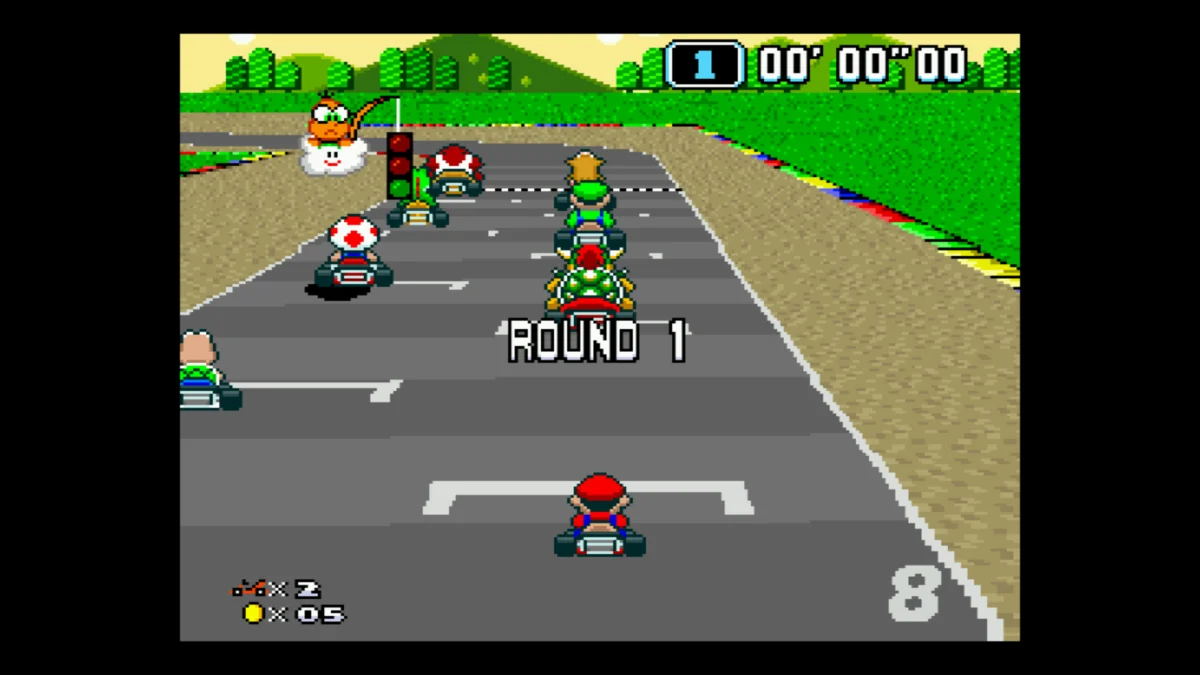
The landscape of retro video game modification has reached a notable milestone with the release of a comprehensive software patch for the 1992 classic Super Mario Kart. Developed by modder Psicopompo, version 1.2 of the modification transforms the game’s single-player presentation by expanding the gameplay viewport to occupy the entirety of the Super Nintendo Entertainment System (SNES) 256×224 display resolution. Historically, players experienced the title through a horizontal split-screen configuration, utilizing the upper half of the display for active racing and the lower half for a real-time track map and position tracker. By stripping away this split-screen division, the newly released patch offers a modernized visual perspective while maintaining the native performance characteristics and framerates of the original hardware.
Main Facts of the Modification
The scope of the Psicopompo modification extends far beyond a simple graphical scaling adjustment. Because the underlying architecture of Super Mario Kart was engineered explicitly around a halved camera viewport, item management, and kart physics coordinate systems, achieving a true fullscreen image required a deep-level engineering overhaul. The developer had to analyze Object Attribute Memory (OAM) and Direct Memory Access (DMA) routines, alongside hardware-level investigations involving SNES motherboard traces and chip signaling.
While the single-player campaign has been successfully adapted to utilize the full display area, the two-player cooperative and competitive modes remain entirely untouched, preserving their traditional split-screen layout. Testing conducted on original, unmodified SNES hardware running version 1.2 demonstrates that the game operates stably without introducing performance degradation, graphical stutter, or input latency. However, this visual expansion comes with structural trade-offs. The traditional on-screen map and the rear-view mirror have been omitted from the fullscreen presentation. According to technical statements provided by Psicopompo, both features rely heavily on Mode 7 graphics processing, High-Definition Horizontal Blanking Interrupts (HDMA), and calculations specifically tailored to the native split-screen framework. Reintegrating these elements would have necessitated reintroducing a segmented frame layout, thereby undermining the core programming logic removed during the optimization process.
Historical Background and Technical Context of Super Mario Kart
Released by Nintendo in August 1992 in North America and Japan—followed by a European release in January 1993—Super Mario Kart stands as a foundational pillar of the racing and kart-racing genres. Developed under the direction of Shigeru Miyamoto and designed by Tadashi Sugiyama and Hideki Konno, the game was conceived at a time when Nintendo sought to maximize the graphical capabilities of its 16-bit console. The defining technical achievement of Super Mario Kart was its pioneering use of Mode 7, a SNES graphics mode that allowed a background layer to be rotated and scaled affine-transformed to create a pseudo-3D perspective from a top-down viewpoint.
To render this pseudo-3D environment smoothly alongside fast-paced sprite rendering for multiple racers, the developers encountered severe hardware constraints. The SNES CPU, a 16-bit Ricoh 5A22 operating at approximately 3.58 MHz, lacked the raw processing power to render a full-screen, high-speed, scaling 3D world for multiple perspectives simultaneously. Consequently, the split-screen design was not merely an aesthetic choice but a necessary technical compromise to reduce the rendering burden on the console’s graphics coprocessors. The top half of the screen rendered the primary player’s camera perspective, while the bottom half either tracked the second player in multiplayer modes or displayed telemetry, maps, and rear-view perspectives in single-player mode. For over three decades, this layout remained the definitive, unalterable standard of the game.
Chronology of Modern ROM Hacking and Viewport Modifications

The journey toward achieving a true fullscreen Super Mario Kart experience spans years of community experimentation and hardware upscaling innovations. In the early eras of console emulation and hardware modification, enthusiasts experimented with aspect ratio stretching and custom display configurations to fill modern widescreen displays. In the hardware modification space, users often relied on external video processors and line doublers—such as the RetroTINK series—to manually zoom in on the top half of the video output. While this method successfully eliminated the black borders and the lower map display on modern flat-panel displays, it resulted in a heavily cropped, low-resolution image with significant pixel distortion and the complete loss of spatial awareness provided by the map.
As retro-dev communities gained deeper proficiency in assembly language, SNES architecture, and memory mapping, complex software hacks began to emerge. Over the past decade, tool-assisted speedrunning (TAS) communities and ROM hackers have increasingly targeted core game mechanics, physics engines, and display logic. Psicopompo’s project represents the culmination of this technical maturation. The development timeline shifted from superficial texture and sprite replacements to invasive engine rewrites. By meticulously reverse-engineering the memory addresses responsible for camera offset calculations and collision detection boundaries, the developer bridged the gap between theoretical emulation adjustments and native hardware execution. The release of version 1.2 on ROMhacking.net under ID 10083 marks the transition of this project from experimental beta builds to a stable, publicly accessible release.
Community Reception and Industry Implications
The release of the fullscreen patch has generated substantial discussion within the retro gaming, emulator development, and preservation communities. Content creators and hardware enthusiasts, such as the community figure known as Wobbling Pixel, quickly highlighted the technical novelty of the patch, drawing widespread attention across digital platforms. Retro gaming analysts note that this modification challenges long-held assumptions regarding the rigidity of 16-bit software design. For decades, it was widely accepted by programmers that altering foundational display parameters of Mode 7 games would destabilize the execution loop. Psicopompo’s work demonstrates that skilled developers can successfully untangle decades-old assembly code to breathe new life into classic software.
Furthermore, this modification arrives at a time when interest in the historical production of Super Mario Kart remains high. Comprehensive retrospectives, such as documentary work produced by historical gaming analysts like Yahel from Wrestling With Gaming, continue to educate contemporary audiences on the immense engineering challenges Nintendo’s internal teams faced during the early 1990s. These documentaries highlight how hardware limitations forced creative compromises, making modern software interventions all the more fascinating to observers of video game history.
Broader Impact on Retro Preservation and Future Outlook
The implications of Psicopompo’s Super Mario Kart patch extend beyond a single quality-of-life modification. As the retro gaming community matures, preservation efforts are increasingly shifting from passive emulation—such as running unmodified ROMs through software emulators—to active software enhancement. Hackers and developers are utilizing advanced debugging tools, logic analyzers, and reverse-engineering frameworks to modernize classic titles while preserving their authentic hardware compatibility.
By proving that complex split-screen engines can be safely refactored into fullscreen presentations without sacrificing framerates, this project establishes a technical precedent for future modifications of other classic SNES, Sega Genesis, and early 3D-era titles. While purists may debate the artistic merit of altering a game’s original framing—especially given the absence of the tactical map and rear-view mirror—the consensus among technical analysts is that such modifications expand the boundaries of what is possible on legacy hardware. Players interested in experiencing Super Mario Kart from a newly unconstrained perspective can access the patch documentation, setup guides, and download files directly via authorized community hosting platforms like ROMhacking.net.