 Cecilia Chamidah Nur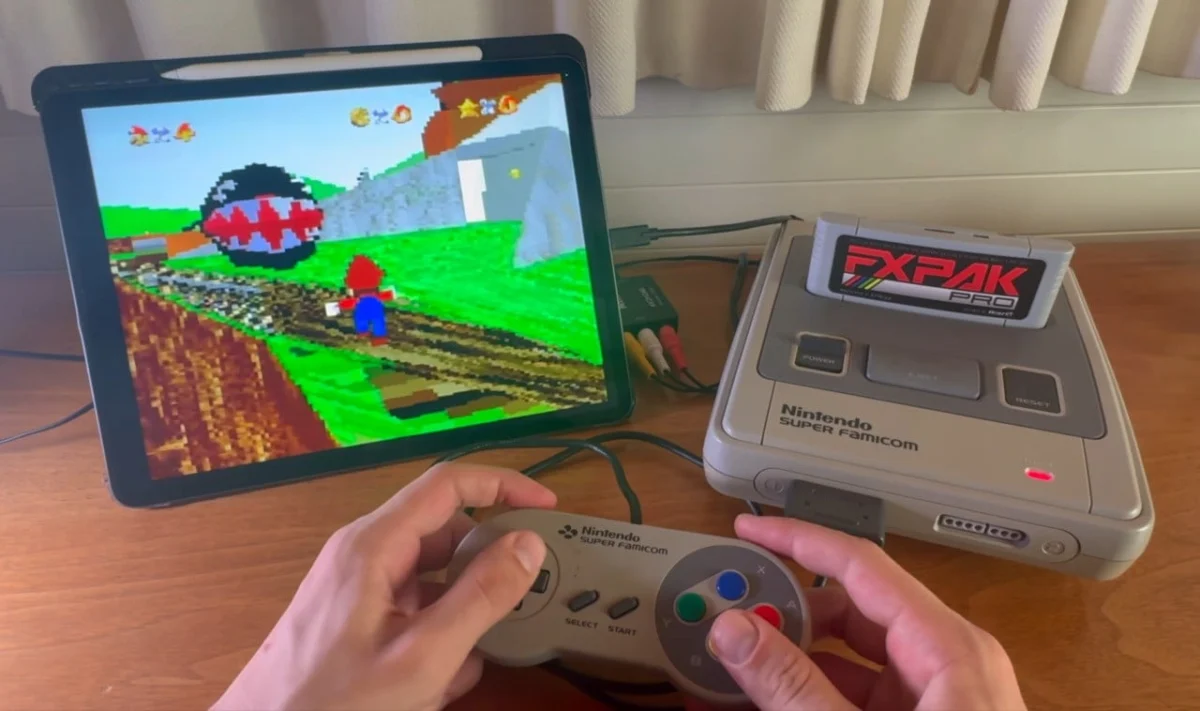
In the mid-1990s, the video game industry stood at a precarious crossroads. As Nintendo prepared to transition the market from the 16-bit era to the burgeoning world of 3D gaming with the Nintendo 64, the Super Nintendo Entertainment System (SNES) remained a dominant force in living rooms worldwide. To sustain interest in the aging hardware, developers pushed the system to its absolute limits, creating masterworks like Donkey Kong Country, Killer Instinct, and Super Mario World 2: Yoshi’s Island. These titles utilized advanced coprocessor chips and specialized software techniques to extract performance levels that were previously considered impossible for the hardware.
Three decades later, the spirit of this technical exploration remains alive within the homebrew community. Modder and developer Game of Tobi has recently showcased a significant technical achievement: a functional port of the seminal 1996 title Super Mario 64 running on original SNES hardware. This project represents a convergence of modern reverse-engineering techniques and the vintage silicon architecture of the 1990s.
The Technical Architecture: Harnessing the Super FX 2 Chip
The core of this port’s success lies in the utilization of the Super FX 2 chip. Originally developed by Argonaut Games, the Super FX line was an experimental RISC processor integrated directly into SNES game cartridges. By offloading complex geometric calculations from the SNES’s primary Ricoh 5A22 CPU to the dedicated Super FX chip, developers were able to render 3D polygons—a feat the standard console was never designed to handle.
The Super FX 2, an enhanced successor to the original, was most notably utilized in the SNES conversion of Doom, the racing game Winter Gold, and the long-delayed Star Fox 2. Tobi’s port leverages the specific capabilities of the Super FX 2, particularly its ability to render rudimentary texture mapping onto 3D polygons. By integrating this hardware-level support, the engine can handle the verticality and complex geometry inherent in the Super Mario 64 level design, such as the expansive landscapes of Bob-Omb Battlefield and the interior corridors of Peach’s Castle.
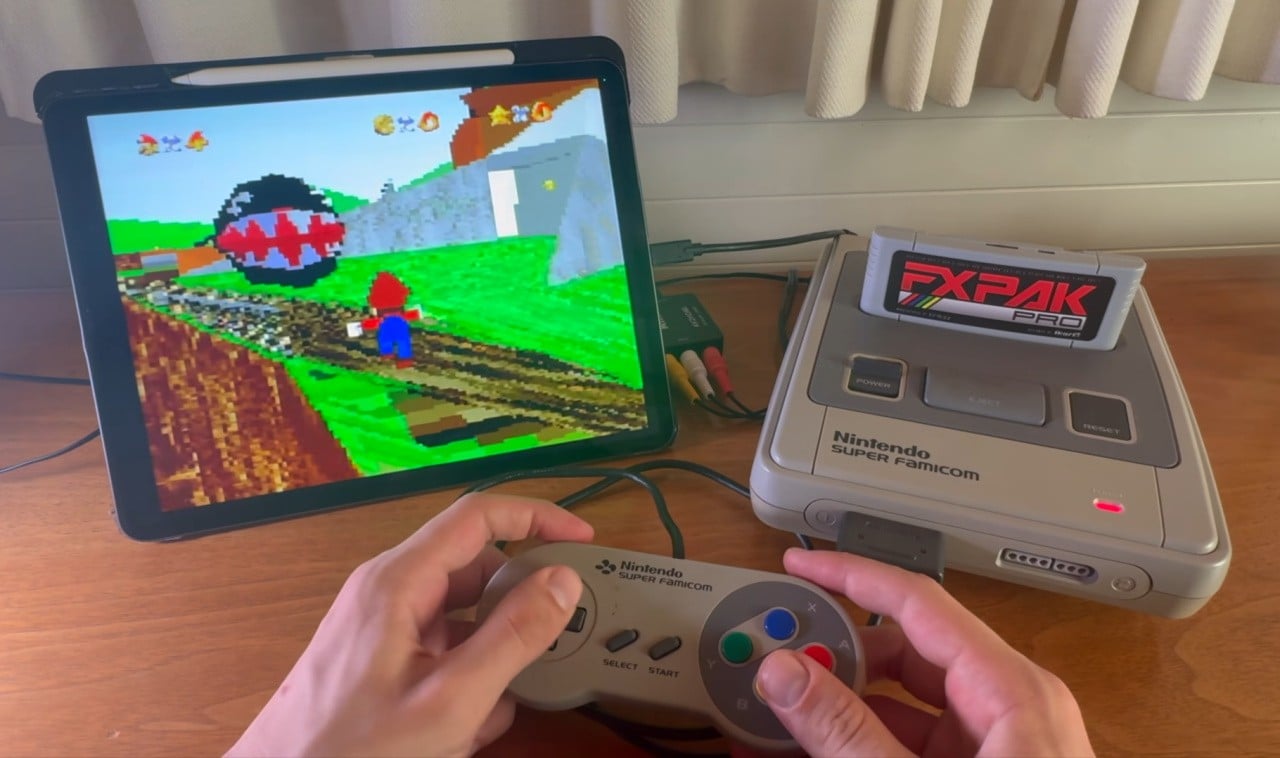
While the engine for this port was built from the ground up by Tobi, the project benefits from the public availability of the original Super Mario 64 source code. This has allowed for the accurate replication of character models, animations, and movement physics, ensuring that the port retains the distinct "feel" of the Nintendo 64 original, despite the massive disparity in computational power between the two consoles.
A Chronology of Retro Engineering
The history of bringing 3D Nintendo titles to the 16-bit era is a relatively recent phenomenon, fueled by the rise of "recompilation" and "decompilation" projects.
- 1996: Super Mario 64 launches on the Nintendo 64, revolutionizing 3D platforming. The SNES, meanwhile, begins its phase-out period.
- 2020-2022: The widespread release of the "sm64-port" project, a fan-led effort to decompile the game’s original C code, provides the foundation for developers to experiment with the title on non-native hardware.
- 2024: Modder "retroports" demonstrates an early, non-hardware-accelerated proof of concept for running Mario 64 on SNES-adjacent architecture, sparking intense interest in the viability of a true port.
- 2025-2026: Game of Tobi releases multiple iterations of their work, including a notable Game Boy Advance recompilation, demonstrating a deep expertise in cross-platform 3D rendering.
- Late 2026: The current Super FX 2-based prototype is showcased, marking the first time the game has successfully utilized dedicated SNES coprocessor hardware for 3D environment rendering.
Comparative Performance and Constraints
Despite the ingenuity of the port, the project is currently in an early state. Performance testing reveals frame-rate instability, particularly in areas with high geometric density or complex character interactions. This is a direct consequence of the hardware bottleneck; even with the Super FX 2 acting as a co-processor, the SNES memory bus and the 16-bit architecture struggle to keep pace with the data throughput required by Mario 64’s complex 3D engine.
When compared to the original Nintendo 64 version, the SNES port exhibits a distinct visual aesthetic. The texture mapping is lower in resolution, and the color palette is constrained by the limitations of the SNES’s Video Display Processor. However, from a computer science perspective, the project serves as a masterclass in optimization. The ability to translate Nintendo’s 3D primitives into a format digestible by a 1990s-era coprocessor is a significant milestone in software engineering.
Implications for the Homebrew Community
The broader impact of such projects extends beyond mere novelty. By deconstructing how modern games can be ported to legacy systems, developers are preserving a deeper understanding of how hardware-software interaction functioned during the "Golden Age" of gaming.

"It is less about the end-user experience and more about the boundaries of the hardware," notes software engineer and independent researcher Marcus Thorne. "When you force a Super FX chip to do work it wasn’t explicitly programmed for—like rendering Mario’s modern assets—you uncover latent potential in that hardware. It changes the historical record of what these consoles were actually capable of."
Furthermore, these projects serve as a form of digital preservation. As original N64 hardware ages, the ability to port its software library to other platforms, including modern PCs or FPGA-based consoles, ensures that these cultural artifacts remain accessible to future generations.
Official Responses and Industry Outlook
Nintendo has traditionally maintained a rigorous stance regarding the use of its intellectual property. While the company has not issued a formal statement concerning the Game of Tobi project, the history of "cease and desist" orders regarding fan-led game projects suggests that the long-term viability of a public release remains uncertain.
However, the technical community has largely embraced the effort as a legitimate pursuit of academic and historical interest. Because the project functions as a port of code rather than a commercial product, it occupies a distinct space in the grey area of digital rights. For now, the developer has indicated that there is no immediate plan for a public release, citing the need for significant optimization and technical refinement before the software could be considered stable enough for external use.
The Future of 16-Bit 3D
The work performed by Game of Tobi and contemporaries like "retroports" demonstrates that the SNES remains a platform with untapped potential. By continuing to iterate on these ports, the community is essentially writing an "alternate history" of gaming, one where the 16-bit era might have persisted for years longer than it did in reality.
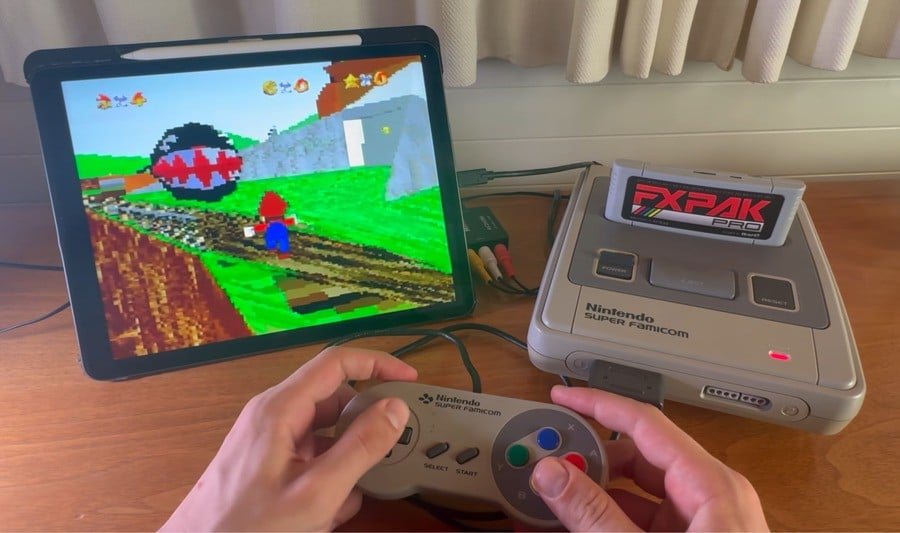
As the code becomes more efficient, the focus will likely shift from basic functionality to feature parity. Challenges remain in implementing advanced lighting effects, complex sound synthesis—which the SNES handles differently than the N64—and the management of large map data. Nevertheless, the successful implementation of 3D environmental features like verticality and texture mapping proves that the fundamental hurdle of "3D on 16-bit" has been cleared.
In the final analysis, the project stands as a tribute to both the creators of the original hardware and the modern programmers who refuse to let the limits of 1990s technology define the ceiling of what is possible. Whether or not this specific iteration ever reaches a wider audience, it has successfully pushed the boundaries of legacy systems, proving that even three decades later, the Super Nintendo still has new tricks to teach us. For fans of the medium, the sight of a 3D Chain Chomp roaming a 16-bit landscape is a powerful reminder of the enduring creative passion that continues to drive the global homebrew community.