 Farhan hamdan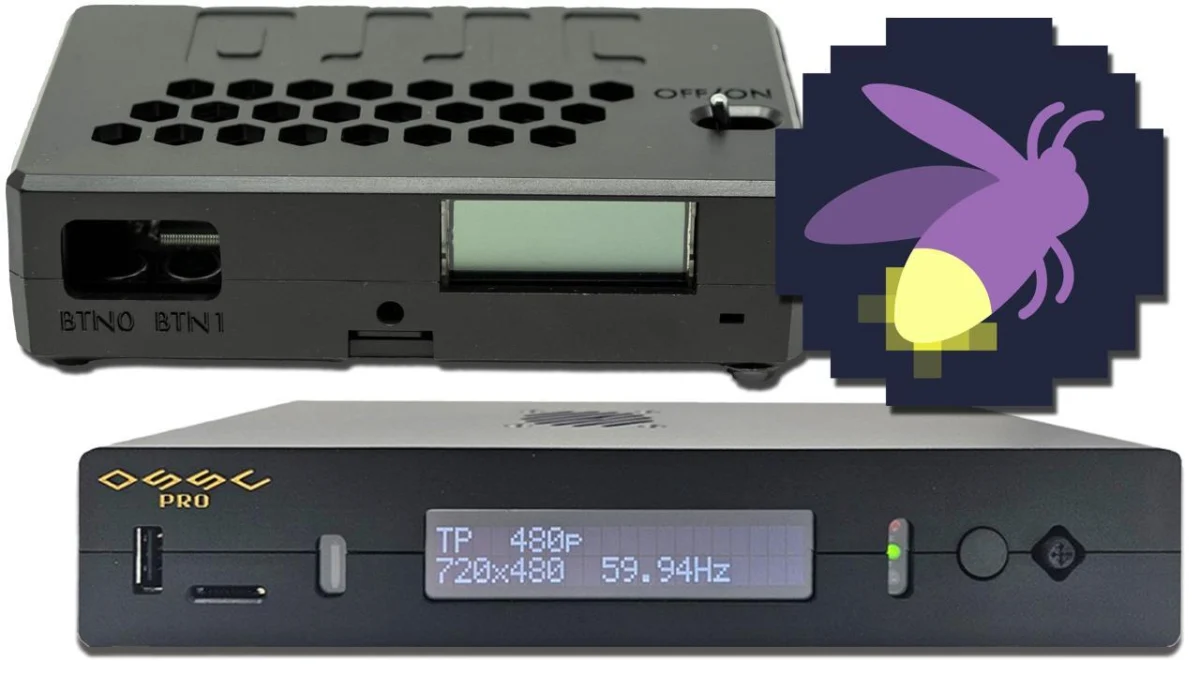
The landscape of retro video game preservation and display technology has taken another significant step forward as RetroRGB announces a comprehensive expansion of its technical documentation and profile repository for Lumacode-modified hardware. Dedicated retro gaming enthusiasts, hardware modders, and digital preservationists now have access to an expanded suite of resources designed to optimize the performance of classic consoles on modern high-definition displays. This latest update introduces detailed, step-by-step instructions for loading and configuring profiles specifically tailored for Lumacode-modified systems utilizing the high-end Open Source Scan Converter (OSSC) Pro. Alongside these extensive guides, the platform has released an initial batch of meticulously pre-configured profile packs catering to vintage platforms, including the Nintendo Entertainment System (NES), the Sega Master System (SMS), and the classic Atari 2600.
This development addresses long-standing challenges in the retro gaming community regarding video signal processing, color accuracy, and display compatibility. By bridging the technological gap between vintage analog hardware and contemporary digital display interfaces, these new resources aim to streamline the user experience for both novice enthusiasts and seasoned hardware veterans. Furthermore, the initiative includes a thorough revision and consolidation of the legacy documentation for the original OSSC model, ensuring that users across different hardware generations benefit from standardized, high-quality display profiles.
Main Facts and Technological Scope
The core of this update centers on the integration of Lumacode technology with advanced line-doubling and scaling hardware. Lumacode is an innovative digital video modification standard designed for legacy consoles that traditionally output standard-definition composite, S-Video, or basic RGB signals. By tapping directly into the video generation pipeline of vintage systems, Lumacode bypasses many of the traditional analog degradation vectors, transmitting pristine digital video data to external scan converters like the OSSC and the OSSC Pro.
However, maximizing the potential of these modified systems requires precise calibration of sampling phases, aspect ratios, timings, and scaling filters within the scan converter. The newly published OSSC Pro Lumacode guide provides users with the exact parameters needed to eliminate visual artifacts, reduce input latency, and achieve pixel-perfect scaling. The accompanying profile packs eliminate the tedious trial-and-error process of manual calibration. Users can simply download the pre-configured files, transfer them to their hardware’s storage media, and immediately enjoy accurate video output from systems like the NES, SMS, and Atari 2600.
In addition to publishing the OSSC Pro resources, the project includes an update to the original OSSC Lumacode instructions. While the underlying architecture of the original OSSC differs significantly from the more powerful OSSC Pro, maintaining synchronized documentation ensures that the broader community retains access to reliable setup procedures. Crucially, it has been noted that users who have already successfully deployed previous profile iterations on the original hardware are not required to update their current configurations, as the core functionality remains stable and fully compatible.
Background Context and Chronological Evolution
The journey toward modern digital perfection for retro consoles has evolved over several decades. When retro gaming began experiencing a massive cultural and commercial renaissance in the late 2000s and early 2010s, enthusiasts relied heavily on bulky cathode-ray tube (CRT) televisions to achieve authentic visual quality. CRTs natively handled the 240p and 480i signals produced by fourth-generation and earlier consoles, displaying them with the intended scanline appearance and zero perceptible input lag.
However, as flat-screen liquid-crystal display (LCD) and organic light-emitting diode (OLED) monitors became the global standard, legacy analog connections—such as composite video and RF coaxial cables—yielded abysmal visual results due to poor scaling algorithms and analog-to-digital conversion lag. This prompted the development of specialized external scan converters. The introduction of the original Open Source Scan Converter marked a watershed moment in the community, providing an open-source, ultra-low-latency hardware solution that processed RGB and component video signals for digital flat panels.

Despite the success of the original OSSC, certain consoles presented inherent limitations due to the quality of their internal analog video encoders. To combat this, hardware engineers developed internal digital mods like Lumacode, which extract digital video streams directly from the console’s graphics processing units before they are converted into analog signals. As these internal modifications gained traction, the demand for dedicated, highly optimized scan converter profiles grew exponentially. The release of the OSSC Pro—featuring vastly superior processing power, frame-rate conversion capabilities, and flexible profile management—created the need for specialized configuration guides. The current expansion by RetroRGB represents the culmination of years of hardware testing, firmware updates, and community-driven profile refinement designed to harmonize these advanced technologies.
Practical Innovations: Simplified Profile Naming
Beyond the primary focus on Lumacode profiles, the recent update introduces a practical, user-friendly discovery regarding file management on OSSC hardware. Historically, managing multiple configuration profiles on both the original OSSC and the OSSC Pro could prove frustrating due to the devices’ internal file-naming conventions. When users saved or loaded profiles, the operating system typically displayed numerical designations rather than descriptive titles, forcing enthusiasts to maintain separate written logs to remember which slot corresponded to which console or configuration.
While official configuration methods—such as those recommended by prominent community developers like Wobbling Pixels—remain robust and ideal for comprehensive profile packs, they can sometimes present a steep learning curve for casual users. To address this usability hurdle, the latest update outlines an alternative, streamlined profile-naming trick. This method allows users to assign clear, readable text identifiers directly to profile files.
When implemented, the OSSC systems display the customized text name upon profile selection rather than a cryptic file number. This simple yet effective organizational enhancement drastically reduces navigation errors, making it significantly easier for users to switch between different console profiles during multi-system gaming sessions. The technique was utilized directly in the creation and organization of the newly released Lumacode profile packs, ensuring an intuitive experience from the moment of installation.
Broader Impact and Implications for Retro Preservation
The continuous refinement of tools like the OSSC Pro and Lumacode modifications carries profound implications for the future of digital video game preservation and the retro gaming hobby at large. As vintage hardware ages, the electronic components responsible for generating and transmitting video signals become increasingly susceptible to degradation, capacitor failure, and signal interference. Internal digital modifications not only revitalize aging hardware by providing crystal-clear output for modern displays, but they also safeguard these consoles against the eventual obsolescence of legacy analog display infrastructure.
Furthermore, standardized configuration profiles foster a more accessible hobby. Historically, achieving professional-grade video output from retro consoles required deep technical knowledge of video timings, horizontal and vertical blanking intervals, and phase sampling. By lowering the technical barrier to entry, pre-configured profile packs allow a broader audience of gamers, educators, and historians to experience classic software in its optimal visual form.
The collaborative, open-source nature of projects like the OSSC and Lumacode ensures that these technologies will continue to adapt as new display standards emerge. As hardware testers continue to evaluate additional consoles, the expanding repository of profiles will grow to encompass a wider array of vintage systems. Ultimately, these technical advancements ensure that the foundational eras of interactive entertainment remain visually faithful, highly accessible, and preserved for future generations of players and researchers.