 Farhan hamdan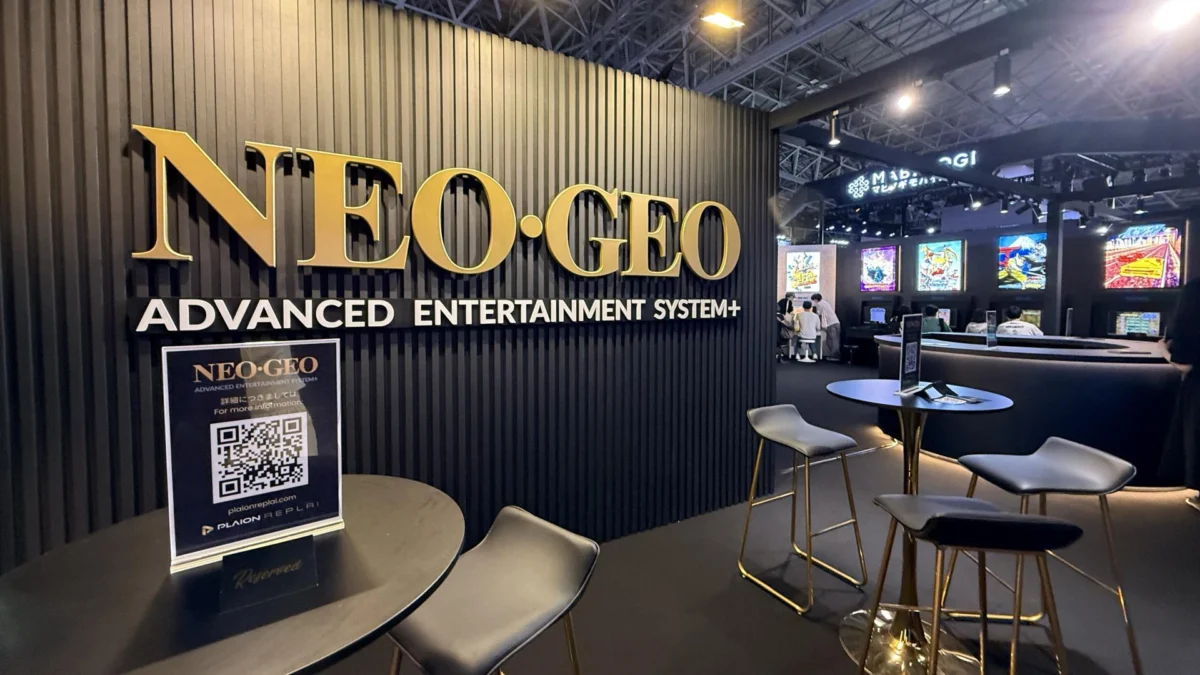
The Tokyo Game Show served as the backdrop for one of the most anticipated hardware demonstrations in the retro gaming community, as publisher Plaion presented fully functional units of the upcoming Neo Geo AES+. Attendees at the convention floor were granted unprecedented hands-on access to the hardware, permitted to run diagnostic tests, connect legacy peripherals, and evaluate the overall performance of the revised system. While early impressions of the hardware’s technical output and build quality have been overwhelmingly positive, the public exhibition also brought renewed attention to the turbulent rollout, recent manufacturing hurdles, and the controversial communication strategy that has defined the product’s development cycle.
Background and Development Context
The Neo Geo AES, originally released by SNK in 1990, remains a legendary piece of interactive entertainment history. Known for bringing arcade-perfect experiences into consumer living rooms at a prohibitive cost, the platform commands a dedicated global following. The announcement of the Neo Geo AES+ aimed to bridge the gap between vintage hardware preservation and modern display technologies, offering enthusiasts an updated console capable of native compatibility with legacy software alongside contemporary video outputs.
However, the path to production has been fraught with obstacles. Industry observers and prospective buyers experienced significant confusion in the months leading up to the Tokyo Game Show, fueled by shifting release windows and conflicting reports regarding supply chain vulnerabilities. The hardware, initially slated for an earlier release, faced a substantial one-year postponement, pushing its official arrival to September 2027.
Industry analysts and reports from video game chroniclers have since clarified that the postponement stemmed primarily from the microchip market rather than architectural flaws within the console itself. Specifically, the integrated circuits designated for the system’s cartridges suffered from unprecedented price surges and availability shortages. Rather than passing exorbitant costs onto consumers or accepting indefinite supply chain bottlenecks, Plaion elected to execute a comprehensive hardware redesign of the cartridges, substituting scarce components with alternative chipsets while striving to maintain performance parity and cost stability.
Hands-On Demonstrations and Technical Specifications
At the Tokyo Game Show, Plaion’s demonstration booths provided the first tangible proof of these engineering adjustments. Hardware testers and community content creators thoroughly examined the console’s DIP switch configurations, video output capabilities, and accessory compatibility.
Observation of the system’s DIP switches revealed flexible operational modes. The console appears to support either analog or HDMI video output independently rather than simultaneously. For high-definition displays, the HDMI interface provides selectable resolutions of 720p and 1080p, complemented by dedicated cropping options. These scaling features are expected to assist users in achieving precise integer scaling, particularly for modern 1080p displays and specialized arcade monitors such as those produced by Arcooda. Furthermore, a 16:9 toggle has been included, which—paradoxically, given the traditional 4:3 nature of classic titles—enables proper aspect ratio correction on specific modern display hardware designed with native widescreen parameters.
To accommodate displays incompatible with the unconventional 59.6Hz refresh rate native to classic Neo Geo architecture, the console features a 60Hz operational mode. Additional enthusiast-oriented features include built-in overclocking options, catering to users seeking to mitigate native hardware slowdowns during graphically intense gameplay sequences.

Analog video functionality has also been clarified through technical evaluations conducted on the convention floor. The system utilizes a MiniDIN output interface styled identically to the Sega Genesis/MegaDrive 2. While this ensures broad compatibility with widely available RGB SCART and composite video cables, it omits native S-Video support. Hardware experts have noted potential risks regarding low-quality third-party passthrough cables—a known hazard historically associated with certain MegaDrive iterations—though seasoned retro gaming enthusiasts are generally well-versed in cabling safety standards. Field tests utilizing professional video monitor (PVM) equipment successfully verified the integrity of the console’s analog signal generation.
Peripherals, Software Compatibility, and Special Editions
Hardware compatibility tests yielded encouraging results for collectors invested in existing Neo Geo ecosystems. Demonstrations confirmed that the AES+ operates seamlessly with third-party enhancements, including Furrtek’s MVS-to-AES conversion adapters and the BackBit MVS ROM Cartridge. This level of backward compatibility ensures that users can leverage existing software libraries without being restricted exclusively to newly manufactured media.
Regarding input devices, the bundled wireless controllers are slated to ship with dual adapter configurations, accommodating both USB standards and original Neo Geo console ports. Alongside the hardware demonstrations, developers showcased a slate of newly announced software titles slated for the platform, ensuring ongoing content support.
For high-tier collectors, details regarding the $1,000 Ultimate Edition have emerged via community unboxing previews. The premium bundle features specialized packaging, enhanced physical contents, and proprietary accessories designed to appeal to dedicated brand loyalists.
Industry Implications and Criticisms of Corporate Communication
Despite the technical success of the Tokyo Game Show demonstrations, Plaion’s public relations strategy has faced severe criticism from consumers and industry commentators alike. The primary grievance centers on an extended period of corporate silence following initial leaks regarding the 2027 delay.
Rather than proactively addressing supply chain challenges through direct, official statements or transparent multimedia updates—a standard practice in modern hardware manufacturing—the company remained largely unresponsive. Observers noted that relying heavily on third-party influencers and convention appearances to convey critical product updates left consumers to navigate months of speculation and uncertainty. This communication vacuum reportedly resulted in a notable wave of canceled pre-orders among disillusioned supporters.
Industry analysts point out that in an era where direct-to-consumer communication via digital channels requires minimal overhead, prolonged opacity risks eroding consumer trust, regardless of the ultimate quality of the physical product. While the hardware presented at the Tokyo Game Show demonstrates that the engineering team successfully navigated significant manufacturing hurdles, the friction experienced during the pre-release phase highlights ongoing challenges in managing community expectations within the niche retro hardware market.
Ultimately, the technical reception at the Tokyo Game Show suggests that the Neo Geo AES+ will deliver the feature set and performance desired by long-term fans of the franchise. However, the rollout serves as a cautionary case study in the importance of transparent corporate communication during hardware development cycles.