 Farhan hamdan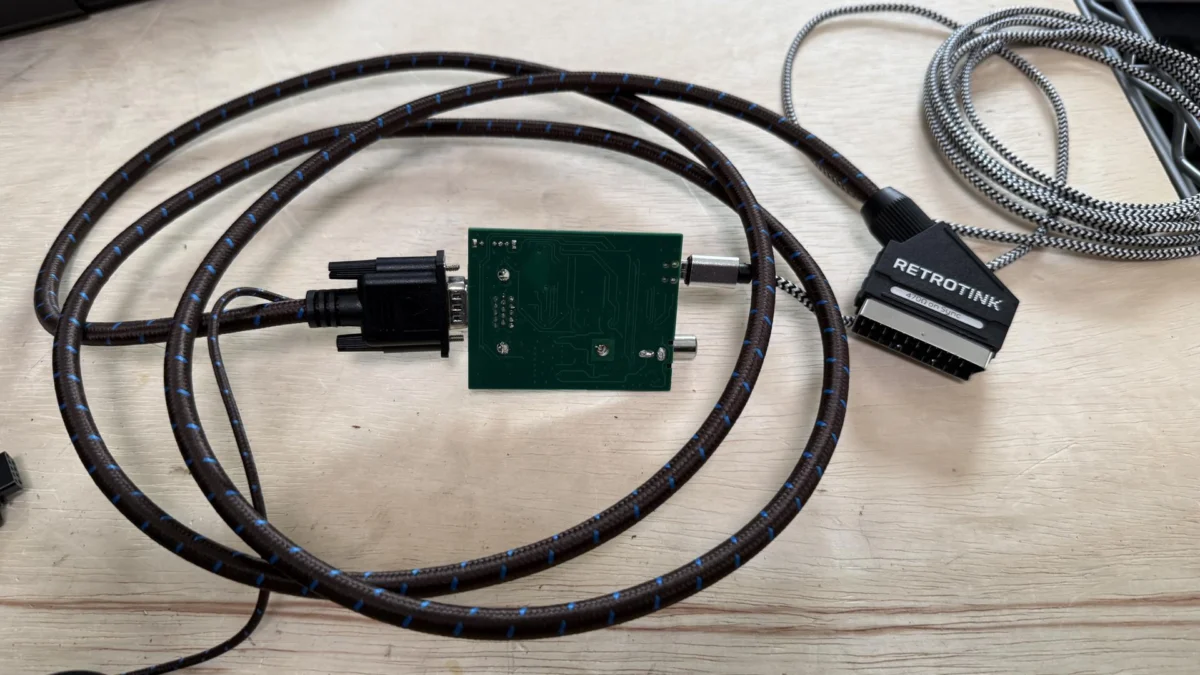
The landscape of retro video game hardware modifications continues to evolve rapidly, offering enthusiasts increasingly sophisticated methods to connect vintage consoles to modern and legacy display technologies. Developer C0pperdragon has recently expanded the ecosystem surrounding the Lumacode modification project by introducing an upcoming RGB and YPbPr component video adapter. This new hardware peripheral is designed to interface seamlessly with any existing Lumacode-modded console, providing high-quality analog video output options without requiring any physical alterations to previously installed modifications. A comprehensive livestream demonstration recently showcased the prototype’s capabilities, setup procedures, and technical specifications, signaling a major milestone for retro gaming enthusiasts who prefer playing on cathode-ray tube (CRT) monitors and professional video monitors (PVMs).
Background and Context of the Lumacode Project
To understand the significance of the new analog adapter, one must examine the origins of the Lumacode project itself. Developed by the prominent hardware engineer known in the community as C0pperdragon, Lumacode emerged as an innovative digital video modification standard tailored for vintage gaming consoles. Traditional video modifications for older systems often relied on complex analog circuits or direct digital-to-analog conversions that could vary wildly in signal fidelity depending on the hardware revision and external cabling. Lumacode fundamentally altered this approach by digitizing video signals internally at the source, allowing for pristine digital transmission to scalers and modern flat-panel displays.
However, a persistent challenge within the retro gaming community has been balancing the desire for modern digital clarity with the authentic experience of playing on legacy analog displays, such as consumer CRT televisions and high-grade studio PVMs. While digital-to-analog converters exist, they often introduce latency, signal degradation, or compatibility issues. C0pperdragon’s newly developed adapter bridges this gap by accepting the digital Lumacode stream and outputting exceptionally clean analog RGB SCART and YPbPr component video signals. This development effectively grants early adopters and future enthusiasts the best of both worlds: the robust digital internal architecture of Lumacode combined with versatile analog output options.
Technical Specifications and Signal Integrity
During the recent public testing phase, the prototype adapter underwent rigorous technical evaluation, including oscilloscope testing to measure signal stability and voltage output. The results demonstrated remarkable engineering precision. Testing revealed that all three primary RGB color signals measured almost perfectly at the industry-standard 700 millivolts. Furthermore, the synchronization signals performed precisely within expected parameters, measuring just under 1.4 volts when utilizing a standard passthrough cable and approximately 400 millivolts when paired with a correctly configured D-Sub to SCART cable featuring the appropriate resistance on the sync line.
Maintaining accurate voltage levels is critical in retro video hardware engineering. Deviations from standard thresholds can lead to overly bright images, washed-out colors, or display synchronization failures, particularly on sensitive professional monitoring equipment. By achieving such precise voltage output, C0pperdragon ensures that the adapter delivers professional-grade video fidelity, minimizing signal noise and preserving the original artistic intent of classic video games.
Setup, Configuration, and User Experience
Despite the advanced engineering underlying the hardware, the installation and daily operation of the adapter have been designed for maximum user accessibility. Integrating the device into an existing setup requires no hardware modifications to the console itself. Users simply connect the RCA cable originating from any Lumacode-modded console directly into the adapter’s input port, supply power, and attach the appropriate output cabling.

For YPbPr component video output, users require a standard D-Sub adapter or a D-Sub to RCA cable. For RGB SCART output, technical recommendations suggest utilizing a MiSTer-compatible cable equipped with a resistor on the sync line, such as the established RetroTINK D-Sub to SCART cable. Once cabling is secured, a physical toggle switch on the unit matches the output signal type to the connected display.
Configuration of the device is managed through an intuitive on-screen display menu accessed via onboard physical buttons. Users can select the specific console currently connected to the adapter, and the system automatically saves the last-used configuration. This persistent memory ensures that user preferences remain intact even after powering down the system or performing firmware updates.
For displays requiring fine-tuning, the adapter includes a straightforward calibration process for phase and gain adjustments. By performing a long-press on the board’s control button, users can enter the adjustment mode. The calibration methodology is notably user-friendly: the user toggles the setting in one direction until signal failure occurs, reverses direction until the image stabilizes and then fails again, and finally positions the setting midway between the two failure points. After a brief pause, the system automatically saves the calibrated values, completing the setup process.
Chronology and Expected Market Release
The public revelation of the RGB and YPbPr adapter follows a steady timeline of development and community engagement led by C0pperdragon and independent hardware reviewers. Initial discussions regarding the Lumacode architecture began circulating within technical forums earlier in the year, culminating in detailed interviews and deep dives into the digital digitizer boards.
The subsequent decision to develop an analog companion board was driven by community demand for reliable CRT and PVM compatibility. Following the recent livestream demonstration and oscilloscope testing phase, industry observers anticipate that the final hardware revision will enter full production. Current projections indicate an official commercial release before the end of the year. Pricing and regional distribution channels have not yet been formally announced, but hardware updates are expected to be published through established retro gaming technical outlets as manufacturing schedules solidify.
Broader Impact and System Implications
The introduction of the Lumacode analog adapter carries significant implications for the broader retro gaming ecosystem, particularly regarding hardware versatility and multi-console routing setups. Because the adapter operates downstream from the internal Lumacode installation, existing hardware owners are not required to purchase replacement internal boards or perform complex retrofits.
Furthermore, advanced enthusiasts can potentially configure complex switching environments. Preliminary analysis suggests that users could connect both analog and digital converters to a shared distribution switch. This configuration would enable a single Lumacode-modded console to output simultaneous video streams to both a legacy CRT display for authentic gameplay and a digital video scaler for modern flat-panel streaming or recording, provided a buffered switch is utilized. Such flexibility maximizes the utility of a single console modification, reducing both clutter and hardware redundancy for collectors who maintain mixed display environments.
As the release window approaches, technical reviewers plan to publish comprehensive video demonstrations exploring advanced switching configurations, light gun responsiveness, and specific use-case scenarios across various classic hardware platforms. The successful integration of high-fidelity analog output into the digital Lumacode framework marks another significant step forward in the preservation and enjoyment of vintage digital entertainment technology.