Farhan hamdan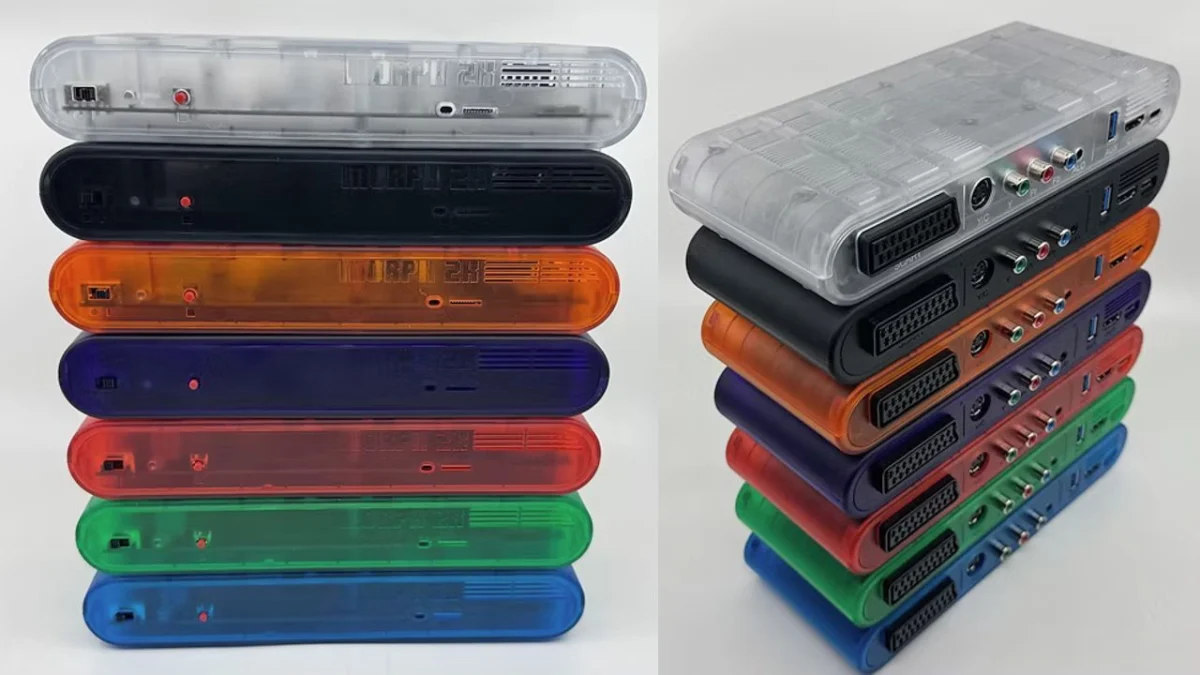
The retro gaming hardware market has experienced a significant expansion in video processing options with PixelFX officially announcing that stock of the Morph 2K is now available for purchase. Positioned as a streamlined and more accessible counterpart to the company’s flagship Morph 4K video scaler, the Morph 2K arrives at a retail price of $200. Crucially, this new iteration introduces native analog video input support, filling a vital niche for enthusiasts who rely on older hardware systems that output legacy analog signals.
According to official distribution updates provided by PixelFX, all seven custom color variations of the Morph 2K are currently in stock, with fulfillment operations scheduled to dispatch orders within a few business days of purchase. This immediate availability provides a reliable hardware solution for retro gaming enthusiasts looking to bridge the technological gap between vintage consoles and modern high-definition displays without encountering the severe input lag or scaling artifacts typical of low-end adapters.
Main Facts and Hardware Specifications
The Morph 2K is engineered to serve as a versatile, high-performance line doubler and video processor tailored specifically for vintage video game consoles, home computers, and arcade hardware. While its predecessor, the Morph 4K, focuses heavily on ultra-high-resolution output and advanced digital processing architecture, the Morph 2K strategically scales back maximum output resolution to 1080p. By capping the output resolution at Full HD, PixelFX has successfully engineered a more cost-effective hardware package priced at $200, making advanced FPGA-based video processing accessible to a broader demographic of hobbyists.
One of the most notable features of the Morph 2K is the inclusion of robust analog input capabilities. Many classic gaming platforms—such as the Sega Saturn, PlayStation 1, Nintendo 64, and various retro microcomputers—rely on analog connection standards including RGB, Component Video, S-Video, and Composite. Integrating these legacy inputs directly into the hardware architecture eliminates the necessity of purchasing expensive external transcoders or switching hubs just to achieve clean signal conversion.
Furthermore, the device maintains the commitment to aesthetic customization that PixelFX has established across its product ecosystem. Buyers can choose from seven distinct colorways, ensuring the hardware matches personal preferences or custom setup themes. The physical unit has been designed with a compact footprint to integrate smoothly into existing entertainment centers or dedicated streaming and content creation desks.
Background Context and Technological Evolution
The release of the Morph 2K follows a broader industry trend toward high-fidelity hardware solutions for legacy entertainment media. For decades, retro gamers relied on budget composite-to-HDMI converters bundled with television sets or low-cost online marketplaces. These generic devices frequently introduced unacceptable levels of motion blur, inaccurate aspect ratios, and detrimental input lag that hindered competitive and casual gameplay alike.
The landscape shifted dramatically with the advent of open-source and boutique hardware projects centered around Field-Programmable Gate Array (FPGA) technology. Devices like the Open Source Scan Converter (OSSC) and the RetroTINK product line demonstrated that dedicated hardware processing could digitize and scale analog signals with zero perceptible lag while preserving the authentic visual characteristics of classic cathode-ray tube (CRT) displays, such as scanlines and crisp pixel grids.
PixelFX entered this competitive arena with the introduction of the Morph 4K, an ambitious project aimed at delivering ultra-high-definition scaling, complex filtering profiles, and low-latency digital video processing. However, the premium pricing tier and primary emphasis on digital or heavily adapted inputs for 4K environments left room for a more targeted device. The Morph 2K directly addresses this gap by offering the core processing efficiency of the PixelFX ecosystem paired with native analog connectivity at half the financial investment of the flagship model.
Chronology of the Product Rollout
The development and deployment of the Morph series reflect a structured product lifecycle managed closely by the engineering and manufacturing teams at PixelFX.

Initial announcements regarding the conceptualization of a diversified scaler lineup began circulating within enthusiast communities following the successful launch and distribution of the Morph 4K. As production lines faced global supply chain fluctuations common to specialized semiconductor manufacturing, PixelFX prioritized fulfilling backlogs for the 4K variant while simultaneously finalizing the firmware and board layout for the upcoming 1080p analog-friendly sibling.
In the weeks preceding the official stock drop, technical previews and demonstration videos provided consumers with a transparent look at the device’s capabilities, user interface, and setup procedures. These early showcases highlighted the seamless integration of analog signals and demonstrated how the software ecosystem handles profile management.
By mid-August, official announcements confirmed that manufacturing runs had concluded successfully and warehouse facilities were fully stocked. The immediate transition from announcement to shipping status indicates a stable supply chain posture for the initial wave, contrasting with the limited-batch scarcity that frequently plagues boutique electronics manufacturing.
Setup Recommendations and Maintenance Best Practices
Hardware experts and early reviewers have outlined standardized procedures to ensure optimal performance upon receiving the Morph 2K. Initial configuration involves connecting the scaler to a local Wi-Fi network during the primary setup wizard. This network bridge is essential for retrieving and installing the latest firmware updates and community-curated profile packs directly from the manufacturer’s repository.
Although units ship with stable software pre-installed, PixelFX maintains an active development cycle dedicated to introducing new features, improving compatibility with obscure hardware timings, and refining scaling algorithms. Establishing network connectivity early simplifies the maintenance routine, allowing future patches to download automatically without manual file transfers via USB drives or microSD cards. The user interface has been optimized to guide users through these network parameters effortlessly, ensuring that even users with minimal technical background can keep their hardware fully updated.
Future Outlook for the Morph Product Line
Consumers evaluating the broader PixelFX catalog have also sought clarification regarding the availability of the higher-end Morph 4K units. Company communications have confirmed that subsequent production batches of the 4K variant are currently scheduled to return to retail channels by the end of the current calendar year. This staggered release strategy ensures that manufacturing capacity is balanced between meeting the immediate demand for the economically priced Morph 2K and satisfying the segment of the market requiring maximum-resolution output.
The reintroduction of the Morph 4K later in the year will complete the two-tiered hardware strategy envisioned by the manufacturer, catering simultaneously to enthusiasts utilizing modern 4K home theater setups and those focusing on standard 1080p display environments or capture hardware configurations.
Broader Industry Impact and Implications
The commercial availability of the Morph 2K carries significant implications for the retro gaming preservation and content creation communities. By democratizing access to high-grade analog signal processing at a $200 price point, PixelFX lowers the financial barrier of entry for individuals seeking to display vintage hardware on modern flat-panel displays without sacrificing visual fidelity.
As flat-panel televisions and computer monitors abandon legacy analog ports entirely—phasing out component, S-video, and composite connections in favor of universal digital standards like HDMI and DisplayPort—external processing hardware has transformed from a niche enthusiast luxury into an essential utility. Devices such as the Morph 2K ensure that physical media and original gaming hardware from the 1980s, 1990s, and 2000s remain fully operational and visually faithful to their original design intent.
Furthermore, the inclusion of robust networking capabilities and continuous software support underscores a shift toward living hardware ecosystems. Rather than treating video scalers as static, single-purpose electronic components, manufacturers now treat them as dynamic platforms capable of evolving alongside display technology standards and user community demands. As the market absorbs the current stock of Morph 2K units, industry observers will monitor how competing hardware developers respond to this competitive pricing structure and feature set within the retro video processing landscape.