 Farhan hamdan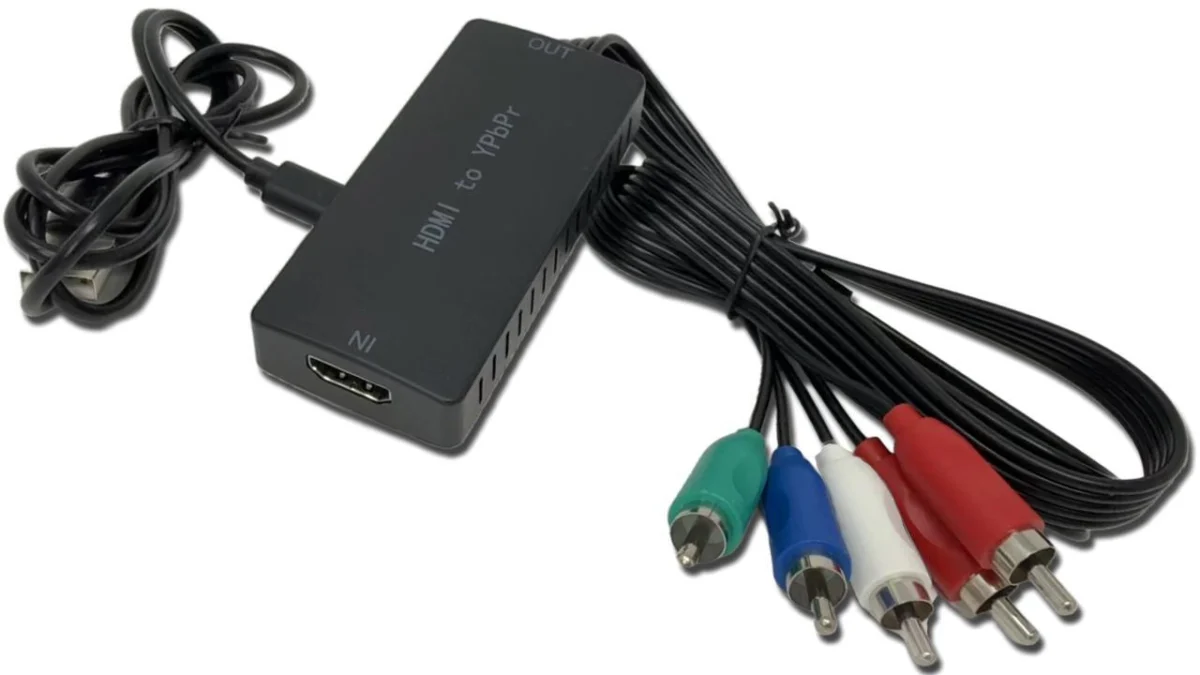
The retro gaming community has long grappled with the hardware challenges of bridging modern digital high-definition sources with legacy analog display technologies. As cathode-ray tube (CRT) televisions and professional video monitors experience a sustained renaissance among enthusiasts, retro-gamers and hardware modification specialists constantly seek reliable, cost-effective digital-to-analog converters (DACs). Recently, a newly discovered budget-friendly HDMI to YPbPr component video converter has emerged on the market, retailing at approximately $22. This device distinguishes itself within the crowded landscape of video conversion hardware by offering native, zero-lag compatibility with low-resolution 240p and 480i signals alongside standard high-definition formats like 480p, 720p, and 1080p.
Background and Technical Evolution of Video Conversion
To understand the significance of this $22 adapter, it is necessary to examine the broader technical landscape of retro-video hardware. For decades, legacy game consoles—ranging from the Nintendo Entertainment System and Sega Genesis to the Sony PlayStation 2 and Nintendo GameCube—output native analog signals. These signals were designed specifically for CRT displays, which utilize scanning electron beams to draw images line by line. With the advent of flat-panel display technologies relying on HDMI inputs, legacy consoles required either hardware modifications (such as RGB or HDMI mods) or external scalers and transcoders to function on modern screens.
Conversely, a growing subset of the retro-gaming demographic prefers to use modern hardware—such as FPGA-based retro consoles, the MiSTer FPGA platform, modern PC setups, or HDMI-modded vintage systems—on traditional CRT televisions to achieve authentic motion clarity, zero input latency, and classic visual aesthetics. This process requires converting a digital HDMI signal back into an analog component video (YPbPr) signal. Historically, this type of digital-to-analog conversion required expensive, professional-grade video scalers or specialized transcoding equipment. While high-end boutique solutions like the Reflex Prism DAC offer robust, feature-rich performance for discerning enthusiasts, their higher price points place them out of reach for casual hobbyists. The introduction of reliable, sub-$25 converters marks a democratization of this technology, making analog integration accessible to a broader consumer base.
Product Overview and Build Architecture
The newly evaluated RuiPuo HDMI-to-YPbPr converter measures up favorably against competing budget models due to its specific architectural choices. The device features a standard HDMI input port designed to accept digital video and audio streams. Uniquely, the YPbPr component video leads, along with the left and right (LR) analog audio RCA cables, are built directly into the chassis of the unit.
While integrated cabling streamlines the setup process by eliminating the need to source separate male-to-male component cables, hardware analysts note potential trade-offs regarding signal integrity. Built-in cables generally lack the heavy-duty multi-layer shielding found in premium aftermarket cables, such as those produced by HD Retrovision. During initial bench testing, minor visual interference was observed when routing the signal through digital display test benches; however, technicians anticipate that such interference will remain negligible or entirely imperceptible when paired with standard analog CRT displays, which naturally smooth out minor high-frequency noise.

Power delivery is handled via an external USB connection, a standard requirement for active digital-to-analog conversion hardware. Notably, the manufacturer included a physical power switch directly on the unit. Hardware specialists have highlighted this inclusion as a significant practical advantage for complex home-theater and gaming rigs. Many enthusiasts utilize automatic component video switches—such as the gcompsw, Gamescare, or SVS systems—which automatically route signals based on active voltage detection. The ability to physically power down the converter when not in use prevents it from inadvertently keeping an input port active on an automated routing switcher, resolving a common workflow friction point for multi-console setups.
Comparative Benchmarks and Alternative Hardware Testing
In recent comparative evaluations conducted by hardware reviewers, this $22 adapter demonstrated notable performance advantages over alternative budget-tier converters currently circulating through online marketplaces.
Chronologically, the testing regimen evaluated three distinct hardware options:
- The RuiPuo HDMI-to-YPbPr Adapter ($22): Demonstrated zero measurable input lag, rapid signal synchronization upon power-up and resolution switching, and full compatibility across the critical 240p, 480i, 480p, and higher resolutions.
- The Anber-Tech HDMI-to-Component Converter: Exhibited reliable zero-lag performance and compatibility with 480p and higher signals, but suffered from the limitation common to most low-cost DACs—a complete inability to sync with 240p and 480i 15KHz interlaced/progressive signals native to fourth and fifth-generation video game consoles.
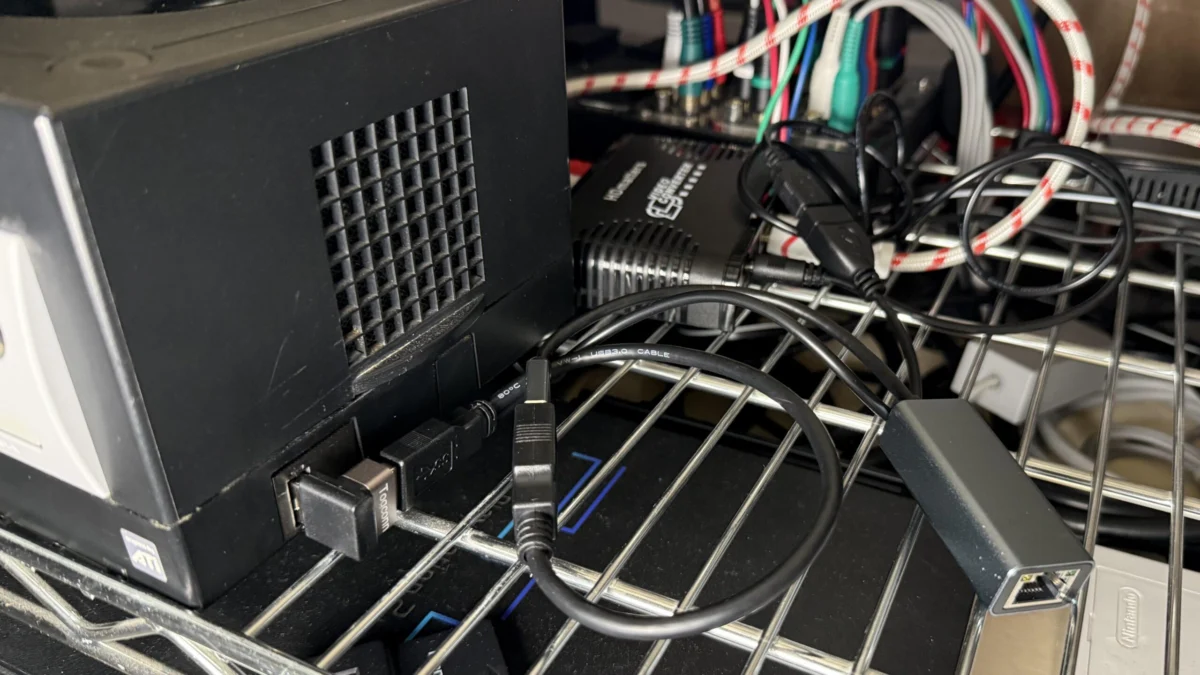
- The Radio Shack Component Adapter: Despite featuring an appealingly compact form factor, this unit presented severe operational inconsistencies. Testing revealed a total incompatibility with the Nintendo GameCube Carby HDMI adapter across all tested resolutions, an inability to process 240p signals, and intermittent, unreliable performance with 480i sources. Technical troubleshooting failed to resolve these stability issues, suggesting inherent hardware limitations within that specific model line.
Despite its impressive feature set for the price, hardware experts note certain operational boundaries. Like virtually all basic YPbPr digital-to-analog converters on the market, this adapter does not natively interface with the MiSTer FPGA’s "Direct Video" mode, which bypasses standard HDMI framing to output raw video signals over specific hardware pins. Users seeking direct MiSTer analog output must continue to rely on dedicated IO boards or specialized analog output modules.
Broader Market Implications and Consumer Guidance
The availability of a reliable, sub-$25 zero-lag DAC capable of handling 240p signals represents a notable shift in the retro-gaming hardware ecosystem. For years, consumers seeking to bridge modern HDMI sources to analog CRTs faced a binary choice: invest heavily in premium, professional-grade transcoding equipment or gamble on generic, unverified online adapters that frequently dropped support for low-resolution 15KHz signals.
Industry analysts observe that while premium devices like the Reflex Prism remain the gold standard for enthusiasts demanding advanced color adjustments, custom scaling, and pristine shielding, budget-friendly alternatives sufficiently satisfy the technical requirements of the average consumer. By combining rapid signal synchronization, physical power management, and essential low-resolution compatibility at an accessible price point, this converter fills a practical gap in the retro-gaming hardware market. Consumers are encouraged to weigh their specific display requirements, cable shielding needs, and setup complexities before purchasing, keeping in mind that budget hardware performs best when matched appropriately with traditional analog display technologies rather than modern digital upscalers.