Chalid Lutfie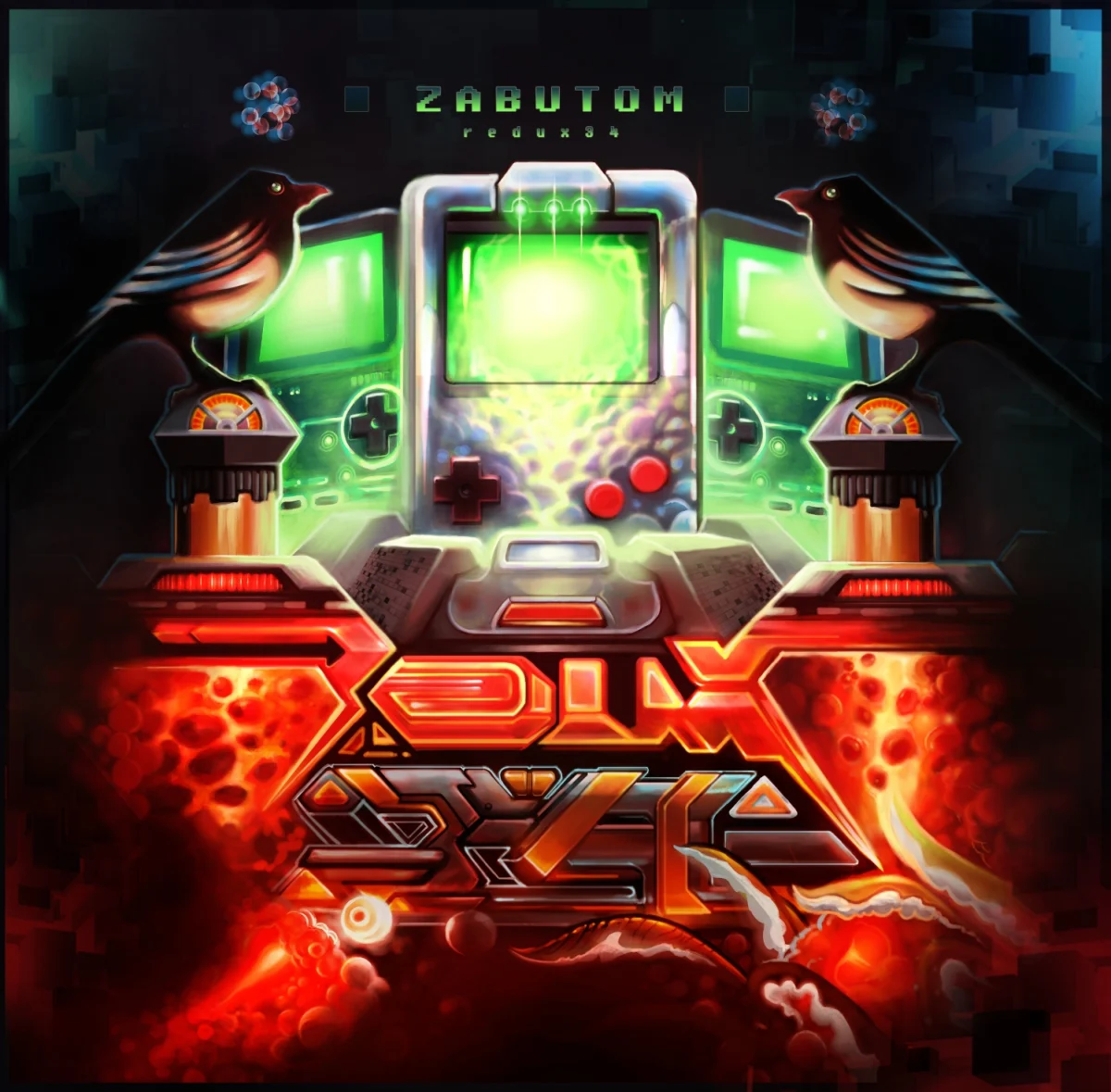
The Artistic Evolution of Niklas Sjösvärd
Born in 1985, Niklas Sjösvärd emerged from the fertile ground of the Swedish demoscene in the early 2000s. The demoscene, a subculture centered on producing self-contained computer programs that generate audio-visual presentations, served as a rigorous training ground for Sjösvärd. During this formative period, he became a fixture in various international compilations and live chiptune events, earning a reputation for his technical proficiency with limited hardware. His 2011 debut on the Ubiktune label, Zeta Force, solidified his standing within the community. That release, a collection of high-energy tracks inspired by the "shoot ’em up" (shmup) video game genre, is now regarded as a foundational work in modern chiptune music.
However, Sjösvärd’s ambitions extended beyond the nostalgia of early gaming hardware. In 2014, he completed a Bachelor’s degree in composition and electronic music at the Academy of Music and Drama at the University of Gothenburg. This formal academic background provided him with the theoretical framework to integrate avant-garde techniques and traditional instrumentation into his electronic foundations. His diverse portfolio prior to Redux34 included experimental electronic projects such as "Friktion" and "Scratches and Petals," as well as live modular techno performances with the Buchla Boys. Furthermore, his work as a vocalist and guitarist in folk-inspired acoustic ensembles like Fowlcloud and Léonore Boulanger informed the organic, melodic sensibilities found in his latest work.
The Chronology and Development of Redux34
The inception of Redux34 dates back to 2008, a period when Sjösvärd began performing extensively at international chiptune festivals using Game Boy consoles equipped with Little Sound DJ (LSDJ) software. While he found success in the "chip-dance" scene, he harbored a desire to expand the sonic boundaries of the medium. The development of the album was not a linear process; rather, it was a protracted journey of technical setbacks and creative refinement that spanned seven years.
A pivotal moment in the album’s history occurred during the creation of the title track. While Sjösvärd was finalizing the groundwork for the composition in 2008, his LSDJ cartridge suffered a critical hardware failure, resulting in the total loss of all saved data. This necessitated a complete reconstruction of the track from memory. This incident gave birth to the title "Redux," reflecting the act of bringing something back or revisiting a lost form. The numerical suffix "34" refers to the track’s unconventional 3/4 time signature, a departure from the standard 4/4 meter prevalent in electronic dance music.
The theme of loss and reconstruction became a recurring motif throughout the production of the album. Sjösvärd reported multiple instances of lost patterns, corrupted settings, and discarded mixes that required him to restart various tracks from scratch. This labor-intensive process contributed to the album’s polished sound, as each iteration allowed for greater detail and more sophisticated layering. It was only after the successful release of Zeta Force and the 2014 project New Beginnings that Sjösvärd felt he possessed the technical maturity to realize the ambitious vision of Redux34.

Technical Composition and Sonic Architecture
Redux34 is distinguished by its seamless integration of disparate sound sources. At its core, the album utilizes the distinctive "bleeps and bloops" of 8-bit hardware, yet these are treated as foundational textures rather than the sole focus. The production utilizes high-fidelity mixing techniques to place these lo-fi sounds within vast, three-dimensional soundscapes.
The inclusion of electric guitars provides a grit and harmonic richness that contrasts with the clean, mathematical precision of the chiptune oscillators. This fusion is particularly evident in the progressive rock-influenced segments, where complex rhythmic structures and melodic flourishes evoke the spirit of 1970s prog-rock pioneers, updated for a digital age. The analog synthesizers add a layer of warmth and "drift" that offsets the rigid timing of the digital sequencers, while the use of spaced-out delay and reverb textures creates an atmospheric, cinematic quality.
From a compositional standpoint, the album moves through various emotional arcs. While tracks like the title piece are rooted in technical complexity, other movements lean into the folk-inspired acoustic sensibilities Sjösvärd explored in his side projects. The result is a record that feels both grounded in the history of electronic music and forward-looking in its execution.

Collaborative Visual Identity and Physical Release
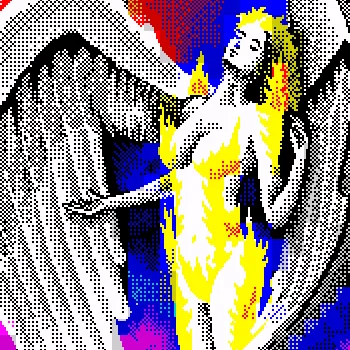
The aesthetic presentation of Redux34 was curated to match its "retro-futuristic" musical themes. The album features original artwork by Anders Karlsson, a concept artist and painter based in Norrköping, Sweden. Karlsson’s visual contributions provide a tangible gateway into the "strange new worlds" suggested by the music. The artwork avoids the neon-soaked clichés of some electronic subgenres, opting instead for a more mysterious and evocative style that aligns with the album’s melancholic yet hopeful narrative.
Ubiktune has ensured a wide distribution for the release, making Redux34 available across all major digital storefronts and streaming platforms. In a nod to the physical media traditions of both the demoscene and the progressive rock era, the album was also issued on physical Compact Disc. This choice reflects a growing demand within the niche electronic community for high-quality physical artifacts that complement the digital listening experience.
Broader Impact and Industry Implications
The release of Redux34 comes at a time when the chiptune genre is undergoing a significant transformation. Once viewed primarily as a novelty or a niche hobby for retro-gaming enthusiasts, chip music has increasingly been recognized as a legitimate tool for contemporary composition. Artists like Zabutom are at the forefront of this movement, demonstrating that 8-bit hardware can be used with the same level of sophistication as any traditional orchestral instrument or modern software suite.

Industry analysts suggest that Redux34 represents a bridge between the insular demoscene and the broader independent electronic music market. By incorporating IDM and progressive rock elements, Sjösvärd appeals to a wider demographic of listeners who may not have a prior affinity for video game music but appreciate complex, well-produced electronic art.
Furthermore, the album highlights the importance of formal education in the evolution of electronic music. Sjösvärd’s degree from the Academy of Music and Drama is indicative of a broader trend where "bedroom producers" are seeking academic rigor to refine their craft. This professionalization of the genre is leading to higher production standards and more ambitious conceptual works across the board.
In the context of the Swedish music export industry, Zabutom remains a key figure. Sweden has long been a powerhouse in both pop production and experimental electronic music; Sjösvärd’s ability to combine these sensibilities—melodic accessibility with technical experimentation—continues this tradition. Redux34 stands as a testament to the resilience of the creative process, proving that even after hardware failures and years of development, the synthesis of old and new technology can result in a profoundly modern work of art. As the album begins to circulate through global streaming networks and physical collections, it is poised to influence a new generation of composers looking to find the humanity within the machine.