Chalid Lutfie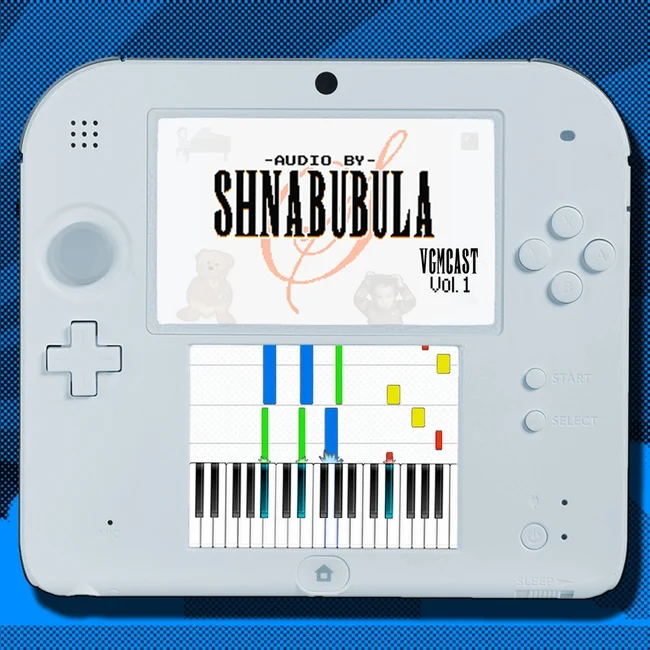
Samuel Ascher-Weiss, the acclaimed composer and pianist known professionally as Shnabubula, has officially inaugurated a new experimental music project centered on real-time audience interaction and accelerated musical pedagogy. The initiative, hosted on the Hitbox streaming platform, marks a significant departure from traditional studio recording, opting instead for a transparent, process-oriented approach to musical performance. By leveraging the low-latency capabilities of modern streaming technology, Ascher-Weiss intends to bridge the gap between improvisational virtuosity and community-driven content creation. The project operates on a rigorous weekly schedule, bifurcated into a developmental "learning phase" on Fridays and a formal "performance phase" on Sundays, challenging the artist to master complex arrangements within a strictly defined window of time.
The Structural Framework of the VGMcast Project
The operational core of the Shnabubula live series is defined by its two-stage weekly cycle, which emphasizes both the labor of musical acquisition and the polish of final execution. Every Friday, beginning at 12:00 PM EST and concluding at 8:30 PM EST, Ascher-Weiss conducts a marathon eight-and-a-half-hour session dedicated exclusively to audience requests. During this period, viewers submit various musical compositions—ranging from obscure video game soundtracks to complex classical pieces—which the artist then deconstructs and learns "by ear" in front of a live digital audience.
This transparent methodology allows observers to witness the cognitive and technical processes involved in high-level musical transcription and memorization. Following the Friday session, the artist utilizes the intervening Saturday for further refinement before presenting a curated "setlist" on Sunday at 4:00 PM EST. This second broadcast serves as the formal recital, where the songs requested and learned just 48 hours prior are performed with professional-grade delivery. The inaugural sessions of this project have already demonstrated the feasibility of this high-pressure model, with the first major cycle resulting in the successful performance of 14 distinct arrangements.
Historical Context and the Evolution of Shnabubula
To understand the significance of this project, one must examine the professional trajectory of Samuel Ascher-Weiss. Long recognized within the Video Game Music (VGM) and chiptune communities, Ascher-Weiss has established a reputation for his idiosyncratic blend of ragtime, jazz fusion, and electronic synthesis. His work often involves "reinterpreting" digital soundscapes through the lens of classical piano proficiency, a skill set that has made him a staple on platforms such as OverClocked ReMix and various independent game soundtracks.
The transition to a live-streaming format represents an evolution of his previous "VGMcast" efforts. While Ascher-Weiss has long engaged with his fanbase through forums and social media, the move to Hitbox allows for a level of synchronous engagement that was previously impossible. This project is not merely a performance but a demonstration of "extreme musicality"—the ability to process information at a speed that defies standard conservatory timelines. By documenting the "struggle" of learning a piece live, Ascher-Weiss demystifies the aura of the "prodigy," replacing it with a visible display of work ethic and analytical skill.
Technological Infrastructure: Why Hitbox?
The choice of Hitbox as a primary broadcasting platform in 2015 is a strategic decision rooted in technical requirements. During this period, the streaming landscape was dominated by Twitch, yet Hitbox sought to differentiate itself through superior latency statistics. For a musician whose project relies on real-time feedback and the "request-and-response" loop, the delay between a viewer typing a message and the streamer seeing it is critical.
Hitbox’s implementation of HTML5 and specialized ingest servers offered lower "glass-to-glass" latency than many of its competitors at the time. For Shnabubula, this meant that a request for a specific theme from Final Fantasy or Mega Man could be acknowledged and integrated into the practice session almost instantaneously. Furthermore, the platform’s community features allowed for a more niche, dedicated environment where the focus remained on the technical merits of the music rather than the broader "variety gaming" culture found elsewhere. This technical alignment is essential for a project that functions as both a performance and an educational masterclass.
Analysis of the 14-Song Inaugural Performance
The most recent milestone in the project was the successful execution of a 14-song setlist, recorded and subsequently archived for public viewing. This repertoire, gathered from the Friday learning session, showcases the breadth of the audience’s tastes and the artist’s adaptability. The setlist included a diverse array of melodies, requiring Ascher-Weiss to shift rapidly between disparate genres and technical demands.
From a musicological perspective, the feat of learning 14 songs in an eight-hour window—and performing them two days later—is substantial. Most professional pianists require weeks of practice to bring a new piece to performance standard. The "Shnabubula method" bypasses traditional sheet music, relying on a highly developed sense of relative pitch and harmonic intuition. Analysts of the stream noted that Ascher-Weiss often breaks down songs into their core harmonic progressions before layering melodic flourishes and rhythmic variations, a technique common in jazz but applied here to the structured world of video game compositions.
Community Reaction and Inferred Impact
While formal statements from the broader music industry are pending, the immediate reaction within the digital music community has been overwhelmingly positive. Observers on platforms like Reddit and Twitter have noted that the "Sunday Setlists" are increasingly being viewed as definitive piano covers of the requested tracks. The interactive nature of the Friday sessions has fostered a sense of "co-creation" among the audience; viewers feel a vestigial ownership of the Sunday performance because they provided the source material and witnessed the labor involved in its mastery.
Furthermore, the decision to release the Sunday performances as downloadable albums provides a tangible output for what would otherwise be ephemeral digital content. This creates a sustainable loop: the live stream generates engagement and immediate feedback, while the subsequent album releases provide a permanent record and a potential revenue stream to support the artist’s continued work.
The Pedagogical Value of Live Musical Deconstruction
One of the most significant, yet understated, aspects of this project is its educational value. In a traditional setting, a student only sees the finished product of a master’s work. Shnabubula’s project flips this script. By broadcasting the hours of repetition, the moments of frustration, and the incremental breakthroughs, he provides a roadmap for aspiring musicians.
The "Friday Learning" sessions function as a laboratory. Viewers see how a professional handles a difficult bridge, how he identifies a complex chord voicing, and how he manages the physical fatigue of a long-form performance. This transparency is a powerful tool for demystifying the creative process. In an era where digital content is often heavily edited to appear effortless, Ascher-Weiss’s commitment to showing the "raw" process is a refreshing return to the reality of artistic discipline.
Broader Implications for the Digital Music Landscape
The launch of this project by Shnabubula coincides with a broader shift in how independent musicians interact with the internet. We are moving away from a model of "broadcast and forget" toward one of "interact and iterate." This project suggests that the future of online music may not lie in the static upload of a perfected MP3, but in the live, social experience of musical creation.
Ascher-Weiss is effectively treating the live stream as a new form of "digital busking" combined with a "reality television" element of skill-based challenge. If successful, this model could be adopted by other virtuosos across different instruments, creating a new genre of educational entertainment. It also raises questions about the future of music copyright and licensing in a live-streamed environment, as the artist is essentially performing "covers" of copyrighted material in a transformative, improvisational manner.
Chronology of the Project Launch
The development of this current iteration can be traced through the following timeline:
- Early May 2015: Initial testing of the Hitbox stream and technical setup.
- May 15, 2015: The first official "Friday Request Session." Ascher-Weiss streams for over eight hours, taking dozens of requests and narrowing them down to a 14-song core.
- May 17, 2015: The inaugural "Sunday Setlist" performance. The 14 songs are performed back-to-back with high-fidelity audio and video.
- May 18, 2015: Formal announcement of the project’s permanence and the release of the recorded setlist for public consumption and download.
- Future Projections: The series is expected to continue indefinitely, with the artist expressing a desire to explore even more complex material as the audience grows.
Conclusion
Samuel "Shnabubula" Ascher-Weiss has successfully transitioned his unique brand of musical virtuosity into a sustainable, interactive format that leverages the best aspects of modern streaming technology. By committing to a rigorous schedule of learning and performing, he has created a platform that is as much about the process of music-making as it is about the final product. As the project continues to evolve, it will likely serve as a benchmark for how elite performers can engage with digital communities in a way that is authentic, transparent, and technically impressive. For fans of video game music, jazz, and piano improvisation, the weekly "VGMcast" on Hitbox has become an essential fixture in the digital arts calendar.