Chalid Lutfie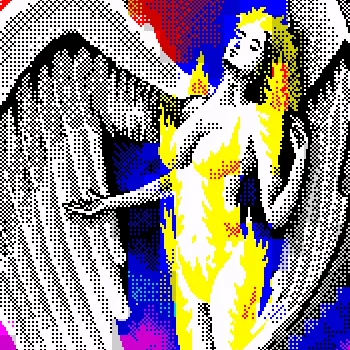
The release of Still Flying by the artist known as C-Jeff represents a pivotal moment in the early 2000s revival of 8-bit music, specifically within the niche but highly influential ZX Spectrum demoscene. Originally composed in 2002, this debut album serves as a definitive example of the "lyric music novel" style, a thematic approach that seeks to imbue instrumental chiptune compositions with narrative depth and emotional resonance. While the album was conceived and executed on hardware that was already considered legacy technology at the time of its creation, its enduring presence on platforms like Bandcamp and its historical significance in the demoscene highlight the technical sophistication and artistic longevity of the ZX Spectrum’s AY-3-8910 sound chip.
The Technical Foundation of Still Flying
To understand the significance of Still Flying, one must examine the constraints and capabilities of the hardware used in its production. The ZX Spectrum, an 8-bit personal home computer released by Sinclair Research in 1982, was not originally designed as a high-fidelity musical instrument. However, the introduction of the 128K models equipped with the General Instrument AY-3-8910 (or the Yamaha YM2149) programmable sound generator (PSG) provided three channels of square-wave synthesis and a noise generator.
C-Jeff utilized Pro Tracker 3 (PT3), a sophisticated music editor for the ZX Spectrum, to compose the album. Pro Tracker 3 was the industry standard for the Russian and Eastern European demoscenes during the late 1990s and early 2000s. Unlike modern digital audio workstations (DAWs) that offer unlimited tracks and high-resolution sampling, PT3 forced composers to work within rigid parameters: three monophonic channels, a limited set of envelopes, and a strict hexadecimal interface. The "Still Flying" sessions were conducted on a real ZX Spectrum, ensuring that every note and modulation was authentic to the hardware’s specific timber and timing quirks.
Chronology of Development and Release
The timeline of Still Flying is characterized by a two-stage release cycle that reflects the transition from competitive demoscene participation to a formal independent album release.
During the calendar year of 2002, C-Jeff (born Dmitry Zhemkov) composed the bulk of the material. The tracks were not initially intended for a cohesive commercial product but were part of a broader creative output within the tracker music community. Two of the album’s most notable tracks, "My Mind is Free" and "Lonely Soul," followed distinct paths through the European demoparty circuit.
In the summer of 2002, the track "My Mind is Free" was submitted to the CAFe 2002 demoparty, held in Kazan, Russia. Due to a self-admitted limited proficiency in the English language at the time, the artist originally titled the track "My mind free." Despite the grammatical error, the composition was a technical showcase of AY-chip programming. It competed in the ZX Spectrum AY Music competition, eventually securing 13th place. While not a podium finish, the track’s inclusion in the final Still Flying tracklist immediately following the competition signaled its importance to the artist’s evolving "lyric music novel" concept.
Later that same year, "Lonely Soul" was entered into the Paradox 2002 demoparty in Rostov-on-Don. This track demonstrated a significant leap in compositional complexity and emotional delivery. It resonated strongly with the jury and the audience, earning 2nd place in the ZX Spectrum AY Music competition. Although "Lonely Soul" was not part of the initial conceptualization of the album, its stylistic alignment with the rest of the 2002 material led to its eventual inclusion as a core component of the Still Flying legacy.
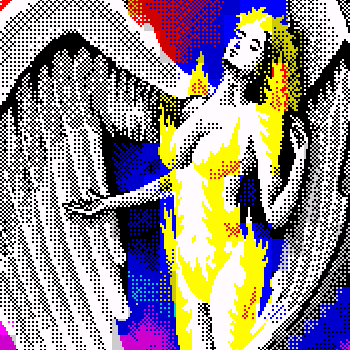
The second stage of the album’s life occurred approximately 18 months after the initial compositions were completed. In a move to preserve the work as a software-based experience, Still Flying was released as an "executable musicdisk." This format allowed users to load the album on a ZX Spectrum (or an emulator) and navigate the tracks through a custom graphical interface. This release involved a collaborative effort from other prominent figures in the scene:
- Vortex: Responsible for the code that powered the musicdisk interface.
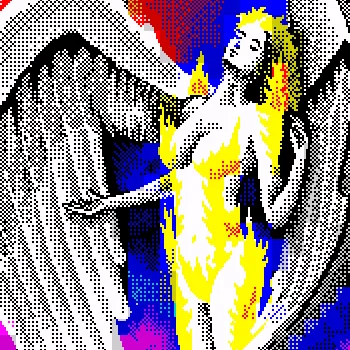
- Schafft: Provided the pixel-art graphics and visual aesthetics.
- Poisoned CyberJack: Handled the data packing and distribution logistics.
Supporting Data and Technical Specifications
The enduring relevance of Still Flying is supported by its technical mastery over the AY-3-8910 chip’s limitations. Analysis of the PT3 files reveals several key data points regarding the album’s production:
- Frequency: The music was composed to run at 50Hz (the standard interrupt rate for PAL ZX Spectrum units), ensuring smooth modulation and vibrato.
- Channel Utilization: C-Jeff maximized the three-channel limit by using rapid "arpeggio" commands to simulate chords, a technique common in 8-bit music but executed here with a focus on melodic fluidity rather than aggressive percussion.
- Memory Management: As an executable musicdisk, the entire package had to fit within the constraints of the ZX Spectrum’s 128K RAM, including the music data, the player engine, and the graphical assets.
The mastering of the album was handled by MmcM (Sergey Myasnikov), another legendary figure in the chiptune world. MmcM’s involvement ensured that the raw AY output was balanced for modern listening environments while maintaining the "crunchy" lo-fi characteristics that define the genre.
Broader Impact and Implications for the Chiptune Genre
The release of Still Flying had implications that extended beyond the Russian demoscene. It served as a bridge between the era of "cracked" software music and the modern independent chiptune movement.
Preservation of Legacy Hardware Culture
By releasing the album on Bandcamp and through executable formats on sites like Pouet and Demozoo, C-Jeff helped transition the ZX Spectrum from a "dead" gaming console to a legitimate tool for contemporary art. This shift is part of a broader trend where vintage hardware is treated with the same reverence as a Stradivarius violin or a Moog synthesizer.
The "Lyric Music Novel" Concept
C-Jeff’s use of the tagline "lyric music novels" is a significant departure from the typical high-energy, game-oriented music usually associated with 8-bit hardware. This analytical framework suggests that chiptune can be used for long-form storytelling. The tracks in Still Flying are characterized by melancholic shifts, minor-key melodies, and complex structures that mirror the chapters of a book. This helped influence a generation of "melodic chiptune" artists who prioritized atmosphere over technical showmanship.
Global Accessibility and Digital Distribution
The fact that Still Flying is currently available on Bandcamp under an "All Rights Reserved" copyright by C-Jeff indicates the professionalization of the scene. In the early 2000s, much of this music was distributed via floppy disks and BBS (Bulletin Board Systems) with little regard for intellectual property. The formalization of this album as a commercial product shows the evolution of the demoscene into a sustainable creative economy.
Official Responses and Collaborative Reflections
While formal press releases were rare in the 2002 demoscene, the "NFO" files (text files accompanying digital releases) and competition results provide a record of the community’s response. The 2nd place finish for "Lonely Soul" at Paradox 2002 was a clear validation of C-Jeff’s direction. Peers in the scene noted that his work moved away from the "noisy" and "chaotic" styles prevalent in early tracking, moving instead toward a "cleaner" and more "harmonious" sound.
Schafft, the artist responsible for the graphics, and Vortex, the programmer, have often been cited in demoscene archives as essential collaborators who helped define the visual language of the 128K era. Their work on the Still Flying musicdisk is frequently referenced in retrospectives of the "Vortex Tracker" era, a period when Russian coders were pushing the ZX Spectrum to its absolute graphical and auditory limits.
Conclusion
Still Flying remains a cornerstone of the C-Jeff discography and a vital artifact of the 2002 ZX Spectrum scene. It stands as a testament to the idea that creative vision is not hindered by hardware limitations but is often sharpened by them. By combining the rigorous technical demands of Pro Tracker 3 with a narrative, "novel-like" approach to composition, C-Jeff created a work that transcends its 8-bit origins. As the chiptune genre continues to grow and influence mainstream pop and electronic music, the foundational techniques and emotional depth found in Still Flying continue to serve as a blueprint for artists seeking to find the "soul" within the machine. The album’s journey from a Kazan demoparty to a global digital audience highlights the universal appeal of melody, regardless of the bit-depth of the medium.