Chalid Lutfie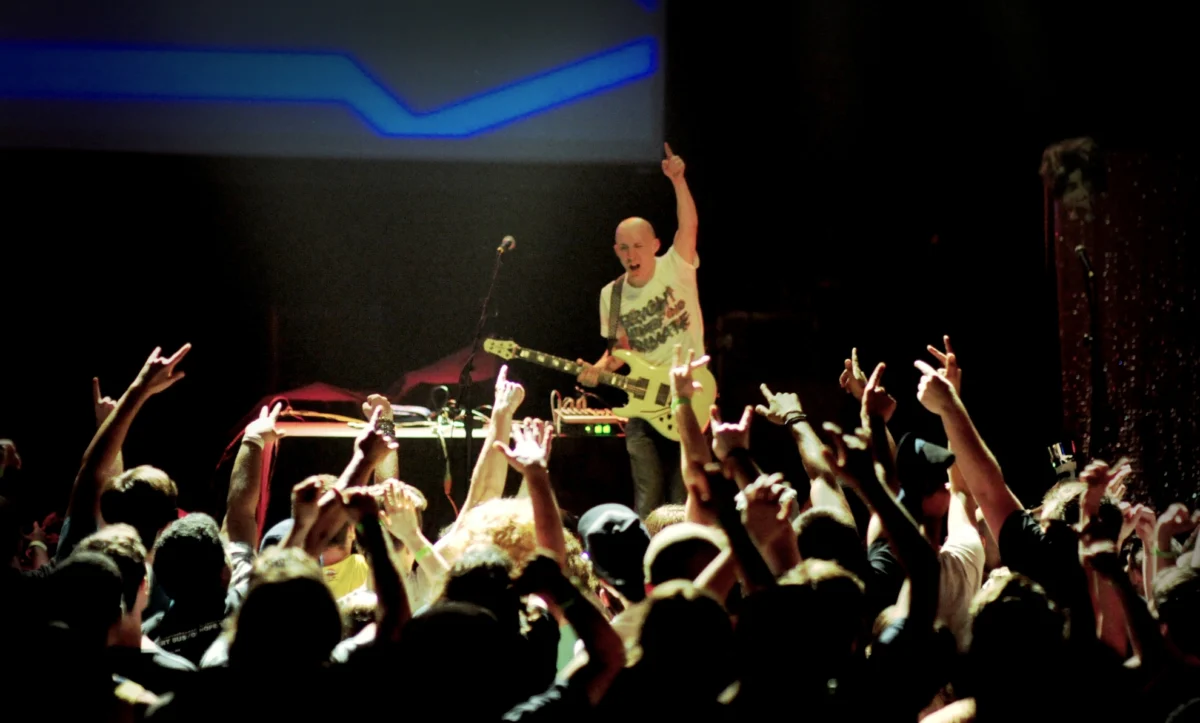
The contemporary chiptune and progressive metal landscapes are set to converge on March 11 with the scheduled release of Lunaria, the latest studio effort from the prolific composer and multi-instrumentalist Dan Burke, known professionally as Danimal Cannon. This release marks a significant milestone in the artist’s career, arriving three years after his critically acclaimed collaboration with Zef, Parallel Processing, and five years after his solo debut, Roots. Lunaria represents the culmination of half a decade of technical refinement, specifically focusing on the seamless integration of Game Boy-based synthesis with high-gain electric guitar—a combination that has defined Burke’s live performances but has remained elusive in a studio setting until now.
The Evolution of the Chiptune-Guitar Hybrid
The technical foundation of Lunaria is rooted in the "chiptune" genre, a style of synthesized electronic music produced by the sound chips of vintage arcade machines and vintage hobbyist computers. Danimal Cannon utilizes the Nintendo Game Boy as his primary instrument, specifically employing the Little Sound DJ (LSDJ) software to program intricate melodies and rhythmic structures within the hardware’s 4-channel limitations. While the chiptune movement has historically remained within the realms of dance and pop-inflected electronic music, Burke has spent the better part of the last five years attempting to bridge the gap between 8-bit textures and the complex, aggressive structures of progressive metal.
According to Burke, the journey toward the sound captured on Lunaria began with his 2011 release, Roots. During that era, the artist experimented with adding guitar tracks to select songs, yet he found the process of "marrying" the two disparate instruments to be surprisingly difficult. The frequency ranges of a distorted electric guitar often clash with the square and pulse waves generated by the Game Boy’s CPU, leading to a muddy or incoherent mix. Consequently, much of his earlier work was released with minimal guitar intervention. The intervening years between 2011 and 2016 were dedicated to mastering the production techniques necessary to make the Game Boy and the guitar sound like a cohesive unit rather than two competing elements. This technical evolution is central to the identity of Lunaria, which Burke describes as the album his audience has been requesting for half a decade.
Conceptual Framework: The Giant Impact Hypothesis
Beyond its technical achievements, Lunaria is a concept album rooted in planetary science and celestial mechanics. Burke, a self-described "science geek," drew primary inspiration from the "Giant Impact Hypothesis," which remains the prevailing scientific theory regarding the formation of the Moon. This hypothesis suggests that approximately 4.5 billion years ago, a Mars-sized body named Theia collided with the proto-Earth. The resulting debris from this cataclysmic event eventually coalesced in orbit to form the Moon.
In Lunaria, Burke personifies this astronomical event, creating a character named Lunaria to represent the impactor and the resulting satellite. The title itself serves a dual purpose: it is both the name of the central figure and a linguistic play on "Lunar-aria," referencing a vocal aria or a formal melodic piece for a solo voice centered on the moon. This personification allows the album to explore themes of collision, creation, and celestial isolation through a narrative lens, providing a structured emotional arc for the record’s progressive compositions.
Collaborative Contributions and Technical Proficiency
The production of Lunaria features significant contributions from guest artists who bring a human element to the digital-heavy arrangements. A notable collaborator on the project is Emily Yancey, a professionally trained opera singer and former neighbor of Burke. Having observed Yancey’s vocal training through their shared apartment walls, Burke identified her specific timbre as the ideal match for the "celestial moon goddess" character of Lunaria. Yancey provides vocals for two tracks on the album, elevating the project from a purely instrumental endeavor to a more cinematic and narrative-driven experience.
In addition to vocal contributions, the album features a guest performance by Samuel Ascher-Weiss, widely known in the video game music community as Shnabubula. Ascher-Weiss, a virtuoso pianist who previously collaborated with Burke on Roots, was tasked with providing a piano rendition of the track "Axis." Burke noted that "Axis" was selected for this treatment because it represented the most compositionally challenging piece on the record. By translating the "quirky" digital textures of the Game Boy into the traditional, organic sounds of a grand piano, the collaboration highlights the underlying complexity of Burke’s songwriting, proving that the compositions hold up under the scrutiny of classical instrumentation.
Stylistic Influences and Genre Fluidity
While Lunaria is fundamentally a metal-adjacent record, its stylistic DNA is composed of a broad spectrum of influences. Burke has cited the Shovel Knight original soundtrack as a significant touchstone for the album’s melodic sensibilities, acknowledging the high standard set by contemporary game music composers. However, the influences extend far beyond the realm of gaming. The industrial textures of Nine Inch Nails and KMFDM are evident in the album’s rhythmic drive, while the rhythmic complexity of indie rock duo Buke and Gase provided a blueprint for the record’s unconventional structures.
Furthermore, the album draws from the world of classical and choral music. Burke has identified the works of Wolfgang Amadeus Mozart and contemporary choral composer Eric Whitacre as instrumental in shaping the harmonic language of Lunaria. The inclusion of these influences suggests a level of academic rigor in the songwriting process, moving the chiptune genre away from its "novelty" roots and toward a more sophisticated form of modern composition. The result is a sound that is "pretty metal" in its intensity but nuanced in its execution.
Visual Identity and Physical Media
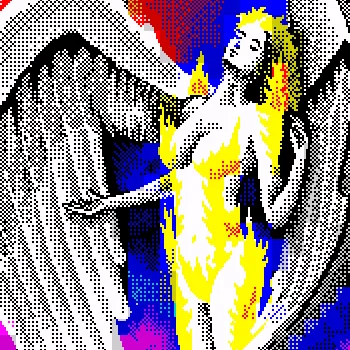
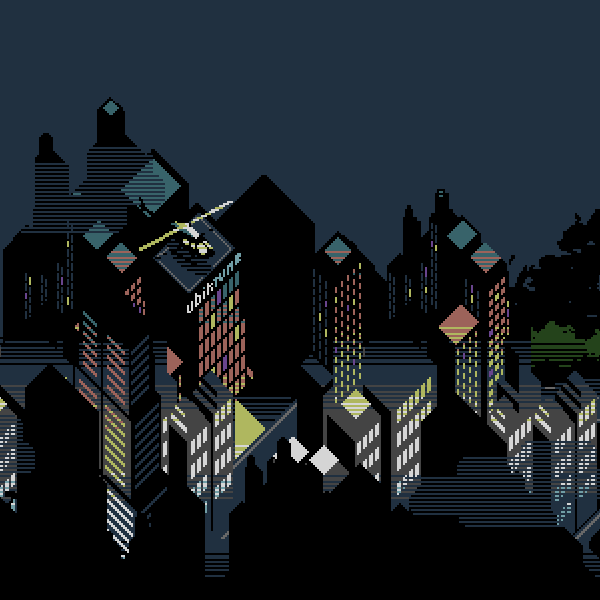
The aesthetic presentation of Lunaria is bolstered by the work of artist Minerva Mopsy, who provided the cover art and promotional visuals. The artwork reflects the album’s celestial themes, bridging the gap between the digital nature of the music and the organic nature of the astronomical concept.
In an era dominated by streaming services, Danimal Cannon continues to emphasize the importance of physical media. Lunaria will be available for digital download via Bandcamp, but it will also receive a physical CD release. The CD edition includes a poster featuring Minerva Mopsy’s artwork, catering to a dedicated fanbase that values the tactile and visual components of a music release. This commitment to physical production aligns with the "collector" culture prevalent in both the chiptune and progressive metal communities.
Chronology of Production and Release
The timeline of Lunaria’s development illustrates the meticulous nature of Burke’s creative process:
- 2011: Release of Roots. Initial experiments with guitar-chiptune fusion began but were largely shelved due to technical limitations.
- 2012–2015: Ongoing development of live performance techniques. Burke toured extensively, refining the "Game Boy and Guitar" setup in a live environment, which informed his studio approach.
- 2013: Release of Parallel Processing with Zef. This period allowed Burke to explore collaborative electronic music while continuing to brainstorm the solo follow-up to Roots.
- 2014–2015: Primary writing and recording phase for Lunaria. This period involved the recruitment of Emily Yancey and Samuel Ascher-Weiss and the conceptualization of the "Lunar-aria" theme.
- Early 2016: Final mixing and mastering. The release of the first single, "Behemoth," served as a technical demonstration of the album’s heavy, guitar-driven sound.
- March 11, 2016: Official global release of Lunaria.
Broader Impact and Industry Implications
The release of Lunaria is significant for several reasons within the broader context of independent music. First, it challenges the perceived boundaries of the chiptune genre. By successfully integrating live instrumentation and operatic vocals, Danimal Cannon demonstrates that 8-bit hardware can serve as a legitimate foundation for complex, multi-layered arrangements that appeal to fans of progressive rock and heavy metal.
Second, the album highlights the increasing crossover between the video game music (VGM) community and mainstream independent music. Composers like Burke are no longer confined to the niche of "fan music"; they are creating original works that utilize the tools of gaming history to push the envelope of modern production. The involvement of artists like Shnabubula further cements this connection, showcasing a high level of musicianship that rivals that of traditional conservatory-trained performers.
Finally, the success of Lunaria’s pre-order campaign and the buzz surrounding its release suggest a robust market for "niche" genre fusions. As listeners become increasingly genre-agnostic, artists who can successfully blend disparate elements—such as 8-bit synthesis, heavy metal guitar, and astronomical theory—are finding a dedicated and growing audience. Lunaria stands as a testament to the power of technical persistence and the enduring appeal of the "lo-fi" aesthetic when combined with "hi-fi" ambition.