Farhan hamdan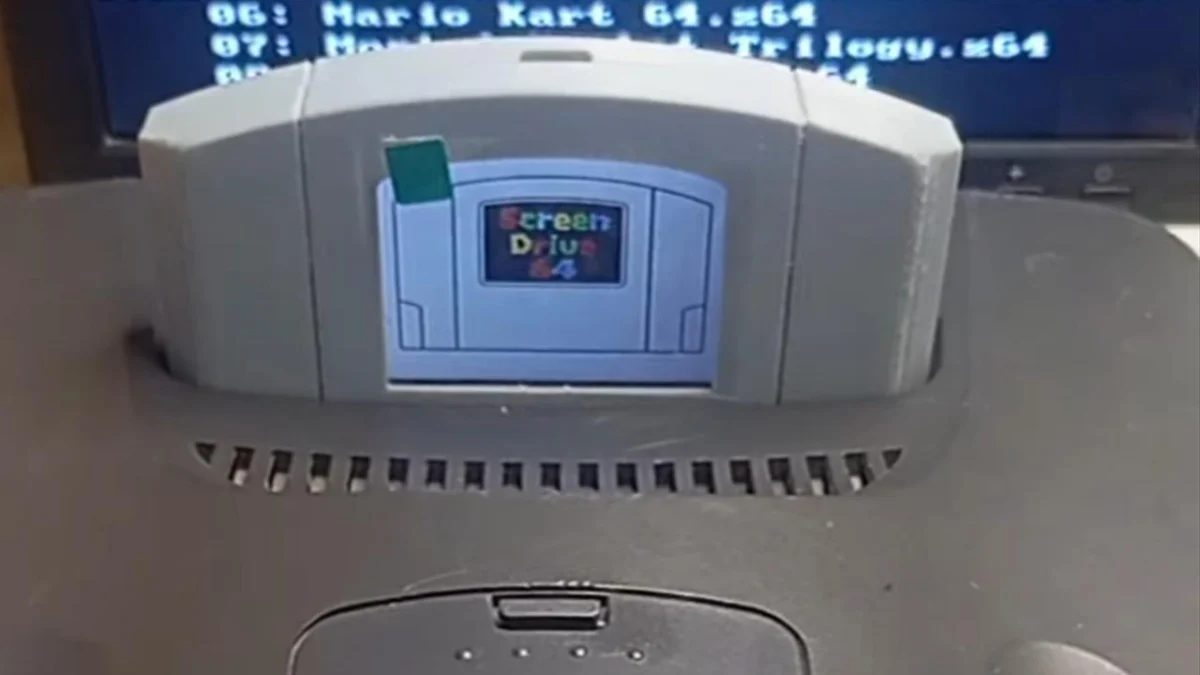
Developer David Brito has introduced the ScreenDrive 64, an innovative Nintendo 64 ROM cartridge that distinguishes itself with a built-in screen capable of dynamically displaying the digital cartridge label of the loaded game. This novel accessory, built upon the established and highly regarded PicoCart64 project by Konrad Beckmann, merges modern display technology with the nostalgic appeal of retro gaming hardware, offering a refined user experience for enthusiasts of the classic 64-bit console.
The Genesis of Innovation: A Modern Twist on Retro Hardware
The retro gaming community has long sought advanced solutions for playing classic titles on original hardware, leading to the proliferation of flash cartridges, commonly known as ROM carts. These devices allow users to load game ROMs from a storage medium, such as an SD card, directly onto a physical cartridge that can be inserted into the console. This capability has been pivotal for game preservation, enabling enthusiasts to play backups of their physical games, access fan translations, and experience homebrew titles without relying on fragile or expensive original cartridges.
The Nintendo 64, released in 1996, presented unique challenges for flash cart development due to its complex hardware architecture and proprietary cartridge format. Early attempts at N64 flash carts often faced limitations in compatibility, performance, or ease of use. However, significant strides have been made in recent years, with projects like Konrad Beckmann’s PicoCart64 emerging as a benchmark for reliability and performance. The PicoCart64, leveraging the capabilities of a Raspberry Pi Pico microcontroller, gained acclaim for its robust game loading, high compatibility, and open-source nature, fostering a community of developers and modders.
David Brito’s ScreenDrive 64 builds directly on this foundation, inheriting the core performance characteristics that have made PicoCart64 a favorite among N64 aficionados. Brito’s innovation lies in integrating a small, high-resolution LCD screen directly into the cartridge shell. This screen serves a purely aesthetic and informational purpose: when a game is loaded from the cartridge’s internal storage (typically an SD card), the corresponding game label or box art is displayed on the screen, mimicking the appearance of an original N64 game cartridge. This feature addresses a common minor inconvenience of traditional flash carts, where the physical cartridge always looks the same regardless of the game loaded, diminishing a small part of the tactile and visual nostalgia associated with physical media.
Technical Specifications and Design Philosophy
The ScreenDrive 64 is meticulously designed to match the physical dimensions and contours of an original Nintendo 64 cartridge, ensuring a seamless fit into the console’s cartridge slot. The integrated LCD screen is strategically placed on the front face of the cartridge, where a traditional paper label would typically reside. Importantly, the screen’s display area is masked to emulate the distinctive shape and proportions of an authentic N64 cartridge label, enhancing the illusion of an original game release. While the developer acknowledges it’s not a "perfect match" due to the inherent differences between a digital display and a printed label, the visual effect is highly convincing and significantly elevates the user experience.
The internal workings of the ScreenDrive 64 combine the proven architecture of the PicoCart64 with custom circuitry for the LCD integration. This involves a microcontroller dedicated to managing the display, receiving game information from the PicoCart64’s firmware, and rendering the appropriate label graphic. The process is designed to be efficient, ensuring that the display update does not introduce lag or interfere with game performance. Users can expect the same rapid game loading times and high compatibility that characterize the base PicoCart64 project.
The user interface for selecting games is handled through the N64 console itself, typically via an on-screen menu presented upon boot-up, similar to other modern flash carts. Once a game is selected, the ScreenDrive 64 simultaneously loads the game ROM for the console and updates its integrated display with the corresponding label art, creating a cohesive and immersive retro gaming experience. This thoughtful integration underscores Brito’s focus on blending modern functionality with the nostalgic aesthetics of the N64 era.
Market Reception and Initial Availability
Upon its initial unveiling, the ScreenDrive 64 quickly garnered significant attention within the retro gaming community, leading to a rapid sell-out of the first production batch. This enthusiastic response highlights a strong demand for innovative, high-quality accessories that enhance the retro gaming experience. The initial pricing for a version housed in a 3D-printed shell was set at 1200 Mexican Pesos, which translates to just under $70 USD. This price point positions the ScreenDrive 64 as a highly competitive option in the premium flash cart market, especially considering its unique display feature. For context, many high-end N64 flash carts without a screen can range from $70 to over $200, depending on features and manufacturer. The affordability, combined with the novelty of the dynamic label, contributed significantly to its immediate popularity.
It is crucial to differentiate the ScreenDrive 64 from other, potentially less reputable, N64 carts with LCD screens that have appeared on platforms like AliExpress. The developer has explicitly stated that the ScreenDrive 64 is a distinct product, developed independently and based on the established PicoCart64 project, known for its transparency and performance. Consumers are advised to exercise caution and verify the origin and specifications of any N64 flash cart featuring an LCD screen to ensure they are acquiring a legitimate and well-supported product. The ScreenDrive 64’s connection to the PicoCart64 project provides a level of credibility and community backing that is often absent from generic, mass-produced alternatives.

Chronology of Development and Community Engagement
While specific development dates for the ScreenDrive 64 are not publicly detailed, its lineage can be traced back to the broader timeline of N64 flash cart evolution. Konrad Beckmann’s PicoCart64 project gained traction within the retro hardware hacking community over recent years, establishing itself as a reliable open-source platform. David Brito, drawing upon this foundation, likely undertook a period of research, design, and prototyping to integrate the LCD screen and develop the necessary firmware modifications.
The public unveiling and subsequent community engagement largely transpired through social media platforms, particularly dedicated retro gaming groups on Facebook, where enthusiasts share their projects and discoveries. Websites like retroRGB, a prominent hub for retro gaming hardware news and reviews, quickly picked up on the ScreenDrive 64’s announcement, amplifying its reach. Additionally, blogs and community resources such as ReCollect64 provided further detailed coverage, offering insights and additional information to interested parties. This organic dissemination through specialized community channels underscores the project’s appeal to a niche yet highly engaged audience. The rapid sell-out following these announcements demonstrates the effectiveness of community-driven promotion and the pent-up demand for such innovative retro accessories.
Future Prospects and Strategic Considerations
Given the overwhelming initial demand, David Brito is reportedly considering a pre-order or crowdfunding campaign for future production runs of the ScreenDrive 64. This strategic move could address the challenge of scaling production to meet wider market interest. A crowdfunding model, in particular, would not only provide the necessary capital for larger-scale manufacturing but also foster a deeper sense of community involvement and investment in the project’s success.
For potential future iterations, several refinements are being considered. The developer has expressed openness to sending units to "hardcore beta testers and reviewers" to gather feedback. This iterative development approach, common in the modding and independent hardware scene, allows for continuous improvement based on real-world usage. Key areas for potential enhancement include moving from 3D-printed shells to injection-molded versions, which would offer a more polished, durable, and factory-like finish, aligning even closer with the aesthetic of original N64 cartridges. Further optimization of the LCD screen’s masking and perhaps even the display technology itself could bring the visual representation of the labels even closer to the authentic look of original N64 artwork.
The concept of integrating dynamic displays into ROM carts holds broader implications for the retro gaming hardware market. While the ScreenDrive 64 currently focuses on the N64, the underlying principle could potentially be adapted to flash carts for other consoles. However, challenges exist, particularly for systems with "wraparound labels" (labels that extend to the top or sides of the cartridge), where integrating a flat screen would be significantly more complex without altering the original form factor. Nonetheless, the ScreenDrive 64 sets a precedent for how modern technology can be thoughtfully applied to enhance retro gaming hardware while respecting its original design principles.
The Broader Impact on Retro Gaming and Preservation
The ScreenDrive 64 represents more than just a novelty; it embodies a trend in the retro gaming community towards enhancing the user experience on original hardware through thoughtful, modern integrations. By dynamically displaying game labels, it restores a layer of visual feedback and nostalgia that is often lost with generic flash carts. This not only makes the experience more aesthetically pleasing but also contributes to the "sense of an original N64 label," making the digital library feel more tangible and curated.
From a preservation standpoint, devices like the ScreenDrive 64, while primarily focused on enhancing playability, play a supportive role. By making it more enjoyable and visually appealing to use legally obtained ROM backups on original hardware, they indirectly encourage engagement with the history of gaming. The continued development of robust flash carts ensures that future generations can experience classic titles on the platforms they were originally designed for, maintaining the authenticity of the gaming experience.
The thriving ecosystem of third-party hardware developers, of which David Brito is a part, demonstrates the enduring passion and ingenuity within the retro gaming community. These independent creators often push boundaries that larger, mainstream companies might overlook, catering to niche demands with innovative solutions. The economic implications are also noteworthy; a vibrant market exists for premium retro hardware, signaling that enthusiasts are willing to invest in quality products that enhance their hobby.
In conclusion, David Brito’s ScreenDrive 64 stands as a testament to the ongoing evolution of retro gaming hardware. By expertly blending the proven performance of the PicoCart64 with a unique and aesthetically pleasing dynamic label display, it offers N64 enthusiasts an enriched and more immersive way to enjoy their classic games. Its immediate success and the developer’s plans for future iterations suggest a bright future for this innovative cartridge, potentially setting a new standard for how modern technology can respectfully and effectively augment vintage gaming experiences.