Farhan hamdan
The MiSTer FPGA platform, a highly regarded open-source hardware and software project dedicated to digital preservation and retro gaming, has recently announced a significant wave of developments spanning graphics hardware emulation, new peripheral launches, and crucial core updates. These advancements promise to further expand the platform’s capabilities, offering enthusiasts unprecedented access to historical computing and gaming experiences.
Groundbreaking 3DFx Voodoo Graphics Card Implementation
One of the most anticipated and technically challenging developments comes from a GitHub developer who has successfully created "SpinalVoodo," an FPGA implementation of the legendary 3DFx Voodoo graphics card. This project aims to replicate the Voodoo’s architecture on the DE10-Nano board, which serves as the foundational hardware for the MiSTer FPGA. The 3DFx Voodoo was a watershed moment in PC gaming history, dominating the late 1990s as the premier accelerator for 3D graphics, ushering in an era of immersive visual experiences with titles like Quake, Unreal, and Tomb Raider. Its Glide API became a standard for developers, offering unparalleled performance compared to software rendering or competing graphics solutions of the time.
While the SpinalVoodo core represents a monumental technical achievement, its immediate integration into existing MiSTer PC cores, such as the AO486, remains a distant prospect. The current implementation of SpinalVoodo alone consumes approximately 70% of the FPGA’s resources on the DE10-Nano. When combined with a complex CPU core like the AO486, which already utilizes over 80% of the FPGA’s capacity, the total resource requirement far exceeds the capabilities of the current MiSTer hardware. This highlights the inherent limitations of the DE10-Nano for highly complex, multi-component PC system emulation, where simultaneous, high-fidelity replication of multiple sophisticated hardware blocks is required.
Despite these immediate integration challenges for MiSTer’s existing PC cores, the SpinalVoodo project holds immense significance for digital preservation. It provides a robust, hardware-accurate recreation of the Voodoo architecture, ensuring that future generations can experience the seminal 3D acceleration technology as it was originally intended. Furthermore, the open-source nature of FPGA development opens the door for potential future applications. It is conceivable that this work could lead to the creation of dedicated FPGA-based PCI cards designed to mimic the Voodoo’s functionality, which could then be used in period-accurate retro PC builds. This concept mirrors projects like PicoGUS, which provides a modern, FPGA-based alternative to vintage sound cards, addressing the increasing scarcity and failure rates of original hardware components. As vintage PC hardware continues to age, become more expensive, and inevitably fail, such FPGA implementations offer a vital pathway to experiencing historical computing platforms in a form as close to the original as possible. The preservation of the Voodoo architecture through FPGA ensures that its legacy and impact on computer graphics are not lost to time or hardware degradation.
The Retro Collective Unveils Multisystem 2 Arcade and Expanded Peripherals
Heber, a prominent developer from The Retro Collective, provided a comprehensive update on several new hardware offerings designed to significantly enhance the MiSTer FPGA experience, particularly for arcade and console enthusiasts. The cornerstone of these announcements is the upcoming Multisystem 2 Arcade, a dedicated JAMMA-compatible board engineered for integration into arcade cabinets.
Multisystem 2 Arcade: A New Era for Cabinet Enthusiasts
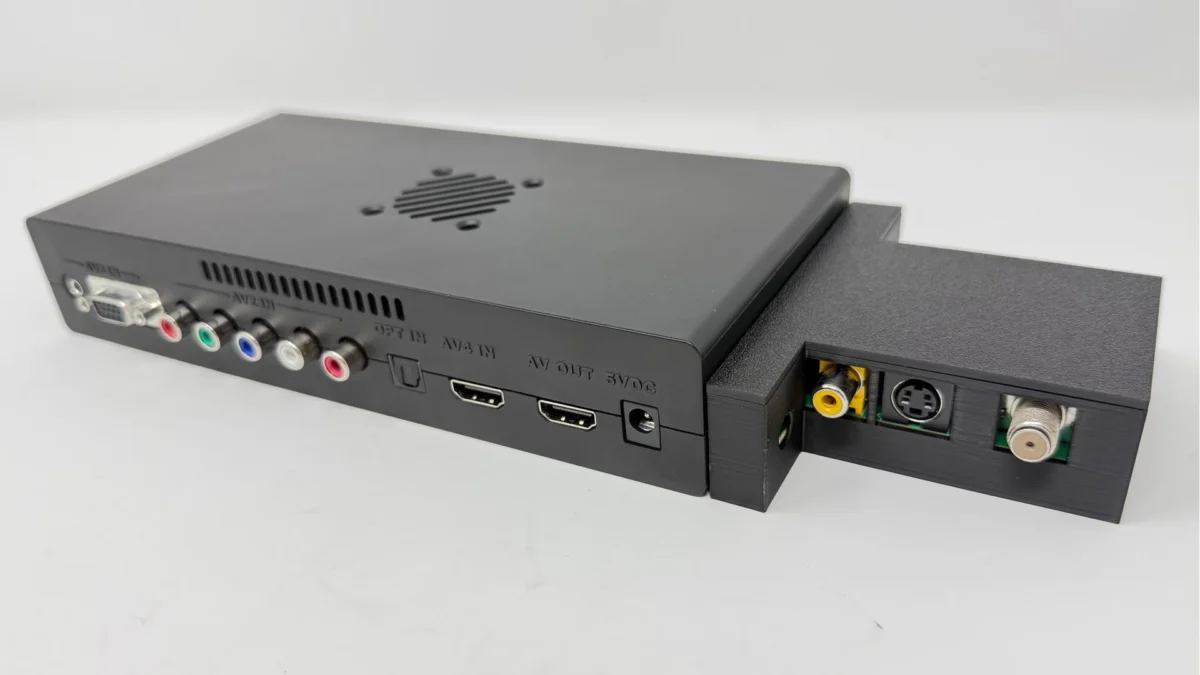
The Multisystem 2 Arcade is a purpose-built solution that streamlines the process of running MiSTer FPGA in an authentic arcade environment. Unlike standard MiSTer setups, this board features a built-in FPGA chip, eliminating the need for a separate DE10-Nano board. This integrated design simplifies installation and reduces clutter within an arcade cabinet. A key feature highlighted by Heber is the expansion connector, which will provide crucial SNAC (Serial Native Accessory Converter) functionality and additional input/output (IO) options. SNAC is vital for connecting original controllers with minimal latency, offering an authentic gaming experience for a wide array of emulated systems. The JAMMA (Japan Amusement Machine Manufacturers Association) standard ensures broad compatibility with existing arcade cabinets, making the Multisystem 2 Arcade an attractive option for collectors and operators looking to infuse their machines with the vast and ever-growing library of MiSTer cores. Manufacturing for this highly anticipated board is expected to commence shortly, bringing it closer to market availability.
Game Boy, Game Boy Color, and Game Boy Advance Cartridge Adapter
In a move that emphasizes authenticity and direct hardware interaction, The Retro Collective also showcased a new cartridge adapter specifically designed for the Multisystem 2. This versatile adapter supports original Game Boy, Game Boy Color, and Game Boy Advance cartridges. Its primary function is to allow users to run games directly from their physical cartridges, bypassing the need for ROM dumping or digital files. This feature is particularly appealing to purists and collectors who value the tactile experience of using original media and wish to preserve the integrity of their physical game libraries. The ability to load games directly from cartridges enhances the overall retro gaming experience by connecting the digital emulation directly to the physical legacy of the consoles. This adapter is slated for release and will be available for purchase starting April 2nd, expanding the Multisystem 2’s capabilities to a massive library of handheld titles.
MiSTer Floppy: Bridging Digital and Analog Amiga Experiences
Further expanding the peripheral ecosystem, a prototype floppy drive adapter for the Amiga core on MiSTer was demonstrated. This "MiSTer Floppy" adapter will enable users to connect and utilize original Amiga floppy disks directly with the MiSTer Amiga core. The Amiga platform, renowned for its vibrant software library distributed on floppy disks, benefits immensely from this development. The adapter’s design is based on an open-source project by RobsmithDev on YouTube, with Heber adapting it for compatibility with the Multisystem 2’s IO architecture. This collaborative, open-source approach is a hallmark of the MiSTer community, fostering innovation and rapid development. The MiSTer Floppy adapter promises to deliver a deeply authentic Amiga experience, allowing users to interact with original software and data in a manner identical to the physical hardware. Enthusiasts are encouraged to explore RobsmithDev’s detailed video for a comprehensive understanding of the MiSTer Floppy project.
Other Heber Products: Enhancing Controller Support
Heber also revealed two new controller docks, each tailored to specific retro gaming needs. The PC Engine Dock facilitates the connection of up to five PC Engine or TurboGrafx-16 controllers, alongside providing support for the PC Engine mouse. This is a significant addition for fans of the console, enabling multiplayer experiences and accommodating games that utilized mouse input. The PC Engine CTRLDock is currently available for purchase.
The second dock, the CTRLDock Flight, caters to a niche but dedicated segment of retro PC gamers. It features ports designed to connect PC GamePort controllers, a standard prevalent during the 1980s and 1990s for joysticks, gamepads, and other input devices. This dock is still under development but promises to bring compatibility for classic flight simulators, racing games, and other PC titles that relied on these legacy controllers to the MiSTer platform. These controller docks underscore the MiSTer community’s commitment to delivering comprehensive and authentic input solutions for a wide range of emulated systems.
Arcade Core Development: New Technos Classics and CPS3 Progress
The MiSTer FPGA community continues to see robust development in its arcade core library, with new additions and significant progress on existing projects.
Coin Op Collection: Technos Wrestling Classics
Coin Op Collection, a dedicated group of core developers, has released new cores for two classic Technos wrestling arcade games: Mat Mania and Mania Challenge. Technos Japan Corporation was a prominent developer in the 1980s and early 1990s, known for iconic titles like Double Dragon and River City Ransom. Their wrestling games, while perhaps less universally known than their beat ’em ups, hold a special place for arcade aficionados. Mat Mania (known as Exciting Hour in Japan) was released in 1985 and featured a colorful roster of characters and engaging, albeit simple, wrestling mechanics. Mania Challenge, released in 1986, built upon this foundation with improved graphics and gameplay. These releases ensure the accurate preservation and playability of these historical arcade titles on the MiSTer platform. Coin Op Collection has also announced plans to cover an even older wrestling title, Tag Team Wrestling, in their next wave of Technos arcade game releases, further expanding the historical scope of their contributions.
Jotego Updates: CPS3, Patreon Features, and Student Mods
Jotego, one of the most prolific and respected MiSTer core developers, has provided an update on the highly anticipated CPS3 (Capcom Play System 3) core. CPS3 was Capcom’s most advanced 2D arcade board, released in 1996, and is renowned for its stunning 2D graphics and fluid animation, particularly in fighting games like Street Fighter III: 3rd Strike, JoJo’s Bizarre Adventure, and Warzard (Red Earth). The integration of the Score Screen graphics layer into the core represents a significant step forward in achieving full graphical fidelity, bringing the core closer to public release. The development of CPS3 on MiSTer is a complex undertaking due to its sophisticated architecture, including a custom encryption system that posed significant challenges for reverse engineering and emulation.
In a move to enhance the experience for his Patreon subscribers, Jotego has added a convenience feature to the "updateall" script. Patreon supporters, who gain early access to beta cores, can now have their JT beta key automatically updated via the updateall utility. This streamlines the process of keeping beta cores current, requiring users only to run "updateall," navigate to the settings screen, and log in. This quality-of-life improvement reflects Jotego’s commitment to supporting his community and simplifying the beta testing process.
Furthermore, Jotego highlighted an initiative involving students interning for his project. These students are developing modified versions of classic arcade games. The first such modification showcased is a revised version of Yie Ar Kung Fu, Konami’s pioneering 1985 fighting game. This program not only provides valuable experience for aspiring developers but also introduces fresh takes on beloved classics, demonstrating the creative potential within the MiSTer community. It fosters new talent and ensures the continuous evolution and exploration of the platform’s capabilities beyond mere replication.
Virtual Boy Core Enters Development
A notable development for console preservationists is the announcement of a Virtual Boy core now in active development. Nintendo’s Virtual Boy, released in 1995, was an ambitious but ultimately commercially unsuccessful console known for its unique red monochrome display and stereoscopic 3D graphics. Despite its short lifespan and limited game library, it represents a significant, albeit quirky, piece of video game history.
A test core is currently available for enthusiasts to experiment with; however, the development is still in its early stages. Most games are reported to be barely playable, indicating that significant work remains to be done in accurately emulating the Virtual Boy’s distinctive hardware, particularly its unique display system and 3D rendering capabilities. The challenges involve replicating the specific timing and output of the console’s reflective mirror system and LED array, which created the illusion of depth. The existence of a Virtual Boy core, even in its nascent form, underscores the MiSTer platform’s mission to preserve even the most obscure and commercially unsuccessful chapters of gaming history, making them accessible for future study and enjoyment.
Update All 2.7: Streamlining the MiSTer Experience
The "Update All" utility, an indispensable tool for MiSTer users, has been upgraded to version 2.7. While the specific new features for this version were not detailed in the original announcement, the "Update All" script is critical for the MiSTer ecosystem. It automates the process of downloading and installing the latest firmware, core updates, and other essential files, ensuring that users can easily keep their MiSTer setup current with the rapidly evolving development landscape. This utility significantly lowers the barrier to entry for new users and simplifies maintenance for experienced ones, allowing them to focus on gaming rather than manual file management. Regular updates to this tool are vital for maintaining the platform’s accessibility and ensuring a smooth user experience as new cores and features are continuously added.
In summary, the recent announcements from the MiSTer FPGA community represent a vibrant period of innovation and expansion. From the ambitious technical feat of the 3DFx Voodoo implementation to the practical enhancements of the Multisystem 2 Arcade and its peripherals, alongside a steady stream of core updates for both popular and niche arcade titles, the platform continues to solidify its position as a leading force in digital preservation and retro gaming. These developments not only expand the playable library but also deepen the authenticity and overall user experience, ensuring that the legacy of computing and gaming hardware remains accessible for generations to come.