Farhan hamdan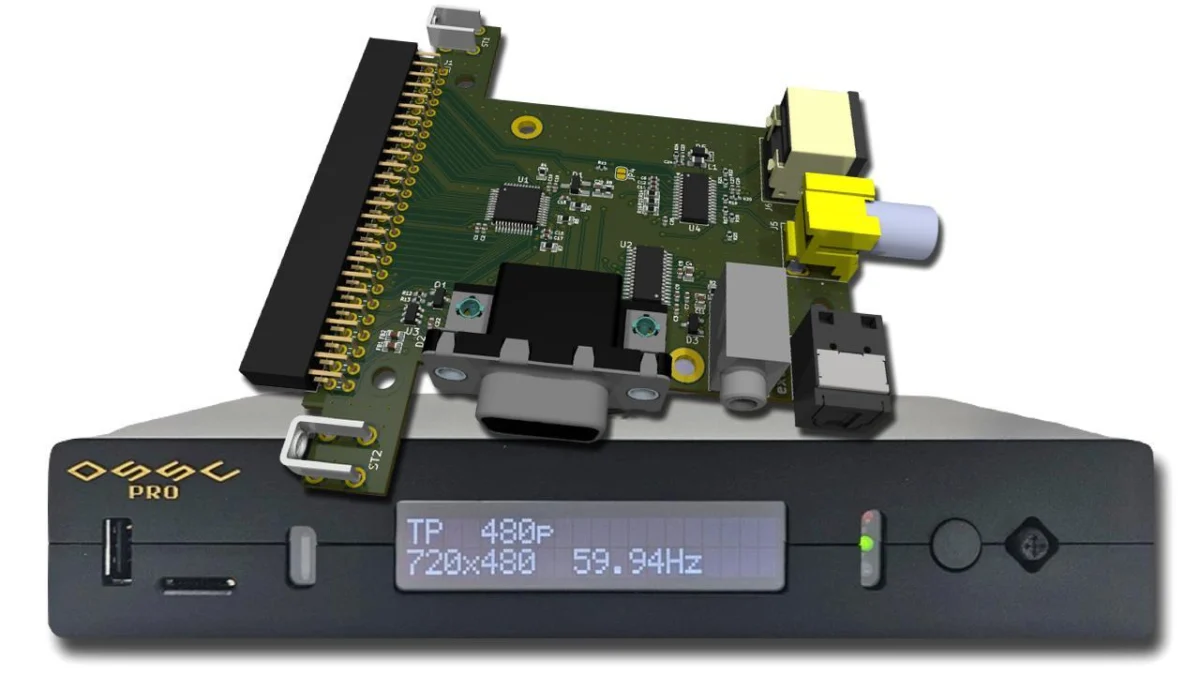
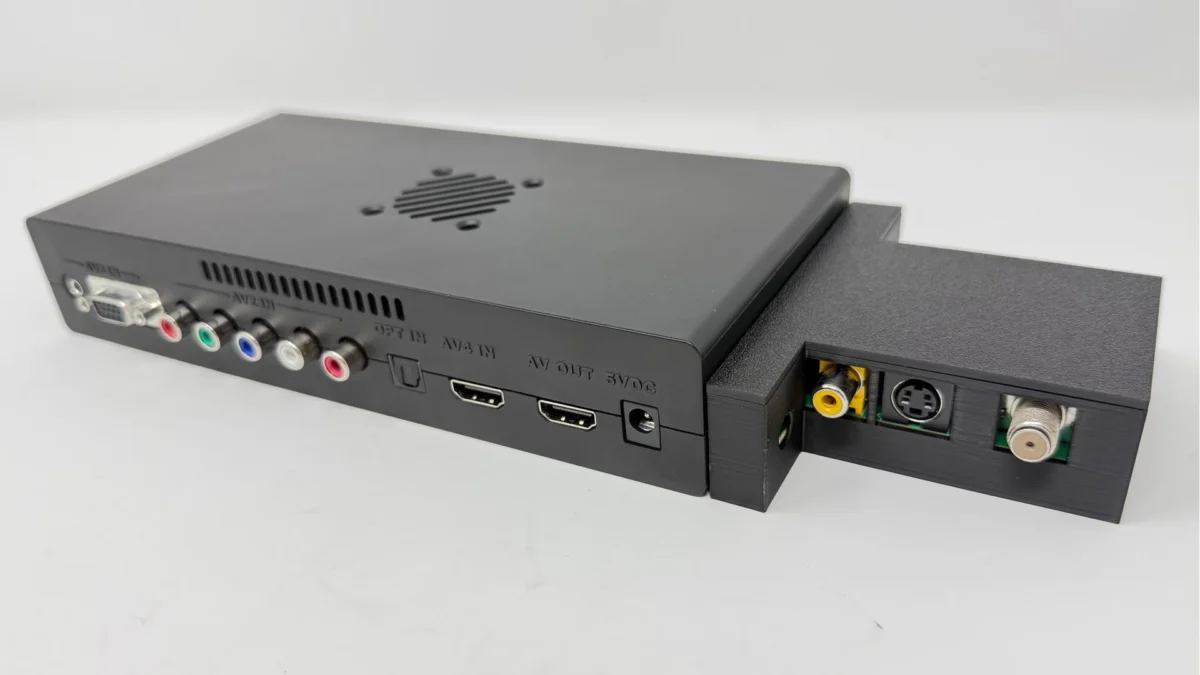
Markus, the principal developer behind the acclaimed Open Source Scan Converter Pro (OSSC Pro), has officially released firmware version v0.82, bringing substantial enhancements to the device’s capabilities. This latest update introduces finalized Lumacode support, a critical feature for accurately rendering the vibrant and historically significant color palettes of Nintendo Entertainment System (NES) games, mirroring the functionality previously lauded in the original OSSC. Concurrently, the firmware lays the groundwork for an anticipated Extra AV-Out adapter, which promises to expand the OSSC Pro’s output versatility by adding Composite and S-Video connections. While the adapter’s pricing and availability remain undisclosed, its inclusion in the firmware signifies an important step towards comprehensive legacy display compatibility.
The OSSC Pro, a cornerstone device for retro gaming enthusiasts, content creators, and preservationists, is renowned for its ability to upscale and process analog video signals from classic consoles into modern digital formats with minimal latency and superior image quality. Its predecessor, the original OSSC, revolutionized how retro games were displayed on contemporary flat-panel televisions by converting low-resolution analog signals (like 240p or 480i) into high-definition digital outputs (like 720p, 1080p, or even 1440p). The OSSC Pro builds upon this legacy, offering enhanced processing power, more input options, and a modular design that allows for future expansions. This latest firmware release, v0.82, reinforces the developer’s commitment to continuous improvement and addressing the nuanced demands of the retro gaming community.
The OSSC Pro: A Foundation for Retro Excellence
To fully appreciate the significance of the v0.82 update, it is crucial to understand the OSSC Pro’s role within the broader retro gaming ecosystem. Modern displays, particularly LCD and OLED panels, are inherently designed for digital, progressive scan signals at high resolutions. Classic gaming consoles, however, output analog, interlaced, or low-resolution progressive scan signals (e.g., RGBs, YPbPr, Composite, S-Video). Directly connecting these older consoles to modern TVs often results in poor image quality, input lag, and incorrect aspect ratios, undermining the authentic gaming experience.
The OSSC Pro acts as a sophisticated bridge, meticulously converting these analog signals into a digital format that modern displays can properly interpret. Unlike conventional upscalers, the OSSC Pro employs a "line-doubling" or "line-tripling" technique, multiplying the original scanlines to create a sharper, pixel-perfect image without introducing the blurring or lag associated with traditional video processors. This ensures that the pixel art of classic games is rendered with pristine clarity, retaining the visual integrity intended by their original developers. Its robust feature set, including extensive input compatibility (SCART, Component, VGA), advanced timing options, and a focus on open-source development, has cemented its reputation as a premium solution for enthusiasts seeking the best possible visual fidelity for their vintage hardware.
Unlocking Authentic NES Colors: The Lumacode Breakthrough
One of the most anticipated features in the v0.82 firmware is the finalized Lumacode support for NES color palettes. The Nintendo Entertainment System, a console that defined a generation, utilized a somewhat unconventional method to render its distinctive color scheme. Due to hardware limitations, the NES’s Picture Processing Unit (PPU) primarily outputted a monochrome (luminance) signal and a color (chrominance) signal that was then modulated. The NTSC NES console, in particular, famously employed a technique known as "color artifacting" or "Lumacode" to generate a wider range of perceived colors than its limited palette would suggest.
This artifacting relies on the precise timing and phase shifts of the chroma signal relative to the luma signal. When displayed on a standard CRT television via composite video, these phase differences would create subtle color fringing and blending, effectively expanding the console’s visual repertoire. While this was an inherent part of the NES’s visual identity, modern upscalers and digital displays often struggle to replicate it accurately, leading to incorrect or muted colors. The original OSSC introduced a groundbreaking implementation of Lumacode support, allowing users to restore these authentic NES colors. The OSSC Pro’s finalized Lumacode support in v0.82 refines this capability, ensuring that NES titles display with their intended, vibrant, and historically accurate color schemes, which is crucial for both visual fidelity and the preservation of gaming history. This level of detail underscores the OSSC Pro’s commitment to delivering an uncompromised retro gaming experience, recognizing that the subtle nuances of a console’s output are as vital as its core resolution.
Bridging Eras: The New Extra AV-Out Adapter
Beyond the Lumacode enhancements, the v0.82 firmware introduces crucial support for an upcoming Extra AV-Out adapter, which will provide Composite and S-Video outputs. This development is a significant milestone for "downscaling power users" and anyone looking to integrate their OSSC Pro setup with older display technologies or capture equipment. While the OSSC Pro excels at upscaling signals for modern digital displays, the ability to downscale and output to legacy analog formats opens up a new realm of possibilities.
The demand for such a feature stems from several factors within the retro community. Many enthusiasts still cherish the authentic look and feel of games played on Cathode Ray Tube (CRT) televisions. CRTs, particularly high-quality PVMs (Professional Video Monitors) or consumer sets with S-Video or Composite inputs, offer unique visual characteristics like scanlines and motion blur that are inherent to the retro gaming experience. The new adapter will allow users to leverage the OSSC Pro’s superior signal processing and input versatility to feed a clean, well-processed signal back into a CRT, bridging the gap between cutting-edge scaling technology and vintage display preferences. Furthermore, content creators who wish to capture or stream gameplay with an authentic "CRT look" without complex external setups will find this adapter invaluable.
Technical Versatility and Simultaneous Outputs
A standout feature highlighted by the developer is the OSSC Pro’s capacity to utilize all outputs simultaneously, including the existing VGA output (via RGBs) alongside the new Composite and S-Video outputs. This concurrent output capability offers unprecedented flexibility for complex setups. Imagine a scenario where a user could feed a pristine, upscaled digital signal to a modern monitor via HDMI, while simultaneously sending a downscaled Composite signal to a vintage CRT for an authentic retro feel, and perhaps an S-Video signal to a legacy capture card for archival purposes. This multi-output functionality caters to a diverse range of user needs, from casual gamers to professional archivists and broadcasters.
It is important to note the inherent limitations of Composite and S-Video standards. These legacy formats are designed for 15KHz signals, meaning they can only handle resolutions such as 240p, 288p, 480i, and 576i, utilizing PAL/PAL60/NTSC standards. The OSSC Pro’s ability to accurately downscale to these specific formats while maintaining signal integrity is a testament to its advanced processing capabilities. This ensures that even when converting to lower-fidelity analog outputs, the image quality remains as clean and stable as possible within the constraints of those standards. The support for various regional video standards (PAL, PAL60, NTSC) further enhances the adapter’s global utility, accommodating a wide array of retro consoles from different territories.

The Broader Impact on Retro Gaming
The continuous development of the OSSC Pro, exemplified by firmware v0.82 and the forthcoming adapter, has profound implications for the retro gaming community. It solidifies the OSSC Pro’s position not merely as an upscaler, but as a comprehensive video processing hub for vintage gaming. By refining Lumacode support, it ensures that the artistic intent of classic developers, particularly for iconic consoles like the NES, is faithfully preserved and displayed. This attention to detail resonates deeply with enthusiasts who prioritize authenticity.
Moreover, the introduction of robust downscaling capabilities to Composite and S-Video addresses a critical need for versatility. As the retro gaming hobby grows, so does the diversity of preferences regarding display technologies. Some prefer the sharp pixels of modern LCDs, others the warm glow and motion characteristics of CRTs. The OSSC Pro, with this update, empowers users to choose their preferred display method without compromising on signal quality at the source. This adaptability makes the OSSC Pro an even more compelling investment for anyone serious about retro gaming, offering a future-proof solution in an ever-evolving landscape of display technologies and personal preferences.
Developer Commitment and Community Engagement
The ongoing support and development from Markus, the creator of the OSSC and OSSC Pro, alongside the advocacy of figures like Bob from RetroRGB, underscore a vital aspect of the retro gaming hardware scene: community-driven innovation. These devices are not mass-produced consumer electronics but rather passion projects born from the needs and desires of a dedicated community. The iterative process of firmware updates, incorporating user feedback and pushing technical boundaries, reflects a strong commitment to serving this niche but passionate audience.
Bob from RetroRGB, a prominent voice and educator in the retro hardware space, frequently reviews and promotes devices like the OSSC Pro. His expressed excitement for the finalized Lumacode support and the downscaling capabilities is a strong indicator of their perceived value within the community. His intention to acquire the latest OSSC expansion adapters and an OSSC Pro for thorough testing further validates the importance of these new features, providing reliable, expert analysis to the broader audience. This collaborative ecosystem of developers, reviewers, and users is crucial for the continued advancement and accessibility of high-quality retro gaming experiences.
Looking Ahead: The Future of Retro Visuals
While the price and availability of the Extra AV-Out adapter are yet to be announced, its impending release, coupled with the immediate availability of firmware v0.82, sets an exciting precedent. It signals a future where retro gaming setups can seamlessly integrate both modern and vintage display technologies, offering unparalleled flexibility. The continuous evolution of the OSSC Pro platform ensures that as new challenges or opportunities arise in the realm of retro video processing, the hardware will adapt and provide solutions.
This commitment to both accuracy (Lumacode) and versatility (legacy AV outputs) positions the OSSC Pro as a definitive tool for preserving and enjoying the rich history of video games. It represents a significant step towards democratizing access to high-quality retro gaming, allowing enthusiasts to tailor their experience to their exact preferences, whether that means pixel-perfect clarity on a 4K monitor or the nostalgic glow of a CRT.
Availability and Resources
Firmware v0.82 is now available for download, allowing OSSC Pro owners to immediately benefit from the finalized Lumacode support. The update can be accessed directly from the developer’s GitHub repository:
Firmware v0.82: https://github.com/marqs85/ossc_pro/releases/tag/v0.82
For those looking to purchase the OSSC Pro, it is available from various regional sellers:
US Seller: https://retrorgb.link/osscprous
EU Seller: https://retrorgb.link/osscpro
Further announcements regarding the Extra AV-Out adapter’s release, pricing, and availability are expected in the near future. The retro gaming community eagerly awaits the opportunity to fully explore the expanded capabilities offered by these latest enhancements to the OSSC Pro platform.