Cecilia Chamidah Nur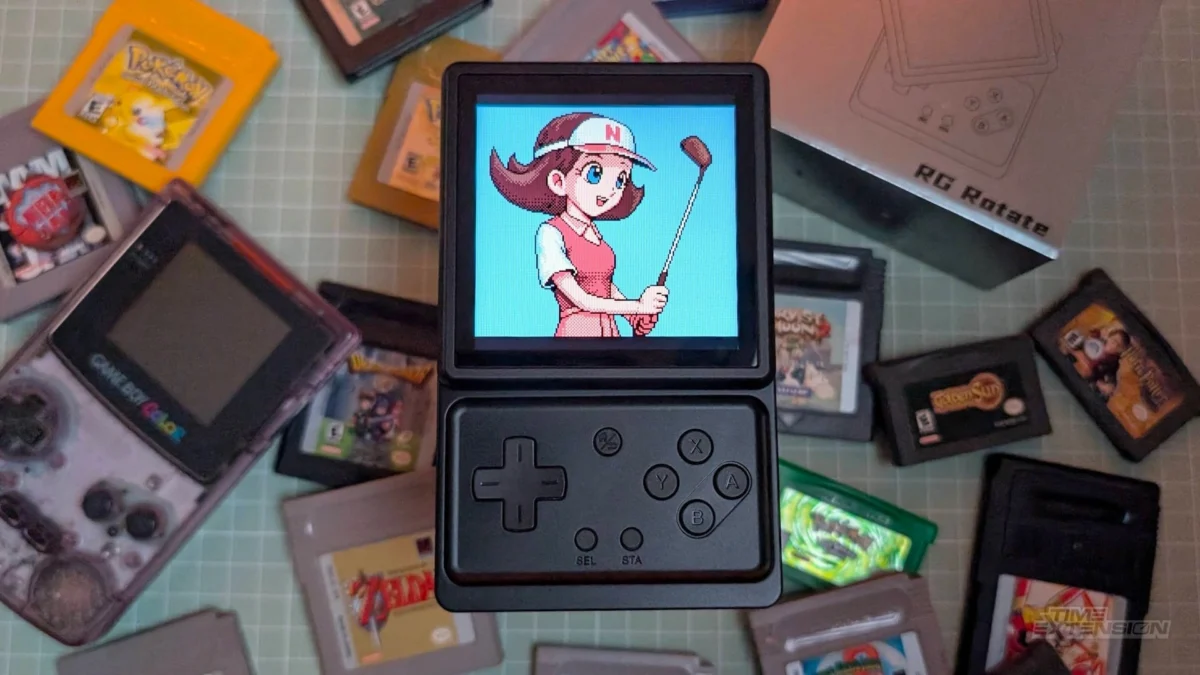
The past week in retro gaming has delivered a compelling blend of technological advancements, legal challenges, inspiring personal sagas, and community-driven innovations, highlighting the enduring vibrancy of classic gaming culture. From a groundbreaking tool enabling legal game disc preservation to a major manufacturer grappling with unauthorized software distribution, the landscape continues to evolve. This period also celebrated a remarkable 37-year development journey for a long-awaited sequel, showcased the power of fan patches to elevate classic titles, and offered candid insights into the personalities behind some of gaming’s most iconic creations. New hardware designs pushing the boundaries of retro handhelds and the re-evaluation of overlooked masterpieces rounded out a busy week, underscoring the dynamic interplay between nostalgia, technology, and dedicated communities.
Advancing Game Preservation: The Advent of OmniDrive
A significant development in the realm of game preservation emerged this week with the release of OmniDrive, a novel tool that empowers users to legally rip optical media from a diverse range of classic consoles using standard PC Blu-Ray drives. This innovation marks a critical step forward for enthusiasts and archivists seeking to digitize their physical game libraries without resorting to cumbersome console modifications or specialized, often expensive, hardware.
OmniDrive operates as a sophisticated firmware modification specifically designed for MediaTek MT1959-based optical disc drives manufactured by Hitachi-LG Data Storage. By altering the drive’s firmware, OmniDrive enables it to bypass the proprietary data formats and copy protection schemes historically embedded in game discs for systems such as the Nintendo GameCube, Wii, and Microsoft Xbox 360. These consoles famously utilized unique disc structures, making direct ripping with off-the-shelf PC drives impossible until now.
Background and Context:
For decades, the digital preservation of console games has presented significant technical and legal hurdles. Unlike PC games, which often came on standard CD-ROMs or DVDs, console titles frequently employed custom disc formats, encryption, and physical security measures. This necessitated complex "softmodding" or "hardmodding" of the consoles themselves, often requiring specialized knowledge, specific hardware revisions, or even soldering skills, to extract game data. The Digital Millennium Copyright Act (DMCA) in the United States, while intended to prevent piracy, also created ambiguity around the legality of circumventing copy protection for personal backups. However, subsequent exemptions have broadened the scope for legitimate archival and personal use.
Prior to OmniDrive, methods for ripping GameCube and Wii discs often involved specific, older model DVD drives that, through rare firmware quirks, could read Nintendo’s proprietary mini-DVD and full-size DVD formats. Xbox 360 disc ripping similarly required specific PC DVD drives with modified firmware or specialized external hardware. These methods were often inconsistent, required specific hardware that became increasingly difficult to find, and were not always universally compatible. OmniDrive streamlines this process by leveraging widely available Blu-Ray drive technology, which offers higher data transfer rates and greater reliability.
Implications for Preservation and Accessibility:
The immediate implication of OmniDrive is a significant boost to digital game preservation efforts. Institutions like the Video Game History Foundation and individual archivists can now more efficiently and reliably create digital backups of their physical collections. This is crucial as optical media degrades over time, and the hardware required to play them becomes obsolete. Furthermore, this tool enhances accessibility for legal emulation, allowing users to play their legally owned games on modern platforms without relying on physical discs or pirated ROMs. While the tool explicitly states its purpose is for legal ripping of owned media, its existence also underscores the ongoing tension between copyright holders and the growing movement for digital preservation and fair use in the digital age. Console manufacturers, while not commenting directly on such tools, typically maintain a strong stance against unauthorized copying, even if for personal backup. However, the legal framework for personal backups has been evolving, recognizing the consumer’s right to access purchased content.
Lenovo Investigates G02 Emulation Handhelds Shipped with Unauthorized ROMs
In a development that highlights the complex legal landscape surrounding emulation hardware, tech giant Lenovo has initiated an internal investigation into reports that its G02 emulation handheld devices are being sold with preloaded copyrighted games, commonly known as ROMs, from Nintendo, Sony, and Sega. This issue casts a spotlight on the challenges faced by major brands operating within the "white-label" manufacturing ecosystem.
The "White-Label" Challenge:
The G02 is identified as a "white-label" device, a common practice in the electronics industry where a generic product manufactured by one company is rebranded and sold by another. In this instance, Lenovo, or an authorized licensee, markets and distributes the G02, but the underlying hardware is produced by a different, often anonymous, supplier. This business model allows companies to expand their product lines rapidly and cost-effectively, but it also introduces complexities in supply chain oversight, especially when third-party resellers enter the picture.
Lenovo has publicly clarified that the G02 handhelds directly shipped by the company and its authorized licensees do not include preinstalled games or even memory cards. The company suspects that unauthorized third-party resellers are acquiring the G02 units and subsequently bundling them with memory cards loaded with vast libraries of ROMs, then marketing them as "ready-to-play" retro gaming systems. This practice, while appealing to some consumers, directly infringes on the intellectual property rights of game publishers.
Industry Context and Legal Ramifications:
The market for retro emulation handhelds has exploded in recent years, fueled by nostalgia and technological advancements that allow powerful emulation on portable devices. However, the distribution of copyrighted ROMs remains a contentious legal issue. Companies like Nintendo have historically pursued aggressive legal action against individuals and companies involved in the unauthorized distribution of their games, viewing it as a direct threat to their intellectual property and current sales.
This incident is not isolated. Numerous smaller, independent manufacturers of retro handhelds have faced similar accusations or have openly engaged in the practice of preloading ROMs, often operating in legal grey areas or from jurisdictions where copyright enforcement is less stringent. For a major brand like Lenovo, however, the implications are far more severe. Association with copyright infringement can lead to significant brand damage, potential lawsuits from aggrieved publishers, and regulatory scrutiny.
Official Response and Implications:
Lenovo’s swift launch of an investigation demonstrates its intent to distance itself from these unauthorized practices and protect its brand integrity. The company will likely focus on identifying the specific resellers involved, implementing stricter controls in its distribution channels, and potentially issuing cease and desist orders. This situation underscores the broader challenge for global electronics brands in maintaining control over their product’s final presentation, particularly when multiple layers of distribution and third-party vendors are involved. The incident serves as a cautionary tale for consumers as well, highlighting the legal risks associated with purchasing devices that include unauthorized software.
A 37-Year Journey: Colin Porch and the ‘Head Over Heels’ Sequel
In a remarkable testament to enduring passion and creative dedication, 81-year-old developer Colin Porch has finally released Return to Blacktooth, the long-awaited sequel to the beloved 1987 isometric adventure Head Over Heels. This project, which took an astonishing 37 years to complete, bridges decades of gaming history and highlights the profound impact of classic titles.
The Legacy of ‘Head Over Heels’:
The original Head Over Heels, released for 8-bit home computers like the ZX Spectrum, Amstrad CPC, and Commodore 64, was a groundbreaking isometric puzzle-platformer developed by Jon Ritman and Bernie Drummond. Players controlled two distinct characters, Head and Heels, each with unique abilities, and had to combine their talents to navigate complex environments, solve puzzles, and escape the planet Blacktooth. Its innovative gameplay, intricate level design, and charming graphics cemented its status as a cult classic and an influential title in the burgeoning European gaming scene of the late 1980s.
A Decades-Long Revival:
Colin Porch, a programmer who worked for Ocean Software, the publisher of Head Over Heels, initially conceived of a sequel shortly after the original’s release. However, the rapidly changing landscape of the gaming industry in the early 1990s, with the rise of more powerful home consoles and the shift away from 8-bit platforms, led him to abandon the project. As Porch revealed in an interview with British television network ITV, the game lay dormant for decades, a forgotten dream amidst a career that moved on from game development.
The catalyst for Return to Blacktooth‘s revival came unexpectedly. Porch credits his former boss at Ocean Software, a figure who encouraged him to revisit the project many years later. This encouragement, coupled with the enduring nostalgia for the original game and the accessibility of modern development tools, reignited Porch’s ambition. He embarked on the monumental task of completing a game he had started almost four decades prior, navigating both the complexities of game design and the personal journey of returning to a long-dormant creative endeavor in his later years.
Developer Insights and Impact:
Porch’s story is one of perseverance. Developing a game over such a vast period means contending with seismic shifts in technology, design philosophies, and player expectations. His dedication to completing Return to Blacktooth speaks volumes about the emotional connection developers have to their creations. The release is not merely a nostalgic curiosity but a fully realized game that aims to capture the spirit of its predecessor while offering new challenges.
The arrival of Return to Blacktooth serves as an inspiration, demonstrating that creative projects, no matter how long they’ve been shelved, can find completion. It also underscores the enduring appeal of retro gaming and the vibrant community that supports and celebrates these classics. For fans of Head Over Heels, it’s a deeply personal journey completed, offering a rare opportunity to revisit a beloved universe through the eyes of one of its original creative minds. This unique chronology in game development stands as a testament to the power of passion transcending time.
Gradius Advance Receives Comprehensive Fan-Made Upgrade
The enduring dedication of the retro gaming community has once again shone brightly, as Gradius Advance, a 2001 entry in Konami’s iconic shoot-’em-up series for the Game Boy Advance, has received a substantial fan-made upgrade patch. This community-driven enhancement breathes new life into a title that, while decent for its platform, never quite reached the legendary status of its series brethren.
The Original ‘Gradius Advance’:
Known variously as Gradius Galaxies in North America and Gradius Generation in Japan, Gradius Advance was developed by Mobile21, a short-lived studio co-founded by Nintendo and Konami in 1999 that ceased operations in 2002. Released early in the GBA’s life cycle, the game was praised for bringing the classic Gradius gameplay to a portable system. It featured the familiar Power-Up Meter, iconic Vic Viper ship, and challenging stages synonymous with the series. However, limitations of the GBA hardware, coupled with Mobile21’s nascent experience, meant the game often felt like a competent but somewhat constrained iteration, lacking the visual flair, enemy variety, and intense boss battles that defined entries like Gradius V or Gradius III.
The Fan-Made Revitalization:
Enter allanrps, a dedicated fan and ROM hacker, who has meticulously crafted an upgrade patch that dramatically improves the Gradius Advance experience. This patch, available via romhacking.net, transforms the game into a far more appealing and challenging title, addressing many of the original’s shortcomings and introducing features that align it more closely with the series’ high standards.
Key enhancements include:
- Dynamic Rank Display: A crucial addition for shmup enthusiasts, allowing players to monitor their performance and adapt strategies.
- High-Visibility Bullets: A common complaint in many retro shmups is projectiles blending into backgrounds. This patch ensures enemy fire is clear and distinct, improving playability and fairness.
- New Weapons: Expanding the arsenal of the Vic Viper, offering more strategic options and varied gameplay.
- Enhanced Bosses: Reworked boss encounters, likely featuring new attack patterns, increased difficulty, and more visually engaging designs.
- Practice Mode: A vital feature for mastering difficult sections and improving skills, a staple in modern shmups often absent in older titles.
Impact and Community Significance:
This comprehensive upgrade exemplifies the power and dedication of the retro gaming community. Fan patches and ROM hacks are a cornerstone of game preservation and enhancement, allowing older games to be re-experienced with modern quality-of-life improvements or even entirely new content. For Gradius Advance, allanrps’s work means that a game previously considered a mid-tier entry can now be genuinely recommended to newcomers and series veterans alike. It extends the game’s lifespan, attracts new players, and demonstrates how passionate individuals can elevate existing works, ensuring their continued relevance and enjoyment for years to come. Such efforts not only improve individual games but also foster a vibrant ecosystem of creativity and collaboration around classic titles.
Mike Fischer Offers Candid Critique of Yuji Naka’s Tenure at Sega
In a revealing interview with Sega-16, former Sega of America Vice President of Entertainment Marketing, Mike Fischer, offered an unusually candid and critical assessment of Yuji Naka, the renowned co-creator of Sonic the Hedgehog and former head of Sonic Team. Fischer’s remarks, particularly his characterization of Naka as "the most miserable person I have ever worked with," provide a rare glimpse into the often-strained dynamics within Sega’s leadership during a pivotal era.
Yuji Naka’s Storied (and Controversial) Career:
Yuji Naka is undeniably one of the most influential figures in Sega’s history. As the lead programmer and later head of Sonic Team, he was instrumental in creating the iconic Sonic the Hedgehog, a character whose speed and attitude defined a generation of gaming. His work on titles like Nights into Dreams, Phantasy Star Online, and ChuChu Rocket! cemented his reputation as a visionary developer. However, Naka’s career has also been marked by controversy, including his departure from Sega in 2006, the turbulent development of Balan Wonderworld at Square Enix, and recent legal troubles related to insider trading.
Mike Fischer, who held key marketing positions at Sega of America, worked closely with many of the company’s creative talents. His perspective offers an insider’s view, unfiltered by corporate public relations. Fischer’s main points of contention revolved around Naka’s personality and his perceived eagerness to claim sole credit for Sonic’s creation. While Naka was undeniably a central figure, game development is a collaborative process, and attributing success solely to one individual often overlooks the contributions of artists, designers, and other programmers.
Analysis of the Statements:
Fischer’s strong language—"the most miserable person I have ever worked with"—suggests deep-seated friction and a challenging working relationship. Such a public condemnation, coming years after their professional association, indicates a lasting impression of Naka’s demeanor and management style. The accusation of Naka being "quick to claim credit" for Sonic touches upon a common issue in creative industries: the struggle for recognition and the often-complex narrative of authorship. In the annals of gaming history, the narrative of who created what is often simplified, and figures like Naka, being the public face, frequently receive outsized credit.
Broader Implications:
These revelations contribute to a more nuanced, and at times unflattering, portrait of one of gaming’s most celebrated developers. They highlight the human element behind game creation, reminding us that even legendary figures can possess difficult personalities. Such insights are crucial for understanding the internal dynamics of game studios, the pressures of high-stakes development, and the complexities of leadership. For fans, it may reshape perceptions of a beloved figure, while for historians, it adds another layer to the intricate story of Sega’s golden age and the personalities that shaped it. Fischer’s interview underscores that even decades later, the personal and professional relationships forged in the crucible of game development continue to resonate and inform our understanding of the industry’s past.
Anbernic RG Rotate: A Charming Leap in Handheld Design
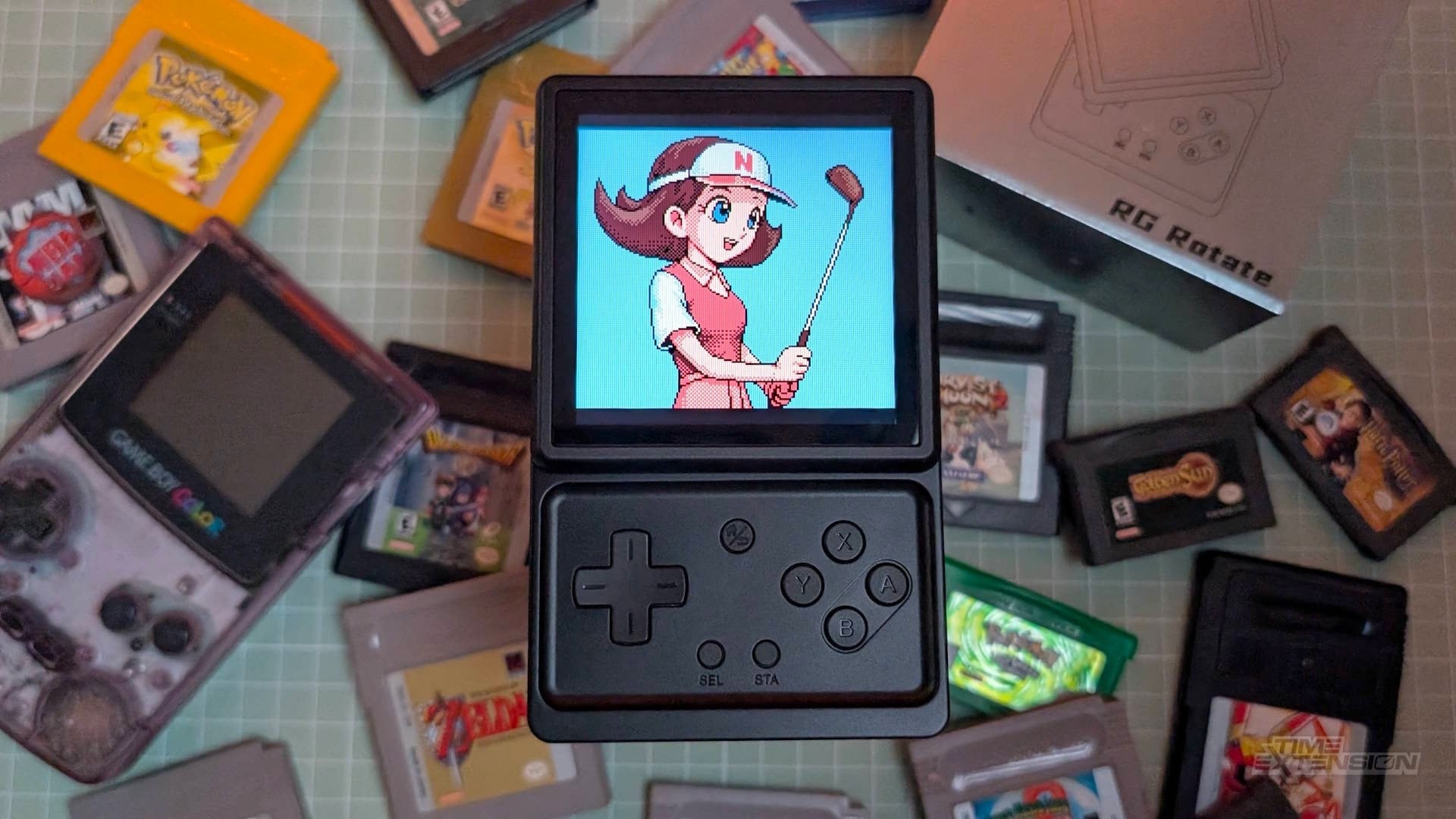
In a market increasingly saturated with conventional "candy bar" designs, Anbernic, a prominent player in the retro handheld space, has introduced a breath of fresh air with its RG Rotate ($87.99). This device has quickly garnered attention for its innovative and "charming" flipping screen mechanism, which sets it apart from the vast majority of its competitors and evokes a strong sense of nostalgia for classic tech designs.
Stagnation in Handheld Design:
For several years, the retro gaming handheld market has seen an explosion of devices, but surprisingly little innovation in form factor. Most products adhere to a horizontal "candy bar" layout, reminiscent of a miniaturized console controller with a screen in the middle. While some manufacturers have attempted to evoke nostalgia by mimicking designs like the Game Boy Advance SP (clamshell), Nintendo 3DS, or even the PlayStation Vita, these have often been iterative rather than truly novel. This design homogeneity, while functional, has left many consumers yearning for something more unique and engaging.
The RG Rotate’s Distinctive Charm:
The Anbernic RG Rotate shatters this mold with its signature flipping screen. As described by reviewers, the act of opening the screen for the first time is a tactile and visual delight, drawing immediate comparisons to iconic moments in pop culture, such as Neo snapping open the Nokia 8110 phone in the 1999 film The Matrix. This deliberate design choice transforms a routine action into an experience, imbuing the device with personality and a sense of mechanical elegance.
While the specific internal specifications (chipset, RAM, screen resolution, battery life) are standard for Anbernic devices in its price range – typically featuring ARM-based processors capable of emulating systems up to PlayStation 1 and some N64/Dreamcast titles, paired with 3.5-inch to 4-inch IPS displays – it is the form factor that truly differentiates the RG Rotate. The hinge mechanism and the satisfying ‘snap’ of the screen are not just aesthetic flourishes; they contribute to a unique user experience. The design likely offers enhanced screen protection when closed and a potentially more ergonomic grip when open, depending on the final engineering.
Market Impact and Future Implications:
The positive reception of the RG Rotate highlights a latent demand for innovative and distinctive designs in the retro handheld market. Anbernic, known for its wide range of devices catering to various price points and emulation capabilities, has successfully leveraged form factor as a key differentiator. This could inspire other manufacturers to explore more creative designs beyond the standard candy bar, potentially leading to a new wave of innovation in handheld ergonomics and aesthetics. For Anbernic, the RG Rotate not only captures a niche market but also strengthens its reputation as a company willing to experiment and deliver unique products, reinforcing its position as a leader in the competitive retro handheld sector. Its success suggests that while raw power is important, a compelling and thoughtful design can be equally, if not more, impactful in capturing the hearts of consumers.
Rediscovering a Masterpiece: The Enduring Legacy of Princess Crown
The classic Sega Saturn action RPG, Princess Crown, is experiencing a well-deserved resurgence in critical acclaim, thanks in part to the recent availability of a robust English fan translation. This renewed attention solidifies its status as a masterpiece and highlights the profound impact of accessibility on the legacy of import-only titles.
George Kamitani’s Visionary Debut:
Released in 1997 in Japan, Princess Crown served as the directorial debut of George Kamitani, a name that would later become synonymous with the distinctive hand-drawn 2D artistry and intricate gameplay of Vanillaware (known for Odin Sphere, Dragon’s Crown, and 13 Sentinels: Aegis Rim). Even in his inaugural project, Kamitani’s signature style was evident. Princess Crown immediately stood out on the Sega Saturn for its stunning, meticulously hand-drawn sprites, fluid animations, and rich, vibrant world design, defying the industry’s then-rapid shift towards 3D graphics.
The game’s narrative follows a young princess, Gradriel, as she embarks on a quest to reclaim her kingdom. Its gameplay blends side-scrolling action with RPG elements, featuring real-time combat, character progression, item management, and a unique storybook presentation that further enhanced its enchanting atmosphere. Despite its critical praise in Japan, the game never received an official English localization, relegating it to cult status among import enthusiasts and those with Japanese language proficiency.
The Impact of English Translation:
For decades, the language barrier prevented a vast Western audience from fully experiencing Princess Crown‘s narrative depth and strategic nuances. Fan translations, often painstaking efforts by dedicated community members, have been crucial in bridging this gap for countless Japanese-exclusive titles. The emergence of a "decent English translation" for Princess Crown has been a game-changer, unlocking the game’s full potential for a global audience and enabling a proper re-evaluation of its artistic and gameplay merits.
This translation allows players to understand the intricate plot, character motivations, and in-game lore, which are vital for appreciating the game’s RPG elements. It transforms Princess Crown from a visually stunning but narratively inaccessible curiosity into a fully immersive experience, revealing the foundational elements that would define Kamitani’s later, critically acclaimed works with Vanillaware.
Enduring Legacy and Critical Reappraisal:
With the language barrier removed, critics and players are now able to fully grasp why Princess Crown is considered a groundbreaking title. Its influence on Vanillaware’s distinct art style, combat mechanics, and storytelling approach is now undeniably clear. The game’s re-review as a "masterpiece" is not merely a nostalgic sentiment but a recognition of its timeless qualities: its unparalleled 2D artistry, engaging action-RPG combat, and captivating narrative.
The revival of interest in Princess Crown underscores the importance of game preservation and the invaluable role of fan communities in making classic games accessible. It serves as a reminder that many treasures from gaming’s past remain hidden, waiting for the right moment and the right tools—like a comprehensive translation—to be fully appreciated by a new generation of players. This re-evaluation ensures that George Kamitani’s directorial debut rightly takes its place among the most influential and artistically significant games of its era.
The past week has truly showcased the multi-faceted nature of the retro gaming world. From technological breakthroughs simplifying game preservation to the heartfelt culmination of decades-long creative endeavors, and from the critical scrutiny of industry giants to the celebratory rediscovery of overlooked gems, the scene continues to thrive with passion, innovation, and an unwavering commitment to its rich history.