Johny Imanuel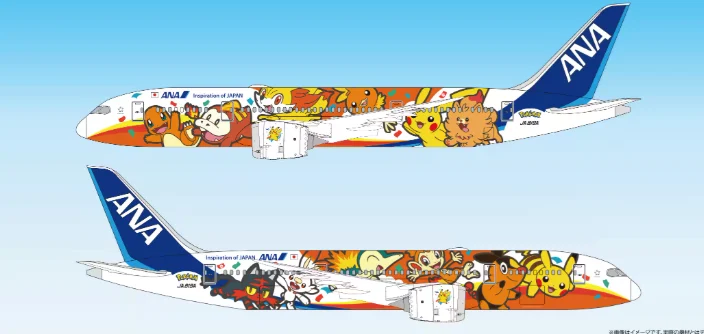
A Dual Celebration of Heritage and Innovation
The partnership between ANA and The Pokémon Company is one of the most enduring collaborations in the aviation industry, dating back to the late 1990s. The latest initiative, titled "Pokémon Air Adventures," seeks to revitalize international and domestic travel by leveraging the massive global appeal of the Pokémon brand. By integrating characters from the tenth generation of the series—specifically those from Pokémon Wind and Waves—ANA is positioning itself at the forefront of pop culture, bridging the gap between digital entertainment and physical travel experiences.
The timing of this reveal is strategic. As The Pokémon Company prepares for its 30th anniversary in 2026, and ANA celebrates four decades of service, the introduction of these "Pokémon Jets" serves as a high-profile marketing vehicle. The inclusion of the new starters—Pombon (Fire-type) and Browt (Grass-type)—represents a rare instance where the franchise has utilized real-world aviation to preview content for a game slated for a future release on the next-generation Nintendo hardware, currently referred to as the "Nintendo Switch 2."
The Trifecta of Design: Red, Green, and Blue
The new fleet consists of three primary designs, each themed around the elemental types that have defined the Pokémon series since its inception in 1996: Fire, Grass, and Water. Each aircraft is designated by a specific color-coded name: Pokémon Jet Red, Pokémon Jet Green, and Pokémon Jet Blue.
Pokémon Jet Red: The Fire Starters
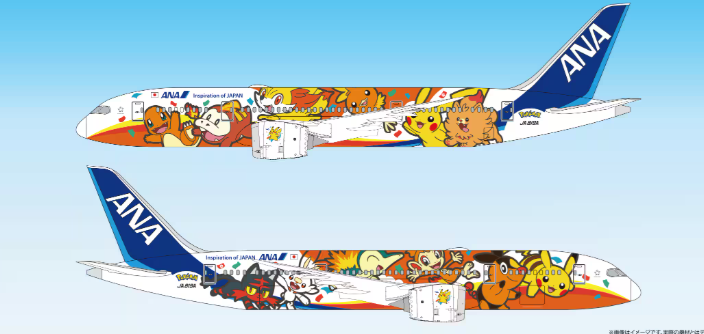
Pokémon Jet Red is dedicated to the Fire-type starters that have served as the first companions for millions of players over the decades. The livery features a vibrant crimson palette and showcases an array of iconic characters. Featured on the fuselage are Charmander (Generation 1), Cyndaquil (Gen 2), Torchic (Gen 3), Chimchar (Gen 4), Tepig (Gen 5), Fennekin (Gen 6), Litten (Gen 7), Scorbunny (Gen 8), and Fuecoco (Gen 9). Most notably, the design includes Pombon, the Fire-type starter from the upcoming Wind and Waves title. As with all planes in this series, Pikachu occupies a prominent position, serving as the bridge between the various generations.

Pokémon Jet Green: The Grass Starters
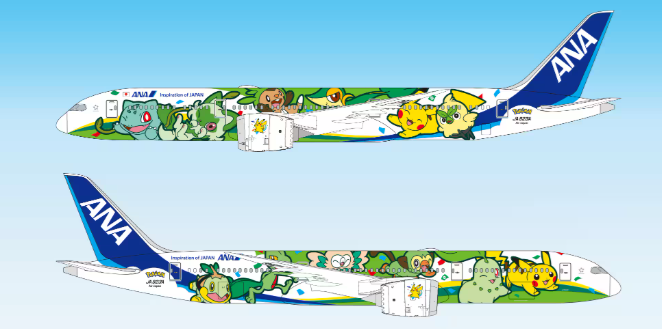
The Pokémon Jet Green livery focuses on the Grass-type lineage. Adorned with shades of emerald and forest green, the aircraft features Bulbasaur, Chikorita, Treecko, Turtwig, Snivy, Chespin, Rowlet, Grookey, and Sprigatito. Taking center stage alongside these veterans is Browt, the new Grass-type starter. The inclusion of Browt on an international-class vessel highlights the global expectations for the tenth generation of Pokémon games.
Pokémon Jet Blue: The Water Starters
While specific visual assets for Pokémon Jet Blue are being held for a secondary reveal, ANA has confirmed that the design will follow the established pattern. It will feature the Water-type starters, including Squirtle, Totodile, Mudkip, Piplup, Oshawott, Froakie, Popplio, Sobble, and Quaxly, along with the yet-to-be-detailed Water starter from Wind and Waves. This aircraft is expected to handle a significant portion of the domestic flight schedule within Japan.
Operational Timeline and Route Logistics
ANA has provided a clear roadmap for the deployment of these specialized aircraft. The rollout is designed to maximize visibility during the peak summer travel season in 2026.
- Pokémon Jet Green: Designated primarily for international routes, this aircraft will connect major hubs in North America, Europe, and Asia with Tokyo’s Haneda and Narita airports. The use of a Grass-themed livery for long-haul flights is intended to evoke a sense of "natural serenity" for passengers embarking on transcontinental journeys.
- Pokémon Jet Red: Scheduled to begin service at the end of July 2026, this aircraft will focus on domestic routes within Japan. It is expected to service high-traffic corridors such as Tokyo to Osaka, Fukuoka, and Sapporo.
- Pokémon Jet Blue: Also slated for domestic operations, the Blue jet will complement the Red jet’s schedule, ensuring that Pokémon-themed travel is available across the entirety of the Japanese archipelago.
Flight information, including specific tail numbers and daily schedules, will be updated in real-time on a dedicated portal within the ANA website. This allows enthusiasts—often referred to as "Pokémon trainers" in the marketing materials—to specifically book flights on these decorated vessels.
The In-Flight Experience: Beyond the Livery
The collaboration extends far beyond the exterior paint of the aircraft. ANA has overhauled the cabin experience to provide a fully immersive environment. Passengers boarding a Pokémon Jet will encounter a variety of themed amenities:
- Cabin Interior: Headrest covers and pillows will feature artwork corresponding to the plane’s specific elemental theme. For instance, passengers on Pokémon Jet Green will find a variety of Grass-type motifs throughout the cabin.
- Service Items: In-flight meals and beverages will be served in specially designed containers and cups. These items are often treated as collectibles by passengers, further driving the "souvenir culture" associated with Japanese travel.
- Auditory Immersion: The airline has replaced standard boarding and landing music with orchestrated arrangements of classic Pokémon themes and jingles. These auditory cues are designed to trigger nostalgia while celebrating the future of the franchise.
- Exclusive Merchandise: ANA has announced that original goods and souvenirs, available only to passengers on these specific flights, will be revealed at a later date. Historically, such items have included limited-edition plush toys, boarding certificates, and specialized "Aviation Pikachu" merchandise.
Strategic Implications for the Aviation and Gaming Industries
This partnership represents a sophisticated intersection of tourism and digital intellectual property. For ANA, the Pokémon Jets serve as a powerful tool for differentiation in a competitive market. By transforming a standard flight into a "bucket list" event, the airline can command higher brand loyalty and attract international tourists who are visiting Japan specifically for its pop-culture exports.
From the perspective of The Pokémon Company and Nintendo, the planes serve as "flying billboards" for the tenth generation of games. Revealing the Wind and Waves starters on the side of a Boeing aircraft generates a level of mainstream media coverage that traditional trailers cannot replicate. It also signals a high level of confidence in the upcoming hardware, the "Nintendo Switch 2," and the software scheduled for 2027.
Market analysts suggest that such collaborations are essential for Japan’s "Cool Japan" initiative, a government-backed program aimed at promoting the country’s cultural industries. As Japan continues to see a surge in inbound tourism, the presence of globally recognized characters like Pikachu at major international gateways reinforces the country’s brand identity as a hub of creativity and technology.
Historical Context: The Legacy of the Pokémon Jet
The concept of the Pokémon Jet was first introduced in 1998 to coincide with the release of Pokémon: The First Movie. The original aircraft, a Boeing 747-400, became an instant cultural icon. Over the years, several iterations have taken to the skies, including the "Pikachu Jumbo" and the more recent "Pikachu Jet NH" and "Eevee Jet NH," which were launched in 2023 to assist in the post-pandemic recovery of the travel sector.
The 2026 fleet represents a significant evolution in this legacy. Unlike previous versions that focused on established characters, the inclusion of the Wind and Waves starters makes these planes part of the active lore-building process for the franchise. It transforms the aircraft from a retrospective celebration into a forward-looking promotional tool.
Anticipation for Pokémon Wind and Waves
While the aviation world focuses on the liveries, the gaming community is dissecting the appearance of Pombon and Browt for clues about the tenth generation. Pokémon Wind and Waves is rumored to take place in a region inspired by oceanic and coastal geography, a theme that fits perfectly with the "Wind" (aviation) and "Waves" (maritime/travel) motifs of the ANA partnership.
The confirmation that the game will debut on the successor to the Nintendo Switch in 2027 has set the stage for a prolonged marketing campaign. By introducing the characters in 2026 via ANA, The Pokémon Company is ensuring that the new starters are household names long before the game actually hits retail shelves.
Conclusion
The unveiling of the ANA Pokémon Jets featuring the Wind and Waves starters is more than a simple branding exercise; it is a testament to the enduring power of the Pokémon franchise and the innovative spirit of All Nippon Airways. As these planes take to the skies in 2026, they will carry with them the hopes of a new generation of fans and the legacy of thirty years of monster-catching history. Travelers and fans alike can look forward to a unique intersection of hospitality and entertainment, proving that for Pokémon, even the sky is not the limit.