 Vera Clarissa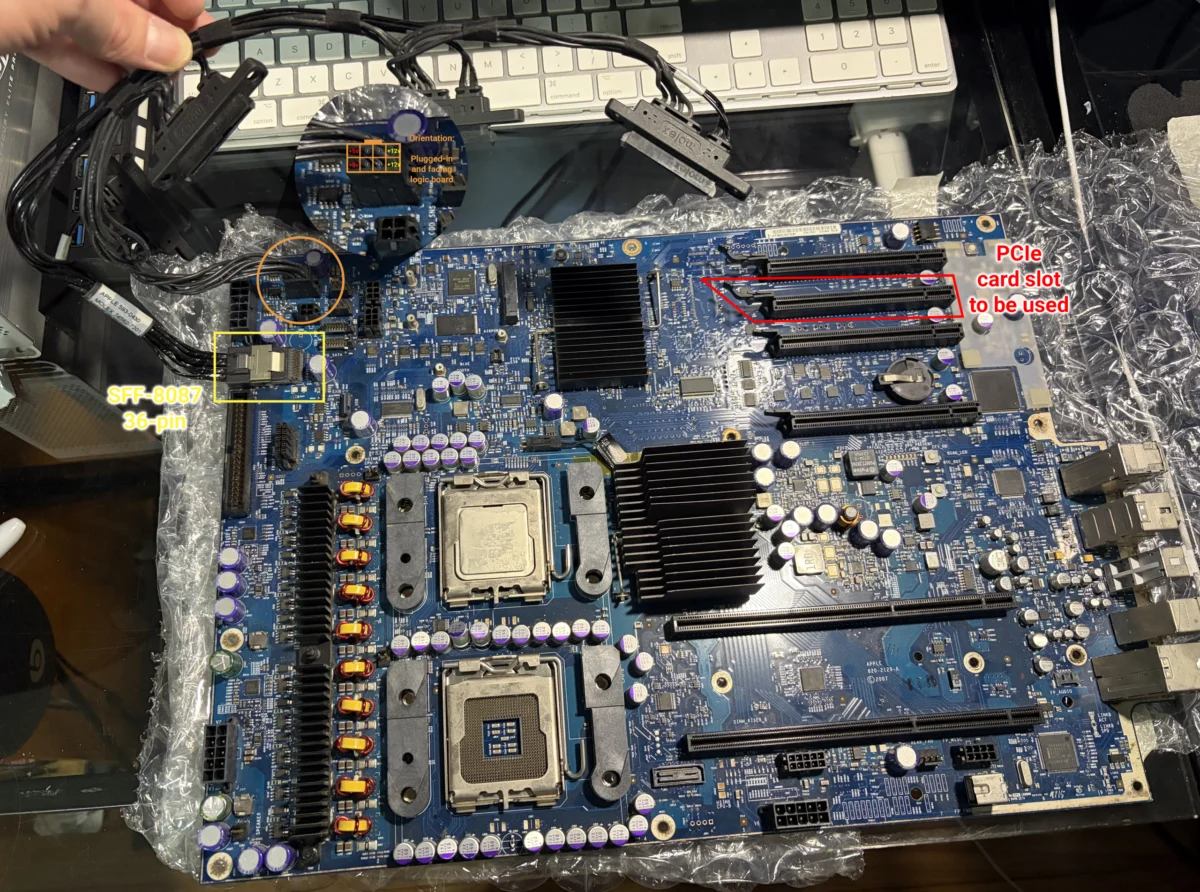
The Mac Pro 1,1 and 2,1 models, released between 2006 and 2007, remain iconic pieces of computing history, celebrated for their "cheese grater" aesthetics and robust, modular internal architecture. As these machines have transitioned from professional workstations to vintage enthusiast projects, users have sought ways to bypass the limitations of their aging hardware. A recent technical milestone in this community involves successfully integrating a RocketRAID 2720SGL controller into an original Mac Pro, effectively upgrading the machine’s storage throughput far beyond the capacity of its native SATA II interfaces. This process required a specialized modification of the internal power and data wiring, demonstrating that with enough ingenuity, legacy Apple hardware can remain relevant for modern data-intensive tasks.

The Technical Challenge of Legacy Expansion
The core difficulty in upgrading a 2006-era Mac Pro lies in its proprietary internal design. The machine utilizes a specialized drive bay wiring harness—often referred to as the backplane—which is designed for a specific Apple-branded storage configuration. When an enthusiast attempts to install a third-party PCIe RAID controller, such as the HighPoint RocketRAID 2720SGL, they encounter two primary obstacles: the physical location of the SFF-8087 mini-SAS ports on the card and the absence of a compatible power delivery system for the drives.
In the standard configuration, the Mac Pro’s backplane handles both data and power through fixed connections. By introducing a RAID card, the data path is diverted from the logic board to the PCIe slot. However, the hard drives in the drive bays still require power, which is usually sourced from the backplane. The challenge becomes how to bridge the gap between the RAID card’s requirements and the available power supply within the cramped chassis. Without a direct SFF-8087 to SATA/SAS cable that matches the unique constraints of the early Mac Pro layout, the card remains non-functional, serving only as a recognized device in the system report rather than a viable storage controller.

A Chronology of the Modification Process
The process of retrofitting this hardware can be broken down into a multi-step engineering effort. Initially, the project began with a diagnostic phase, where the internal wiring harness of a Mac Pro 1,1 was mapped to identify potential power taps.
- Phase One: Hardware Assessment. The technician examined the drive bay wiring harness and identified that the power connector was in close proximity to the mini-SAS interface, though the RAID card’s ports were positioned on the opposite side of the PCIe slot array.
- Phase Two: Pinout Analysis. Using standard Molex adapters intended for optical drive bays, the technician mapped the pinout required for the 8-pin PCIe power configuration. This required careful manual adjustment of the Molex pins to match the specific voltage requirements of the drives.
- Phase Three: Fabrication. The technician unsheathed the pins from a standard plastic housing, crimped them to allow for a direct fit into the mini 8-pin connector, and sleeved the wires to prevent electrical shorts. This makeshift, yet precise, connection allowed power to be drawn directly from the optical bay’s auxiliary power circuit.
- Phase Four: Integration and Testing. Once the wiring was secured and verified, the RocketRAID 2720SGL was installed in PCIe slot 3. A SATA III SSD was connected, and the system was booted into macOS El Capitan, utilizing modified kernel extensions (kexts) to ensure the RAID controller was correctly recognized by the legacy operating system.
Performance Metrics and Data Throughput
The results of this modification provide a compelling argument for the viability of the project. By moving from the native onboard SATA II ports—which are limited to a theoretical maximum of 3Gbps—to the RocketRAID 2720SGL, the performance gains are significant.

In initial benchmarking, a SATA III Corsair Force GT 240GB SSD achieved read speeds of approximately 477 MB/s and write speeds of 388 MB/s. These figures represent a substantial improvement over the stock Apple RAID card or the direct-to-motherboard SATA II implementation, which typically bottlenecks at much lower thresholds. Furthermore, the RocketRAID controller demonstrated the ability to auto-adjust its lane usage. While lower-performance drives were initially recognized using only a single PCIe lane (x1), the system successfully utilized eight lanes (x8) when paired with modern high-speed storage, proving the card’s ability to scale with the hardware connected to it.
Broader Implications for Vintage Computing
This technical experiment highlights several important implications for the vintage computing community. Firstly, it underscores the value of the "modular" era of Apple hardware. Because the Mac Pro chassis provides ample room and a sturdy, if proprietary, power distribution system, it remains a favorite for "sleeper" builds—machines that look dated on the outside but contain modern, high-performance internals.

Secondly, it addresses the issue of sustainability. By finding ways to utilize modern controllers and storage media with hardware that is nearly two decades old, enthusiasts can extend the functional lifespan of these machines, preventing them from entering the waste stream. The ability to achieve modern-day SSD speeds on a 2006 machine is not merely a novelty; it allows these systems to perform tasks such as media editing, data archiving, and server hosting with a level of reliability that was previously impossible.
However, these modifications are not without risks. The use of custom-wired Molex-to-PCIe power connections necessitates a deep understanding of electrical safety. Poorly crimped pins or improper insulation can lead to short circuits, which could cause catastrophic damage to the logic board or the power supply unit (PSU). The community consensus, therefore, emphasizes the need for professional-grade sleeving and careful stress-testing of all custom-fabricated power cables.

Future Research and Potential Limitations
Despite the success of this project, several questions remain for the research community. For instance, the ability to boot the operating system from a volume managed by a third-party RAID controller remains a significant hurdle. In many cases, the firmware of the classic Mac Pro is not designed to recognize these cards during the initial boot sequence (the EFI boot phase). While the drives can be accessed once the operating system is loaded, users typically still need a boot drive connected to the native SATA ports to initiate the OS.
Future efforts will likely focus on the implementation of modern bootloaders, such as rEFIt or OpenCore, which may allow for greater flexibility in selecting boot volumes. Additionally, as the industry moves toward NVMe storage, the next logical step for these enthusiasts will be attempting to integrate M.2 drives via PCIe adapters, potentially pushing the read and write speeds of the Mac Pro 1,1/2,1 even further into the realm of modern workstation standards.

In conclusion, the modification of the Mac Pro’s internal wiring to support a RocketRAID 2720SGL is a testament to the ingenuity of the enthusiast community. By bridging the gap between legacy proprietary architecture and modern storage interfaces, these users are successfully navigating the limitations of aging technology. As these projects continue to evolve, they provide a valuable roadmap for maintaining the utility and performance of some of Apple’s most beloved professional hardware.