 Indra Gunadi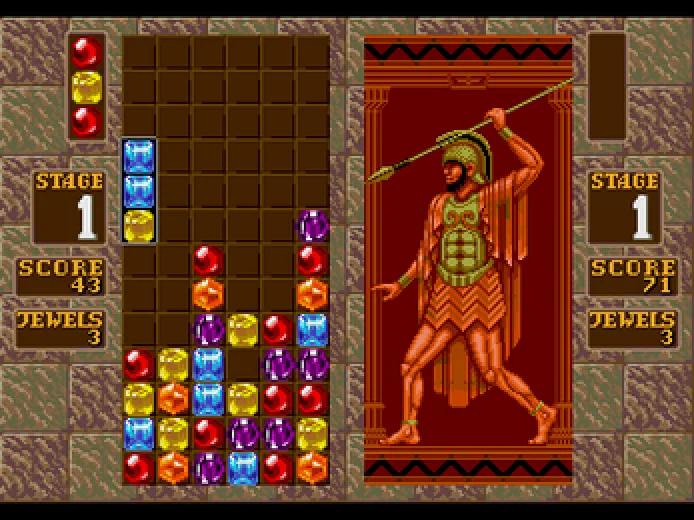
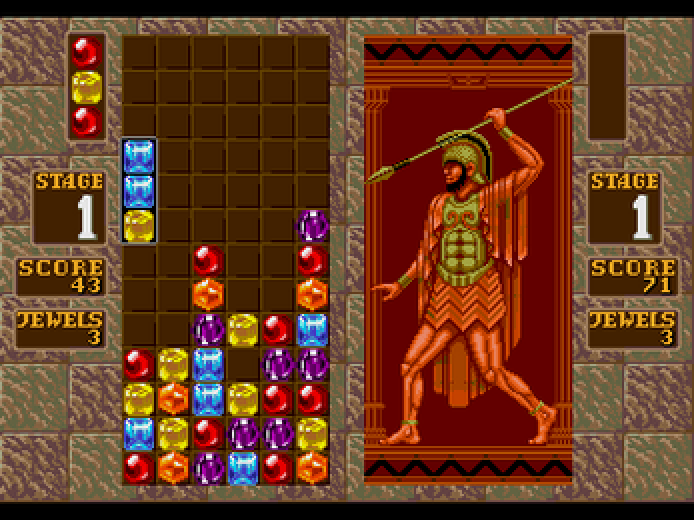
The release of Columns II: The Voyage Through Time for the Sega Mega Drive marks a significant milestone in the preservation and accessibility of classic arcade architecture. Developed by the programmer known as Master Linkuei, this project serves as a precise, disassembly-based port of the 1990 Sega System C arcade original. By meticulously reconstructing the game’s logic to achieve a 1:1 parity with the source material, the developer has provided a definitive version of a title that historically remained confined to specialized arcade hardware. This release is bolstered by modern quality-of-life enhancements, including battery-backed save functionality, a dedicated pause feature, and a restored hidden test mode, ensuring the experience is both authentic to the original vision and optimized for contemporary play.
Historical Context of the Sega System C Architecture
To understand the technical gravity of this port, one must consider the historical context of the Sega System C. Introduced in the late 1980s, the System C was an arcade board based on the same fundamental architecture as the Sega Mega Drive (known as the Sega Genesis in North America). Despite the hardware similarities, porting games from the arcade environment to the home console was rarely a straightforward process in the 1990s. Developers were frequently forced to compromise on graphical fidelity, sound sample rates, or gameplay logic to fit the limitations of home console cartridges and the specific memory mapping of the consumer hardware.
Columns II, released in 1990, was a direct successor to the original 1989 puzzle game that sought to compete with the burgeoning popularity of Tetris. While the original Columns found success on the Mega Drive, the sequel—The Voyage Through Time—introduced more complex mechanics and a distinct visual flair that was difficult to replicate on home hardware at the time. Master Linkuei’s approach of utilizing a disassembly-based port signifies a shift in how retro developers approach these tasks. Rather than attempting to emulate the arcade hardware or rewriting the code from scratch, the developer analyzed the original machine code, allowing for a reconstruction that mirrors the logic of the arcade original with near-perfect fidelity.
Chronology of the Project
The development cycle for this project spanned several months of reverse engineering, characterized by a focus on technical accuracy. The initial phases involved the extraction of the original System C ROM data, followed by a rigorous process of mapping the game’s subroutines to the Mega Drive’s processor, the Motorola 68000.
Throughout 2026, the developer shared intermittent updates within the retro-gaming community, detailing the challenges of managing the System C’s memory registers compared to the standard Mega Drive configuration. By late 2026, the project reached a "feature-complete" state. The integration of a save battery, which was not a standard feature for the original arcade release, was achieved through custom memory management, allowing players to record their progress in the "Voyage" mode—a feature essential for the game’s longevity in a home environment. The final phase involved the reactivation of the original test menu, a debug tool used by arcade operators in the 1990s, which provides players with unique insights into the game’s internal configuration and diagnostic parameters.
Technical Specifications and Implementation
The port functions at the same frame rate and resolution as the arcade original, maintaining the crisp, vibrant color palette that characterized Sega’s early 90s aesthetic. The use of AI-assisted tools during the coding process helped streamline the translation of legacy arcade instructions into modern assembly syntax, ensuring that the port remains stable on authentic hardware.
One of the primary technical hurdles in porting System C games is the handling of interrupt vectors and the synchronization of the VDP (Video Display Processor). Master Linkuei’s implementation successfully bridges these gaps. By rebuilding the logic 1:1, the game avoids the common pitfalls of "speed-up" or "slow-down" issues often seen in amateur ports. The inclusion of the pause feature is particularly noteworthy; in the original arcade environment, pausing was non-existent because the game was designed to facilitate continuous play or "game over" cycles to encourage revenue. Implementing a pause function in this version required the developer to intercept the game loop without breaking the timing of the falling blocks or the music synchronization.
The Role of Modern Preservation
The release of Columns II: The Voyage Through Time highlights a broader trend within the video game industry: the community-led preservation of arcade history. While companies like Sega have historically re-released titles through "Ages" or "Classics" collections, there remains a vast library of arcade software that has been neglected.
Industry analysts observe that this type of "homebrew" porting serves as an essential bridge between commercial re-releases and academic preservation. By making these games accessible on the original hardware for which they were architecturally designed, developers like Master Linkuei are ensuring that the nuances of arcade-era programming are not lost to time. The use of modern storage solutions, such as flash cartridges, allows these ports to exist in a physical state that honors the original medium, providing a bridge between 1990s engineering and 2020s accessibility.
Broader Implications and Market Impact
The impact of this release extends beyond a simple novelty for retro enthusiasts. It demonstrates that the technical barrier for porting arcade-perfect experiences is lower than ever, provided the developer has the requisite skills in assembly and reverse engineering. This creates a precedent for other developers to revisit the System C library, which includes titles that have never seen a formal home release.
Furthermore, the integration of battery saves and debug modes suggests a new standard for "definitive editions" in the hobbyist market. Consumers are no longer satisfied with simple emulated ports; there is a growing demand for releases that add value through enhanced utility and transparency—such as the restored test mode. This trend may eventually influence how official publishers approach their legacy catalogs, as the bar for quality in the enthusiast space continues to rise.
Community Reception and Future Outlook
Reaction from the retro-gaming community has been overwhelmingly positive. Forums dedicated to Sega preservation have praised the project for its stability and the faithfulness of the gameplay loop. The ability to experience the "Voyage" mode in a way that respects the original arcade timing has been cited as a primary highlight for players who grew up in the arcade era.
Looking ahead, the success of this port may inspire further investigation into the Sega System C library. With tools now more sophisticated and the community more collaborative, the technical documentation for these arcade boards is becoming increasingly comprehensive. While Master Linkuei has not announced future projects, the methodology employed here—combining original disassembly with modern quality-of-life patches—provides a blueprint for future preservationists.
As we move further into the 2020s, the line between "fan-made" and "professional-grade" software continues to blur. The release of Columns II: The Voyage Through Time is a testament to the dedication of individual developers who are effectively acting as digital historians. By revitalizing a 36-year-old game, this project ensures that the legacy of the Sega System C remains vibrant, playable, and, most importantly, accurate to the original intent of its creators. The work stands as a benchmark for future arcade ports, proving that with enough technical diligence, the limitations of the past can be overcome to serve the needs of the present.