 Indra Gunadi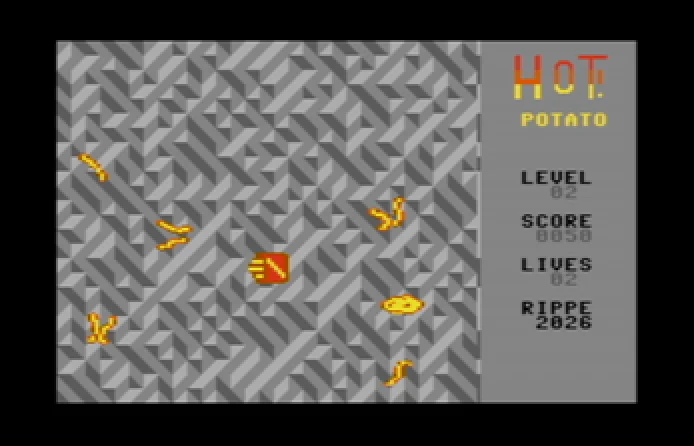
The release of Hot! Potato, a new software title for the Commodore 64 developed by programmer mjrippe, marks a continued interest in the development of assembly-based games for 8-bit platforms four decades after their original market dominance. Released on October 7, 2026, the game represents a technical milestone for its creator, serving as their first completed assembly language project developed specifically within the Turbo Macro Pro environment. As the homebrew scene for the Commodore 64 continues to evolve, releases like Hot! Potato provide insight into the modern methodology of 8-bit development and the enduring legacy of the MOS Technology 6510 microprocessor.
Technical Foundations and Development Process
The development of Hot! Potato was characterized by a strict adherence to traditional assembly language programming. Unlike modern cross-platform development tools that allow coders to write in higher-level languages before compiling for the C64’s architecture, mjrippe utilized Turbo Macro Pro. This assembler is a staple of the C64 scene, providing an environment that allows developers to write code directly on the original hardware or through highly accurate emulators.
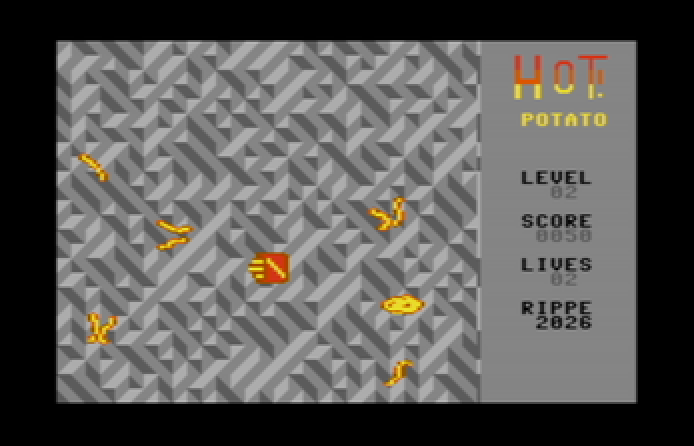
Assembly language programming is inherently complex, requiring the developer to manage memory addresses, CPU registers, and hardware interrupts with surgical precision. By choosing to build the game entirely in assembly, the developer bypassed the overhead associated with interpreted languages, resulting in a title that maximizes the limited resources of the Commodore 64. The game’s mechanics—which involve a fry cook navigating a screen to collect potatoes—rely on efficient sprite-handling routines, a hallmark of well-optimized assembly code.
Gameplay Mechanics and Design Philosophy
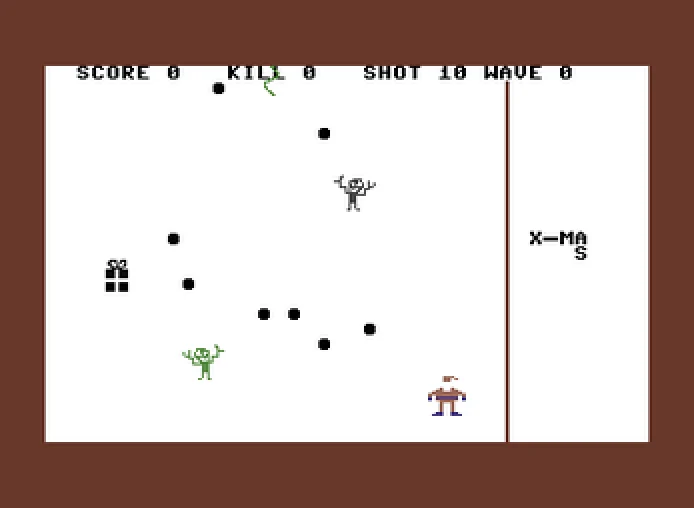
At its core, Hot! Potato is a high-speed arcade-style game that emphasizes pattern recognition and reflexes. Players control a fry cook character whose primary objective is to collect falling potatoes while avoiding a single, unpredictable bouncing projectile. The simplicity of the loop is intentional, mirroring the "pick-up-and-play" design philosophy of 1980s arcade cabinets.
A notable feature included in the design is the "ketchup bonus" mechanic. By successfully intercepting a falling ketchup bottle, players are awarded an extra life. This serves as a risk-reward system; the ketchup often appears in high-traffic areas of the screen where the bouncing potato is most likely to cause a collision. This mechanic adds a layer of depth to the gameplay, forcing the player to balance point accumulation with the necessity of survival. The use of basic but effective collision detection, programmed directly at the machine-code level, ensures that the game remains responsive even when multiple sprites move across the screen simultaneously.
The Commodore 64 Homebrew Ecosystem
The Commodore 64, released in 1982, remains the best-selling single computer model of all time, with estimates suggesting between 12.5 and 17 million units sold. While Commodore Business Machines ceased operations in the mid-1990s, the platform has fostered a vibrant, multi-generational homebrew community. This community is responsible for keeping the platform alive through modern hardware expansions—such as SD-card-based disk emulators—and a steady stream of new software titles.
The publication of Hot! Potato on October 7, 2026, is part of a larger trend of software releases that maintain the spirit of the early 8-bit era while utilizing modern distribution methods. Platforms like PDROMs and various digital repositories have replaced the physical cassette and floppy disk distribution models, allowing developers from around the globe to share their work instantly. This digital democratization has lowered the barrier to entry for developers who wish to cut their teeth on 6502/6510 assembly.
Chronology of 8-Bit Software Evolution
The trajectory of the Commodore 64 scene has undergone several distinct phases since the computer’s peak:
- 1982–1994 (Commercial Peak): The period of massive commercial output from companies like Epyx, Ocean Software, and Gremlin Graphics.
- 1995–2005 (The Dark Age/Transition): Commercial development largely ceased, but a dedicated enthusiast base began maintaining the hardware, and the "demoscene" pushed the graphical limits of the machine.
- 2006–2015 (Revival of Indie Development): The rise of specialized hardware such as the 1541 Ultimate, which allowed users to load software from modern storage, spurred a return to game creation.
- 2016–Present (The Professionalized Homebrew Era): Modern developers, such as the creator of Hot! Potato, now use sophisticated debugging tools and community-vetted assembly environments to produce games that often exceed the technical polish of original 1980s titles.
Impact on Modern Software Development Skills
The act of programming for the Commodore 64 is increasingly viewed as an educational exercise in computer science fundamentals. By restricting the available memory to 64KB and limiting the processor speed to approximately 1 MHz, developers are forced to learn the intricacies of memory management, efficient algorithm design, and hardware-level optimization.
Experts in retro-computing suggest that the discipline required to develop for the C64 provides a unique perspective on modern software bloatedness. In an era where modern operating systems and applications consume gigabytes of RAM, the constraint-based programming of a title like Hot! Potato serves as a reminder of the importance of efficiency. When a developer writes code for the C64, every cycle matters; there is no "garbage collection" or background process to mask inefficient code.
Industry Reaction and Future Outlook
While a title like Hot! Potato may not shift the market shares of modern gaming giants, its release is significant within the context of digital preservation and the history of computing. Industry analysts often note that the longevity of the Commodore 64 is an anomaly in the technology sector, driven by a "cult of the machine" that shows no signs of waning.
The release also highlights the importance of the Turbo Macro Pro environment. As a professional-grade assembler, it remains a gold standard for hobbyists. The fact that a developer in 2026 can produce a functional, entertaining title using tools that have been refined for decades speaks to the stability of the platform’s development environment.
Implications for Preservation
The release of new software for legacy hardware is a critical component of digital preservation. By creating new content, developers ensure that the hardware remains functional and relevant, preventing it from becoming a "dead" object in a museum. Projects like Hot! Potato provide a bridge between the historical software libraries of the 1980s and the capabilities of modern preservationist tools.
Furthermore, as the global community moves toward more sustainable and energy-efficient computing, the lessons learned from 8-bit development—such as the extreme reuse of memory and the optimization of instruction sets—have found renewed interest in the field of embedded systems and IoT (Internet of Things) development. While Hot! Potato is a game, the underlying methodology of its creation is inherently linked to the broader field of resource-constrained software engineering.
In conclusion, Hot! Potato serves as a testament to the enduring appeal of the Commodore 64. Through the efforts of developers like mjrippe, the platform continues to serve as a canvas for creativity, technical exploration, and the preservation of the assembly language tradition. As the software library for the C64 continues to grow in 2026 and beyond, it remains clear that the limitations of the 1980s architecture are not a hindrance, but rather a catalyst for ongoing innovation in the retro-computing space. Whether for the purpose of personal challenge or community contribution, the development of new software for the Commodore 64 remains a vital and active pursuit within the global technology community.