 Farhan hamdan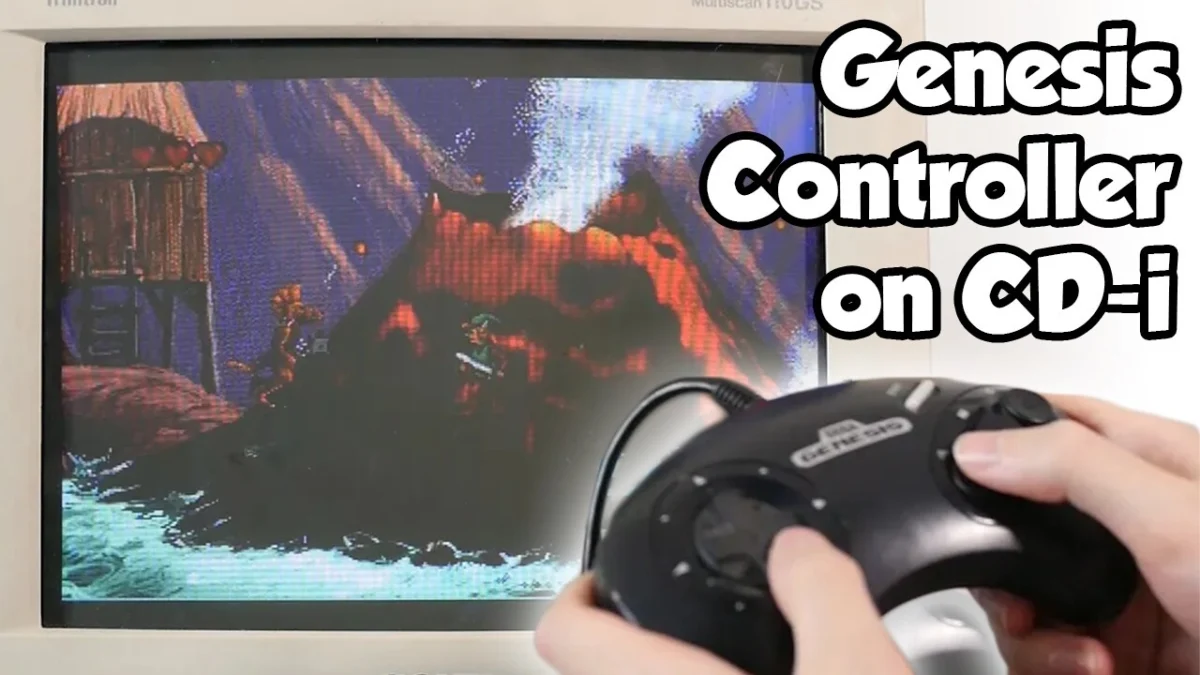
The intersection of retro hardware modification and modern open-source engineering has yielded yet another fascinating crossover, as content creator and hardware enthusiast MattKC successfully designed and released a functional adapter allowing Sega Genesis controllers to interface with the infamous Philips CD-i multimedia console. While ostensibly a project about bridging two entirely different gaming ecosystems from the 1980s and 1990s, the endeavor serves as an extensive masterclass in legacy input architecture, reverse engineering, and the evolution of digital controller communication protocols. By documenting the engineering process in a comprehensive video release, MattKC has provided both hobbyists and electronics historians with a detailed look at how hardware standards persist, adapt, and occasionally collide across different generations of interactive entertainment technology.
The roots of this technological bridge trace back decades, beginning with a standard that fundamentally shaped the video game industry: the 9-pin D-sub connector popularized by the Atari 2600 in 1977. When Atari introduced its seminal console, the interface established a baseline pinout for digital joysticks that manufacturers would adopt and adapt for over a decade. MattKC’s technical breakdown highlights how this legacy design philosophy directly influenced subsequent hardware, most notably Sega’s 16-bit powerhouse, the Sega Genesis, released in Japan in 1988 as the Mega Drive and in North America in 1989.
Understanding the constraints and capabilities of the 9-pin standard is essential to grasping the complexity of MattKC’s adapter. The original Atari 2600 joystick relied on simple discrete electrical switches, where pressing a direction or the single action button completed a circuit by pulling a specific pin to ground. As video games grew more complex, systems required more inputs without abandoning the physical connector format. Sega solved this challenge brilliantly with the standard 3-button Genesis controller, utilizing multiplexing techniques to read multiple inputs over a limited number of physical lines.
The engineering hurdle became significantly more pronounced with the introduction of the Genesis 6-button controller, released alongside fighting games like Street Fighter II: Special Champion Edition. To accommodate additional face buttons (X, Y, Z) and a Mode button without adding extra pins to the proprietary cable, Sega implemented a clever polling cycle. By rapidly toggling the select line (pin 7) high and low, the controller’s internal logic shifts between two different states, allowing the console to read all six buttons and a directional pad sequentially within a single frame refresh cycle.
In contrast, the Philips CD-i—released in 1991 as an interactive home video platform rather than a dedicated game console—utilized its own distinct peripheral ecosystem and communication protocols. Navigating the CD-i’s operating system and its notoriously sluggish software library with official hardware has long been a frustration for retro gaming enthusiasts. By creating a translation layer between the Sega input stream and the CD-i’s expectations, MattKC’s project effectively liberates the console from its native peripherals, offering users a vastly superior tactile experience derived from one of the most beloved gamepads in history.

The physical hardware developed during this project has been made entirely open-source, with complete schematics, documentation, and firmware hosted publicly on GitHub via the repository named gencdi. By embracing an open-source model, MattKC invited the broader hardware modification community to inspect, replicate, and improve upon the design. Within a remarkably short window following the release of the project, community members began iterating on the architecture, tailoring the design for custom printed circuit boards (PCBs) and alternative microcontroller implementations. This rapid community evolution underscores the vitality of the retro hardware scene, where collaborative troubleshooting and iterative design frequently transform idiosyncratic proof-of-concept builds into polished, accessible consumer-grade modifications.
From an analytical perspective, the underlying mechanics of retro controller adapters shed light on modern latency discussions in competitive and casual gaming. Hardware adapters that translate legacy protocols must poll input states fast enough to avoid introducing perceptible input lag. Because controllers like the Sega Genesis 6-button variant rely on rapid state cycling multiple times per frame to transmit button configurations, a properly coded microcontroller can ingest these signals and output them to a host system with virtually zero accumulated delay. Technical examinations of such adapters consistently reveal that the processing overhead of modern low-cost microcontrollers—such as the AVR or ARM-based chips frequently used in these projects—is negligible, typically operating well within sub-millisecond tolerances. Consequently, players utilizing a Genesis gamepad on a Philips CD-i experience instantaneous input registration, bounded only by the inherent polling rate of the host console itself rather than the translation adapter.
While the Philips CD-i remains a footnote in mainstream video game history—often remembered more for its controversial licensing of Nintendo intellectual properties like Hotel Mario and the Zelda CD-i trilogy than for its commercial success—it continues to command a dedicated following among digital archivists and hardware modders. Projects driven by morbid curiosity and technical ambition often unearth unexpected synergies between forgotten enterprise technology and classic consumer electronics. By systematically analyzing the signal processing of the Atari 2600, Sega Genesis, and Philips CD-i, MattKC’s project transcends a mere novelty act, cementing itself as a valuable educational resource for aspiring embedded systems engineers and digital historians alike.
The broader implications of open-source hardware adapters extend well beyond niche consoles like the CD-i. As original vintage controllers degrade due to age, brittle plastics, and worn-out membrane pads, authentic replacement peripherals become increasingly scarce and expensive. Solutions that allow robust, mass-produced legacy controllers—such as the ubiquitous 3-button and 6-button Sega Genesis pads—to interface with disparate vintage systems ensure that enthusiasts can continue to interact with historical hardware without accelerating the wear and tear on increasingly rare original accessories. Furthermore, the proliferation of GitHub repositories containing open hardware designs democratizes electronic engineering, empowering enthusiasts with minimal coding experience to fabricate their own custom adapters using affordable desktop manufacturing tools like soldering irons and 3D printers.
As community members continue to refine the gencdi repository and adapt its principles to other legacy architectures, the boundary lines separating closed hardware ecosystems continue to blur. What began as an eccentric digital experiment to play an ill-fated 1990s multimedia disc player with a classic 16-bit Sega gamepad has evolved into a testament to the ingenuity of the modern retro gaming community. Through meticulous reverse engineering, transparent documentation, and collaborative open-source development, hardware enthusiasts ensure that the technology of yesterday remains fully playable, adaptable, and relevant for generations to come.