Vera Clarissa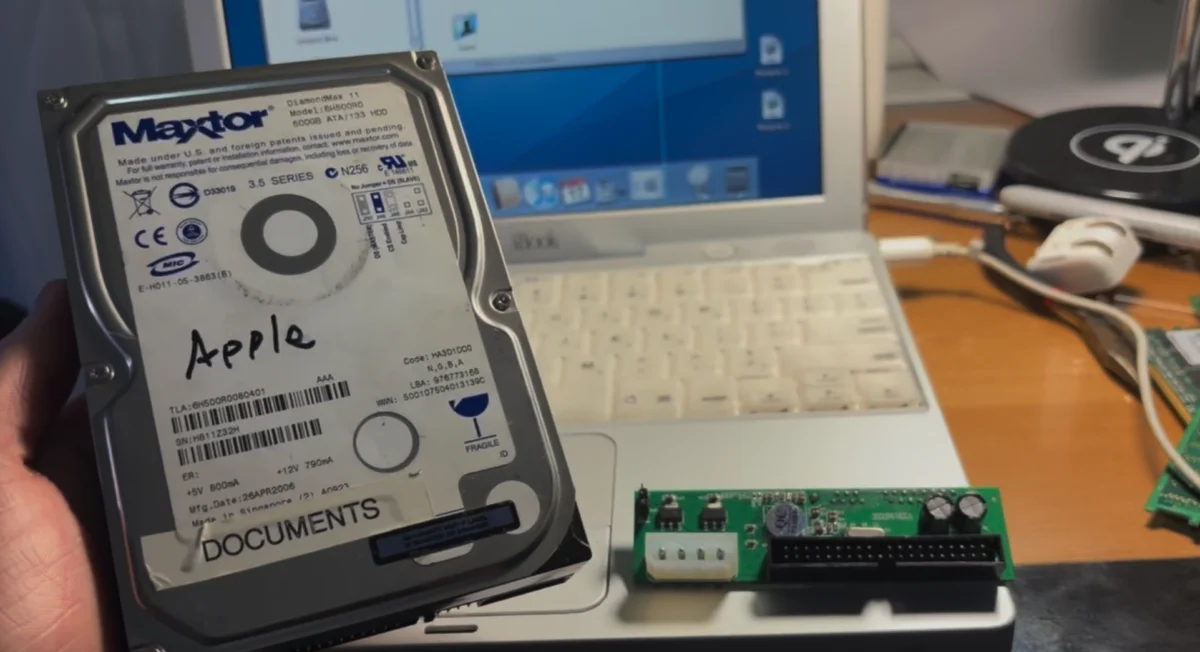
The historical limitation of the IDE (Integrated Drive Electronics) interface, specifically the ATAPI 6.0 standard, famously restricted storage capacity to 137 GB on most personal computers manufactured in the late 1990s and early 2000s. For enthusiasts of the Apple PowerPC ecosystem, this 128 GB threshold (commonly referred to as the 128 GB barrier) has long been a significant hurdle for those seeking to modernize classic hardware. However, recent successful efforts to bypass this restriction on a Summer 2000 Indigo iMac G3 demonstrate that with the correct software drivers and careful implementation, these vintage machines can accommodate substantially larger storage volumes, effectively extending their utility for modern hobbyist applications.
The Evolution of the ATA Standard and Storage Limitations
To understand the necessity of this modification, one must examine the evolution of the ATA/IDE specification. Before the introduction of the ATA-6 (ATA/100) standard, the 28-bit Logical Block Addressing (LBA) scheme limited the maximum addressable storage to approximately 137 gigabytes (specifically 128 gibibytes). This became a critical bottleneck for users as hard drive prices plummeted and capacities soared throughout the mid-2000s.

While Apple eventually addressed this issue in their professional line—with the Revision B Quicksilver Dual 1.0 GHz Power Mac G4 being the first to break the limit, followed by the 1 GHz 17-inch iMac in early 2003—the vast majority of early iMac G3 models remained tethered to the 128 GB ceiling. The internal logic boards of these machines lacked the necessary hardware support for 48-bit LBA, which is required to access sectors beyond the 28-bit limit.
Project Overview: The Indigo iMac G3 Restoration
The recent project involved a 400 MHz Indigo iMac G3, a machine that remains a quintessential icon of the "Bondi Blue" era, though it hails from the later stages of the G3 line. Historical data indicates this specific unit was purchased on June 19, 2001, and retains its original boot ROM version 3.3.0f3.
The core of the initiative was the integration of a 500 GB Maxtor ATA/133 hard drive. Despite the age of such components, the reliability of these specific Maxtor drives—often salvaged from secondary markets for nominal costs—makes them popular choices for retro-computing enthusiasts. The primary technical obstacle was not the physical installation of the drive, but the software-level intervention required to trick the legacy firmware into recognizing a volume exceeding the 128 GB limit.

Methodology and Technical Implementation
The installation process necessitated the use of the SpeedTools Hi-Cap ATA Driver, a legacy utility designed specifically to override the firmware limitations of older Macintosh hardware. A critical finding in this process is the sequence of operations: the driver must be installed and active before the operating system attempts to format or mount a drive larger than 128 GB. Failure to adhere to this order results in the operating system failing to recognize the drive’s full capacity or, in some cases, the drive failing to mount entirely.
The procedure involved:
- Booting from a Secondary Machine: Using an iBook G3 running Mac OS X 10.4.11 as a host, the target iMac G3 was connected via FireWire 400 in Target Disk Mode.
- Software Configuration: The Hi-Cap ATA driver was installed on the host system to ensure the environment was primed to handle the larger address space.
- Drive Formatting: The 500 GB Maxtor drive was partitioned and formatted within the Disk Utility environment, ensuring no residual data existed and that the partition table was compatible with the PowerPC architecture.
- Data Migration: Using Carbon Copy Cloner (version 3.4.7), the operating system environment was cloned to the new drive. The data transfer, conducted over the FireWire 400 bus, spanned approximately six hours to migrate roughly 14 GB of system files.
Upon completion, the iMac G3 was able to boot directly from the 500 GB drive, with the operating system reporting the full capacity of the disk—a feat previously deemed impossible by the original factory specifications.

Broader Implications for the PowerPC Community
This modification is part of a growing movement within the retro-computing community to revitalize PowerPC machines for modern usage. As interest in "classic" macOS environments grows, so too does the need for expanded storage to accommodate the influx of new, community-developed software.
Projects such as PowerFox for G3, the introduction of exFAT file system support for Mac OS X Tiger, and the implementation of AI-driven agents tailored for PowerPC architectures signify a resurgence of interest in these machines. By removing the 128 GB barrier, enthusiasts can now create multi-partition setups, allowing for the installation of multiple versions of the Mac OS—such as Mac OS 9.2.2 for legacy gaming and Mac OS X 10.4.11 for modern web-adjacent tasks—all on a single, high-capacity drive.
The Role of Preservation and Firmware Security
Beyond the storage upgrade, this project highlights the importance of firmware preservation. During the process, the community identified that the iMac G3’s boot ROM (3.3.0f3) was outdated. In the interest of long-term preservation, the ROM was dumped and uploaded to public archives, such as the MacRumors community forums.

This act of "digital archiving" is becoming increasingly vital. As original Apple support pages and lookup tools continue to struggle with legacy serial numbers—often returning errors or misidentifying these vintage units as modern devices like AirPods—the community has taken on the role of primary documentarian. The inability of modern databases to accurately parse the serial numbers of 20-year-old hardware serves as a stark reminder that the digital history of these machines is now almost entirely in the hands of private collectors and hobbyist groups.
Conclusion
The successful deployment of a 500 GB hard drive in an Indigo iMac G3 underscores a persistent truth in computer history: hardware limitations are often transient when met with persistent software engineering. By bypassing the 128 GB IDE barrier, this project not only extends the functional lifespan of a classic machine but also provides a template for future restorations. As the community continues to develop new drivers, patches, and software for the PowerPC architecture, the "Low End Mac" ethos—of maximizing the utility of discarded technology—remains a cornerstone of digital heritage preservation. The project stands as a successful case study in combining low-cost legacy hardware with specialized driver solutions to achieve results that exceed the design intent of the original manufacturers.