Vera Clarissa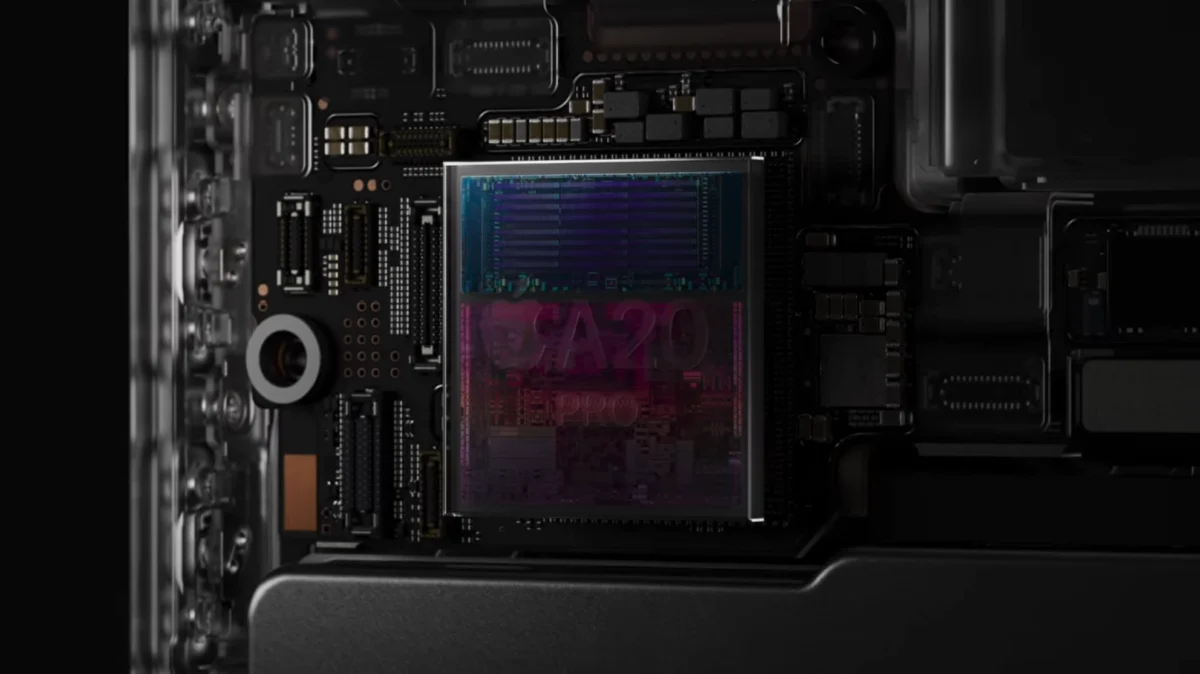
Architectural Evolution and Thermal Management
The A20 Pro introduces a significant departure from previous System-on-Chip (SoC) designs. Drawing inspiration from the efficiency-focused architecture of Apple’s M-series silicon, the new chip integrates memory components directly alongside the main silicon die. This physical redesign is not merely for space efficiency; it addresses the age-old mobile challenge of thermal throttling. By placing memory in close proximity to the processor, engineers have facilitated more direct heat dissipation into the device’s internal vapor chamber.
This structural change has yielded measurable benefits in sustained performance, allowing the chip to operate at higher clock speeds for longer durations without succumbing to the heat-induced down-clocking that plagues less sophisticated designs. Furthermore, the integration has enabled a 50% increase in memory bandwidth, reaching a staggering 113.7 GB/s. This allows the device to handle complex computational tasks, such as real-time 3D rendering and large-language model processing, with unprecedented throughput.

Chronology of Silicon Advancement
To understand the significance of the A20 Pro, one must look at the rapid acceleration of Apple’s silicon roadmap over the last six years. The journey began in late 2020 with the M1 chip, which redefined expectations for notebook performance by delivering high efficiency and power in a compact thermal envelope.
- Late 2020: The M1 chip debuts, setting a new industry standard for ARM-based desktop performance.
- 2022–2024: Apple continues to iterate on the A-series for iPhones and M-series for Macs, focusing on transistor density and neural engine capabilities.
- Late 2025: The iPhone 17 Pro introduces the A19 Pro, pushing mobile clock speeds to 4.26 GHz and establishing a high baseline for mobile multitasking.
- September 2026: The iPhone 18 Pro series launches with the A20 Pro, marking the mass-market introduction of 2nm fabrication and a shift in SoC physical topology.
This timeline illustrates a clear objective: the systematic elimination of the performance delta between a smartphone and a portable workstation.
Benchmarking the A20 Pro
Geekbench 6.7.x data provides a quantitative glimpse into the A20 Pro’s capabilities. A comparative analysis of the A20 Pro against the A19 Pro reveals significant generational gains. While the Apple event focused on user-facing features, the underlying silicon saw substantial revisions, including an expanded L1 instruction cache, L1 data cache, and L2 cache. These improvements, paired with a climb in clock speed from 4.26 GHz in the A19 Pro to a peak of 4.93 GHz in the A20 Pro, underscore a commitment to raw computational speed.

When compared against the M1 MacBook Air, the A20 Pro demonstrates a remarkable trajectory. In both Single-Core CPU and Metal GPU benchmarks, the A20 Pro delivers more than double the performance of the original M1. Perhaps most impressively, the A20 Pro nearly matches the Multi-Core performance of the M4 MacBook Air. This is a transformative milestone; a device that fits in the palm of a hand is now statistically competitive with laptops released just eighteen months prior.
Industry and Technical Analysis
While benchmarks are often viewed as "synthetic," they serve as a critical diagnostic tool for measuring the "water pressure" of a system—essentially, how much computational strain a processor can withstand before encountering bottlenecks. Industry analysts suggest that the leap to 2nm allows for a higher transistor count, which provides developers with more "headroom" to implement advanced features like on-device generative AI, complex ray-traced lighting in mobile gaming, and high-fidelity video processing that were previously confined to stationary desktop environments.
The decision to redesign the SoC layout reflects a broader industry trend toward "package-on-package" efficiency. By reducing the distance data must travel between the memory and the logic core, latency is reduced, and power consumption is optimized. For the end user, this manifests as smoother transitions, faster app launch times, and the ability to maintain peak performance during intensive workflows like professional-grade video editing or heavy scientific modeling.

The Broader Implications for Mobile Computing
The implications of the A20 Pro extend beyond the iPhone 18 Pro. As these chips reach the 2nm threshold, the distinction between mobile, tablet, and laptop hardware continues to blur. If a handheld device can perform at the level of an M4-based laptop, the traditional justification for carrying a dedicated computer for general-purpose productivity begins to diminish for a large segment of the population.
However, challenges remain. High performance in a 2nm chip requires sophisticated power management. While the vapor chamber design is a significant improvement, the laws of physics dictate that higher clock speeds will always demand more energy. Apple’s challenge in the coming years will be to balance this raw performance with the power efficiency expected of a daily-use device.
Moreover, the software ecosystem must keep pace. While the hardware is now capable of desktop-class tasks, the operating system must provide the interface and toolsets to leverage that power. We are currently witnessing a shift where the hardware is no longer the bottleneck for mobile productivity; instead, the focus is shifting toward how software can intelligently utilize this newfound computational abundance.

Conclusion and Future Outlook
The release of the A20 Pro represents a maturation of Apple Silicon. By hitting the 2nm milestone and re-engineering the internal layout for better heat dissipation, Apple has successfully pushed the boundaries of what is possible within the constraints of a smartphone chassis. The data from Geekbench 6.7.x is clear: the gap between mobile and desktop has not just narrowed—in many specific use cases, it has effectively vanished.
As we look toward the future, the integration of such powerful silicon into mobile devices will likely trigger a new wave of software innovation. Developers, no longer constrained by the limited processing power of previous generations, are now free to port more complex, desktop-tier applications to the iPhone. The A20 Pro is not just a faster chip; it is a signal that the smartphone has finally transcended its origins as a communication tool to become a primary, professional-grade computing platform for the vast majority of global users. Whether this necessitates a shift in how we define "personal computing" remains to be seen, but the technological foundation for that transition is now firmly in place.