Farhan hamdan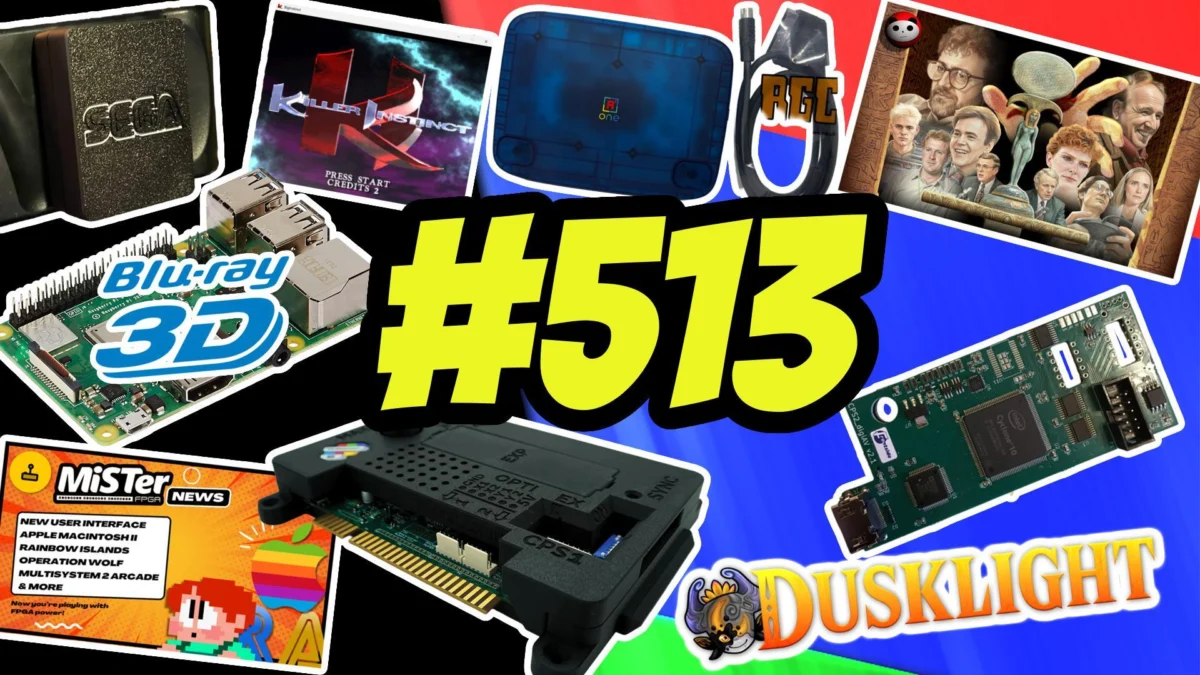
The retro gaming and hardware enthusiast community witnessed a robust week of developments, marked by significant strides in emulation, open-source hardware, FPGA advancements, and historical preservation efforts. The latest Weekly Roundup, released on May 13th, 2026, provided a comprehensive overview of these innovations, offering detailed insights into projects ranging from a highly anticipated arcade emulator release to crucial optimizations for complex FPGA cores and new solutions for classic portable consoles. The aggregation of these updates underscores the dynamic and continuously evolving landscape of digital preservation and enthusiast-driven hardware modifications, collectively pushing the boundaries of how classic games and systems are experienced in the modern era.
The Dawn of BigInstinct: A Breakthrough in Killer Instinct Emulation
A pivotal announcement in the realm of arcade emulation arrived with the public release of "BigInstinct," a dedicated emulator for the iconic fighting game Killer Instinct. This development, highlighted at the 00:18 mark of the roundup, represents a monumental achievement given the game’s historically challenging hardware architecture. Killer Instinct, originally released in 1994 by Rare and published by Midway, utilized a unique "Ultra 64" arcade system board, which was a proprietary development platform designed to pave the way for the Nintendo 64 console. This complex hardware, featuring a MIPS R4600 RISC CPU and specialized graphical components, has long presented formidable hurdles for accurate software emulation.
Prior to BigInstinct, emulation of Killer Instinct often suffered from inaccuracies, performance issues, or incomplete feature sets, limiting the ability of enthusiasts to experience the game precisely as it was intended in its arcade glory. The BigInstinct project, a culmination of years of dedicated reverse engineering and programming efforts, aims to overcome these limitations. Early reports and community feedback suggest that BigInstinct delivers a remarkably faithful emulation experience, addressing long-standing graphical glitches, audio synchronization problems, and input latency concerns that plagued previous attempts. The significance of this release extends beyond mere playability; it is a critical step in the digital preservation of an arcade classic, ensuring that future generations can access and appreciate a historically important title with an unprecedented level of accuracy. The availability of such a specialized emulator also sets a precedent for tackling other notoriously difficult arcade systems, signaling a hopeful future for the broader arcade preservation movement.
Empowering Portability: Open-Source Sega Nomad Battery Pack
The Sega Nomad, Sega’s ambitious but power-hungry portable console from 1995, has long been celebrated for its ability to play full Sega Genesis cartridges on the go. However, its notoriously short battery life – often less than two hours on six AA batteries – significantly hampered its practicality. The retro community has consistently sought solutions to this inherent design flaw, and a new open-source battery pack, detailed at 02:07 in the roundup, offers a compelling modern answer.
This open-source project provides schematics and designs that allow enthusiasts to construct or commission a custom battery solution, typically utilizing more efficient and higher-capacity modern lithium-ion cells. Unlike bulky external battery solutions or modifications that require extensive internal rewiring, this open-source pack is designed for integration, offering a cleaner and more ergonomic solution. The benefits are manifold: significantly extended playtime, reduced reliance on disposable AA batteries, and often a lighter overall package. The "open-source" nature is key; it fosters community collaboration, allowing for ongoing improvements, alternative designs, and widespread adoption without proprietary restrictions. This initiative reflects a broader trend within the retro hardware scene, where enthusiasts leverage modern engineering principles and collaborative development to address the limitations of vintage technology, enhancing usability and longevity for beloved classic systems. It empowers users to customize their experience and contributes to the sustainability of retro gaming hardware by providing repair and enhancement pathways.
Arcade Revival: MiSTer Multisystem2 JAMMA Integration
The MiSTer FPGA project continues to be a cornerstone of modern retro gaming, offering highly accurate hardware recreations of classic systems. A notable development highlighted at 04:36 concerns the MiSTer Multisystem2, now featuring full JAMMA (Japan Amusement Machine Manufacturers’ Association) integration. JAMMA is the standardized wiring harness used in most arcade cabinets from the mid-1980s onwards, making it the universal interface for arcade PCBs.
The Multisystem2 JAMMA effectively transforms a MiSTer FPGA setup into a plug-and-play arcade board compatible with standard arcade cabinets. This integration is a game-changer for arcade enthusiasts and collectors. Previously, connecting a MiSTer to an authentic arcade cabinet often required custom adapters, wiring modifications, or specific input/output boards. The Multisystem2 JAMMA streamlines this process, allowing users to simply drop their MiSTer-powered solution into a JAMMA-wired cabinet and play a vast library of arcade cores with the precise input and video output characteristics of original hardware. This includes support for authentic arcade controls, original arcade monitors (via analog video output), and the power requirements of a cabinet. The implication is profound: it democratizes access to a highly authentic arcade experience at home, significantly reducing the complexity and cost traditionally associated with collecting and maintaining multiple original arcade PCBs. It also provides a robust platform for arcade preservationists, offering a highly accurate and flexible alternative for showcasing and enjoying countless arcade titles without the wear and tear on irreplaceable original hardware.
MiSTer FPGA Ecosystem: Luís’s Core Updates and GUI Enhancements
The MiSTer FPGA platform thrives on continuous community development, and the contributions of individual developers like Luís are frequently highlighted. The roundup, at 06:32, specifically recognized Luís’s recent updates, which include significant enhancements to the MiSTer’s graphical user interface (GUI) and specific game cores, notably for Rainbow Islands and the Multisystem 2 arcade setup.
Luís’s work on the GUI is particularly impactful. A user-friendly interface is crucial for the accessibility and adoption of complex technical platforms like MiSTer. Improvements in navigation, configuration options, and visual presentation make the MiSTer more approachable for a wider audience, moving beyond the highly technical early adopter base. These enhancements often involve refining menu structures, improving asset loading, and streamlining the process of selecting cores, games, and settings. Concurrently, core updates, such as those for Rainbow Islands, demonstrate the ongoing commitment to perfecting individual game experiences. These updates typically involve meticulous debugging, timing adjustments, and the implementation of previously missing features to ensure the most accurate possible recreation of the original hardware. The integration with the Multisystem 2 arcade system further exemplifies the synergistic development within the MiSTer community, where hardware and software advancements frequently complement each other. The cumulative effect of these continuous, iterative updates is a MiSTer platform that grows ever more robust, accurate, and user-friendly, solidifying its position as a leading solution for FPGA-based retro gaming and preservation. This collaborative model ensures that the platform remains at the cutting edge of retro hardware emulation.
Unearthing FMV History: The Digital Pictures / Double Switch Documentary
The 1990s saw a brief but memorable era of Full Motion Video (FMV) games, a genre that leveraged nascent CD-ROM technology to integrate live-action video into interactive experiences. Among the most prominent studios in this space was Digital Pictures, known for titles like Night Trap and Double Switch. The news at 11:53 highlighted an upcoming documentary focusing on Digital Pictures and, specifically, the story behind Double Switch.
This documentary is a vital contribution to video game historiography. The FMV genre, while often critically divisive, represents a unique and experimental period in game development, reflecting technological ambitions and creative risks of the time. Double Switch, released in 1993 for the Sega CD, challenged players to monitor multiple security cameras and activate traps to protect a mansion’s inhabitants. Documentaries like this delve into the production challenges, the technology constraints, the creative decisions of the developers, and the cultural reception of these games. They often feature interviews with original developers, cast members, and industry historians, providing firsthand accounts and critical analysis that might otherwise be lost to time. The preservation of such narratives is crucial for understanding the evolutionary path of video games, recognizing the diverse approaches taken during formative periods, and appreciating the often-overlooked innovations that, despite commercial outcomes, influenced subsequent design philosophies. This documentary serves as a valuable archival resource, ensuring that the unique legacy of Digital Pictures and the FMV genre is thoroughly documented and accessible for future study and appreciation.
Refining Classic Connectivity: SuperStation One SCART Cable
For aficionados of classic console gaming, achieving the highest possible video quality from original hardware is paramount. SCART (Syndicated for Colour Art and Radio Transmissions) cables, particularly those wired for RGB (Red, Green, Blue) signals, have long been the gold standard for connecting European consoles to compatible displays, offering significantly superior image fidelity compared to composite or S-Video connections. The roundup, at 15:11, featured the SuperStation One SCART Cable, designed specifically for the original PlayStation (PS1).

While the PS1 natively supported RGB output, the quality of third-party SCART cables could vary wildly, often introducing interference, noise, or lacking proper shielding and component quality. The SuperStation One cable addresses these issues by offering a premium, meticulously engineered solution. This typically involves using high-quality shielded coaxial cables for each color channel, proper impedance matching, and robust connectors to ensure a clean, stable, and interference-free RGB signal. The impact on image quality is immediately noticeable: sharper pixels, vibrant colors, and significantly reduced video artifacts, bringing out the best in the PS1’s often low-resolution but distinct 3D graphics. For serious collectors and purists who wish to play on CRT televisions or upscale to modern displays with minimal signal degradation, such a cable is an essential accessory. It underscores the ongoing demand within the retro community for specialized, high-performance accessories that bridge the gap between vintage electronics and contemporary expectations for visual fidelity, reaffirming the enduring value placed on authentic and high-quality presentations of classic games.
Modernizing Retro Displays: 3D Blu-Ray on Raspberry Pi 3 with CRT Cadence
The enduring appeal of Cathode Ray Tube (CRT) displays for retro gaming and classic media consumption lies in their unique visual characteristics, such as perfect black levels, instant pixel response, and scanlines that accurately replicate the original aesthetic. The news at 18:05 presented an intriguing development: the ability to play 3D Blu-Ray content on a Raspberry Pi 3 with proper CRT cadence.
This achievement is technically complex and significant. Modern digital video, including Blu-Ray, is designed for progressive scan flat-panel displays, operating at specific refresh rates (e.g., 24p, 30p, 60p) that often do not align perfectly with the interlaced or specific refresh rates of CRTs. Attempting to display such content directly on a CRT typically results in judder, dropped frames, or incorrect aspect ratios. The "proper CRT cadence" refers to the intricate process of converting the digital video signal to match the exact timing and synchronization requirements of a CRT, often involving advanced video processing to create interlaced frames or specific refresh rates (e.g., 480i, 240p) that CRTs can display natively without motion artifacts. The Raspberry Pi 3, a versatile single-board computer, is being utilized as the processing unit for this task, leveraging its graphics capabilities and open-source software flexibility to achieve this demanding conversion. This development opens up new possibilities for enthusiasts who wish to experience a wider range of modern media, including stereoscopic 3D content, on their beloved vintage displays, blending cutting-edge media with classic visual aesthetics. It highlights the ingenuity of the community in adapting readily available, affordable hardware to solve complex display compatibility challenges.
Advancing Saturn Emulation: MiSTer Saturn Core Optimizations
The Sega Saturn holds a unique and somewhat enigmatic place in console history, renowned for its complex dual-CPU architecture that made it notoriously difficult to program for and, consequently, equally challenging to emulate accurately. The update at 23:53 in the roundup detailed crucial optimizations to the MiSTer Saturn core, specifically addressing the formidable challenge of overcoming a "chock full FPGA" scenario.
Developing an FPGA core for a system as intricate as the Saturn requires immense effort in reverse engineering and hardware description language (HDL) programming. The "chock full FPGA" refers to a situation where the logic gates and memory blocks available on the FPGA chip (in this case, the DE10-Nano, commonly used for MiSTer) are nearing or exceeding their capacity, making it difficult to implement all the necessary components of the Saturn’s architecture. Recent optimizations involve refining the HDL code, implementing more efficient logic designs, and strategically utilizing the FPGA’s resources to squeeze in more of the Saturn’s complex components. These efforts directly translate into improved game compatibility, better performance, and enhanced accuracy for games that previously suffered from graphical glitches, audio issues, or outright non-functionality. For instance, these optimizations might enable more accurate rendering of polygons, better handling of the Saturn’s unique VDP2 background layer, or more precise emulation of its sound processors. The ongoing progress with the MiSTer Saturn core is a testament to the dedication of developers in the FPGA community, pushing the boundaries of what is possible with current hardware and bringing ever-closer to a perfect hardware-level preservation of one of gaming’s most challenging consoles.
Accessibility for Arcade Classics: CPSHDMI Mod Back in Stock
For collectors of original arcade hardware, particularly Capcom’s highly regarded CPS-1, CPS-2, and CPS-3 (Capcom Play System) boards, connecting these classic systems to modern displays often presents a challenge. Original arcade boards output analog video signals (RGB via JAMMA) that are incompatible with contemporary HDMI-only televisions. The news at 26:34 announced that the CPSDigiAV arcade HDMI mod is back in stock, a welcome development for the community.
The CPSDigiAV mod is a specialized hardware modification designed to extract a pristine digital video signal directly from the Capcom arcade boards and output it via HDMI. This process bypasses the noisy analog conversion stages that often plague traditional upscalers or direct analog-to-HDMI converters, ensuring the highest possible image quality on modern displays. The mod typically offers features like selectable scanline filters, aspect ratio controls, and often integrates audio output as well. The periodic scarcity of such niche hardware solutions can be frustrating for enthusiasts, making the restock announcement particularly significant. It means that more arcade collectors can now easily integrate their cherished original CPS boards into their home entertainment setups without compromising on video fidelity or requiring complex, expensive external upscaling solutions. This initiative plays a crucial role in making original arcade hardware more accessible and enjoyable for a new generation of players, bridging the technological gap between vintage and modern display technologies while preserving the integrity of the original arcade experience.
Decompiling a Legend: The Zelda: Twilight Princess "Dusk" Port
Game decompilation projects represent a fascinating and technically demanding facet of game preservation and fan development. The announcement at 28:50 regarding "Dusk," a decompilation port of The Legend of Zelda: Twilight Princess, marks a significant milestone. Decompilation involves reversing compiled machine code back into human-readable source code, a painstaking process that allows developers to understand a game’s inner workings and create native ports to new platforms or introduce extensive modifications.
The Legend of Zelda: Twilight Princess, originally released for the GameCube and Wii in 2006, is a beloved title in the iconic series. A full decompilation project, such as "Dusk," typically aims to rebuild the entire game from its reconstructed source code, allowing for native executables that run directly on modern operating systems (e.g., Windows, Linux) without the need for emulation. This offers several advantages: potentially higher performance, greater stability, enhanced graphical options (like native high-resolution rendering, improved texture filtering, or even ray tracing), and significantly easier modding capabilities. Unlike emulation, which simulates the original hardware, a decompilation port runs the game’s logic natively on the target system, unlocking its full potential. The "Dusk" project demonstrates the dedication of fan communities to not only preserve classic games but also to enhance and extend their lifespans beyond the limitations of their original platforms. Such projects are often community-driven, open-source endeavors that contribute invaluable knowledge to game development and preservation efforts, fostering a deeper understanding of game engines and design principles.
Beyond Gaming: Practical Gadgetry – Car Jump Pak / Tire Inflator
While primarily focused on retro gaming and associated hardware, the roundup occasionally touches upon broader technological interests. At 30:21, the discussion veered towards a practical gadget: a car jump starter pack combined with a tire inflator. This inclusion reflects the multifaceted interests of a tech-savvy audience, recognizing the utility of versatile tools that solve common modern-day problems.
Modern portable jump starter packs, often powered by high-capacity lithium-ion batteries, have become indispensable emergency tools for vehicle owners. Their ability to jump-start a dead car battery without the need for another vehicle or cumbersome jumper cables provides a significant safety and convenience factor. Integrating a tire inflator into such a device further enhances its utility, offering a solution for low tire pressure, a common issue that can impact fuel efficiency and safety. These devices often feature additional functionalities like USB ports for charging mobile devices and built-in LED flashlights, making them multi-purpose emergency kits. The discussion likely highlighted the compact nature, power efficiency, and reliability of specific models, appealing to the practical sensibilities of an audience that appreciates well-engineered, problem-solving technology. While not directly related to retro gaming, its inclusion serves as a reminder that the same curiosity and appreciation for innovation that drives retro hardware development also extends to practical applications of modern electronics.
Community Support and Future Outlook
The breadth and depth of the developments covered in Weekly Roundup #513 underscore the vibrant and highly active nature of the retro gaming and hardware enthusiast community. From the intricate technical achievements in emulator development and FPGA core optimization to the practical enhancements for classic consoles and the vital efforts in historical documentation, these projects are overwhelmingly driven by passionate individuals and collaborative groups.
Crucially, many of these initiatives rely heavily on community support, as highlighted by the repeated call for contributions at 31:45. Monthly support services, one-time tips, and the use of affiliate links are instrumental in funding the extensive research, development, and hardware acquisition necessary for these ambitious projects. This funding model allows developers to dedicate significant time and resources to reverse-engineering, programming, and testing, ultimately benefiting the entire retro gaming ecosystem. The ongoing evolution of platforms like MiSTer, the continuous stream of open-source hardware designs, and the meticulous work on game decompilations collectively paint a picture of a community committed to preserving, enhancing, and celebrating the history of video games. The commitment to open sharing of knowledge, technical expertise, and financial support ensures that the pace of innovation remains high, promising an exciting future for retro gaming enthusiasts worldwide as new solutions emerge to connect the past with the present and future of interactive entertainment.