
 Farhan hamdan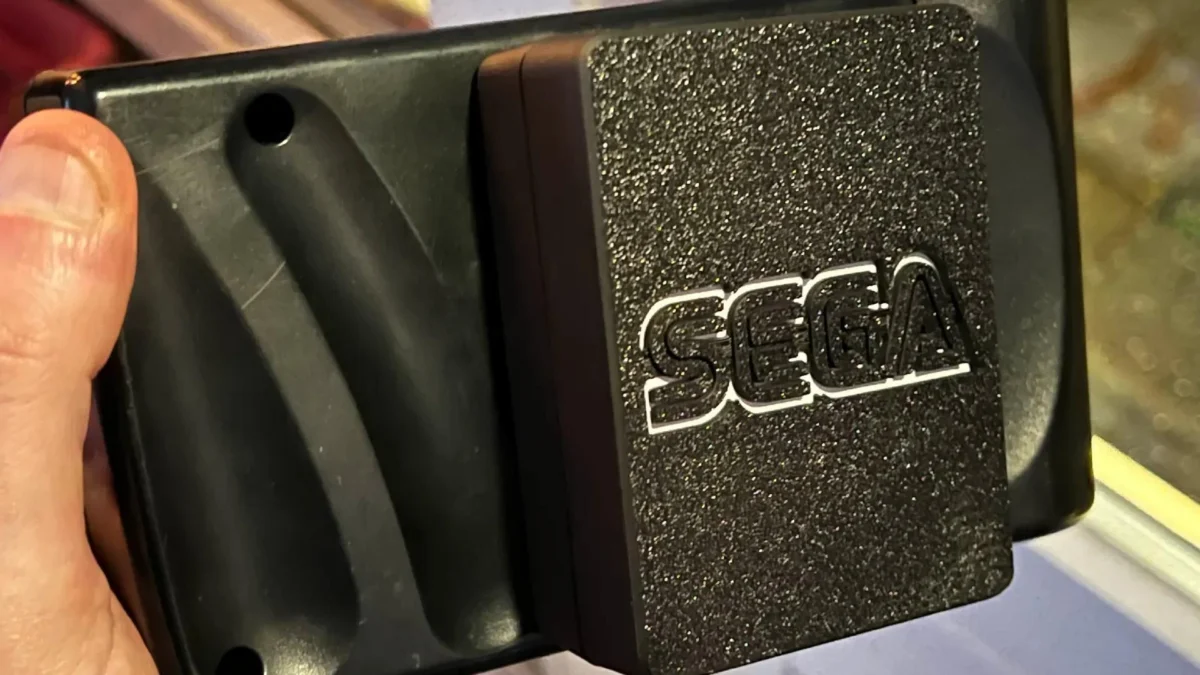
Dennis van den Broek, known within the retro gaming community as Pointer Function, has unveiled an innovative open-source battery pack designed specifically for the Sega Nomad portable console. Released under the permissive Creative Commons 4.0 License, this new solution aims to address one of the Nomad’s most significant historical drawbacks: its notoriously short battery life. The design leverages readily available rechargeable 18650 lithium-ion batteries and incorporates modern USB-C charging capabilities, offering a customizable and potentially more cost-effective alternative for enthusiasts. Multiple versions of the pack are available, catering to different user preferences, including options with or without an integrated power switch, and designs that draw power either through the console’s rear connections or via an external cable. Comprehensive build instructions and all necessary links have been provided by Mr. van den Broek on the main project page hosted on Printables.com.
This release represents a significant development for the dedicated community of Sega Nomad owners, who have long sought robust and sustainable power solutions to enjoy their vintage hardware without being tethered to a wall outlet. While established plug-and-play options, such as Greg’s Nomad Pak, have served the community reliably for years, Pointer Function’s open-source initiative introduces a do-it-yourself (DIY) pathway that fosters community engagement, customization, and potentially lower acquisition costs for the end-user.
The Sega Nomad: A Portable Genesis with a Power Problem
To fully appreciate the significance of Pointer Function’s contribution, it is essential to understand the historical context and inherent challenges of the Sega Nomad. Released by Sega in North America in October 1995, the Nomad was an ambitious portable version of the popular Sega Genesis (Mega Drive) home console. Priced at $179.99 upon launch, it allowed users to play most of their existing Genesis cartridge library on a handheld device, a concept that was revolutionary for its time.
The Nomad featured a 3.25-inch backlit passive-matrix LCD screen, a six-button control layout, and a video output port that allowed it to connect to a television, effectively transforming it into a portable home console. Internally, it mirrored the Genesis’s architecture, utilizing a Motorola 68000 CPU as its main processor and a Zilog Z80 for sound control. While technically impressive, its design was marred by one critical flaw: its exorbitant power consumption. The console required six AA batteries, which, even under optimal conditions, would typically provide only two to three hours of gameplay. This severe limitation quickly became the primary deterrent for potential buyers and a source of frustration for early adopters. Sega did offer an optional external battery pack (model MK-6106) and an AC adapter, but these often proved cumbersome or insufficient for extended portable play. The short battery life, coupled with its relatively high price and competition from more successful handhelds like Nintendo’s Game Boy, contributed to the Nomad’s limited commercial success and its discontinuation in 1999.
Despite its commercial struggles, the Sega Nomad has cultivated a cult following among retro gaming enthusiasts. Its unique ability to play original Genesis cartridges on the go, combined with its robust build quality and nostalgic appeal, has cemented its place as a desirable, albeit challenging, piece of gaming history. The ongoing passion for the Nomad has fueled a vibrant modding community dedicated to preserving and enhancing the console, with power solutions consistently ranking as a top priority.
Evolution of Portable Power Solutions for Retro Consoles
The retro gaming community has a long history of innovating to overcome the limitations of vintage hardware, and power management for portable consoles like the Nomad is a prime example. Early attempts to extend the Nomad’s playtime often involved bulky custom battery packs, often utilizing lead-acid or nickel-cadmium (NiCd) batteries, which were heavy and prone to memory effects. As battery technology advanced, particularly with the proliferation of lithium-ion (Li-ion) cells, more efficient and compact solutions began to emerge.
For years, dedicated modders and small-scale entrepreneurs have offered bespoke battery modifications, ranging from internal Li-ion battery swaps to external power banks. These solutions often required varying degrees of technical skill for installation, or commanded a premium price for pre-built units. One of the most prominent and widely adopted professional solutions has been Greg’s Nomad Pak. Released approximately two and a half years ago, Greg’s Nomad Pak offered a refined, plug-and-play external battery solution that has garnered a strong reputation for its reliability and ease of use. This commercial product effectively addressed the demand for a hassle-free power upgrade, providing a convenient option for those less inclined towards DIY projects. Its continued functionality after years of use underscores the quality and engineering behind such dedicated commercial offerings.
However, the rise of the open-source hardware movement within the retro gaming sphere has introduced a new paradigm. This movement emphasizes community collaboration, transparency, and the free sharing of design files and schematics, enabling enthusiasts to build, modify, and improve upon existing technologies. Pointer Function’s battery pack for the Sega Nomad fits squarely within this burgeoning trend, offering an alternative that prioritizes accessibility and user empowerment.
The Pointer Function Battery Pack: A Deep Dive into Design and Open-Source Philosophy
Pointer Function’s open-source battery pack represents a modern approach to a classic problem. Its design centers around the use of 18650 lithium-ion cells, a standard in rechargeable battery technology. 18650 batteries are favored for their high energy density, relatively low cost, and widespread availability, making them an ideal choice for DIY projects requiring substantial power. The design incorporates a battery management system (BMS) for safety, crucial for handling Li-ion cells, which require careful charging and discharge monitoring to prevent overcharging, over-discharging, and short circuits.
A key modern convenience integrated into the design is USB-C charging. USB-C has become the ubiquitous standard for power delivery in contemporary electronics, offering reversible connectors, faster charging speeds, and broad compatibility. This feature allows users to charge their Nomad battery pack using common smartphone chargers or power banks, eliminating the need for proprietary charging cables and adapters.
The versatility of the design is another hallmark of this open-source project. Pointer Function has provided multiple versions of the enclosure and circuit configurations to suit diverse user needs. Options include versions with an integrated power switch, allowing users to easily toggle power to the console, and versions without a switch for a more minimalist setup. Furthermore, the design caters to different methods of connecting power to the Nomad: some versions connect directly via the console’s rear expansion port, providing a sleek, integrated look, while others utilize an external cable for more flexible placement or compatibility with modified Nomads. This modularity empowers users to choose the configuration that best fits their specific preferences and technical comfort level.
The decision to release the design under the Creative Commons 4.0 License is central to its open-source philosophy. This license allows anyone to use, share, and adapt the project, provided they attribute the original creator. This fosters a collaborative environment where community members can contribute improvements, troubleshoot issues, and even develop derivatives of the original design. Such an approach not only democratizes access to advanced hardware solutions but also ensures the longevity and adaptability of the project, as it is not dependent on a single commercial entity for support or updates. It contrasts sharply with proprietary solutions, where design specifications are often kept confidential, limiting user repairability and customization options.

Building the Pointer Function battery pack requires a moderate level of DIY skill. Users will need access to a 3D printer for fabricating the enclosure parts and basic soldering skills for assembling the electronic components. Detailed build instructions provided by Mr. van den Broek on Printables.com guide users through each step, making the project accessible to enthusiasts willing to invest time and effort.
Statements, Reactions, and Community Engagement
While specific direct quotes from Mr. van den Broek regarding the project’s motivations were not immediately available, the spirit of his open-source release clearly aligns with empowering the retro gaming community. The development of such a solution is typically driven by a desire to share knowledge, reduce barriers to entry for advanced modifications, and collaboratively enhance the gaming experience for vintage hardware.
Initial reactions from the retro gaming community are expected to be overwhelmingly positive. Online forums, social media platforms like X (formerly Twitter) and Bluesky (where Mr. van den Broek is active), and YouTube channels dedicated to retro tech are likely to become hubs for discussion, build logs, and further development. The open-source nature of the project invites feedback and contributions, potentially leading to further refinements or new features from the community itself. This model of collaborative innovation is highly valued within the retro gaming and maker communities, as it allows for rapid iteration and tailored solutions that commercial products might not always provide. For modders and hardware enthusiasts, this project serves as both a practical solution and an inspiration, demonstrating what can be achieved with shared knowledge and modern manufacturing techniques like 3D printing.
Critical Considerations and Best Practices for Users
Despite the undeniable benefits of this open-source solution, users must exercise caution, particularly concerning the selection of 18650 batteries. As highlighted by Dennis van den Broek himself, the market is unfortunately saturated with counterfeit or low-quality 18650 cells. These fake batteries often fail to meet their advertised capacity, can degrade rapidly, and, more critically, pose significant safety risks, including overheating, venting, and even fire, if not properly manufactured or if their internal protection circuits are compromised.
To mitigate these risks, Mr. van den Broek offers a crucial tip: be wary of any 18650 batteries listed with capacities above 3500mAh. While battery technology is constantly evolving, such high capacities are often indicative of fraudulent claims in the consumer market, especially at suspiciously low prices. Reputable 18650 cells from trusted manufacturers like Panasonic, Samsung, LG, and Sony/Murata typically have actual capacities ranging from 2500mAh to 3500mAh. It is highly recommended that users purchase 18650 batteries only from reputable vendors who specialize in authentic cells, avoiding generic listings on large online marketplaces that may not vet their suppliers rigorously. Furthermore, always use protected 18650 cells if possible, which include built-in overcharge, over-discharge, and short-circuit protection, adding an extra layer of safety.
Beyond battery selection, users undertaking the DIY build should ensure they have adequate soldering skills and follow all instructions meticulously. Incorrect wiring or poor soldering can lead to malfunctions or safety hazards. Familiarity with basic electronics and proper safety precautions, such as working in a well-ventilated area and using appropriate personal protective equipment, are paramount.
Broader Impact and Implications
Pointer Function’s open-source battery pack for the Sega Nomad extends beyond merely powering a vintage console; it embodies several significant trends and implications for the broader retro gaming and open-source hardware communities.
Firstly, it contributes to the sustainability and longevity of vintage electronics. By providing accessible and repairable solutions, projects like this help reduce electronic waste. Instead of discarding a beloved console due to an obsolete power solution, enthusiasts can extend its life using modern, readily available components. This aligns with a growing movement towards repairability and circular economy principles within technology.
Secondly, it empowers the DIY community. The open-source nature fosters a culture of shared knowledge and collaborative development. It lowers the barrier to entry for individuals interested in hardware modification, allowing them to learn, build, and contribute without needing proprietary tools or licenses. This collective intelligence often leads to more robust, community-supported solutions than those developed in isolation.
Thirdly, there are economic implications. While the initial outlay for a 3D printer or soldering iron might be a barrier for some, the per-unit cost of building an open-source battery pack can be significantly lower than purchasing a pre-built commercial solution. This makes high-quality modifications more accessible to a wider range of enthusiasts, particularly those on a budget. It also supports a niche market for components, encouraging innovation among suppliers.
Finally, this project reinforces the enduring vitality of the retro gaming movement. It demonstrates that classic hardware is not merely a relic of the past but a platform for ongoing innovation and engagement. By blending vintage aesthetics and gameplay with modern conveniences like USB-C charging and efficient Li-ion batteries, projects like Pointer Function’s ensure that consoles like the Sega Nomad remain playable and relevant for future generations of gamers. It exemplifies the dedication of a community committed to preserving gaming history while simultaneously pushing its boundaries. This project is a testament to the power of open collaboration in preserving and enhancing the legacy of gaming’s golden eras.
In conclusion, Dennis van den Broek’s open-source battery pack for the Sega Nomad stands as a commendable contribution to the retro gaming community. It offers a practical, customizable, and cost-effective solution to a long-standing power issue, embodying the spirit of DIY and open-source collaboration. While users are encouraged to exercise due diligence in sourcing components, particularly 18650 batteries, this initiative provides a powerful alternative to commercial offerings, further solidifying the vibrant and innovative ecosystem surrounding classic gaming hardware. Whether opting for a convenient plug-and-play solution or embracing the rewarding challenge of a DIY build, Sega Nomad owners now have more robust options than ever to keep their portable Genesis consoles powered up for countless hours of nostalgic gameplay.








