Farhan hamdan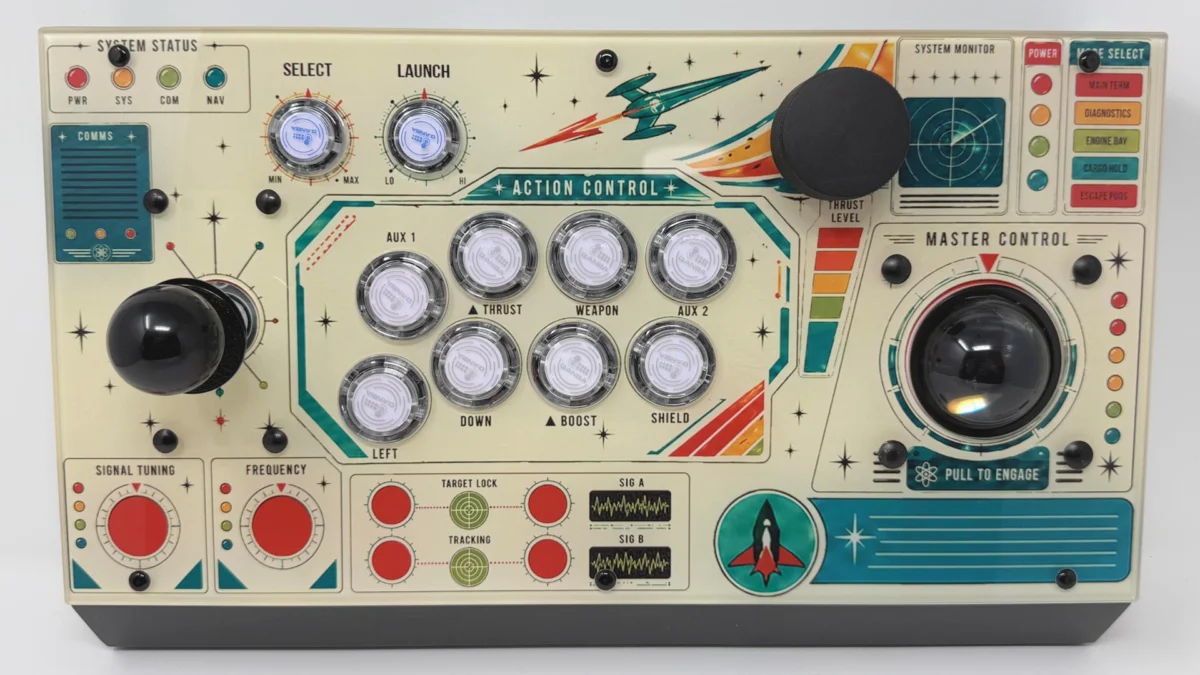
The Fightbox R10 Pro arcade stick, a high-performance controller already recognized for its technical superiority and versatile features, has recently unveiled a new edition featuring custom artwork by acclaimed artist Cary T. Self. This artistic collaboration elevates the device’s aesthetic appeal while maintaining its robust engineering, solidifying its position as a leading recommendation for enthusiasts and competitive players alike within the fighting game community (FGC) and broader arcade gaming sphere. The R10 Pro, previously lauded for its sub-one-millisecond input lag, integrated spinner and trackball, and comprehensive configuration options, now offers an even more personalized and visually striking experience.
Unveiling the Artistic Collaboration: Cary T. Self’s Vision for the R10 Pro
The introduction of the "SelfCreated" artwork version marks a significant moment for the Fightbox R10 Pro. Custom artwork has long been a cornerstone of the arcade stick culture, allowing players to express their individuality and connection to their favorite games or personal brands. Cary T. Self, known for his distinctive artistic style, has contributed a design that transforms the controller from a mere input device into a piece of functional art. This partnership underscores Fightbox’s commitment not only to technical excellence but also to the aesthetic and personal expression valued by its user base.
For many within the FGC, an arcade stick is more than just hardware; it is an extension of the player. The visual design can influence a player’s morale, reflect their personality, and even become a talking point in competitive settings. Self’s artwork, therefore, is not merely a superficial addition but an integral enhancement to the overall user experience. While specific details of Self’s creative process for this particular design remain proprietary, it is common for artists collaborating on gaming peripherals to draw inspiration from classic arcade motifs, character designs, or abstract concepts that evoke the intensity and dynamism of competitive play. The integration of such professional artwork directly onto the controller bypasses the need for players to seek third-party customization services, offering a premium, ready-to-use solution that combines high-end performance with a unique visual identity. This move aligns with a growing trend in the gaming peripheral market where manufacturers are increasingly recognizing the demand for visually distinct and artistically curated products.
Technical Prowess: The R10 Pro’s Core Performance and Versatility
At its foundation, the Fightbox R10 Pro’s reputation is built upon its exceptional technical performance. A key highlight is its remarkably low input lag, consistently measured at an average of less than one millisecond. This figure is critical for competitive gaming, where even fractional delays can impact gameplay, particularly in fast-paced fighting games that demand precise, frame-perfect inputs. The R10 Pro’s ability to process inputs with such minimal latency places it among the elite controllers available on the market, providing players with a direct and responsive connection to their on-screen actions. This performance benchmark is achieved through optimized internal circuitry and robust USB connectivity, ensuring signal integrity and rapid data transmission.
Beyond its low latency, the R10 Pro distinguishes itself through its integrated spinner and trackball. These features, often found in dedicated arcade cabinets, expand the controller’s utility far beyond traditional fighting games. The spinner is ideal for classic arcade titles such as Arkanoid, Tempest, and Centipede, which rely on rotational input for gameplay. The trackball, similarly, opens up compatibility with games like Missile Command and Marble Madness, offering a level of authenticity and control that standard joysticks or gamepads cannot replicate. The seamless integration of these specialized inputs into a single USB cable solution simplifies setup and minimizes cable clutter, a significant convenience for users who value versatility. This comprehensive input suite means the R10 Pro caters not only to the modern fighting game enthusiast but also to retro gaming aficionados seeking an authentic arcade experience on contemporary platforms. The modular design and varied configurations further enhance its appeal, allowing consumers to select versions with or without these specialized inputs, depending on their specific gaming preferences and budget.
Ergonomics and Configuration Choices: Adapting to Player Needs
The Fightbox R10 Pro is available in multiple configurations, notably including both 6-button and 8-button layouts. The initial review focused on the 6-button model, but subsequent evaluation of the 8-button version confirms a consistent high-quality user experience. The choice between these two layouts primarily hinges on the specific genres and titles a player intends to engage with. Traditional fighting games, particularly those from Capcom’s Street Fighter series, often utilize a 6-button configuration, with three punches and three kicks. However, many modern fighting games, such as those in the Tekken or Mortal Kombat franchises, or other arcade genres, can benefit from or even require eight primary action buttons. The additional two buttons on the 8-button model provide greater flexibility for mapping auxiliary functions, macros, or simply accommodating games with a broader control scheme, without significantly altering the controller’s overall footprint or ergonomic comfort.
Observations suggest that the physical dimensions and tactile feel between the 6-button and 8-button versions remain largely consistent. While a larger setup like a full Viewlix cabinet might offer more expansive surface area, the R10 Pro manages to pack its features into a compact form factor that is significantly lighter and more portable than traditional arcade cabinet controls. This balance of size and functionality makes it an attractive option for players who may not have dedicated gaming setups or who frequently transport their equipment for tournaments or local multiplayer sessions. The availability of different button brands, such as Sanwa or other popular arcade button manufacturers, further allows for customization of the tactile feedback and actuation force, catering to individual player preferences which can vary widely based on playstyle and familiarity with specific button types.
Enhancing User Experience: The Non-Slip Pad and Light-Up Buttons
Fightbox continues to refine the R10 Pro experience with thoughtful accessories and design variations. A notable recent addition is a new non-slip silicone pad designed to be applied to the bottom of the arcade stick. Priced at approximately $15, this accessory addresses a common user concern: controller stability during intense gameplay. Players who place their arcade stick on their lap or on slick surfaces often struggle with movement and slippage, which can disrupt concentration and performance. The non-slip pad, a seemingly minor addition, offers a practical solution to this issue, providing enhanced grip and stability. Its upcoming installation and testing in a public livestream event underscore the product’s commitment to community feedback and practical application. This accessory is particularly beneficial for competitive players who rely on consistent controller positioning to maintain peak performance.
Another aesthetic and functional variation available is the option for light-up buttons. While traditionally, many veteran players express a preference for the established tactile feel and performance of standard arcade buttons like Sanwa, the inclusion of illuminated buttons introduces a modern flair. These buttons can enhance the visual appeal of the controller, especially in low-light environments, creating a more immersive and dynamic gaming experience. The trade-off between traditional tactile feedback and visual aesthetics is a common discussion point among enthusiasts. While some players may prioritize the familiar click and actuation of non-illuminated buttons, others may find the vibrant glow of light-up buttons an attractive feature that adds to the overall premium feel of the device. The ongoing evaluation of these light-up buttons in real-world play, as mentioned by reviewers, will provide valuable insights into how effectively they balance visual appeal with uncompromised performance and player comfort over extended gaming sessions.

Market Position and Competitive Landscape
The Fightbox R10 Pro stands as a formidable contender in the increasingly competitive market for high-performance arcade sticks. Its blend of ultra-low input lag, versatile input options (joystick, spinner, trackball), and customizable configurations positions it favorably against both established brands and newer entrants. Competitors typically fall into categories ranging from budget-friendly options that compromise on performance or build quality, to premium sticks from manufacturers like Hori, Qanba, or Razer, which often focus on specific features but may lack the comprehensive input suite of the R10 Pro.
The R10 Pro’s "fairly priced" nature, considering its feature set and performance benchmarks, provides significant value. For a device that offers professional-grade responsiveness, multi-genre compatibility, and now, artistic customization, its market positioning is strategic. The ability to choose specific button brands and configurations allows it to appeal to a broader segment of the market, from casual players looking for an upgrade to serious competitors demanding the best. The consistent positive reviews and strong recommendations from respected hardware reviewers, such as RetroRGB, further bolster its credibility and influence purchasing decisions within the dedicated gaming communities.
Statements from Stakeholders and Community Impact
While direct official statements regarding the Cary T. Self artwork edition are often disseminated through product pages and social media, the implications of such a release can be inferred from the company’s product philosophy and market trends. Fightbox’s decision to collaborate with an artist like Cary T. Self suggests a strategic move to differentiate its product line beyond purely technical specifications. It implies a recognition that the modern gaming consumer, particularly within niche communities like the FGC, values personal expression and unique aesthetics alongside raw performance.
From the perspective of Fightbox, this collaboration likely represents a commitment to innovation and community engagement. A hypothetical statement from a Fightbox representative might emphasize: "Our partnership with Cary T. Self embodies our dedication to merging cutting-edge performance with unparalleled artistic design. We believe that a truly great controller should not only perform flawlessly but also inspire and reflect the passion of its user. The ‘SelfCreated’ R10 Pro is a testament to this vision, offering a distinct aesthetic for players who demand both precision and style."
Cary T. Self, as the artist, would likely express enthusiasm for translating his artistic vision onto a functional gaming peripheral. His perspective might be: "It was an exciting challenge to design for the R10 Pro. My goal was to create artwork that resonates with the energy of arcade gaming, providing players with a visually stimulating experience that complements their intense gameplay. This collaboration allows art to directly intersect with the gaming world in a tangible and interactive way."
The ongoing endorsement from prominent hardware reviewers, such as the one from RetroRGB, reinforces the R10 Pro’s standing. Such continued positive evaluations provide critical independent verification of the product’s quality and performance, guiding consumers through a crowded market. The reviewer’s willingness to re-evaluate different button configurations and discuss new accessories like the non-slip pad highlights an ongoing engagement with the product’s evolution and a commitment to providing thorough, up-to-date information to their audience. This sustained attention helps maintain the product’s visibility and reinforces its reputation as a benchmark for arcade stick performance.
The broader implications for the fighting game community are significant. The availability of high-performance, customizable, and aesthetically diverse controllers like the R10 Pro lowers the barrier to entry for serious competitive play while simultaneously enhancing the experience for casual players. It fosters a culture where personal expression is celebrated alongside technical skill. The integration of multi-genre inputs also encourages exploration of classic arcade titles, bridging the gap between retro gaming enthusiasts and modern competitive players. This holistic approach strengthens the community by offering versatile tools that cater to a wide spectrum of gaming preferences and historical contexts.
Looking Ahead: Continuous Innovation and Community Engagement
The evolution of the Fightbox R10 Pro, from its initial highly-rated technical review to the introduction of artistic collaborations and practical accessories, demonstrates a clear commitment to continuous improvement and responsiveness to user needs. The upcoming livestream demonstrating the installation of the non-slip pad and further testing of the light-up buttons illustrates an ongoing dialogue with the gaming community. This transparency and active engagement are crucial for building brand loyalty and ensuring that products remain relevant and desirable in a rapidly evolving technological landscape.
As the FGC continues to grow and diversify, the demand for peripherals that offer both cutting-edge performance and unique personalization will only increase. The Fightbox R10 Pro, with its robust core features, versatile configurations, and now its striking artistic editions, is well-positioned to meet these demands, offering a compelling package for anyone serious about their arcade gaming experience. The synergy between advanced engineering and artistic design, exemplified by the "SelfCreated" R10 Pro, sets a new standard for what players can expect from their high-performance controllers.