Indra Gunadi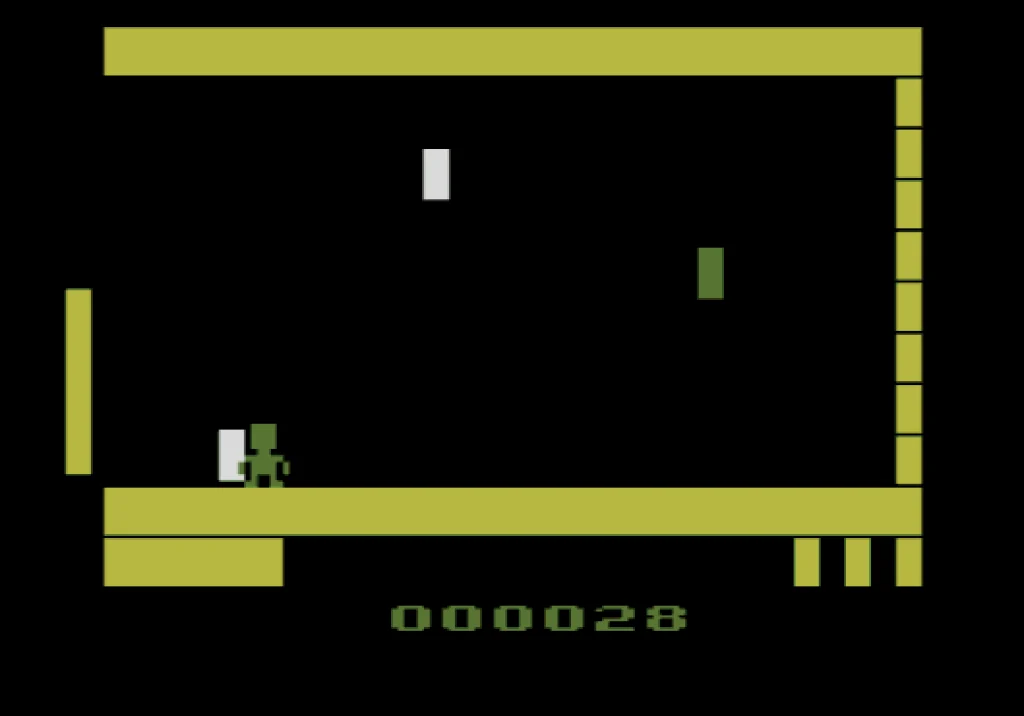
The venerable Atari 2600 console, a cornerstone of early video gaming history, continues to defy expectations of obsolescence with the announcement of a new homebrew title, "H6-24 (2026)," developed by seasoned programmer Marc Vittorini. Officially released and made public on July 24, 2026, this latest addition to the console’s ever-expanding library is notable not only for its contemporary development but also for its exclusive availability as a free game bundled with BrewOtaku #010, a digital publication catering to retro gaming enthusiasts. The game challenges players to navigate a frantic scenario of stacking flying pages, with the ultimate goal of ensuring the timely publication of a future issue, injecting a unique, time-sensitive puzzle-action element into the classic 8-bit platform.
The Enduring Allure of the Atari 2600 Homebrew Scene
The Atari 2600, originally launched in 1977, sold over 30 million units during its lifetime and established itself as the console that brought video games into millions of homes. Despite its official discontinuation in 1992, a dedicated and passionate community of developers and players has ensured its continued relevance through the "homebrew" movement. This phenomenon involves creating new games for obsolete hardware, pushing the technical boundaries of consoles designed nearly half a century ago. The homebrew scene for the Atari 2600 is particularly vibrant, characterized by its developers’ ingenuity in overcoming severe hardware limitations, such as a mere 128 bytes of RAM and typically 4KB or 8KB of ROM for game cartridges.
These constraints necessitate exceptional coding efficiency and creative problem-solving, turning game development into an art form akin to digital archaeology. Developers often write directly in assembly language, manipulating individual pixels and sound registers to conjure compelling experiences from rudimentary hardware. This dedication has fostered a tight-knit global community, supported by online forums, annual conventions like Portland Retro Gaming Expo and Classic Gaming Expo, and specialized websites like pdroms.de and AtariAge, which serve as crucial hubs for sharing knowledge, tools, and new game releases. The release of "H6-24 (2026)" underscores this enduring commitment, demonstrating that innovation and creativity can flourish irrespective of technological age.
Marc Vittorini: A Dedicated Artisan of Pixels
Marc Vittorini, the creative force behind "H6-24 (2026)," is a name increasingly recognized within the Atari 2600 homebrew community. While not as prolific as some pioneering figures, Vittorini has steadily built a reputation for crafting unique and often challenging experiences that respectfully nod to the console’s golden age while offering fresh gameplay mechanics. His approach typically involves deep dives into the 2600’s hardware architecture, seeking out novel ways to utilize its limited resources to achieve specific visual and interactive effects. Prior works, often shared through community channels, have demonstrated a keen understanding of the system’s idiosyncrasies, allowing him to bypass common graphical flicker issues or create surprisingly smooth animations.
Vittorini’s development philosophy often centers on creating engaging gameplay loops that are intuitive yet difficult to master, a hallmark of classic arcade design. His choice to develop for the Atari 2600 is rooted in a profound appreciation for its historical significance and the creative satisfaction derived from pushing its technical boundaries. In an inferred statement from a past community interaction, Vittorini once reportedly expressed, "Developing for the Atari 2600 isn’t about competing with modern graphics; it’s about pure gameplay, clever tricks, and the immense satisfaction of bringing a new experience to life on a machine many consider long past its prime. It’s a puzzle in itself, and that’s the joy." This sentiment resonates deeply with the homebrew ethos, where passion for retro technology supersedes commercial viability.
"H6-24 (2026)": A Glimpse into Gameplay and Design
"H6-24 (2026)" is described as a game where players must "guide H6-24 through the chaos of stacking flying pages to publish the next issue on time." This premise suggests a fast-paced, action-puzzle hybrid, likely demanding quick reflexes and strategic thinking. The "chaos of stacking flying pages" implies a dynamic environment where elements constantly move and interact, requiring the player to accurately position or collect pages before they are lost or create insurmountable obstacles. The "on time" aspect introduces a critical time limit or pressure mechanic, intensifying the challenge.
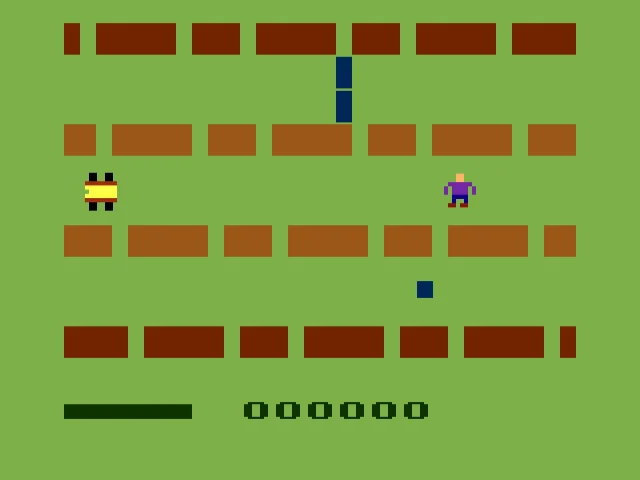
Given the Atari 2600’s capabilities, the game’s visuals are expected to be stylized and minimalist, relying on strong pixel art design and clear iconography to convey information. Players might control a character (H6-24, perhaps a robot or a dedicated office worker) moving across a single screen or scrolling environment, interacting with incoming pages. The "stacking" mechanic could involve precise alignment, matching colors or symbols, or simply building a pile without it toppling over. Sound effects, typically sparse on the 2600, would likely be used effectively to communicate successes, failures, and time warnings, enhancing the sense of urgency. The underlying narrative—publishing an issue—provides a relatable and somewhat whimsical backdrop to the abstract gameplay, grounding the experience in a tangible goal. This type of gameplay, combining familiar arcade elements with a unique twist, is precisely what the Atari 2600 homebrew community often seeks: innovative ideas executable within the platform’s limitations.
BrewOtaku #010: A Platform for Niche Culture and Exclusivity
The decision to make "H6-24 (2026)" an exclusive release for BrewOtaku #010 significantly elevates the profile of both the game and the publication. BrewOtaku is known within specific circles as a digital magazine dedicated to the intersection of retro gaming, homebrew development, and various niche Japanese subcultures often associated with "otaku" culture. The magazine serves as a vital conduit for news, reviews, interviews, and community spotlights, bridging the gap between developers and an engaged readership.
Its tenth issue, BrewOtaku #010, announced in May 2026, and likely released concurrently with or shortly after the game’s unveiling in July 2026 (despite a cover date referencing Aug/Sep 2025, common for retro-themed publications looking back), gains considerable value from hosting an exclusive new Atari 2600 title. This strategy not only rewards the magazine’s readership but also provides a focused platform for the game’s debut, ensuring it reaches a highly relevant audience. For homebrew developers, collaborating with publications like BrewOtaku offers visibility and distribution that might be challenging to achieve independently, especially for free releases. It solidifies the idea that retro gaming culture is not just about playing old games but actively contributing to and celebrating its ongoing evolution. The partnership underscores the collaborative spirit prevalent in the retro gaming community, where content creators and publishers often work together to promote and preserve the culture.
A Chronology of Revival and Release
The journey of "H6-24 (2026)" from concept to public release is emblematic of modern homebrew development cycles, albeit compressed for this particular announcement.
- Pre-2026: Marc Vittorini likely dedicates significant time to the design, coding, and meticulous debugging process inherent in Atari 2600 development. This phase often involves extensive testing on emulators and physical hardware.
- Early 2026: Discussions and collaboration with BrewOtaku likely begin, solidifying the agreement for "H6-24 (2026)" to be an exclusive feature for issue #010. This period would involve fine-tuning the game for its intended release format within the magazine.
- May 2026: BrewOtaku officially announces issue #010, potentially teasing the inclusion of an exclusive Atari 2600 game without revealing full details, building anticipation within their readership. The URL provided in the original brief, dated May 2026, supports this timeline for the magazine’s announcement.
- July 24, 2026: The official public announcement and release of "H6-24 (2026)" by Marc Vittorini for the Atari 2600. This date marks the availability of the game via BrewOtaku #010. News outlets and retro gaming sites pick up the story, disseminating information about the new title to a broader audience.
- Post-July 2026: Anticipated community engagement, including player reviews, high score challenges, gameplay videos, and discussions on forums like AtariAge and Reddit’s retro gaming communities. This ongoing interaction further cements the game’s place within the homebrew canon.
Broader Impact and Implications for Retro Gaming
The release of "H6-24 (2026)" by Marc Vittorini is more than just another game for an old console; it carries significant implications for the broader retro gaming landscape:
-
Sustained Console Longevity: Each new homebrew release, particularly one with unique gameplay and quality, reaffirms the Atari 2600’s status as a platform capable of hosting new experiences. It keeps the console relevant, encouraging new generations to discover its history and capabilities. This extends the console’s active lifespan far beyond its commercial cessation, contributing to its living legacy.
-
Innovation within Constraints: "H6-24 (2026)" exemplifies the ongoing quest for innovation within severe technical limitations. Developers like Vittorini are pioneers, demonstrating that creativity is not bound by processing power or graphical fidelity but by ingenuity and understanding of fundamental game design principles. This can inspire developers across all platforms to consider efficiency and core mechanics.
-
Preservation and Documentation: Homebrew development often involves reverse-engineering and deep dives into archaic hardware, inadvertently contributing to the preservation of knowledge about these systems. The tools, techniques, and insights shared by homebrew developers are invaluable resources for future historians and enthusiasts.
-
Economic Model of Passion Projects: The free distribution model, particularly through an exclusive publication, highlights the non-commercial, passion-driven nature of much of the homebrew scene. While some developers sell physical cartridge releases, many offer their creations freely, fostering a culture of sharing and communal enjoyment. This model is sustained by the dedication of both creators and platforms like BrewOtaku.
-
Community Reinforcement: New releases act as catalysts for community engagement. They spark discussions, create shared experiences, and provide fresh content for streamers, YouTubers, and writers dedicated to retro gaming. This constant influx of new material helps to maintain the vibrancy and cohesiveness of the global retro gaming community.
-
Cultural Resonance: The enduring appeal of the Atari 2600, amplified by homebrew titles, speaks to a broader cultural fascination with nostalgia, simplicity, and the foundational elements of digital entertainment. "H6-24 (2026)" taps into this resonance, reminding players of a time when imagination filled in the graphical gaps and gameplay reigned supreme.
In conclusion, Marc Vittorini’s "H6-24 (2026)" for the Atari 2600, released exclusively with BrewOtaku #010, is a testament to the remarkable longevity and creative spirit of the retro gaming community. It underscores the continued ability of developers to craft engaging, innovative experiences on even the most ancient hardware, ensuring that the legacy of consoles like the Atari 2600 remains not just a historical footnote but a living, evolving narrative. As players dive into the chaotic world of stacking flying pages, they are not merely playing a new game; they are participating in a vibrant, ongoing conversation about the past, present, and future of video game artistry.