Farhan hamdan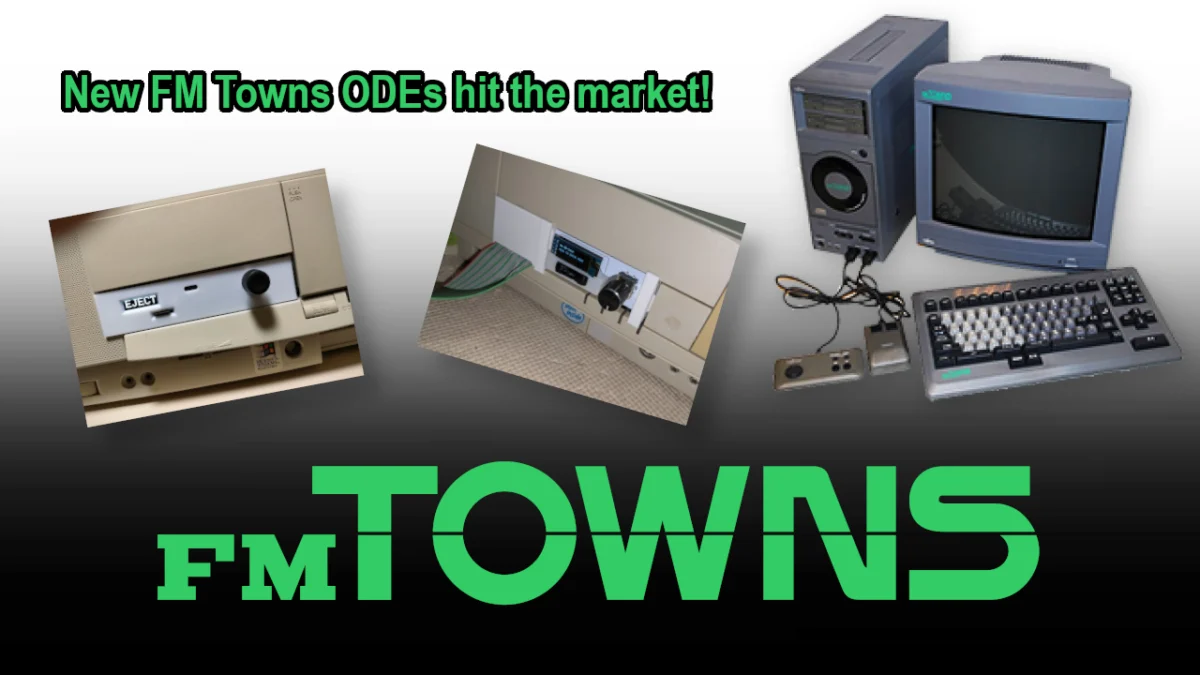
The landscape of retro computing for fans of Japan’s vibrant 1980s and 1990s home computer scene has been significantly advanced with the recent independent release of two new Optical Drive Emulators (ODEs) for the Fujitsu FM Towns. These devices, developed by Japanese engineers known as mcDomDom and Medama, represent a crucial leap forward in addressing the long-standing challenges of hardware preservation and software accessibility for the pioneering CD-ROM-based platform. Their near-simultaneous introduction in 2026 marks a pivotal moment for a community dedicated to keeping these iconic machines alive.
The Golden Age of Japanese Home Computing
The 1980s and early 1990s witnessed a distinct and fiercely competitive home computer market in Japan, largely separate from the PC-centric landscape dominating Western markets. Brands like NEC, Sharp, Fujitsu, and MSX consortium members carved out unique niches, fostering a rich ecosystem of hardware and software. NEC’s PC-88 and later PC-98 series were juggernauts, dominating business and gaming segments with their proprietary architectures. The PC-98, in particular, became the de facto standard for Japanese personal computing, selling millions of units and hosting an immense software library. Sharp’s X68000, known for its powerful graphics and sound capabilities, became a darling of arcade enthusiasts, often receiving near-perfect arcade ports due to its close architectural resemblance to Capcom’s CPS-1 arcade board. The MSX standard, a collaborative effort by Microsoft Japan and ASCII Corporation, aimed for widespread compatibility and affordability across various manufacturers, becoming particularly popular in schools and for entry-level programming.
Amidst this diverse landscape, Fujitsu introduced the FM Towns in February 1989. Its name, an acronym for "Fujitsu Multimedia-capable NEW system," aptly highlighted its groundbreaking feature: it was the world’s first home computer to ship with a CD-ROM drive as standard equipment. This was a revolutionary inclusion at a time when CD-ROM drives were expensive peripherals, typically relegated to high-end workstations or not yet widely adopted in consumer electronics. The FM Towns was initially powered by an Intel 80386DX processor, clocked at 16 MHz, paired with up to 6MB of RAM. Later models would feature faster CPUs (up to a 486DX2 66MHz) and more RAM. Its graphical capabilities were impressive for the era, offering resolutions up to 640×480 pixels with 256 colors from a palette of 4096, and later models supporting up to 32,768 colors. The integrated CD-ROM drive, however, was its defining characteristic, allowing for significantly larger software installations, high-quality digitized audio tracks (often redbook audio, akin to music CDs), and full-motion video clips, pushing the boundaries of multimedia computing and gaming.
The FM Towns’ innovative design facilitated a rich library of games and educational software that leveraged the CD-ROM’s capacity for immersive experiences. Titles often featured extensive voice acting, orchestral soundtracks, and detailed graphics that surpassed what floppy disk-based systems could offer. This emphasis on multimedia made the FM Towns a unique proposition, albeit one that struggled to compete with the sheer market dominance of the NEC PC-98 series. However, this reliance on CD-ROM technology, while forward-thinking, introduced a critical vulnerability that would manifest decades later: the inherent fragility and eventual failure of optical drives and media.
The Imperative of Preservation: Confronting Hardware Decay
As these vintage machines transitioned from cutting-edge technology to cherished retro artifacts, a significant challenge emerged for enthusiasts and preservationists. The optical drives, typically manufactured with mechanical components, lasers, and specific electronics, are prone to wear and tear. Over time, lasers weaken, motors fail, disc trays jam, and capacitors degrade. Furthermore, the optical media itself can degrade, a phenomenon known as "disc rot," rendering original software unreadable. This created a critical bottleneck for enjoying the vast and unique software library of the FM Towns. Without functional drives or media, the system’s core functionality is compromised, and its cultural and historical significance risks fading into obsolescence.
For years, the primary solution to these issues in the retro computing community has been the Optical Drive Emulator (ODE). An ODE replaces the physical optical drive with a modern storage solution, typically an SD card or USB drive, from which disc images (digital copies of original CDs) can be loaded. This not only circumvents the need for a functional optical drive but also eliminates wear and tear on precious original discs, often improving loading times and reducing noise. ODEs have become indispensable tools for platforms like the Sega Dreamcast (GDEMU), Sega Saturn (Rhea/Phoebe), and increasingly for Japanese home computers, symbolizing a crucial step in ensuring the longevity of these systems.
The Predecessor: Deunan’s Wizard and DocBrown
Until recently, the commercially available ODE market for the FM Towns was largely dominated by the "Wizard," a device created by Deunan. Deunan is a highly respected independent engineer within the retro gaming hardware community, renowned for developing the popular GDEMU for the Sega Dreamcast and the Rhea/Phoebe series for the Sega Saturn. The Wizard offered FM Towns enthusiasts a viable solution, allowing them to load CD-ROM images from an SD card, thereby bypassing failing optical drives.
Deunan also extended his expertise to the FM Towns Marty, a consolized version of the FM Towns computer released in 1993, which offered a more consumer-friendly, game-console-like experience. The Marty, despite its innovative design as one of the first 32-bit CD-ROM consoles, struggled in the market. For this system, Deunan developed the "DocBrown" ODE, a clever nod to the time-traveling scientist from "Back to the Future," a choice appreciated by many in the community for its touch of retro-futuristic charm.
While Deunan’s devices were technically excellent and highly sought after, their availability was often a significant hurdle. Production runs were typically limited, and demand frequently outstripped supply, leading to long waiting lists and sometimes inflated prices on the secondary market. This issue was particularly pronounced for the Wizard and DocBrown, given the comparatively smaller user base for the FM Towns platforms compared to the Dreamcast or Saturn. Additionally, the Wizard faced compatibility limitations, being primarily designed for tower models of the FM Towns and not universally supporting the more compact or all-in-one "Fresh" series models. This left a notable segment of the FM Towns user base without a readily accessible or compatible ODE solution, highlighting a clear market gap for more universally compatible and consistently available devices.
A New Era of Accessibility: mcDomDom and Medama Emerge in 2026
Fast forward to 2026, and the retro computing community has witnessed a significant development. Within weeks of each other, two independent Japanese engineers have released their own distinct Optical Drive Emulators for the Fujitsu FM Towns, promising enhanced compatibility and, crucially, improved availability. These new devices, the mcDomDom and the Medama, represent a collective effort from the Japanese hobbyist scene to democratize access to the FM Towns software library.
The emergence of these two new ODEs is a testament to the enduring passion for these vintage systems and the ingenuity of dedicated engineers. Their simultaneous release suggests a shared recognition of the unmet demand and the technical feasibility of creating more robust and widely compatible solutions. Both projects appear to be driven by a deep understanding of the FM Towns architecture and the specific needs of its enthusiast community, addressing the limitations of previous offerings and broadening the scope of preservation.
The mcDomDom: Features and Implementation
The mcDomDom ODE, developed by a Japanese engineer known by the handle mcDomDom, has quickly garnered positive attention for its feature set and perceived reliability. It aims to offer broad compatibility across a range of FM Towns models, a significant improvement over previous solutions. Key features often include:
- SD Card Support: Utilizing readily available SD cards for storing disc images, offering convenience and high capacity for even the largest FM Towns software libraries.
- Integrated Display and Rotary Dial: Many iterations of the mcDomDom feature a small OLED screen and a rotary encoder, allowing users to browse and select disc images directly on the device without requiring additional software on the FM Towns itself. This "Gotek-like" interface is highly praised for its intuitive operation and independence from the host system’s software, making it user-friendly.
- Broad Model Compatibility: Designed to support various FM Towns models, including the more challenging "Fresh" series (e.g., Fresh E) and tower units (e.g., 20F), addressing a critical need previously underserved by solutions limited to specific form factors.
- Plug-and-Play Installation: While requiring some technical proficiency and careful handling, the installation process is generally designed to be as straightforward as possible, often involving the replacement of the original CD-ROM drive and connection to the existing power and data lines.
Initial reports from users, including detailed documentation of installations on forums like NFG Games, suggest a high level of satisfaction with the mcDomDom. The device is noted for its stable performance and effective emulation of the original CD-ROM drive. While some users have pointed out the current absence of a sophisticated on-screen disc launcher menu software, the integrated dial and screen functionality is widely considered "very serviceable" and effective for day-to-day use. Crucially for global enthusiasts, the mcDomDom has shown more consistent stock availability, a welcome change from the scarcity often associated with niche retro hardware. This consistent availability suggests a more robust production pipeline, a key factor in democratizing access.
The Medama: A Parallel Innovation
Running parallel to the mcDomDom release is the Medama ODE, another independently developed solution from Japan. While specific public details on the Medama may be slightly less abundant in Western forums, its presence indicates a healthy, competitive drive within the Japanese retro hardware scene. Based on product pages (such as those found on BOOTH) and community discussions, the Medama appears to share many functional similarities with the mcDomDom, aiming for comparable performance and compatibility.
Early observations suggest the Medama also supports a wide array of FM Towns models, fulfilling the growing demand for comprehensive compatibility across the platform’s diverse hardware revisions. While initial versions might have differed in interface (e.g., a potential lack of a rotary dial and screen at launch, as noted in some early comparisons), the rapid pace of development in this niche market means features often converge quickly. The Medama has been noted to sell out quickly upon release, suggesting high demand and potentially smaller, more focused production batches, though this dynamic could evolve over time with increased demand and production capacity. The existence of two robust, independently developed solutions simultaneously speaks volumes about the vibrancy and dedication of the FM Towns enthusiast community.
Broader Implications for Retro Computing and Preservation
The introduction of the mcDomDom and Medama ODEs carries significant implications for the retro computing community and the broader field of digital preservation:
- Enhanced Accessibility and Longevity: By replacing aging and failing optical drives, these ODEs ensure that FM Towns systems can continue to function for decades to come. This directly translates to increased accessibility for current owners and potentially lowers the barrier to entry for new enthusiasts, as the risk of acquiring a non-functional machine due to a dead CD-ROM drive is significantly mitigated. The lifespan of the platform is effectively extended indefinitely.
- Software Preservation: ODEs are critical tools in software preservation. They allow users to play digital backups of their original games and applications, protecting them from disc rot and physical damage. This contributes to the long-term archival of a unique and culturally significant software library, ensuring that future generations can experience and study these historical artifacts.
- Community Growth and Innovation: The availability of multiple, well-supported ODEs often stimulates community growth. As more systems become functional, more content is shared, discussions flourish, and further hardware/software developments are inspired. The competition between mcDomDom and Medama also fosters innovation, pushing both developers to refine their products and potentially inspire new features or broader compatibility.
- Economic Impact on the Retro Market: While specialized, the retro computing market has an economic dimension. Increased hardware functionality can stabilize or even increase the value of working FM Towns units, as their usability is significantly enhanced. It also creates a micro-economy around the production and distribution of these specialized hardware solutions, supporting independent engineers and small businesses.
- Blueprint for Other Platforms: The success and iterative development in the FM Towns ODE space can serve as a blueprint for similar preservation efforts for other vintage platforms facing analogous challenges with proprietary or failing optical media. It demonstrates the power of independent engineering in filling gaps left by original manufacturers.
Navigating International Acquisition: The Proxy Service Imperative
For enthusiasts outside Japan, acquiring these cutting-edge ODEs presents a unique set of challenges, primarily related to international shipping and regulations concerning electronic components. Japanese online marketplaces like BOOTH, which often host these independent engineering projects, typically do not ship directly overseas. This necessitates the use of proxy shipping services.
However, the landscape for proxy services has become increasingly complex. In recent months, major international proxy services, such as Buyee, have reportedly begun to refuse the shipment of certain electronic components, particularly bare Printed Circuit Boards (PCBs), citing evolving international shipping regulations or internal policy changes. This can create significant hurdles for hobbyists trying to import specialized retro hardware, leading to frustration and delays. This trend reflects a broader tightening of regulations on international shipments of electronics, often due to concerns over lithium-ion batteries (even if not present in the specific item) or general safety classifications for "electronic components."
Fortunately, alternative proxy services continue to operate effectively. Services like BaggageForward have been recommended by users for their reliability in navigating these regulatory complexities and successfully shipping PCBs and other electronic components internationally. These services act as an intermediary, purchasing the item on behalf of the international buyer and then repackaging and shipping it to their final destination, often with specialized customs declarations to ensure compliance. Users are strongly advised to research and choose a proxy service known for its experience and success in shipping electronic components to avoid potential delays or refusal of shipment, verifying their policies on electronic parts before committing.
The Future of FM Towns: A Resurgent Platform
The dual arrival of the mcDomDom and Medama ODEs in 2026 marks a new chapter for the Fujitsu FM Towns. What was once a platform increasingly threatened by hardware failure and inaccessibility is now poised for a resurgence. With robust, widely compatible, and more consistently available preservation solutions, more FM Towns units can be brought back to life, and their unique software library can be enjoyed by a broader audience than ever before. This not only honors the legacy of Fujitsu’s pioneering multimedia computer but also reinforces the vital role that independent engineers and a passionate global community play in safeguarding digital history for future generations. The ongoing innovation in this niche sector underscores a commitment to ensuring that the technological marvels of the past remain vibrant and playable in the present, fostering a deeper appreciation for the rich history of computing and gaming.