Farhan hamdan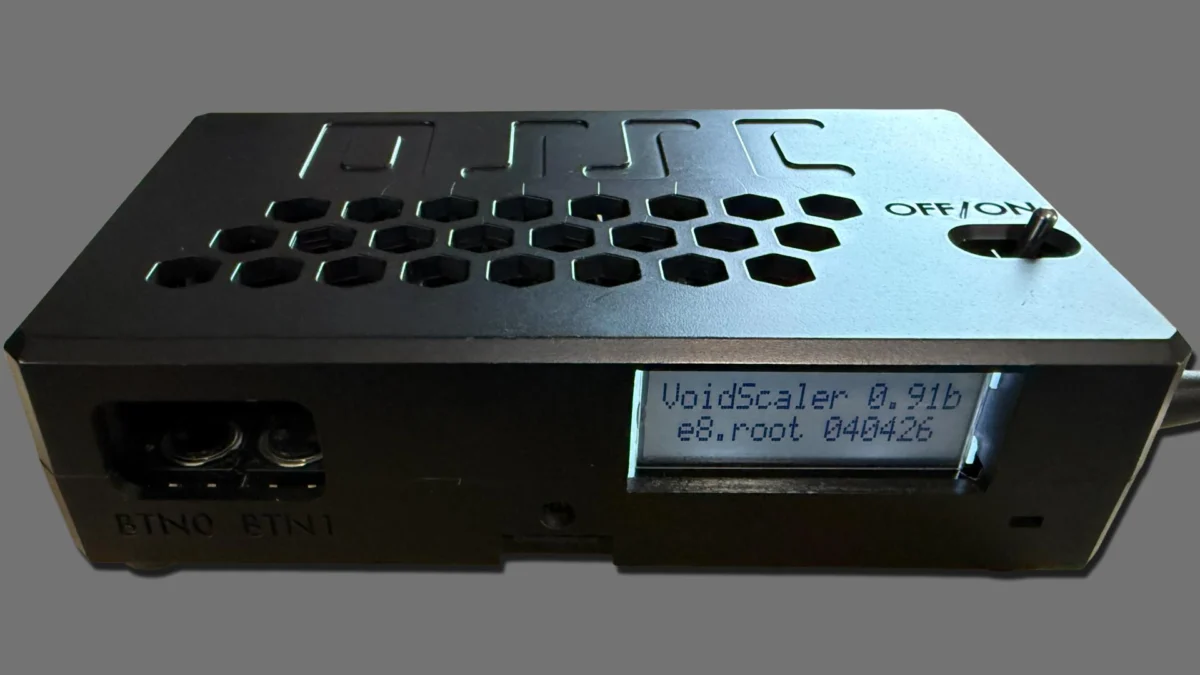
The landscape of retro video gaming and display technology has recently witnessed a significant evolution with the release of an updated VoidScaler project by developer e8root. This pivotal update introduces an alternative firmware that repurposes the highly acclaimed Open Source Scan Converter (OSSC) from its traditional role as an upscaler into a sophisticated downscaler. This transformation allows enthusiasts to connect modern HDMI sources to vintage Cathode Ray Tube (CRT) displays, outputting signals compatible with classic hardware, such as 240p or 480i at a crucial 15kHz horizontal scan rate, provided an HDMI Digital-to-Analog Converter (DAC) is utilized. The most groundbreaking feature of this release is the ability to run VoidScaler as a secondary firmware on compatible OSSC units, offering seamless switching between the device’s original upscaling capabilities and its new downscaling functionality with a simple menu selection, automatically reverting to the primary firmware upon power cycling.
The Open Source Scan Converter: A Legacy of Innovation
To fully appreciate the significance of VoidScaler’s latest update, it is essential to understand the foundational role of the Open Source Scan Converter (OSSC). Developed by Markus Hiienkari, the OSSC emerged as a revolutionary device in the retro gaming community, addressing a critical challenge faced by enthusiasts attempting to play vintage console games on modern flat-panel displays. Traditional retro consoles, such as the Super Nintendo Entertainment System, PlayStation, Sega Genesis, and many others, output video signals at low resolutions (e.g., 240p, 480i) with a 15kHz horizontal scan rate, often through analog RGB, S-Video, or composite connections. Modern televisions, designed for high-definition digital signals, typically struggle to process these vintage formats, often resulting in severe input lag, poor image scaling, and a general loss of the authentic visual experience.
The OSSC’s original purpose was to accurately and with minimal latency convert these 15kHz analog signals into higher-resolution digital signals (like 720p, 1080p, or even 4K in some configurations) via HDMI. Unlike conventional upscalers, the OSSC employs a "line doubling" or "line tripling" technique, multiplying the original scanlines without complex video processing that could introduce lag. This approach preserved the pixel-perfect quality and inherent characteristics of retro games, making it an indispensable tool for purists and content creators alike. Its open-source nature fostered a vibrant community of developers and users who continuously contributed to its firmware, expanding its capabilities and refining its performance. The device quickly became a benchmark for high-quality retro gaming on modern displays, cementing its status as a cornerstone of the retro hardware ecosystem. The community’s continuous engagement has led to numerous firmware iterations, each bringing improvements in compatibility, features, and overall user experience, making the OSSC a testament to collaborative innovation.
Bridging Eras: The Challenge of Modern Content on Vintage Displays
While the OSSC excelled at bringing retro content to modern screens, a parallel challenge persisted for enthusiasts who preferred the authentic experience of playing on Cathode Ray Tube (CRT) displays. CRTs are highly prized in the retro gaming community for several reasons: they exhibit virtually zero input lag, display true black levels, render colors vibrantly, and natively produce the characteristic "scanlines" that are integral to the aesthetic of many classic games. Furthermore, CRTs handle the native resolutions and refresh rates of vintage consoles without the need for scaling, preserving the original artistic intent.
However, connecting modern video sources—such as contemporary gaming consoles, streaming devices, personal computers running emulators, or even Blu-ray players—to CRTs presents a significant hurdle. These modern devices typically output high-definition digital signals, predominantly via HDMI, at resolutions like 720p, 1080p, or higher. CRTs, on the other hand, are analog displays designed for much lower resolutions and expect specific analog signal types, often RGBHV (Red, Green, Blue, Horizontal Sync, Vertical Sync) or YPbPr (Component Video), and crucially, they operate at a 15kHz horizontal scan rate for standard definition content (240p/480i) or 31kHz for higher definition VGA monitors. Directly connecting an HDMI output to a 15kHz CRT is impossible without an intermediate conversion device that can perform a "downscaling" operation, converting the high-resolution digital signal into a low-resolution analog signal that the CRT can display. This is precisely the void that e8root’s VoidScaler project aims to fill.
Downscaling, in this context, involves reducing the pixel count and converting the digital signal to an analog one, while also ensuring the output adheres to the CRT’s required horizontal scan rate of 15kHz. This process is complex, requiring precise timing, aspect ratio correction, and often deinterlacing if the input signal is interlaced (e.g., 1080i). The integration of VoidScaler with the OSSC, coupled with an HDMI DAC, provides an elegant and robust solution to this long-standing technical conundrum, opening up new possibilities for experiencing modern media on classic display hardware.
VoidScaler: A New Chapter for the OSSC
The VoidScaler project, spearheaded by developer e8root, represents a significant evolution in the functionality of the Open Source Scan Converter. Initially conceived as a specialized firmware to enable the OSSC to act as a downscaler, the project has steadily gained traction within the retro gaming and display enthusiast communities. Its core objective is to reverse the OSSC’s primary function, transforming it from a device that takes low-resolution analog signals and outputs high-resolution digital signals, into one that accepts high-resolution digital signals (via an HDMI DAC) and outputs low-resolution analog signals suitable for CRTs.
The development of VoidScaler has been a testament to the collaborative and iterative nature of open-source projects. Drawing on the OSSC’s robust hardware and flexible firmware architecture, e8root has engineered a solution that addresses the nuanced technical requirements of downscaling. This includes managing signal synchronization, color space conversions, and ensuring accurate output timings to maintain compatibility with a wide array of vintage displays. The project’s progression has seen multiple iterations, each building upon the last, refining performance, expanding feature sets, and improving stability. Early versions of VoidScaler required a more involved flashing process, often necessitating the firmware to be the sole resident on the OSSC, which presented a barrier for users who frequently switched between upscaling and downscaling needs. The latest update, however, marks a pivotal moment in the project’s maturity, directly tackling this usability challenge with an innovative solution.
Key Technical Advancements and the Dual-Firmware Breakthrough
The most significant advancement in e8root’s latest VoidScaler update is the introduction of a dual-firmware capability. This feature dramatically enhances the OSSC’s versatility and user convenience. For OSSC units running firmware version 1.20 or newer, VoidScaler can now be installed as a secondary, or "alternate," firmware. This means users no longer need to perform a full re-flash or use specialized JTAG programmers every time they wish to switch between the OSSC’s original upscaling functionality and VoidScaler’s downscaling mode. Instead, a simple selection within the OSSC’s on-screen menu can trigger the switch.
Upon selecting VoidScaler, the OSSC reboots into the downscaling environment. When the user is finished, a power cycle of the OSSC automatically defaults the device back to its primary firmware, restoring its upscaling capabilities without any further manual intervention. This "power-cycle revert" mechanism is a game-changer for enthusiasts who frequently alternate between playing retro consoles on modern displays and modern content on CRTs. It removes friction from the user experience, making the OSSC an even more indispensable tool in a comprehensive retro gaming setup. This innovation leverages the OSSC’s internal memory architecture, allowing it to store and manage two distinct firmware images efficiently.

Beyond the dual-firmware capability, the update encompasses a multitude of improvements and refinements to VoidScaler’s core downscaling algorithms. While specific details of every change are typically outlined in the developer’s release notes, such updates generally include enhanced compatibility with a broader range of HDMI DACs, improved signal stability, more precise aspect ratio controls, and potentially new output modes tailored for specific CRT types. Bug fixes and performance optimizations are also common in such comprehensive firmware releases, ensuring a more stable and reliable downscaling experience. The ability to run 240p or 480i signals from modern sources is meticulously engineered to mimic the native output of classic gaming consoles, providing an authentic visual fidelity on CRT displays that is unparalleled by software emulation alone. This deep dive into signal processing underscores the technical sophistication behind VoidScaler, ensuring that the essence of analog video is preserved even when sourced from digital origins.
Installation and User Experience
Implementing the new VoidScaler firmware, particularly to take advantage of the dual-firmware feature, requires a few preparatory steps. The primary prerequisite for seamless dual-firmware operation is an OSSC unit running at least version 1.20 of the official firmware. For optimal performance and access to additional features, updating to OSSC version 1.21 is highly recommended. This update, while offering numerous benefits, typically requires a small hardware modification to the OSSC board itself, usually involving bridging specific pads or installing a minor component to unlock expanded memory or processing capabilities. Users with OSSC units older than v1.20 can still utilize VoidScaler, but it will need to be flashed as the only firmware on the device, often necessitating a JTAG programmer for flashing and switching between official OSSC firmware and VoidScaler.
Once the OSSC’s firmware is updated (or the user is prepared to flash VoidScaler as the sole firmware), the process involves downloading the latest VoidScaler firmware files, typically in .bin format, along with the remote reference map from the official GitHub repository. To enhance user experience, it is advisable to rename the .bin files to shorter, more descriptive names before copying them to the fw directory on the OSSC’s MicroSD card. For instance, a file named "VoidScaler_091_040426_RGBHV_43" could be shortened to "VS_RGBHV_43_091," making it easier to identify the specific firmware (e.g., RGBHV output, 4:3 aspect ratio) directly on the OSSC’s front LCD menu.
After inserting the MicroSD card back into the OSSC and powering it on, users navigate to the settings menu, then select "firmware update." From there, they can choose the desired VoidScaler firmware variant—for example, "RGBHV" if using an HDMI to VGA converter for output to a PC CRT monitor or professional video monitor. Upon successful flashing, the OSSC will automatically reboot to its main firmware. The user can then return to the settings menu and select the option to launch the second firmware, which will reboot the device into VoidScaler mode.
Configuration within VoidScaler mode is facilitated by referencing the provided remote map. Users can cycle through various output modes using the OSSC’s remote control buttons until a stable signal is achieved on their connected CRT. A crucial aspect of the OSSC’s design is its front LCD, which provides all necessary information and allows for complete operation and firmware loading without needing to connect to a modern flat-panel display first. This attention to user-centric design further streamlines the setup process, enabling enthusiasts to quickly and efficiently bridge their modern digital content with their cherished vintage displays.
Developer Insights and Community Impact
The sustained development of projects like VoidScaler underscores the immense value of open-source initiatives within specialized technical communities. Developer e8root’s commitment to refining and expanding the OSSC’s capabilities, particularly in a domain as technically challenging as downscaling, highlights the passion and expertise prevalent in the retro gaming hardware scene. While e8root’s direct statements or official interviews regarding this specific update are not widely published, the iterative nature of the VoidScaler project and its careful integration with the OSSC’s existing architecture speak volumes about the developer’s methodical approach and deep understanding of video signal processing.
The impact of this update on the retro gaming and hardware enthusiast community is multifaceted. Firstly, it significantly extends the utility and lifespan of existing OSSC hardware. A device that was primarily designed for upscaling now gains robust downscaling capabilities, transforming it into an even more versatile "Swiss Army knife" for video enthusiasts. This enhances the return on investment for OSSC owners and potentially attracts new users who previously sought dedicated downscaling solutions. Secondly, it further democratizes access to high-quality display options for modern content on CRTs. By leveraging an established and widely adopted device like the OSSC, VoidScaler makes the sophisticated process of downscaling more accessible and manageable for a broader audience, fostering greater experimentation and enjoyment.
Furthermore, the open-source ethos behind both the OSSC and VoidScaler promotes knowledge sharing and collaborative problem-solving. The community can scrutinize the code, suggest improvements, report bugs, and even contribute directly to the project, ensuring its continued evolution and adaptation to emerging needs. This collective effort strengthens the ecosystem around retro hardware, ensuring that solutions remain responsive to user demands and technical challenges. The seamless integration of this new functionality ensures that the OSSC remains at the forefront of video processing solutions for both vintage and modern content, providing a robust platform for preserving and enjoying gaming history.
The Future of Retro Display Technology
The release of the updated VoidScaler firmware with its dual-firmware capability represents more than just a technical achievement; it signifies a broader trend in the preservation and innovative re-purposing of technology. As CRTs become rarer and more challenging to maintain, solutions like VoidScaler ensure that their unique display characteristics can continue to be enjoyed with contemporary content, bridging decades of technological advancement. This blend of old and new fosters a richer, more authentic experience for enthusiasts who value the visual nuances of classic display methods.
The implications for hardware longevity are significant. By adding new functionality to an "older" device like the OSSC, its relevance and utility are extended, encouraging continued support and development within the community. This also has potential, albeit minor, economic implications, as it could spur renewed interest in purchasing OSSC units and compatible HDMI DACs. More broadly, this project exemplifies how dedicated communities, driven by passion and technical expertise, can continuously innovate on existing platforms, pushing the boundaries of what is possible and challenging the notion of planned obsolescence. The ability to seamlessly switch between upscaling and downscaling positions the OSSC as a central hub for all retro video processing needs, solidifying its place as an indispensable tool for enthusiasts. This continuous evolution promises a vibrant future for retro gaming and display technology, where the best of both historical and contemporary worlds can coexist.
Resources:
- Download VoidScaler Firmware: https://github.com/e8root/voidscaler/releases/
- Purchase OSSC: https://retrorgb.com/ossc.html
- Marco’s Original VoidScaler Page: https://retrorgb.com/voidscaler.html